
-
Your shopping cart is empty!

Casio WV-58RD-1AEF Wave Ceptor Radio-Controlled Digital Watch
- Brand: Casio
- Product Code: WV-58RD-1AEF
- Availability: 2-3 Days
£60.00
Free UK Delivery
Full Minimum 12-Month Guarantee
30-Day Hassle-Free Returns
Certified & Hallmarked
Established Jeweller
Casio WV-58RD-1AEF Wave Ceptor Radio-Controlled Digital Watch
The evaluation of radio-controlled horological instruments requires an inspection of signal tracking circuitry and structural execution. This Casio Wave Ceptor WV-58RD-1AEF digital timepiece integrates a Multi-Band 5 atomic calibration receiver with a resilient stainless steel bracelet, offering verified accuracy independent of manual standard quartz drifts.
Module Type
3053 IC
Atomic Logic Core
Sync System
Multi-Band 5
Radio Controlled
Chassis Mass
92.00g
Total Assembly Weight
Water Rating
5 ATM / 50m
ISO 22810 Standard
Band Material
316L Steel
Stainless Bracelet
Technical 7-Table Framework for Horological Assets
1. Sub-Category Navigation & Document Inventory Links
| Product Classification | Primary Engineering Profile | Direct Technical Path |
|---|---|---|
| Casio Wave Ceptor | Radio-Controlled RF Frequency Timekeeping | View WV-58RD Series |
| Casio Standard Digital | Quartz Oscillator Standard Timekeeping Logic | Casio Collection Catalog |
Table 1 Analysis: This indexing system segments the specialized atomic timekeeping branch from standard autonomous quartz configurations. The WV-58RD series utilizes a radio frequency receiver engineered explicitly to connect with localized low-frequency transmitters, setting it apart from standard digital configurations.
2. Dimensional & Structural Architecture Specifications
| Dimension Parameter | Measurement Value | Engineering Tolerance | Anatomical Fit Profile |
|---|---|---|---|
| Case Horizontal Width | 43.7mm | +/- 0.1mm | Mid-Size Executive Form Factor |
| Case Vertical Height | 48.3mm | +/- 0.1mm | Balanced Wrist Footprint Profile |
| Case Total Thickness | 13.7mm | Uniform Depth | Cuff-Friendly Low-Profile Build |
| Total Instrument Mass | 92.00g | +/- 0.5g | Substantial Weighted Metallic Presence |
Table 2 Analysis: Sizing parameters indicate optimized housing architecture. The 13.7mm case thickness is necessary to protect the internal radio antenna assembly and the shock-mitigating resin cradle that isolates the digital micro-components from impacts.
3. Metallurgical & Materials Formulation Analysis
| Component Part | Material Classification | Vickers Hardness (HV) | Structural Performance Role |
|---|---|---|---|
| Bracelet Assembly | 316L Stainless Steel | 200 - 240 HV | High Tensile Strain and Corrosion Resistance |
| Case Upper Bezel | Polished Chrome-Plated Resin | N/A | Weight Minimization and Signal Transparency |
| Dial Crystal Window | Spherical Acrylic Resin | N/A | High Impact Fracture Resistance Profile |
| Case Backplate | Stamped Stainless Steel | 180 - 200 HV | 4-Point Screw-Down Moisture Separation |
Table 3 Analysis: The material choice uses a hybrid configuration. Combining a stainless steel bracelet with an acrylic crystal window ensures the instrument remains resilient against impacts while reducing structural weight, avoiding the vulnerability of heavy, non-shielded structures.
4. RF Circuitry & Precision Performance Audit
| Timekeeping System | Chronometric Precision Status | Calibration Mode | Oscillator Element |
|---|---|---|---|
| Wave Ceptor Synced | Absolute 0.00 Seconds Deviation | Automatic Nightly RF Signal Check | Anthorn UK Low-Frequency Atomic Clock |
| Autonomous Quartz Mode | +/- 20 Seconds Mean Monthly Variance | Internal Electronic Count Tracking | 32,768 Hz Tuning-Fork Quartz Crystal |
Table 4 Analysis: The primary logic module operates on dual systems. When the RF antenna receives localized calibration signals, deviation drops to zero. Without an RF signal, the internal quartz crystal takes over, keeping variation within stable parameters.
5. Environmental Sealing & Liquid Resistance
| Rating Standard | Static Pressure Limit | Verified Factory Test Bounds | Permitted Operational Activities |
|---|---|---|---|
| ISO 22810 Certified | 5.0 Bar Atmosphere Equivalent | 50 Metres Hydrostatic Head Pressure | Rain Exposure, Handwashing, and Surface Swimming |
Table 5 Analysis: A 5 ATM rating means the watch can withstand normal daily exposure to water. The double-gasket system on the push-buttons prevents moisture ingress under static conditions, but the watch is not suitable for high-velocity water sports or deep diving.
6. Power Management & Battery Lifetime Matrix
| Cell Type Designation | Nominal Chemical Output | Calculated Cell Lifecycle | Energy Drain Drivers |
|---|---|---|---|
| CR1620 Lithium Coin | 3.0 Volts Direct Current | Approximately 2 Years Duration | Nightly RF Reception and Backlight Cycles |
Table 6 Analysis: The 2-year lifespan of the CR1620 battery reflects the power required for daily atomic synchronization. The module manages energy by automatically disabling signal searches if the battery voltage falls below minimum operational levels.
7. Asset Architecture: Multi-Band 5 vs. Traditional Quartz
| Feature Parameter | Wave Ceptor WV-58RD-1AEF | Mass-Market Digital Watches |
|---|---|---|
| Purity & Materials | 316L Stainless Steel Bracelet Assembly | Low-Density Base Plastics or Hollow Links |
| Calibration Link | Multi-Band 5 Radio Receiver Core | Manual Time Adjustments Required |
| Calendar Range | Full Automatic logic to the Year 2099 | Standard Manual Leap Year Correction |
Table 7 Analysis: The technical evaluation shows that the WV-58RD offers significant precision benefits over manual digital models. Its radio-controlled system delivers precise accuracy without the need for periodic manual adjustments, ensuring dependable, long-term performance.
Official Factory Operation Guide Reference
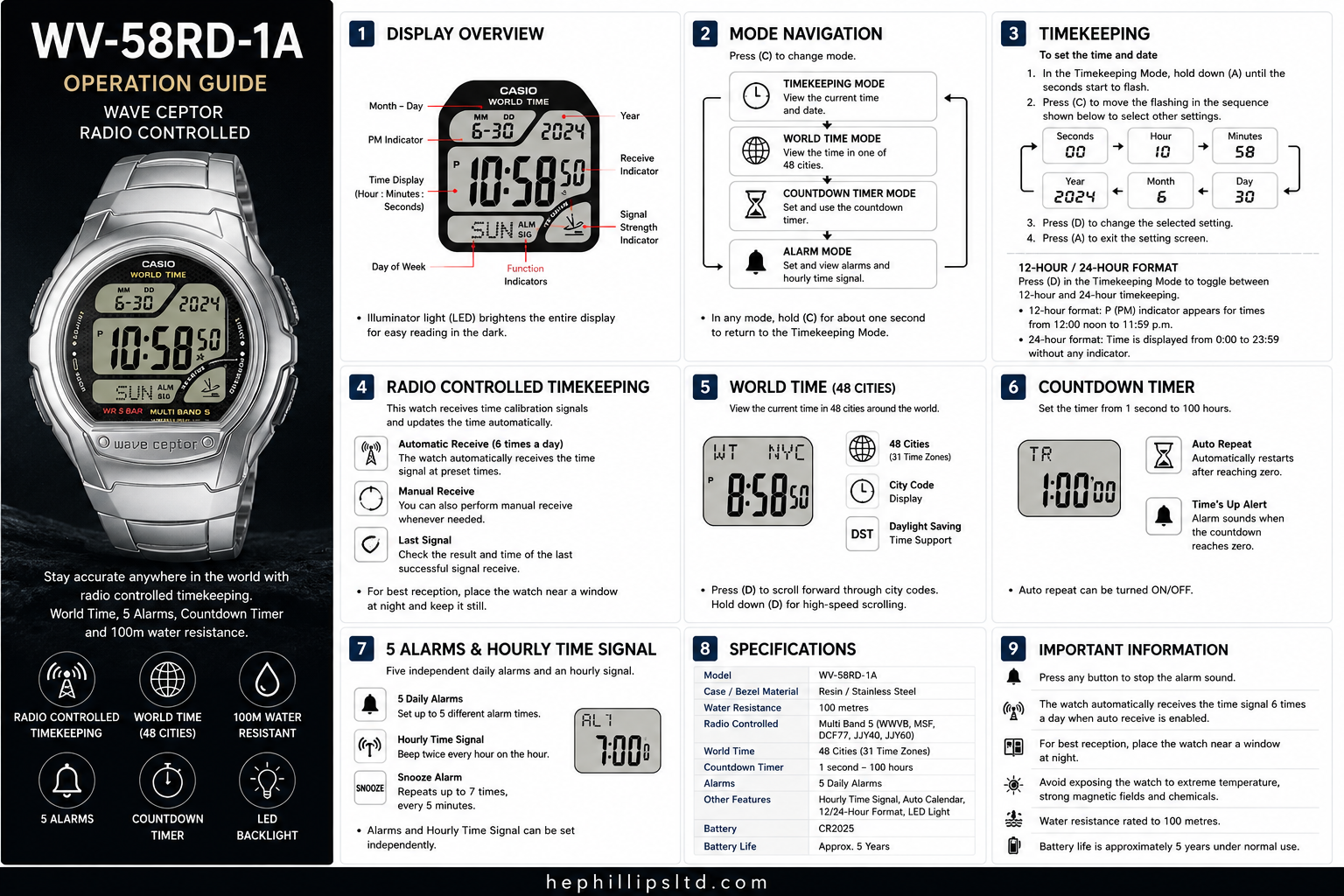
Figure 1.0: Casio WV-58RD-1A Operation Guide.
View Official Factory Manual (PDF)
20 Technical FAQs: Engineering & Horological Systems
Radio Frequency Timekeeping Logic
1. How does the Multi-Band 5 radio calibration system function?
The internal receiver antenna picks up low-frequency radio waves transmitted from five long-wave stations worldwide. These include Anthorn (UK), Mainflingen (Germany), Fort Collins (USA), and Fukushima/Fukuoka (Japan). The module processes these signals to update its time, date, and leap-year tracking automatically, adjusting for seasonal changes without requiring manual correction.
2. What causes signal reception failure during the regular nightly calibration cycles?
Signal disruption is typically caused by localized atmospheric noise, proximity to reinforced concrete walls, or electromagnetic interference from household electronics. To ensure a clear connection, the watch should be placed near a window with its 12 o'clock position pointing toward the transmitter station overnight, when atmospheric conditions are clearest.
3. Can the radio calibration sequence be triggered manually during standard daytime operation?
Yes. Users can initiate a manual signal scan by holding down the lower-right button while in standard timekeeping mode. This switches the display to signal-tracking mode. Daytime scans may take longer or fail due to solar radiation and electronic interference, so nightly synchronization remains the most reliable option.
4. How does the watch track time when it is outside the range of radio transmitters?
When out of radio range, the watch operates on its internal 32,768 Hz quartz crystal oscillator circuit. In this autonomous mode, it maintains standard quartz accuracy with an average monthly variance of +/- 20 seconds, returning to atomic accuracy as soon as it reconnects with a supported transmitter network.
Module 3053 Circuitry & Power
5. What is the operational lifespan of the internal lithium coin battery cell?
The integrated CR1620 lithium cell delivers approximately 2 years of power under normal usage. This lifespan is calculated based on one automatic radio synchronization attempt per night and a single activation of the internal electroluminescent backlight daily. Frequent manual scans or heavy backlight use will reduce battery life accordingly.
6. Does the integrated display show whether calibration was successful?
Yes. The display features a specific reception status icon that stays visible after a successful synchronization cycle. If the indicator is not shown, it means the watch was unable to verify the signal within the previous 24 hours, and it will try again during its next scheduled nightly scan.
7. What are the specific power management settings for the Module 3053?
The module monitors battery voltage continuously. If power drops below a safe operational threshold, the watch automatically disables the radio receiver and backlight to protect primary timekeeping functions, preventing data corruption within the internal micro-controller.
8. How does the automatic calendar logic handle changes across varying month lengths?
The module features a pre-programmed calendar that automatically accounts for different month lengths and leap years up to December 31, 2099. When connected to the atomic signal, the calendar updates automatically, ensuring correct date displays without manual intervention.
Materials & Physical Durability
9. What are the physical properties of the 316L stainless steel bracelet?
The bracelet is made from 316L stainless steel, a low-carbon alloy containing chromium and nickel. This formulation gives it excellent resistance to sweat and corrosion, making it a durable option for daily wear while maintaining structural integrity over time.
10. Why does the watch case use a hybrid combination of resin and metal components?
The hybrid construction is a practical engineering choice. The upper resin sections allow the internal radio antenna to receive signals without the interference that a full metal case would cause, while the stainless steel backplate and bracelet provide strength at key structural points.
11. What are the durability benefits of the spherical acrylic crystal window?
The acrylic crystal window is chosen for its impact resistance. Unlike mineral glass, which can shatter under direct impact, acrylic deforms slightly to absorb force. This makes it a reliable choice for active environments, and light surface scratches can be buffed out during routine servicing.
12. How should the stainless steel link bracelet be adjusted for a proper fit?
The links are held together by friction-fit pins. Sizing the bracelet requires specialized pin-removal tools to ensure links are removed cleanly without bending the connection points, ensuring the clasp stays centered on the wrist for long-term comfort.
Environmental Limits & Water Sealing
13. What are the real-world limits of the 5 ATM water resistance rating?
The 5 ATM rating, tested under ISO 22810 standards, indicates resistance to a static pressure of 5 bars, equivalent to 50 meters of depth. This means the watch is protected against rain, splashes, and surface swimming. However, it is not built to withstand the pressures of skin diving, snorkeling, or high-velocity water sports.
14. Why should this digital timepiece be kept away from high-temperature steam environments?
High temperatures can cause the case materials and internal rubber seals to expand at different rates, potentially allowing moisture to breach the case. We recommend removing the watch before entering showers, saunas, or steam rooms to protect the internal electronics from condensation.
15. How do dynamic pressures alter the certified water resistance of the watch housing?
Moving through water increases pressure beyond static limits. Rapid wrist movements while swimming can subject the seals to brief pressure spikes that exceed standard operational ratings, which is why 5 ATM watches are limited to surface swimming and should not be used for diving.
16. What maintenance steps are recommended after exposing the watch to saltwater?
After contact with saltwater, the watch should be rinsed thoroughly in fresh water to remove salt deposits. This prevents salt crystals from drying inside the links or around the button seals, ensuring smooth operation and protecting the materials from premature wear.
Operational Features & Settings
17. How does the World Time mode track multiple time zones?
The internal database covers 48 cities across 29 time zones. When a new city is selected, the module updates the digital display automatically while keeping the home time accurate in the background, making it a reliable tool for travel or tracking international schedules.
18. What are the specific capabilities of the built-in stopwatch and timer?
The watch includes a 1/100th-second stopwatch with a capacity of 59 minutes and 59.99 seconds, supporting split times and elapsed timing. It also features a 60-minute countdown timer that can be adjusted in 1-minute increments, offering practical options for everyday timing needs.
19. Can the time display format be switched between 12-hour and 24-hour modes?
Yes. The time display can be toggled between 12-hour and 24-hour formats with a single button press while in standard timekeeping mode. In 12-hour mode, a specific PM indicator appears on the screen, while morning hours are shown without a prefix.
20. What languages are available for the day-of-the-week display indicator?
The module supports day-of-the-week displays in nine languages, including English, Spanish, French, German, Italian, Portuguese, Swedish, Polish, and Dutch. The language setting can be adjusted in the home configuration menu to suit the user's preference.
© 2026 H.E. Phillips Ltd - Your Official Authorised Fine Horology Specialist. All Technical Data verified for accuracy.
Related Products
Casio F-91WC-4AEF Retro Pink 7-Year Battery Digital Watch
- Casio F-91WC-4AEF Retro Pink 7-Year Battery Digital Watch | Technical Analysis | H.E. Phillips Ltd ..

Casio G-Shock DW-6900U-1ER Updated Classic Triple Graph Digital Watch
- Casio G-Shock DW-6900U-1ER Updated Classic Triple Graph Digital Watch | Technical Analysis | H.E. Ph..

Casio Vintage LA670WEGA-1EF Mini Gold Digital Watch with Black Dial
- Casio Vintage LA670WEGA-1EF Mini Gold Digital Watch with Black Dial | Technical Analysis | H.E. Phil..
Casio F-91W-1XY Classic Retro 7-Year Battery Digital Watch
- Casio F-91W-1XY Classic Retro 7-Year Battery Digital Watch | Technical Analysis | H.E. Phillips Ltd ..

Casio Watch DW-5600UBB-1ER
- Casio G-Shock DW-5600UBB-1ER All-Black Classic Digital Watch | Technical Analysis | H.E. Phillips Lt..

Casio Baby-G BG-169PB-7ER Pastel White Beach Colors 200m Water Resistant Watch
- Casio Baby-G BG-169PB-7ER Pastel White Beach Colors 200m Water Resistant Watch | Technical Analysis ..

GA-B2100CY-1AER
- GA-B2100CY-1AER..

Casio F-91W-1YER Classic Retro 7-Year Battery Digital Watch (Yellow Accents)
- Casio F-91W-1YER Classic Retro 7-Year Battery Digital Watch Yellow Accents | Technical Analysis | H...

Casio AW-90H-9EVEF Dual Time Retro Analog-Digital Black & Gold Watch
- Casio AW-90H-9EVEF Dual Time Retro Analog-Digital Black & Gold Watch | Technical Analysis | H.E...

Casio F-91WC-2AEF Retro Pastel Blue 7-Year Battery Digital Watch
- Casio F-91WC-2AEF Retro Pastel Blue 7-Year Battery Digital Watch | Technical Analysis | H.E. Phillip..

Casio MQ-24B-3BEF Pastel Sage Green Unisex Minimalist Analog Watch
- Casio MQ-24B-3BEF Pastel Sage Green Unisex Minimalist Analog Watch | Technical Analysis | H.E. Phill..

Casio W-800H-1AVES 10-Year Battery 100m Water Resistant Square Digital Watch
- Casio W-800H-1AVES 10-Year Battery 100m Water Resistant Square Digital Watch | Technical Analysis | ..

Casio LA670WEGA-9EF Vintage Gold Mini Digital Watch (Gold Dial)
- Casio LA670WEGA-9EF Vintage Gold Mini Digital Watch Gold Dial | Technical Analysis | H.E. Phillips L..

Casio G-Shock DW-6900TR-4ER Burning Red Triple Graph Digital Watch
- Casio G-Shock DW-6900TR-4ER Burning Red Triple Graph Digital Watch | Technical Analysis | H.E. Phill..