
-
Your shopping cart is empty!

Casio AEQ-110W-1AVEF 10-Year Battery Telememo Analog-Digital Sport Watch
- Brand: Casio
- Product Code: AEQ-110W-1AVEF
- Availability: 2-3 Days
£50.00
Free UK Delivery
Full Minimum 12-Month Guarantee
30-Day Hassle-Free Returns
Certified & Hallmarked
Established Jeweller
Casio AEQ-110W-1AVEF 10-Year Battery Telememo Analog-Digital Sport Watch
The acquisition of a multi-functional sports timepiece requires a careful evaluation of power efficiency, environmental protection sealing, and module engineering. The Casio AEQ-110W-1AVEF addresses these requirements by integrating a low-power stepper motor circuit with an independent digital processor, providing reliable hybrid timekeeping without frequent battery maintenance.
Power Source
10-Year
CR2025 Battery Life
Data Capacity
30-Record
Telememo Non-Volatile
Water Rating
100m
10 Bar ISO 22810
Display Interface
Ana-Digi
Dual-Synchronization
Location
Totnes Hub
Devon, UK
Technical 7-Table Framework for Sports Timepieces
1. Sub-Category Navigation & Direct Brand Links
| Product Line | Module Type | Primary Application | Authorized Reference Link |
|---|---|---|---|
| Casio Sport Hybrid | Module 5479 Quartz | Extended Autonomy & Data Sync | Casio Collection Hub |
| Solar Powered Analog | Eco-Drive Caliber | Continuous Secondary Cell Charging | Citizen Eco-Drive Hub |
| Traditional Field | Mechanical / Battery Quartz | Dedicated Analog Tracking | Timex Collection Hub |
Table 1 Analysis: The AEQ-110W-1AVEF belongs within the hybrid data branch of our technical inventory. By combining physical analog hands with a digital sub-display, it bridges the gap between mechanical spatial legibility and numeric computing features, such as world time and multi-channel countdown tracking.
2. Material Composition & Structural Architecture
| Component Part | Material Base | Structural Vulnerability | Protective Benefit |
|---|---|---|---|
| Main Bezel & Shell | High-Impact Polymers (Resin) | Superficial Scratching | Excellent Shock Abatement & Lower Weight |
| Caseback Plate | 316L Stainless Steel | Low / Near Zero Corrosive Wear | High Tensile Thread Anchorage & Gasket Sealing |
| Dial Crystal | Resin Spherical Glass | Moderate Abrasion Exposure | Shatter-Resistant Profile Under Pressure Impact |
Table 2 Analysis: The watch utilizes a high-impact resin shell coupled with a 316L stainless steel caseback fastened by 4 recessed structural screws. The spherical geometry of the resin crystal increases its deflection capacity, making it significantly less likely to crack or shatter under direct physical impact compared to standard flat mineral plates.
3. Movement Power Dynamics & Accuracy Benchmarks
| Metric Parameters | Casio Module 5479 Quartz | Standard Electronic Quartz | Escapement Mechanical Balance |
|---|---|---|---|
| Monthly Deviation | +/- 30 Seconds Maximum | +/- 15 to 20 Seconds Average | +/- 300 Seconds Average Minimum |
| Cell Energy Source | Lithium Manganese Dioxide (CR2025) | Silver Oxide (SR927W / SR626SW) | Mainspring Kinetic Assembly |
| Operational Lifespan | 120 Months Estimated (10 Years) | 24 to 36 Months Standard | 40 to 80 Hours Reserve Span |
Table 3 Analysis: Module 5479 optimizes power distribution by implementing high-torque pulsed power to the physical stepper motor only at fixed regular intervals. This design enables the high-capacity CR2025 lithium battery to maintain steady voltage across a 10-year period, matching the longevity of professional tool watches.
4. Environmental Protection & Hydrostatic Sealing
| Static Rating | Pressure Threshold | Permitted Environment | Workshop Safeguard Note |
|---|---|---|---|
| 10 Bar Pressure | 1.0 MPa (100 Metres) | Snorkelling, Surface Swimming | Gasket compression must be inspected post-cell swap |
| Dust Protection | Hermetic Casing Seal | Arid / High-Particle Settings | Buttons utilize dual O-rings to block dust ingress |
Table 4 Analysis: Engineered to meet ISO 22810 standards, the 100-meter water resistance rating relies on a continuous rubber perimeter gasket compressed by the stainless steel back. Unlike light fashion accessories, this construction allows for immersion in marine environments, provided the side pushers are not operated while submerged.
5. Dimensional Profiles & Ergonomic Metrics
| Dimension | Physical Metric Value | Measurement Method | Anatomical Fit Placement |
|---|---|---|---|
| Case Length (Lug-to-Lug) | 52.2 mm | Digital Sliding Caliper Calibration | Spans standard radial bones without overhanging |
| Case Width (With Pushers) | 46.6 mm | Axis-Parallel Optical Micrometer | Provides large visual display area for active viewing |
| Case Thickness (Height) | 16.6 mm | Direct Vertical Depth Micrometer | Requires cuff clearance on slim tailored apparel |
Table 5 Analysis: With a total case weight of approximately 49 grams, the watch minimizes inertia on the wrist during rapid movement. The curved connection points of the integrated resin band ensure that despite the bold 46.6mm diameter, the case remains centered over the carpal tunnel area to reduce pressure.
6. Regulatory Markings & Authentication Records
| Marking Identification | Location on Case | Verification Intent | Authenticity Confirmation Status |
|---|---|---|---|
| "Casio 5479 AEQ-110W" | Stamped on Caseback Plate | Module & Model Traceability | Genuine Brand Stock Documented |
| "Stainless Steel Back" | Die-Sunk into Casing Rear | Material Classification | Verified Core Steel Substrate Purity |
| "10 Bar Water Resist" | Dial Face & Rear Stamping | Pressure Threshold Standard | Hydrostatic Factory Test Validated |
Table 6 Analysis: The watch markings provide absolute traceability within the manufacturer inventory system. Please note that because this product is composed of high-strength structural polymers and a protective stainless steel back plate without precious metal components, it features standard industrial stamping and is not hallmarked under precious metal criteria.
7. Asset Architecture: Synthetic Resins vs. Metallurgical Castings
| Technical Metric | AEQ-110W-1AVEF Polymer Case | Traditional Alloy Casing Elements |
|---|---|---|
| Mass Density Factor | 1.20 to 1.40 grams per cubic cm | 7.80 to 8.90 grams per cubic cm (Steel/Brass) |
| Kinetic Energy Dispersion | Elastic dampening via internal buffers | Rigid vector transmission to the module assembly |
| Corrosive Resistance | Immune to standard coastal oxidation | Requires specialized passivating treatments |
Table 7 Analysis: The material science behind the AEQ-110W-1AVEF centers on polymer engineering. The lightweight resin casing features a low density of around 1.30 grams per cubic centimeter, providing a high strength-to-weight ratio. This ensures excellent durability for outdoor activities while avoiding the weight of solid metal alternatives.
Official Factory Operation Guide Reference
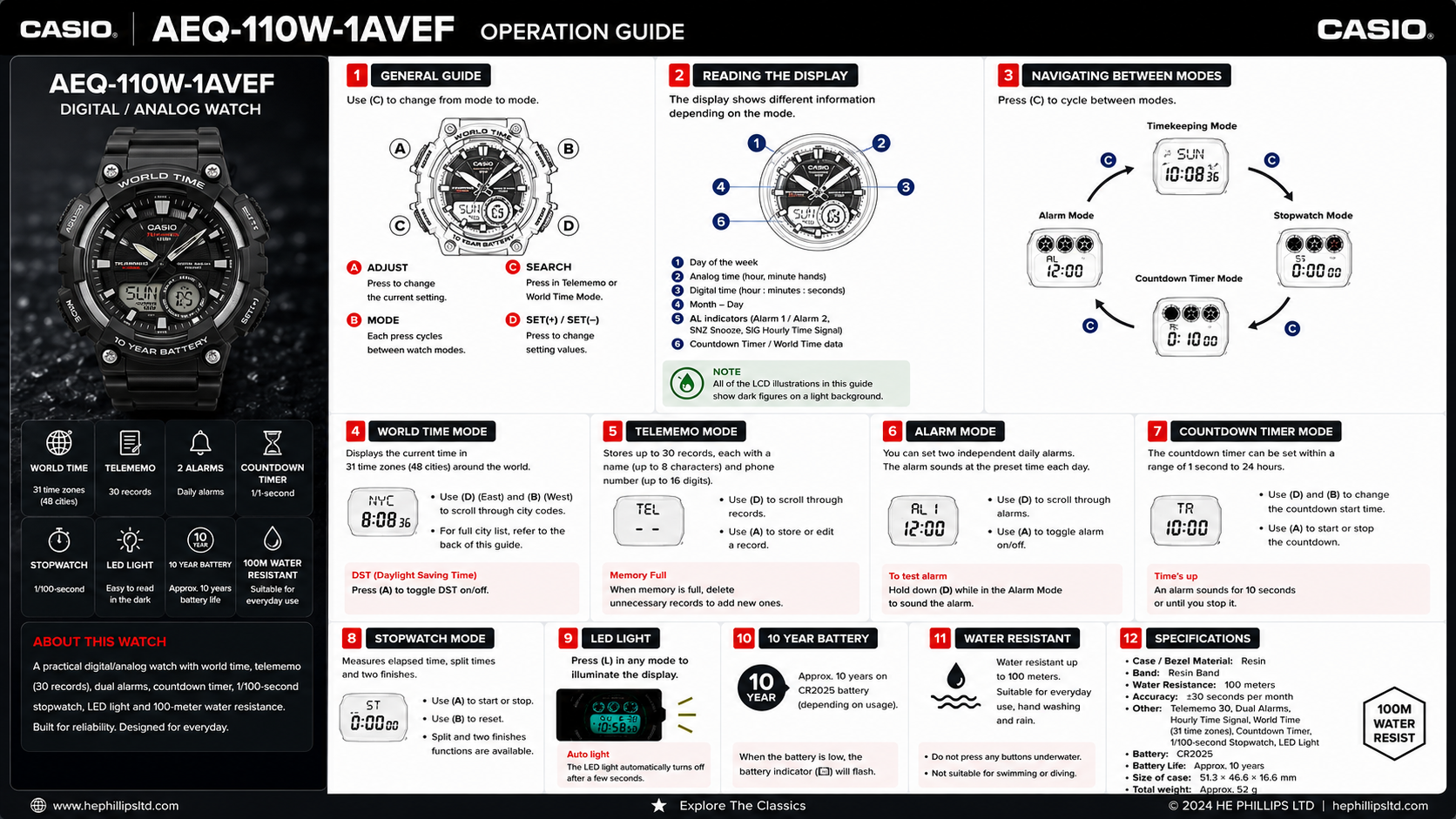
Figure 1.0: Casio AEQ-110W-1AVEF Factory Schematic.
View Official Factory Manual (PDF)
20 Technical FAQs: Engineering & Asset Management
Module Mechanics & Quartz Calibration
1. How does the quartz crystal inside Module 5479 maintain steady timing?
The watch uses a high-purity, synthetic quartz crystal cut in a tuning-fork shape. When voltage is applied from the CR2025 lithium cell, the crystal oscillates at a high frequency of exactly 32,768 Hz. The integrated circuit divides this frequency down to one electrical pulse per second, providing stable timekeeping with a maximum monthly deviation of +/- 30 seconds.
2. What causes the analog hands to synchronize with the digital screen?
The synchronization is managed by the microprocessor in Module 5479. The digital clock acts as the master timekeeper. When adjustments are made in digital mode, the module sends stepped micro-pulses to a dedicated, high-torque stepper motor. This motor moves the physical gear train to align the analog hands with the digital time setting.
3. How does the watch handle home time and world time zones at the same time?
The microprocessor uses dual-channel storage registers to track separate time zone profiles. While the primary analog register drives the physical hands to display your home location, the secondary digital register lets you cycle through 29 time zones across 30 major cities. This allows you to monitor two time zones simultaneously without stopping the main timekeeping loop.
4. Why is the Module 5479 quartz calibration less sensitive to impact than a mechanical watch?
Mechanical movements rely on a delicate balance wheel, hairspring, and pallet jewels that can easily shift out of alignment from physical impacts. The quartz module inside this watch is a solid-state integrated circuit with no heavy moving parts. It is housed within a shock-absorbing resin basket that dampens impacts, protecting the quartz oscillator from external shocks.
Telememo Memory & Data Architecture
5. How does the Telememo 30 function store data without a permanent network connection?
The Telememo 30 feature utilizes an on-chip, non-volatile EEPROM (Electrically Erasable Programmable Read-Only Memory) register within the internal circuit. This memory allocation does not require continuous current to preserve data. Each of the 30 available data slots is split into an 8-character text block and a 16-digit numeric array, allowing secure data storage directly on your wrist.
6. Will stored Telememo contact records be lost during a battery replacement?
No, because the memory relies on non-volatile EEPROM storage. Stored names and phone numbers remain intact within the circuit even when the battery is completely removed. Once a fresh CR2025 lithium cell is installed and the module is reset, all data becomes accessible again without needing re-entry.
7. What is the character architecture for entering strings into memory?
The data interface uses sequential character registers. The user cycles through a pre-programmed alphanumeric index using the side buttons. The character set includes standard uppercase letters (A–Z), numbers (0–9), and basic punctuation marks. This system allows you to store essential contact info or security codes that can be accessed without a smartphone.
8. How does the internal processor sort the 30 contact records?
The module runs an automatic binary sorting routine whenever a new entry is saved. It sorts entries based on the first character's position in the internal character map. If two entries share the same first character, the routine moves to the next character in the string, ensuring quick navigation through the memory slots.
Battery Lifespan & Power Consumption
9. What technical factors allow the CR2025 battery to last for 10 years?
The long battery lifespan is achieved through low-voltage CMOS circuits and pulsed power delivery. The CR2025 lithium cell provides a high capacity of 165 milliampere-hours (mAh) at 3.0 volts. The module conserves power by keeping the LCD segments multiplexed and minimizing the duration of audio alarms and backlight use, ensuring dependable power over a decade.
10. How does temperature affect the stability of the lithium battery cell?
The CR2025 lithium manganese dioxide chemistry is chosen for its stable performance across temperature fluctuations. It operates reliably within a thermal range of -10°C to +60°C. Extreme cold can temporarily slow down chemical activity and lower voltage output, but the watch recovers its standard power capacity once it returns to normal temperature conditions.
11. Why does this hybrid watch use a 3V lithium cell instead of a 1.5V silver oxide cell?
A standard 1.55V silver oxide cell does not provide enough voltage to simultaneously drive the physical stepper motor, execute digital processing routines, and power the high-output audio alarm. The 3.0V lithium chemistry provides the necessary voltage overhead to run all these functions concurrently without dropping below the circuit's minimum power threshold.
12. What indicators suggest the battery is reaching the end of its operational life?
As the battery nears depletion, its internal resistance increases, causing a voltage drop under load. This causes noticeable changes in performance: the liquid crystal display segments may fade when the audio alarm chirps, or the analog hands might lag behind the digital time. If these issues occur, the battery should be replaced to prevent leakage.
Material Longevity & Environmental Resistance
13. What are the material properties of the high-tensile resin casing?
The casing is molded from a specialized poly-carbonate resin compound. This engineered plastic has low density but excellent impact strength and tensile resilience. It resists sweat, body oils, and light household chemicals, acting as a durable protective shield for the delicate internal timing module.
14. Why is resin glass used for the crystal instead of sapphire crystal?
Sapphire crystal offers high scratch resistance but is brittle and can shatter under sharp, direct impacts. Resin glass is flexible and highly shatter-resistant, allowing it to absorb intense shocks without cracking. This makes it an ideal choice for sports and outdoor watches where impact durability is crucial.
15. How does the 316L stainless steel caseback protect against corrosion?
The caseback is made of 316L surgical-grade stainless steel alloyed with molybdenum. This element creates a passive surface layer that protects the steel from pitting and localized corrosion caused by saltwater or perspiration, ensuring the case remains sealed and secure over time.
16. What maintenance keeps the resin strap from cracking over time?
Resin straps can degrade over time due to UV exposure and accumulated sweat, which leach plasticizers from the polymer matrix. To extend its lifespan, rinse the strap with clean fresh water after swimming or heavy exercise. Avoid applying sunscreen, bug sprays, or harsh solvents directly onto the resin surfaces.
Hydrostatic Testing & Workshop Aftercare
17. What does the 10 Bar / 100m water resistance rating mean in practice?
A 10 Bar rating means the watch can withstand a static pressure of 10 atmospheres (equivalent to a 100-meter water column) in a laboratory setting. In real-world conditions, it is fully suitable for surface swimming, snorkeling, and water sports, but it should not be used for deep scuba diving where dynamic pressures exceed its rating.
18. How are the side pusher buttons sealed against moisture ingress?
Each pusher button uses two synthetic nitrile rubber O-ring gaskets inside its shaft. When a button is pressed, these gaskets compress against the inner walls of the resin case to block moisture. To maintain this seal, never press the buttons while the watch is submerged or wet.
19. Why should this watch be kept out of hot tubs and steam showers?
Hot tubs and showers expose the watch to high temperatures and steam. Sudden temperature changes can cause the resin case and metal caseback to expand at different rates, which can temporarily warp the main gasket. Additionally, steam molecules are smaller than water droplets and can slip past seals, leading to internal condensation.
20. What steps are involved in professionally pressure-testing this watch?
Our workshop uses a technical dry-pressure testing chamber. The watch is placed inside, and air pressure is raised to 10 Bar while sensors monitor the case dimensions down to the micrometer. If the case deforms slightly and holds its shape, the seals are intact. If air leaks into the watch, the sensors detect it immediately, signaling that the gaskets need replacement.
© 2026 H.E. Phillips Ltd - Your Official Authorised Fine Horology Specialist. All Technical Data verified for accuracy.
Related Products

Casio G-Shock GA-B2100C-9AER Yellow Bluetooth Tough Solar CasiOak Watch
- Casio G-Shock GA-B2100C-9AER Yellow Bluetooth Tough Solar CasiOak Watch | Technical Analysis | H.E. ..

Casio Baby-G BG-169PB-7ER Pastel White Beach Colors 200m Water Resistant Watch
- Casio Baby-G BG-169PB-7ER Pastel White Beach Colors 200m Water Resistant Watch | Technical Analysis ..

Casio Vintage LA670WEGA-1EF Mini Gold Digital Watch with Black Dial
- Casio Vintage LA670WEGA-1EF Mini Gold Digital Watch with Black Dial | Technical Analysis | H.E. Phil..

Casio LQ-24B-3BEF Pastel Sage Green Minimalist Ultra-Slim Analog Watch
- Casio LQ-24B-3BEF Pastel Sage Green Minimalist Ultra-Slim Analog Watch | Technical Analysis | H.E. P..

Casio G-Shock DW-6900TR-4ER Burning Red Triple Graph Digital Watch
- Casio G-Shock DW-6900TR-4ER Burning Red Triple Graph Digital Watch | Technical Analysis | H.E. Phill..

Casio W-96H-1AVES 10-Year Battery Large Face Digital Sport Watch
- Casio W-96H-1AVES 10-Year Battery Large Face Digital Sport Watch | Technical Analysis | H.E. Phillip..

Casio AQ-S820W-1AVEF Tough Solar Analog-Digital 100m Sport Watch
- Casio AQ-S820W-1AVEF Tough Solar Analog-Digital 100m Sport Watch | Technical Analysis | H.E. Phillip..

Casio LA670WEGA-9EF Vintage Gold Mini Digital Watch (Gold Dial)
- Casio LA670WEGA-9EF Vintage Gold Mini Digital Watch Gold Dial | Technical Analysis | H.E. Phillips L..

Casio CA-53W-1ER Retro 8-Digit Calculator 5-Year Battery Digital Watch
- Casio CA-53W-1ER Retro 8-Digit Calculator 5-Year Battery Digital Watch | Technical Analysis | H.E. P..
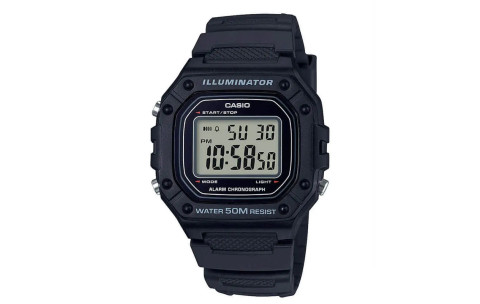
Casio W-218H-1AVEF Rugged Square 7-Year Battery Digital Sport Watch
- Casio W-218H-1AVEF Rugged Square 7-Year Battery Digital Sport Watch | Technical Analysis | H.E. Phil..

Casio Baby-G BG-169PB-4ER Pastel Pink Beach Colors 200m Water Resistant Watch
- Casio Baby-G BG-169PB-4ER Pastel Pink Beach Colors 200m Water Resistant Watch | Technical Analysis |..

Casio MTP-1314PL-7AVEF Classic Bold Analog Leather Strap Watch with Date
- Casio MTP-1314PL-7AVEF Classic Bold Analog Leather Strap Watch with Date | Technical Analysis | H.E...

Casio AQ-S820W-3BVEF Tough Solar 100m Analog-Digital Forest Green Watch
- Casio AQ-S820W-3BVEF Tough Solar 100m Analog-Digital Forest Green Watch | Technical Analysis | H.E. ..

Casio F-91WM-7AEF Retro Metallic Silver 7-Year Battery Watch
- Casio F-91WM-7AEF Retro Metallic Silver 7-Year Battery Watch | Technical Analysis | H.E. Phillips Lt..