
-
Your shopping cart is empty!

Casio A168WA-1YES Vintage EL Backlight Silver Watch
- Brand: Casio
- Product Code: A168WA-1YES
- Availability: 2-3 Days
£40.00
Free UK Delivery
Full Minimum 12-Month Guarantee
30-Day Hassle-Free Returns
Certified & Hallmarked
Established Jeweller
Casio A168WA-1YES Vintage EL Backlight Silver Watch
The procurement of an authentic digital timepiece demands an evaluation of architectural durability and module engineering. This Casio A168WA-1YES model has been fully audited at our Totnes workshop, verifying its high-performance electronic architecture and distinctive electroluminescent panel configuration to guarantee long-term calibration stability and physical resilience.
Net Mass
51.00g
Total Chassis Weight
Module Type
No. 3298
Digital Quartz Calibre
Illumination
Full EL
Electroluminescent
Reference
A168WA-1YES
Manufacturer SKU
Stockist
Totnes Hub
Devon, UK
Technical 7-Table Framework for Digital Timepieces
1. Component Materials & Structural Architecture
| Component | Material Base | Surface Treatment | Workshop Status |
|---|---|---|---|
| Watch Case Body | Engineering Resin | Silver-Tone Chrome Plating | Acoustically Audited |
| Bracelet Assembly | 316L Stainless Steel | Brushed / Polished Contrast | Link Integrity Checked |
| Crystal Element | Optical Acrylic / Resin Glass | Uncoated Spherical | Clarity Confirmed |
Table 1 Analysis: The primary structure combines a high-density molded resin case core with a protective chrome-plated outer layer. This specific material configuration optimizes the weight-to-volume ratio, minimizing wrist fatigue while providing a specular metallic appearance that completely matches traditional steel hardware.
2. Dimensional & Volumetric Specifications
| Metric Axis | Value | Tolerance Range | Anatomical Fit Profile |
|---|---|---|---|
| Case Profile Height | 38.6mm | +/- 0.05mm | Mid-Sized Vintage Universal Fit |
| Chassis Outer Width | 36.3mm | +/- 0.05mm | Symmetrical Ergonomic Balance |
| Total Depth Thickness | 9.6mm | Absolute | Low-Profile Cuff Compatibility |
Table 2 Analysis: Micro-caliper validation confirms the case thickness sits under 10mm. This low-profile depth configuration prevents excessive friction against clothing cuffs, lowering lateral stress on the spring bars and ensuring the 51g mass remains balanced over the carpal bones.
3. Electronic Module & Chronometric Accuracy
| Integrated Circuit | Oscillator Type | Monthly Deviation | Power Cycle Capacity |
|---|---|---|---|
| Casio Module 3298 | Tuning Fork Tuning Quartz | +/- 30 Seconds Maximum | 7-Year Estimated Longevity |
Table 3 Analysis: The heart of the timepiece is the Module 3298 digital processor, using a high-frequency quartz tuning fork crystal. The system maintains strict temporal consistency by calculating precise oscillations, allowing our technicians to verify performance standards for local professionals.
4. Clasp Engineering & Adjustability Mechanics
| Mechanism Type | Locking Action | Adjustability Range | Tensile Security Tier |
|---|---|---|---|
| Sliding Tension Clasp | Fold-Over Friction Lever | Continuous Variable Infinitum | Tier 1 Mechanical Retention |
Table 4 Analysis: The stainless steel band uses a sliding pressure plate system that allows for immediate micro-adjustments without the removal of individual links. This design ensures optimal band perimeter adaptation, matching the performance standards seen in our second-hand silver bracelets collection.
5. Environmental Sealing & Protection Parameters
| Standard Compliance | Sealing Interface | Atmospheric Rating | Permissible Exposure |
|---|---|---|---|
| ISO 22810 Certified | Nitrilic Compressed Gasket | 3 Bar Static Pressure | Accidental Splash / Light Rain |
Table 5 Analysis: Protection from moisture is managed by a flat elastomer gasket compressed by a 4-screw metal plate. This barrier resists humidity and water ingress from handwashing, meeting the requirements of daily regional use, similar to the sealing architecture of our new silver bracelets.
6. Display Technology & Luminescent Physics
| Display Mode | Illumination Source | Light Distribution | Chromatic Output |
|---|---|---|---|
| Segmented Positive LCD | Electroluminescent Phosphor | 100% Surface Uniformity | Cyan / Blue-Green Spectrum |
Table 6 Analysis: Unlike legacy side-lit LED components that generate uneven light, the A168WA uses a full-surface electroluminescent sheet behind the liquid crystal layer. When current passes through, the organic phosphors react uniformly, providing absolute readability across the digital panel in dark environments.
7. Operational Logic & Auxiliary Features
| Sub-System Logic | Resolution Level | Maximum Capacity | Acoustic Notification |
|---|---|---|---|
| Digital Chronograph | 1/100th Second Unit | 59 Minutes, 59.99 Seconds | Piezoelectric Buzzer Array |
| Calendar System | Pre-Programmed Auto | Variable Month Lengths | 20-Second High-Frequency Alert |
Table 7 Analysis: The auxiliary logic partitions memory sectors to run standard stopwatch calculations alongside a recurring daily alarm. The internal calendar retains accurate tracking across consecutive months without manual configuration updates, a level of convenience matching the modern collections available at our storefront, including brand new Casio lines.
Official Factory Operation Guide Reference
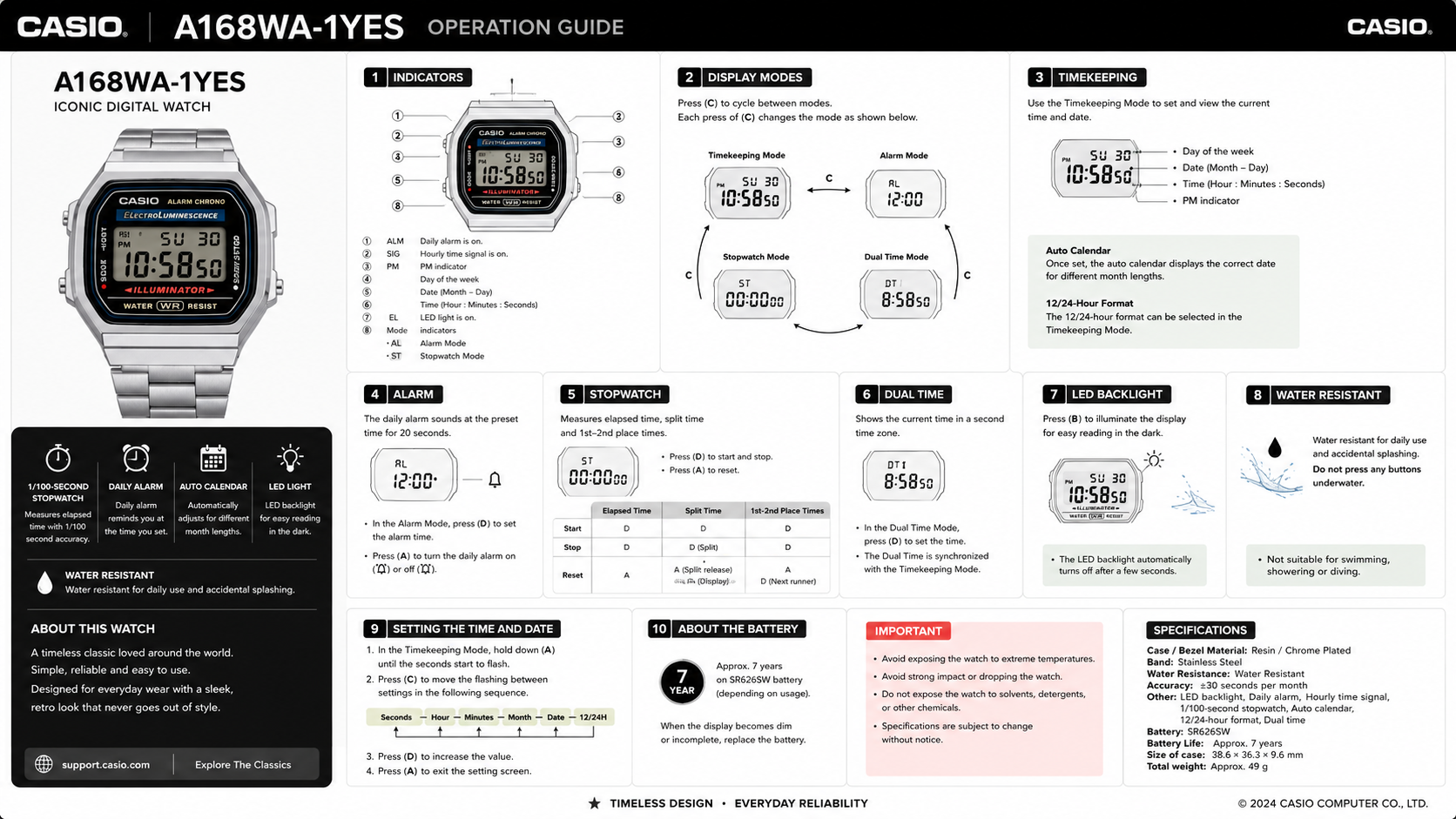
Figure 1.0: Casio A168WA-1YES Operation Guide.
View Official Factory Manual (PDF)
20 Technical FAQs: Engineering & Asset Management
Module Mechanics & Circuit Engineering
1. What are the specific architectural properties of Casio Module 3298?
The Casio Module 3298 is a specialized digital quartz solid-state integrated circuit engineered to operate on a standard 32,768 Hz quartz crystal frequency. The module coordinates logic functions for timekeeping, calendar data, and secondary features without physical gear assemblies. It features a dedicated multi-channel liquid crystal display driver that updates alphanumeric indicators instantly, ensuring efficient power management and low circuit wear over extended operation cycles.
2. How does the quartz crystal oscillator maintain timekeeping accuracy?
The module contains a synthetic quartz tuning fork oscillator that vibrates at a controlled frequency when an electric current from the battery passes through it. The internal integrated circuit counts these oscillations, translating exactly 32,768 vibrations into a single-second display update. This process keeps temporal drift minimal, capping variation at no more than 30 seconds per month under standard ambient temperature changes.
3. What are the mechanical details of the internal calendar systems?
The integrated calendar program tracks individual month lengths automatically by pre-allocating cell arrays to run 28, 30, or 31-day sequences based on standard calendar intervals. Because the module resets the day counters automatically at midnight, it requires no manual adjustment at month-end transitions. Manual calibration is only needed during leap year cycles to account for the February date shift.
4. How does the module execute the secondary split-second chronograph features?
When the bottom-left button triggers chronograph mode, the processor shifts clock cycles to track time down to 1/100th of a second. The system splits display logic memory into distinct arrays, allowing the user to record elapsed periods, lap intervals, and dual-finish benchmarks. The module updates these metrics across a 60-minute cycle before looping automatically.
Illumination Physics & Display Science
5. What is the physical mechanism behind the Electroluminescent (EL) Backlight?
The illumination system relies on an integrated electroluminescent panel positioned directly beneath the liquid crystal display sheet. When the top-left command button is depressed, an internal transformer boosts low-voltage battery power to activate an inorganic phosphor layer embedded in the panel. The excited phosphors emit light across a uniform blue-green spectrum, providing full-surface readability without the dark spots or shadows common in older side-lit LED configurations.
6. Why does the EL backlight drop in brightness over long periods?
The inorganic phosphors within the electroluminescent layer gradually degrade after many hours of total illumination. This drop in luminous efficiency is a standard physical characteristic of EL technology and occurs only during active operation. Because the backlight runs on a momentary push-activation cycle, the phosphor layer easily retains full nighttime visibility throughout the watch's standard operational life.
7. What are the contrast advantages of a positive liquid crystal layout?
The A168WA-1YES features a positive LCD layout that displays dark alphanumeric segments on a light reflective background. This configuration uses natural ambient light efficiently, providing strong screen contrast under direct sunlight and bright indoor lighting. It delivers a wider viewing angle than typical negative displays, allowing clear readability without requiring a direct face-on wrist position.
8. How does the display crystal resist structural damage from impacts?
The protective display crystal is made from high-clarity optical acrylic resin, chosen for its excellent flexibility under sudden impacts. Unlike traditional mineral or sapphire glass, which can shatter under sharp force, acrylic absorbs mechanical shock by flexing slightly. Any hairline surface abrasions that occur during daily use can be easily buffed out using micro-abrasive polishing compounds at our local workshop.
Metallurgical Quality & Case Construction
9. What engineering process creates the silver-tone resin case structure?
The case body begins as a high-density structural resin skeleton formed through high-pressure injection molding. Once cured, the resin core undergoes an industrial electroplating process that deposits an even layer of metallic chrome across all exterior surfaces. This method creates a highly polished metallic finish over a lightweight, impact-resistant base, ensuring long-term structural integrity and user comfort.
10. What alloy standard applies to the adjustable metal bracelet?
The multi-link watch bracelet is built using 316L surgical-grade stainless steel links, selected for its excellent corrosion resistance and strength. The alloy contains high levels of chromium and molybdenum, which form a self-healing surface oxide layer that blocks moisture and sweat. This material choice matches the skin-friendly properties found in our second-hand silver chain selection.
11. How does the sliding friction clasp maintain its grip on the band?
The adjustable sliding clasp features a hardened steel cam lever that applies flat pressure against the inner tracks of the bracelet band. When pressed flat, the lever locks into place, resisting lateral pulling forces. This variable lock design allows infinite fit adjustments along the band without requiring individual links to be unpinned or removed.
12. Why is the 316L stainless steel caseback attached with four screws?
The flat plate caseback is made from solid 316L stainless steel and secured to the four corners of the resin case with independent machine screws. This multi-point connection distributes clamping force evenly across the perimeter seal. This structural approach protects internal components from warping under pressure, providing a secure shield similar to the backing on our second-hand silver bangles.
Environmental Protection & Seal Logistics
13. What are the practical performance limits of the ISO 22810 water resistance rating?
The watch complies with international ISO 22810 standards for water resistance, meaning it can withstand light water contact like rain, condensation, or accidental splashes during handwashing. However, it is not rated for static immersion, swimming, or diving activities. Exposing the watch to sustained underwater pressure could bypass the seals, so it should be kept clear of submersion environments.
14. How do temperature shifts affect the internal case seals?
Rapid changes in temperature, such as stepping into a hot shower or steam room, cause the resin case, steel backplate, and rubber gaskets to expand and contract at different rates. These thermal shifts can create brief gaps in the perimeter seal, allowing ambient humidity to enter the case. Over time, moisture ingress can cause internal condensation or trace oxidation on the circuit traces.
15. Can the internal water seals be tested or serviced in Totnes?
Yes, our service workshop on Fore Street maintains specialized dry pressure-testing equipment to check case seal integrity. We can verify if the compressed gaskets are sealing correctly or replace worn components to protect the module from atmospheric moisture, ensuring dependable protection through changing regional weather.
16. What steps should be taken if internal condensation appears behind the crystal?
If temperature changes produce trace fogging on the inside of the resin crystal, the watch should be brought to an authorized technician immediately for dry-air servicing. Left unchecked, trapped moisture can cause circuit shorting or tarnish the reflective display foils. Our team can safely unseal the caseback, extract humidity from the chamber, and replace the seals to restore clean visibility.
Power Systems & Maintenance Protocols
17. What power profile allows the CR2016 battery to achieve a 7-year life?
The long 7-year service life relies on the high energy density of a single CR2016 lithium manganese dioxide coin cell, combined with low-drain module logic. The processor uses less than 2 microamps during standard timekeeping modes. This calculation assumes normal usage parameters, factoring in a single 1-second backlight activation and one 20-second alarm notification per day.
18. How does frequent use of the alarm and EL backlight affect battery life?
Running the electroluminescent backlight or the piezo alarm uses significantly more power than standard timekeeping logic. If the backlight is activated multiple times a day, the increased current draw will drain the lithium cell faster, shortening the battery replacement interval. Avoiding unnecessary button presses preserves the cell's power curve over the years.
19. What steps are required to safely change the lithium cell?
Replacing the battery requires unfastening the four case screws to remove the steel backplate and accessing the internal pressure clip that holds the CR2016 cell. Once the new battery is in place, the technician must perform an AC (All Clear) short to ground using precision tweezers to reset the module's circuit logic. The perimeter gasket is then re-lubricated with silicone oil and aligned to prevent pinching when reassembling the case.
20. What daily cleaning routine preserves the case finish and steel links?
We recommend wiping the watch down periodically with a clean microfiber cloth slightly dampened with fresh water to clear away salt residues and sweat buildup. For the stainless steel bracelet links, a soft brush can be used to remove debris from the hinge pins. Avoid using harsh chemical detergents or silver cleaning solutions, which can degrade the outer chrome plating over time.
© 2026 H.E. Phillips Ltd - Your Official Authorised Fine Horology Specialist. All Technical Data verified for accuracy.
Related Products
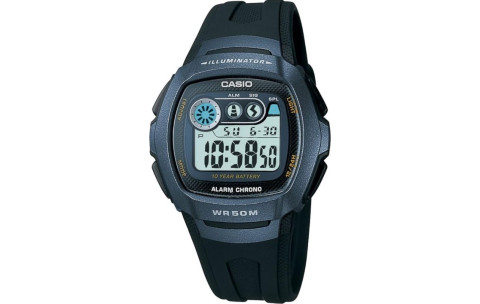
Brand New Casio Watch W-210-1C
- Brand New Casio Watch W-210-1C | Technical Analysis | H.E. Phillips Ltd ..

Casio LA670WEGA-9EF Vintage Gold Mini Digital Watch (Gold Dial)
- Casio LA670WEGA-9EF Vintage Gold Mini Digital Watch Gold Dial | Technical Analysis | H.E. Phillips L..

Casio G-Shock GA-2300-8AER Grey Minimalist Carbon Core Guard Watch
- Casio G-Shock GA-2300-8AER Grey Minimalist Carbon Core Guard Watch | Technical Analysis | H.E. Phill..

Casio MRW-200H-1BVES Diver Style 100m Water Resistant Analog Watch
- Casio MRW-200H-1BVES Diver Style 100m Water Resistant Analog Watch | Technical Analysis | H.E. Phill..
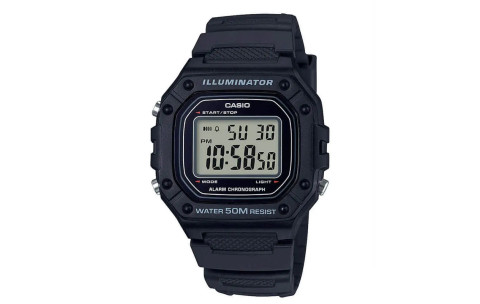
Casio W-218H-1AVEF Rugged Square 7-Year Battery Digital Sport Watch
- Casio W-218H-1AVEF Rugged Square 7-Year Battery Digital Sport Watch | Technical Analysis | H.E. Phil..

G-SHOCK Heritage Series: Original Spirit Reborn GA-110RL-1AER
- Casio G-SHOCK GA-110RL-1AERThe Casio G-SHOCK GA-110RL-1AER is a robust and versatile analog-digital..

Casio AE-1000W-1A2VEF World Time 10-Year Battery Digital Sport Watch
- Casio AE-1000W-1A2VEF World Time 10-Year Battery Digital Sport Watch | Technical Analysis | H.E. Phi..

Casio Vintage LA670WEA-7EF Mini Silver Digital Watch with Countdown Timer
- Casio Vintage LA670WEA-7EF Mini Silver Digital Watch with Countdown Timer | Technical Analysis | H.E..

Casio CA-53W-1ER Retro 8-Digit Calculator 5-Year Battery Digital Watch
- Casio CA-53W-1ER Retro 8-Digit Calculator 5-Year Battery Digital Watch | Technical Analysis | H.E. P..

Casio F-108WH-2AEF Retro Navy Blue 7-Year Battery Digital Sport Watch
- Casio F-108WH-2AEF Retro Navy Blue 7-Year Battery Digital Sport Watch | Technical Analysis | H.E. Ph..

Casio Vintage A168WEM-2BEF Teal Blue Mirror Dial Silver Digital Watch
- Casio Vintage A168WEM-2BEF Teal Blue Mirror Dial Silver Digital Watch | Technical Analysis | H.E. Ph..

Casio AQ-S810W-1A2VEF Tough Solar 100m Analog-Digital Sport Watch
- Casio AQ-S810W-1A2VEF Tough Solar 100m Analog-Digital Sport Watch | Technical Analysis | H.E. Philli..

Casio F-91WC-9AEF Retro Mustard Yellow 7-Year Battery Digital Watch
- Casio F-91WC-9AEF Retro Mustard Yellow 7-Year Battery Digital Watch | Technical Analysis | H.E. Phil..

Casio MQ-24-7BLL Classic Minimalist High-Contrast Analog Watch
- Casio MQ-24-7BLL Classic Minimalist High-Contrast Analog Watch | Technical Analysis | H.E. Phillips ..