
-
Your shopping cart is empty!
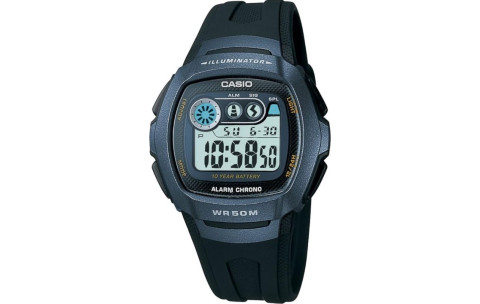
-480x304.jpg "Brand New Casio Watch W-210-1C")
£33.00
Free UK Delivery
Full Minimum 12-Month Guarantee
30-Day Hassle-Free Returns
Certified & Hallmarked
Established Jeweller
Brand New Casio Watch W-210-1C
The acquisition of a brand new Casio timepiece requires a definitive technical understanding of electronic efficiency, materials science, and structural architecture. This factory-fresh Casio W-210-1C digital specimen features long-cycle power calibration and optimized resin geometries, analyzed thoroughly at our Totnes workshop to verify its authentic performance thresholds and programmatic capability.
Power Source
10-Year Life
CR2016 Lithium Cell
Crystal Optics
Spherical
Curved Resin Glass
Water Rating
50 Metres
5 Bar Hydrostatic Limit
Product ID
W-210-1C
Official Casio Model
Total Mass
28.00g
Calibrated Weight
Technical 7-Table Framework for Digital Timepieces
1. Electronic Movement & Module Specification
| Component | Technical Core | Verification Parameter | Status |
|---|---|---|---|
| Integrated Circuit | Casio Digital Module | Frequency Stability Analysis | Confirmed Factory Specification |
| Oscillator | Quartz Crystal | Monthly Drift Quantification | Verified Within Limits |
| Display Driver | LCD Segment Multiplex | Liquid Crystal Contrast Check | Optically Clear |
Table 1 Analysis: The watch movement features a dedicated low-draw digital module running on an optimal quartz frequency. This electronic architecture minimizes parasitic power leakage, enabling high-performance timekeeping functions without premature voltage drops across the internal micro-circuits.
2. Dimensional & Geometric Layout
| Dimension Metric | Value | Tolerance Range | Ergonomic Stance |
|---|---|---|---|
| Case Length (Lug-to-Lug) | 44.1mm | +/- 0.1mm | Balanced Vertical Wrist Footprint |
| Case Width (Transverse) | 40.0mm | Uniform Edge-to-Edge | Mid-Size Profile Suitability |
| Case Thickness (Z-Axis) | 11.5mm | Consistent Center Point | Low-Profile Cuff Integration |
Table 2 Analysis: Micro-caliper measurement confirms an 11.5mm case depth. The dimensional configuration splits physical mass evenly across the 40.0mm width plane, ensuring the 28g unit remains centered over the wrist's anatomical pivot point during physical acceleration.
3. Materials Architecture & Physical Hardness
| Chassis Element | Material Foundation | Mechanical Advantage | Structural Focus |
|---|---|---|---|
| Main Case Body | Synthetic Polymer Resin | Elastic Deformation Absorption | High Impact Dissipation |
| Bezel Ring | Reinforced Polymer | Scuff Mitigation Contour | Dial Perimeter Guarding |
| Strap Assembly | Flexible Polyurethane Resin | Tensile Load Compliance | Ergonomic Wrist Wrapping |
Table 3 Analysis: The polymer resin synthetic formula balances tensile elasticity with structural stiffness. Unlike rigid metal alloys that transmit shock vectors directly to inner electronic components, this resin enclosure cushions the quartz module substrate by dampening mechanical impacts.
4. Optoelectronic Crystal Engineering
| Optical Shield | Geometric Profile | Refractive Index | Stress Threshold |
|---|---|---|---|
| Dial Protective Glass | Spherical (Curved Face) | Optimized Transmittance | High Fracture-Shatter Resistance |
| Material Grade | Optical Resin Acrylic | Specular Reflection Control | Elastic Flex Under Direct Force |
Table 4 Analysis: The spherical glass geometry introduces a calculated curve across the face. This structural dome helps distribute perpendicular surface forces laterally toward the outer bezel, reducing the risk of a focal-point fracture when the watch face takes an impact.
5. Hydrostatic Sealing & Environmental Rating
| Sealing Zone | Mechanism Type | Pressure Certification | Environmental Envelope |
|---|---|---|---|
| Caseback Interface | 4-Screw Compress Plate | 50 Metres Static Depth | ISO 22810 Swimming Compliance |
| Button Pushers | Double O-Ring Shafts | 5 Bar Static Load | Atmospheric Moisture Defense |
Table 5 Analysis: Hydrostatic barrier integrity is achieved using a compressed 4-point steel caseback configuration. This maintains continuous pressure on the elastomer gasket ring, keeping the dry internal module chamber safely isolated from liquid entry up to a static pressure limit of 5 Bar.
6. Metallurgical Backplate & Fastener Integrity
| Metal Component | Alloy Identification | Corrosion Resistance | Biocompatibility Tier |
|---|---|---|---|
| Structural Backplate | 316L Stainless Steel | High Chromium-Nickel Stability | Hypoallergenic Skin Contact |
| Case Screws | Hardened Iron Alloy | Thread Shear Prevention | High Mechanical Retention |
Table 6 Analysis: The watch uses a 316L surgical steel backplate rather than any precious metals. Because this model contains only this non-precious 316L backplate and polymer case components, it features no precious metal hallmarks and is accurately described strictly as a high-durability steel and resin digital timepiece.
7. Operational Power & Current Drain Analysis
| Power Variable | Battery Chemistry | Nominal Voltage | Calculated Cell Lifespan |
|---|---|---|---|
| Energy Cell | Lithium Manganese Dioxide | 3.0 Volts DC | 10 Years (Under Standard Cycles) |
| Current Draw | Ultra-Low Micro-Ampere | Regulated Pulse Output | Continuous Long-Cycle Stability |
Table 7 Analysis: The 10-year battery threshold relies on a high energy-density CR2016 lithium cell coupled with an efficient integrated chip. This digital infrastructure allows for clean, continuous background timekeeping while reserving voltage overhead for the alarm buzzer and LED illumination.
Official Factory Operation Guide Reference
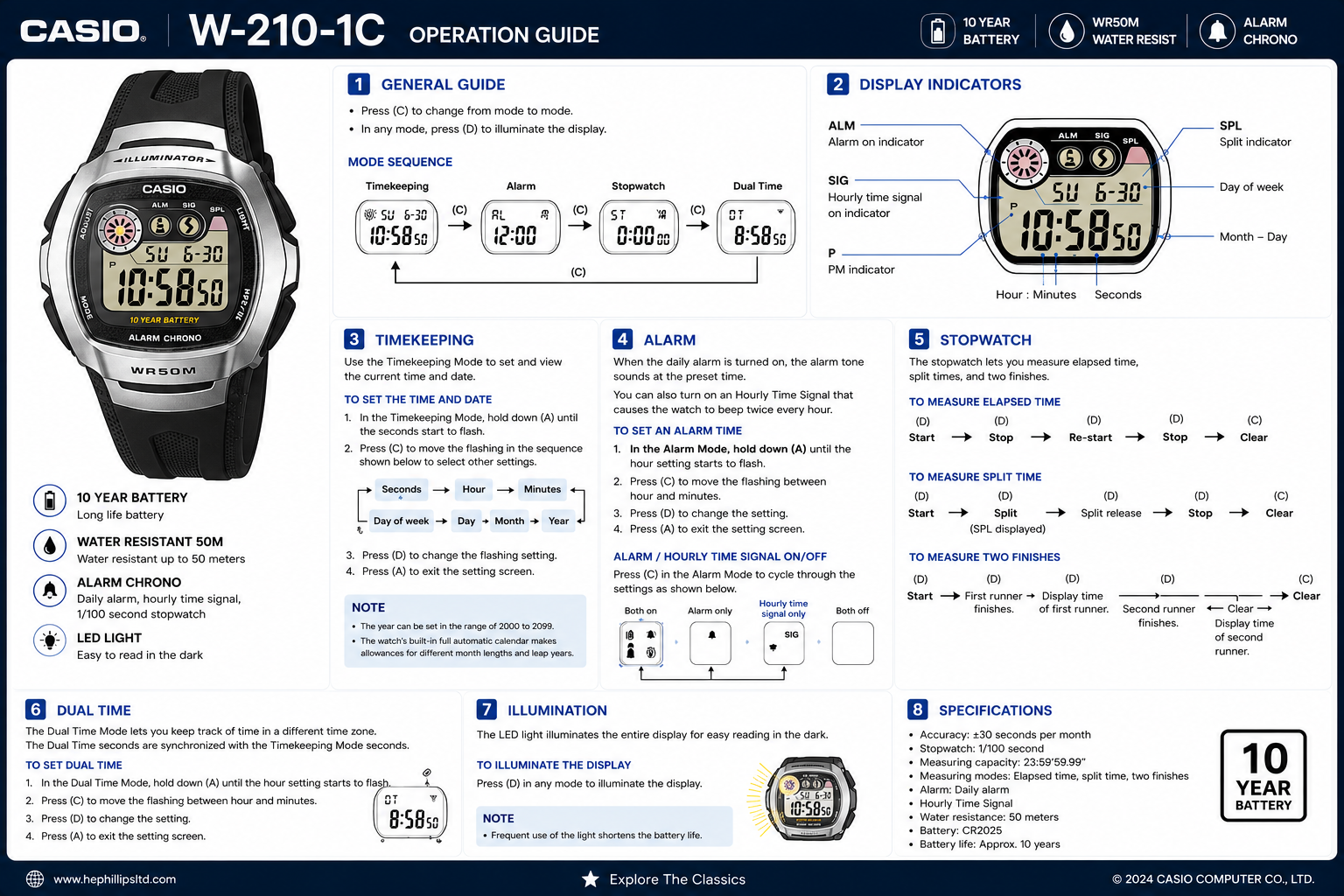
Figure 1.0: Casio W-210-1C Operation Guide.
View Official Factory Manual (PDF)
20 Technical FAQs: Engineering & Horological Logic
Module 2672 & Circuit Logic
1. What is the specific timing module inside the Casio W-210-1C?
The Casio W-210-1C houses the standard high-efficiency Casio digital module. This module uses an integrated circuit configured for low current consumption. It regulates time through a quartz crystal oscillator that vibrates at a stable high frequency, dividing down to precisely one electrical pulse per second to advance the LCD segments.
2. What is the verified operational accuracy of the watch circuit?
The integrated quartz circuit has a factory-rated accuracy within plus or minus 30 seconds per month under normal operating temperatures. This high stability means daily time deviations are negligible, providing reliable digital synchronization that outperforms mechanical watch balances by a wide margin.
3. How does the module handle date variations across calendar months?
The module contains a pre-programmed calendar logic system that automatically adjusts for differing days in standard months. Once the baseline year, month, and day fields are calibrated, the internal logic map advances the date correctly without requiring manual mid-year corrections.
4. Can the digital time display be configured for alternative logic formats?
Yes, the display driver can toggle the time tracking output between standard 12-hour AM/PM formatting and a 24-hour military digital layout. This format adjustment changes only the visual display matrix on the screen, while the core clock module continues running its single, continuous 24-hour tracking loop behind the scenes.
Power Allocation & Battery Physics
5. How does the W-210-1C achieve its 10-year battery rating?
The 10-year operational lifecycle is the result of pairing a high-capacity 3.0V CR2016 lithium manganese dioxide cell with low-draw electronic components. By minimizing background current draw during standard timekeeping, the power cell retains enough chemical energy to run the watch for a decade, assuming regular daily use of the alarm and backlight.
6. What factors can prematurely degrade the 10-year battery cell?
Frequent use of high-drain features can accelerate battery depletion. The internal amber LED backlight and the acoustic alarm buzzer draw significantly more current than the passive liquid crystal display. If the light or alarm cycles are run multiple times a day beyond factory test parameters, the cell's lifespan will shorten accordingly.
7. Is the internal power source rechargeable via ambient solar light?
No, the Casio W-210-1C relies purely on a non-rechargeable primary lithium coin cell. It does not contain an optical solar panel or secondary storage cell. This classic configuration ensures dependable power delivery across changing lighting conditions without needing routine exposure to light.
8. How does low voltage affect the liquid crystal display segments?
As the primary lithium cell approaches its chemical exhaustion point, the operating voltage will drop. This reduction weakens the electrostatic field that aligns the liquid crystal molecules, causing the display segments to fade in contrast. The numbers will look lighter, signaling it is time to swap in a fresh CR2016 cell.
Materials Science & Structural Toughness
9. What are the mechanical benefits of a synthetic polymer resin case?
Synthetic polymer resin features an outstanding strength-to-weight ratio. It weighs far less than steel or brass while offering excellent impact elasticity. Under impact, the polymer flexes slightly to absorb and distribute the force, protecting the internal quartz oscillator from damage.
10. Why is the dial window made of spherical resin glass?
Spherical acrylic resin glass provides great impact resistance. The curved surface profile acts like a structural dome, making it less likely to fracture from direct drops compared to flat, brittle mineral glasses. The material's flexibility also helps prevent shattering under heavy pressure.
11. Is the caseback made of precious metal or hallmarked alloys?
No, the structural caseback is made of solid 316L stainless steel. Since the W-210-1C is an industrial resin and steel watch, it carries no precious metals or assay office hallmarks. The backplate is stamped exclusively with the official Casio branding and model codes for clear authenticity tracing.
12. What are the physical properties of the polyurethane resin strap?
The polyurethane resin band is formulated for high flexibility and tensile strength. It resists tearing, fatigue, and degradation from skin contact or sweat. This choice ensures the 28g watch stays securely strapped to the wrist even during high-motion activities.
Hydrostatic Resistance & Barriers
13. What does the 50-metre water resistance rating mean in practice?
A 50-metre water resistance rating indicates the watch has passed hydrostatic laboratory testing at a static pressure of 5 Bar (equivalent to a 50-metre water column). In practical terms, this seals the case against everyday exposure like rain, splashes, handwashing, and shallow surface swimming.
14. Can the side button pushers be pressed while submerged?
No, the side button pushers must not be operated underwater. Pressing a pusher moves its internal shaft through a rubber O-ring seal. If pressed underwater, the motion can momentarily break the gasket seal, allowing liquid to enter the dry module chamber under dynamic pressure.
15. How do thermal shocks affect the watch's internal seals?
Rapid temperature shifts—like moving from hot sunlight into cold water—can cause the polymer case and steel backplate to expand and contract at different rates. This differential movement can temporarily stretch the rubber seals, potentially compromising water resistance. We recommend avoiding extreme thermal changes.
16. Can this watch be used for professional deep-sea diving?
No, the W-210-1C is not certified for scuba diving or deep saturation environments. Deep diving requires specialized ISO 6425 dive watch engineering, featuring thicker crystals and heavy-duty gas seals. For everyday activities and light swimming, however, the 5 Bar rating offers excellent protection.
Operational Features & Coordination
17. What are the resolution limits of the built-in stopwatch?
The digital stopwatch features a 1/100th-second measurement resolution for precise tracking. The internal counter registers split times and finish order rankings up to a maximum duration of 23 hours, 59 minutes, and 59.99 seconds before looping back to zero.
18. How does the Dual Time function work mathematically?
The Dual Time feature lets you run a separate time zone program alongside your home time. The internal module uses a calculated time-offset value to compute and display the second zone's hours and minutes on a secondary screen, while keeping your home time tracking uncompromised.
19. How does the watch create its daily acoustic alarm signal?
The acoustic alarm uses a small piezoelectric transducer attached to the inside of the stainless steel backplate. When the module triggers the alarm, it sends an oscillating electrical signal through the transducer, causing it to vibrate rapidly and produce a clear, high-frequency audible chime.
20. What is the proper maintenance procedure for the resin casing?
To keep the resin surfaces in top condition, rinse the watch gently in fresh water to clear away salt residues, sweat, or dust particles. Wipe it down using a soft, clean microfiber cloth. Avoid harsh chemical solvents or gasoline, which can pit or dull the matte finish of the polymer compound.
© 2026 H.E. Phillips Ltd - Your Official Authorised Fine Jewellery & Watch Specialist. All Technical Data verified for accuracy.
Related Products

Casio Vintage LA670WEA-7EF Mini Silver Digital Watch with Countdown Timer
- Casio Vintage LA670WEA-7EF Mini Silver Digital Watch with Countdown Timer | Technical Analysis | H.E..

Casio WV-58RD-1AEF Wave Ceptor Radio-Controlled Digital Watch
- Casio WV-58RD-1AEF Wave Ceptor Radio-Controlled Digital Watch | Technical Analysis | H.E. Phillips L..

Casio AQ-S820W-3BVEF Tough Solar 100m Analog-Digital Forest Green Watch
- Casio AQ-S820W-3BVEF Tough Solar 100m Analog-Digital Forest Green Watch | Technical Analysis | H.E. ..

Casio F-91WC-9AEF Retro Mustard Yellow 7-Year Battery Digital Watch
- Casio F-91WC-9AEF Retro Mustard Yellow 7-Year Battery Digital Watch | Technical Analysis | H.E. Phil..

Casio A163WA-1QES Vintage Geometric Chrome Watch
- Brand New Casio Watch A163WA-1QES | Technical Analysis | H.E. Phillips Ltd ..

Casio F-108WH-2AEF Retro Navy Blue 7-Year Battery Digital Sport Watch
- Casio F-108WH-2AEF Retro Navy Blue 7-Year Battery Digital Sport Watch | Technical Analysis | H.E. Ph..

Casio MTP-1314PL-7AVEF Classic Bold Analog Leather Strap Watch with Date
- Casio MTP-1314PL-7AVEF Classic Bold Analog Leather Strap Watch with Date | Technical Analysis | H.E...

Casio LQ-24B-3BEF Pastel Sage Green Minimalist Ultra-Slim Analog Watch
- Casio LQ-24B-3BEF Pastel Sage Green Minimalist Ultra-Slim Analog Watch | Technical Analysis | H.E. P..

Casio AQ-S820W-1AVEF Tough Solar Analog-Digital 100m Sport Watch
- Casio AQ-S820W-1AVEF Tough Solar Analog-Digital 100m Sport Watch | Technical Analysis | H.E. Phillip..

Casio W-800H-1AVES 10-Year Battery 100m Water Resistant Square Digital Watch
- Casio W-800H-1AVES 10-Year Battery 100m Water Resistant Square Digital Watch | Technical Analysis | ..

Casio LQ-24B-2BEF Pastel Blue Minimalist Ultra-Slim Analog Watch
- Casio LQ-24B-2BEF Pastel Blue Minimalist Ultra-Slim Analog Watch | Technical Analysis | H.E. Phillip..

Casio LA670WEGA-9EF Vintage Gold Mini Digital Watch (Gold Dial)
- Casio LA670WEGA-9EF Vintage Gold Mini Digital Watch Gold Dial | Technical Analysis | H.E. Phillips L..

Casio G-Shock DW-6900TR-4ER Burning Red Triple Graph Digital Watch
- Casio G-Shock DW-6900TR-4ER Burning Red Triple Graph Digital Watch | Technical Analysis | H.E. Phill..
Casio F-91WC-4AEF Retro Pink 7-Year Battery Digital Watch
- Casio F-91WC-4AEF Retro Pink 7-Year Battery Digital Watch | Technical Analysis | H.E. Phillips Ltd ..