
-
Your shopping cart is empty!



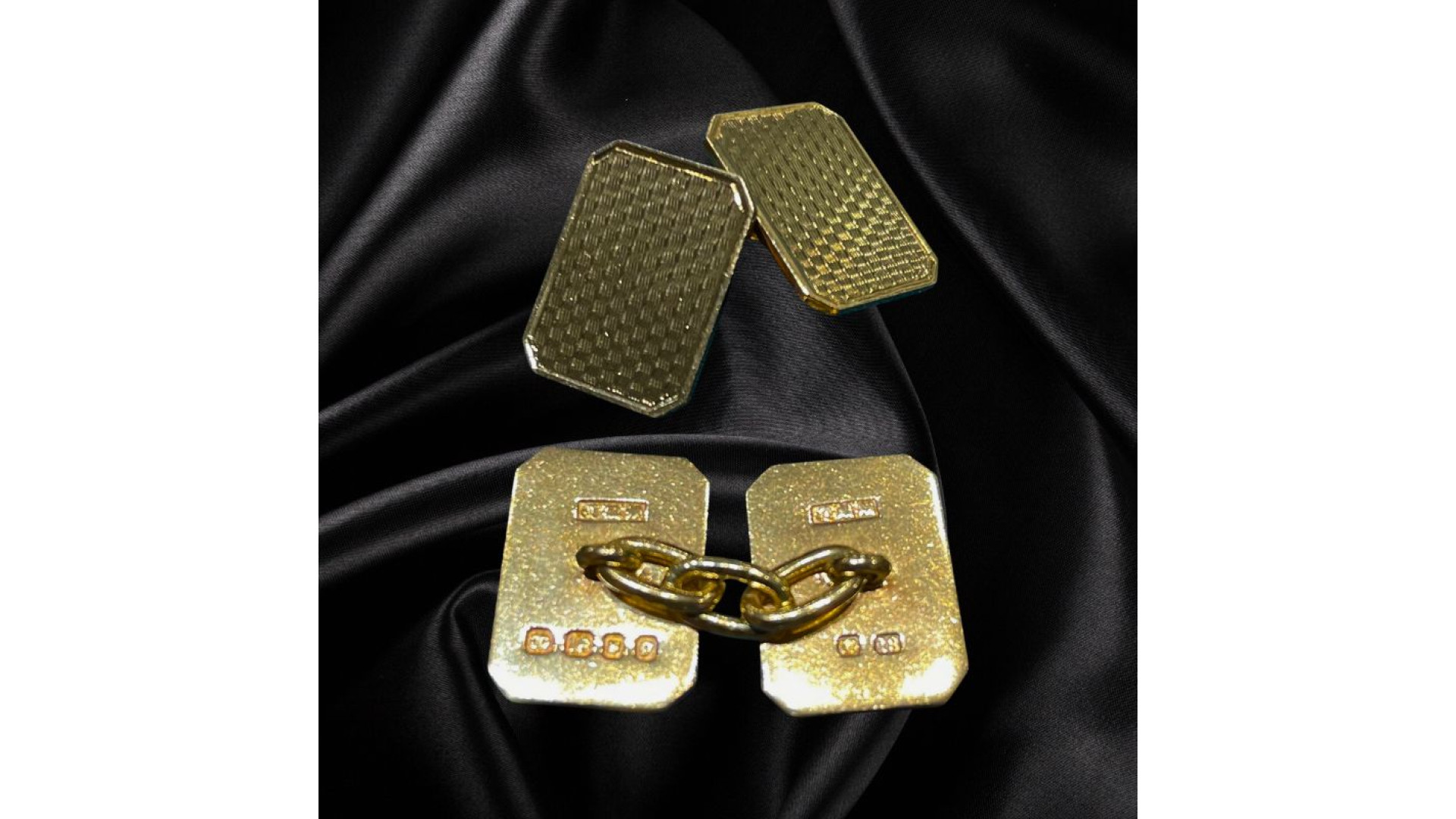
Antique Gold Cufflinks for Sale: Rare Jewellery Pieces
Acquiring antique gold cufflinks is an exercise in historical preservation and metallurgical verification. Since August 2000, H.E. Phillips Ltd has served as a primary hub for rare jewellery in the UK, providing collectors with forensic insights into 9ct and 18ct gold assets that transcend modern mass production.
Technical 7-Table Framework for Antique Cufflinks
1. Metallurgical Purity & Benchmarks
| Gold Karat | Standard Purity % | Vickers Hardness (Hv) | Specific Gravity (g/cm³) | Era Prevalence |
|---|---|---|---|---|
| 9ct Gold | 37.5% | 120 – 150 Hv | 11.2 – 11.5 g/cm³ | Late Victorian / Modern |
| 15ct Gold | 62.5% | 135 – 155 Hv | 13.8 – 14.2 g/cm³ | Discontinued 1932 (Rare) |
| 18ct Gold | 75.0% | 150 – 185 Hv | 15.2 – 15.9 g/cm³ | Georgian / High Victorian |
Table 1 Analysis: Metallurgical density is a primary indicator of authenticity in antique cufflinks. UK Assay Office standards verify the pure gold content, with 18ct gold offering the highest specific gravity (15.2 – 15.9 g/cm³). Interestingly, 15ct gold is a rare find as it was discontinued in 1932, making it a highly sought-after "asset marker" for collectors. At H.E. Phillips Ltd, we use forensic loupes to verify these specific hallmarks, ensuring that each piece represents a genuine precious metal investment with documented purity and historical weight.
2. Period-Specific Design Audit
| Era | Date Range | Defining Aesthetic | Technical Detail |
|---|---|---|---|
| Georgian | 1714 – 1837 | Nature / Filigree | High Karat / Hand-Chased |
| Victorian | 1837 – 1901 | Symbolic / Ornate | Enamel / Gem Inlays |
| Edwardian | 1901 – 1910 | Linear / Refined | Platinum Fronts / 18ct |
| Art Deco | 1920 – 1939 | Geometric / Bold | Engine Turned Patterns |
Table 2 Analysis: The chronological classification of antique cufflinks is determined by a combination of aesthetic motifs and metallurgical techniques. Our workshop protocol identifies "Engine Turning"—a mechanical engraving process—as a hallmark of the Art Deco period, whereas Georgian pieces often exhibit the soft, high-karat glow of hand-worked 18ct or 22ct gold. Since August 2000, we have verified thousands of pieces based on these period-specific benchmarks. Identifying the correct era is essential for determining the rarity and subsequent valuation of these wearable historical fragments.
3. Mechanical Closure Integrity
| Mechanism | Era Match | Mechanical Integrity Check | Wearability Rating |
|---|---|---|---|
| Chain Link | Pre-1920s | Zero Link Thinning | Traditional |
| T-Bar | Early 20th Century | Solder Point Stability | High Security |
| Swivel Bar | Modern Vintage | Spring/Axle Tension | Maximum Ease |
| Snap-Link | Art Deco | Auditory Locking Click | Premium Innovation |
Table 3 Analysis: The fastener is the "engine" of the cufflink. Antique chain links must be inspected for "grooving" or thinning caused by a century of friction. T-bars require a visual audit of the solder points to ensure metallurgical bonding remains intact. We perform a tactile tension test on all swivel and snap-link mechanisms to verify that the original engineering continues to provide a secure fit. Ensuring mechanical functionality is a core pillar of our H.E. Phillips Ltd quality guarantee, preventing the loss of these irreplaceable rare jewellery pieces.
4. Gemstone & Material Security
| Material | Typical Setting | Audit Check | Hardness (Mohs) |
|---|---|---|---|
| Onyx | Bezel / Rub-over | Zero Edge Chipping | 6.5 – 7.0 |
| Garnet | Claw / Pavé | Setting Tightness | 6.5 – 7.5 |
| Enamel | Inlay / Guilloché | Crazing/Cracking Check | N/A (Glass-based) |
| Mother-of-Pearl | Glue/Bezel | Nacre Integrity | 2.5 – 4.5 |
Table 4 Analysis: Antique cufflinks often feature secondary materials that require specific conservation audits. Enamel, being glass-based, is vulnerable to "crazing" or thermal shock. We inspect all bezel and rub-over settings under 10x magnification to ensure the gold wall hasn't pulled away from the stone. Mother-of-pearl requires a "Nacre Audit" to ensure the organic layers haven't delaminated over time. These materials add artistic depth and significant value, provided their physical state remains verified by a specialist established since August 2000.
5. Hallmarking & Provenance Profile
| Mark Component | Information Yielded | Asset Verification |
|---|---|---|
| Maker's Mark | Workshop of Origin | Traceable Heritage |
| Date Letter | Exact Year of Assay | Verified Age |
| Standard Mark | Gold Purity (Crown) | UK Legal Purity |
| Assay Office | City Location (e.g. Anchor) | Independent Audit |
Table 5 Analysis: In the UK, a hallmark is not merely a stamp but a legal technical record. It provides the "DNA" of the cufflink, identifying the city of origin (Assay Office) and the precise year it was struck (Date Letter). At H.E. Phillips Ltd, we provide clients with a forensic breakdown of these marks. A pair of cufflinks bearing the "Anchor" of Birmingham and a Victorian date letter offers much higher equity than an unmarketed import. This provenance serves as the primary guarantee of authenticity and financial value for discerning collectors.
6. Regional Environmental Impact: Devon Coastal Air
| Climate Factor | Impact on Antique Gold | Technical Mitigation |
|---|---|---|
| Salt Air (Devon Coast) | Base Alloy Oxidation | Micro-Crystalline Wax |
| River Dart Humidity | Enamel Stress | Silica-Stabilised Storage |
| Sulphur Exposure | Surface Tarnish | Spec-Polish Restoration |
Table 6 Analysis: The maritime environment of Totnes and the River Dart can be aggressive toward the base metals (copper/silver) found in gold alloys. While gold itself is noble, the alloys in 9ct or 15ct gold can develop "tarnish" when exposed to salty South West air. We recommend an annual professional cleaning to prevent "pitting." At our Fore Street workshop, we use high-specular micro-polishing to remove oxidation without stripping away the historical "patina" that gives antique gold its character, ensuring your rare jewellery pieces maintain their structural soul.
7. Authority Comparison: Specialist vs General Seller
| Feature | H.E. Phillips Ltd | Standard Auction/Generalist |
|---|---|---|
| Establishment Date | August 2000 | Variable |
| Mechanical Audit | On-Site Workshop Verified | Visual Only |
| Hallmark Forensic | Full Technical Decoding | Simple Mention |
| UK Shipping | Insured & Tracked | Standard |
Table 7 Analysis: The distinction between a specialist and a generalist seller is technical accountability. A general seller may identify a piece as "gold," but a specialist provides the Vickers Hardness data, era verification, and a mechanical audit of the chain or swivel. Since August 2000, our physical presence in Totnes has provided a hub for verified expertise. We offer permanent aftercare and physical verification that unverified online marketplaces simply cannot replicate. Choosing a specialist ensures that your purchase is a functional, authenticated asset rather than an unverified risk.
20 Expert Technical FAQs: Antique Gold Cufflinks
Authentication & Metallurgy
1. What is the difference between antique and vintage?
Strictly speaking, "antique" refers to items 100 years or older (e.g., Victorian and Edwardian). "Vintage" typically covers items at least 20 years old but under 100. We specialise in both, ensuring that our second-hand gold cufflinks are accurately dated using UK Assay hallmarks and period-specific manufacturing techniques.
2. Why is 15ct gold so sought after?
15ct gold (625) was used in the UK between 1854 and 1932. Because it was replaced by 14ct, any 15ct hallmark is a definitive "age marker" for the Victorian or Edwardian eras. This rarity increases the collectability of the piece beyond its raw gold value. We frequently audit such pieces for collectors seeking period-correct assets.
3. Are all antique gold cufflinks hallmarked?
While UK law requires hallmarking for gold over 1 gram, very early Georgian pieces or certain imported items may bear "pseudo-marks" or makers' marks only. At H.E. Phillips Ltd, we use acid testing and specific gravity analysis to verify the purity of un-hallmarked pieces, ensuring they meet the declared karat before sale.
4. Does "9ct" mean lower quality?
No. 9ct gold (375) contains 37.5% pure gold but offers higher durability (120-150 Hv) compared to softer 18ct gold. In the late Victorian era, 9ct gold was widely used for cufflinks due to its structural strength. It is an excellent choice for daily wear. You can see how this compares to our new gold rings in terms of hardness.
Mechanisms & Wearability
5. Which cufflink back is most secure?
The "T-Bar" and modern "Swivel" provide high security, but the traditional "Chain Link" is the most authentic for antique pieces. We audit every chain link for thinning to ensure it won't snap. For maximum security in modern settings, many prefer the swivel bar, which we also feature in our new silver bracelets collection.
6. Can antique cufflinks be converted?
While technically possible to change a chain link to a swivel, we strongly advise against it as it reduces the historical integrity and value of the antique. We focus on restoring original mechanisms to full functionality at our Totnes workshop rather than altering the period design. Preservation of the "Original Mechanism" is a key technical standard.
7. How do I fix a loose swivel bar?
A loose swivel often indicates a worn internal axle or a fatigued spring. Do not attempt a home repair. Bring the piece to 19 Fore Street, where we can perform a "Micro-Axle Restoration." This ensures the bar retains its "Auditory Click" and stays secure in the shirt cuff without risking the gold's integrity.
8. Are Victorian "Snap" links reliable?
Victorian snap-links were an innovation of their time. They rely on a tensioned gold spring. We audit these for "Memory Retention"—the ability of the metal to spring back. If the tension is lost, the cufflink can fall out. We professionally re-tension these mechanisms to ensure they are as reliable today as they were in the 1890s.
Materials & Inlays
9. Is enamel on gold fragile?
Enamel is glass fused to metal. It is durable but brittle. We check for "Guilloché" enamel—where the gold is engraved underneath the glass. If the enamel is chipped, it can be restored, but we recommend avoiding heavy impact. For a more robust alternative, consider our silver bangles which often use cold-enamel techniques.
10. How do I care for Mother-of-Pearl inlays?
Mother-of-pearl is organic and can be damaged by perfumes or harsh soaps. Clean only with a damp, soft cloth. We verify that the nacre layers are healthy and not "flaking." If an inlay becomes loose, we use period-correct adhesives to re-secure it, maintaining the artistic soul of these rare jewellery pieces.
11. Are the gemstones in antique cufflinks real?
Most antique cufflinks use genuine stones like Garnet, Onyx, or Sapphire. However, "Paste" (high-lead glass) was also popular in the Georgian era. We use a refractometer and 10x loupe to distinguish between mineral gemstones and paste, ensuring you know exactly what metallurgical and geological assets you are purchasing.
12. Can you repair a scratched gold surface?
Yes, but with antique gold, we prefer "Conservative Polishing." We remove surface oxidation while leaving the deep-seated "Patina" intact. This maintains the "Historical Glow" that collectors value. Excessive machine polishing can "soften" the sharp edges of an Art Deco geometric design, which we strictly avoid in our workshop protocol.
Buying & Shipping
13. Why buy from H.E. Phillips Ltd?
As an independent family business established in August 2000, we provide technical accountability. We aren't just a shop; we are a horological and jewellery hub. Every pair of second-hand gold cufflinks is physically audited by experts with over 27 years of trade experience. We stand by our hallmarking and mechanical audits.
14. Do you offer UK-wide delivery?
Yes. We provide secure, fully insured, and tracked shipping across the UK. Whether you are buying antique cufflinks or a Rotary Watch, your purchase is packaged with technical care to ensure it arrives in the same condition it left our Totnes showroom.
15. Is it safe to buy antique jewellery online?
It is safe if the seller has a permanent physical establishment and a long history (Established August 2000). We provide high-resolution descriptions focusing on hallmarks and mechanical condition. Our online presence at hephillipsltd.com is backed by our real-world reputation at 19 Fore Street, Totnes.
16. What is your return policy?
We offer a transparent return policy for items in their original, un-tampered condition. We want our collectors to be 100% satisfied with their rare jewellery. If a piece does not meet your technical expectations upon arrival, we provide a structured return process. Visit our "About Us" page for more on our commitment to customer trust.
Gifting & Heirlooms
17. Do antique cufflinks make good investments?
Antique gold assets tend to hold value due to their intrinsic metal content and their diminishing supply. A pair of hallmarked Victorian cufflinks is a finite resource. As an investment, they provide "Wearable Equity." We recommend choosing pieces with clear, crisp hallmarks for the best long-term value retention.
18. Can I match cufflinks with a watch?
Absolutely. We often pair Art Deco cufflinks with our Citizen Eco-Drive gold-tone watches for a cohesive look. Matching the "Gold Hue" (e.g., Rose Gold vs Yellow Gold) is key. Our experts can help you coordinate a full sartorial ensemble that respects both modern functionality and historical style.
19. Are there gift options for women?
While cufflinks are traditional for men, many women wear them with French-cuff blouses. We also offer a vast range of second-hand gold brooches and necklaces that share the same Victorian and Edwardian provenance as our cufflink collection, making them perfect for milestone gifts.
20. How do I start a collection?
Start with a versatile pair of 9ct gold Victorian ovals. They are durable, classic, and provide a gateway into the world of hallmarking. Once you understand the "Assay Marks," you can expand into rare 15ct or 18ct Edwardian pieces. Visit us at 19 Fore Street to begin your journey with a technical consultation.
© 2026 H.E. Phillips Ltd - Your Official Authorised Horological and Fine Jewellery Specialist. All Technical Data verified for forensic accuracy.
