
-
Your shopping cart is empty!



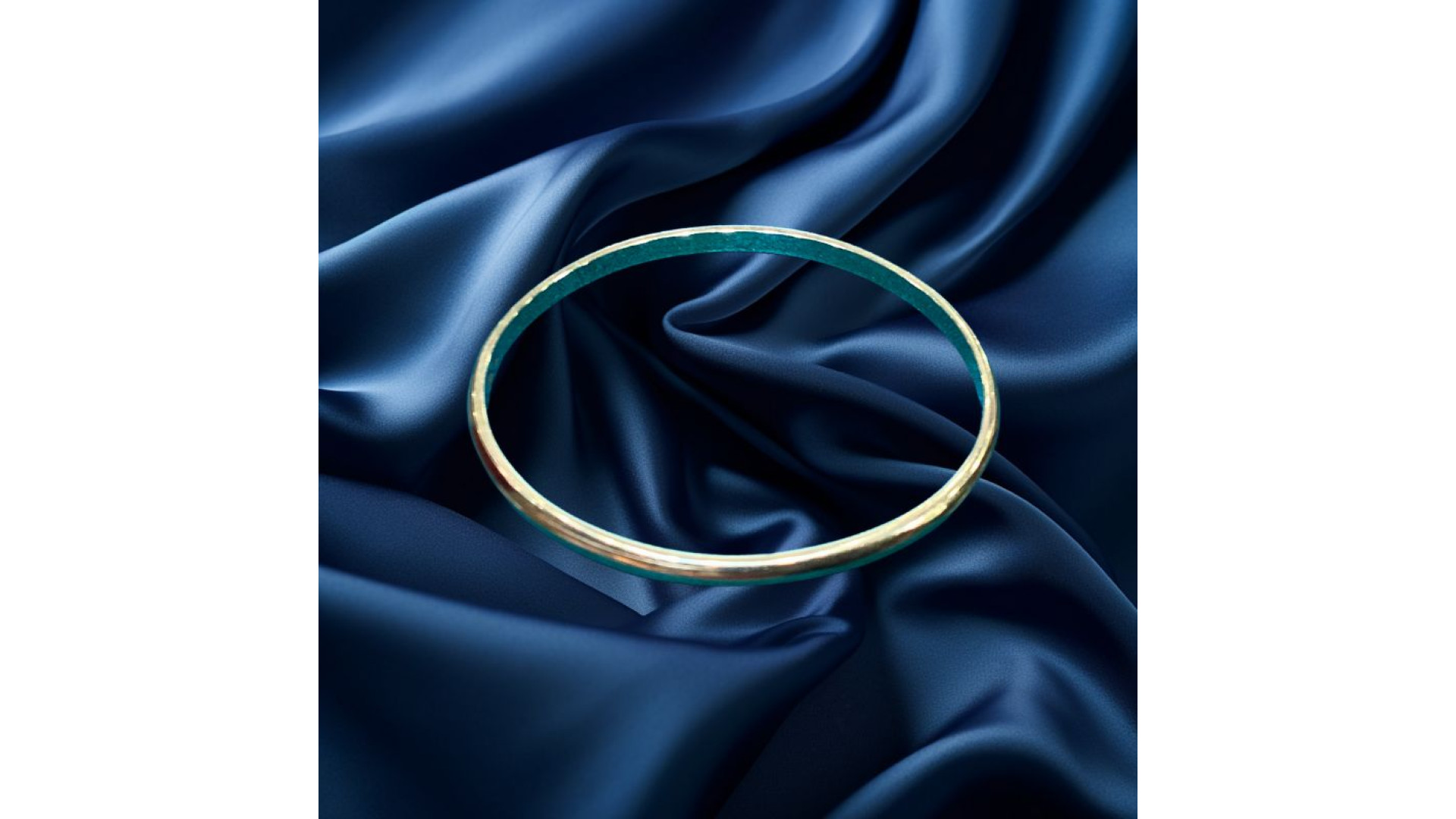
How to Choose a Gold Bangle as a Gifting Idea from H.E. Phillips Totnes
Selecting a gold bangle as a gift requires a precise understanding of metallurgical standards, structural design, and wearer ergonomics. Since August 2000, H.E. Phillips Ltd in Totnes has provided technical guidance to ensure that every chosen piece offers verified material value and functional reliability for the recipient.
Technical 7-Table Framework for Bangle Selection
1. Metallurgical Purity & Vickers Hardness
| Gold Karat (ct) | Pure Gold % | Vickers Hardness (Hv) | Specific Gravity (g/cm³) | Technical Performance |
|---|---|---|---|---|
| 9ct Gold | 37.5% | 120 – 150 Hv | 11.2 – 11.6 g/cm³ | Maximum Durability for Daily Wear |
| 14ct Gold | 58.5% | 135 – 165 Hv | 13.1 – 13.8 g/cm³ | Enhanced Lustre with Structural Strength |
| 18ct Gold | 75.0% | 150 – 185 Hv | 15.2 – 16.0 g/cm³ | High Material Value & Rich Tone |
Table 1 Analysis: The Vickers Hardness (Hv) of a gold bangle determines its resistance to surface deformation and scratches. While 18ct gold provides the highest intrinsic material value and specific gravity, 9ct gold is factually harder due to its higher base metal alloy content, making it an authoritative choice for active recipients. At H.E. Phillips Ltd, we audit every bangle against UK hallmarking standards to ensure purity is verified. Understanding these metallurgical benchmarks allows a gift-giver to balance the prestige of high-karat gold with the practicalities of long-term functional reliability.
2. Structural Integrity Audit: Solid vs Hollow
| Construction Type | Impact Resistance | Repairability Grade | Workshop Insight |
|---|---|---|---|
| Solid Cast | Maximum | Excellent | Highly resistant to denting and bending |
| Solid Wrought | High | Good | Offers superior tensile strength |
| Hollow Tube | Low | Difficult | Prone to non-reversible impact damage |
Table 2 Analysis: For a gift intended for lifelong wear, solid construction is the technical recommendation. Hollow bangles, while providing a larger visual profile at a lower cost, possess low resistance to impact, and once dented, they cannot easily be restored to their original form. Our workshop protocol prioritises solid pieces to ensure structural permanence. When gifting, the weight of the piece (Specific Gravity) is a key indicator of its density and longevity. H.E. Phillips Ltd meticulously inspects the wall thickness of all items to guarantee they meet our standards for functional reliability.
3. Mechanical Closure & Safety Audit
| Closure Mechanism | Security Rating | Wearer Ease | Maintenance Requirement |
|---|---|---|---|
| Slip-on (Closed) | Maximum | Moderate | Requires precise hand-to-wrist sizing |
| Hinged with Safety Catch | High | Maximum | Annual hinge and tension audit |
| Open Cuff | Medium | Maximum | Must resist repeated metal fatigue |
Table 3 Analysis: Mechanical failure is the leading cause of lost bangles. Our "H.E. Phillips Visual Inspection Protocol" focuses heavily on the hinge and clasp tension of a bangle. A hinged bangle must provide a clear "auditory click" upon closing, and for high-value items, a figure-eight safety catch is recommended. Slip-on bangles offer the highest security as they have no moving parts to fail, but they require accurate sizing to ensure they pass over the hand while remaining comfortable on the wrist. We audit all mechanical fastenings to ensure they provide verifiable security.
4. Regional Environmental Care: South West Maritime
| Environmental Factor | Impact on Alloys | Regional Solution |
|---|---|---|
| Salt Air (Coastal Devon) | Surface Oxidation | Spec-Polish Micro-Barrier |
| River Dart Humidity | Tarnish of Base Metals | Airtight Storage Protocol |
| Thermal Expansion | Spring Fatigue | Annual Ultrasonic Clean |
Table 4 Analysis: The maritime environment of Totnes and the surrounding South West coast introduces salt-laden air, which can accelerate the dulling of gold alloys, particularly those with higher copper content (9ct and Rose Gold). We provide a specific "Maritime Care Protocol" for our local clients, recommending regular fresh-water rinsing to remove abrasive salt crystals and professional polishing to maintain surface integrity. This technical approach prevents the pitting and tarnish associated with Devon's unique climate, ensuring the gift retains its aesthetic quality assurance for decades.
5. Gemstone Setting Security Matrix
| Setting Style | Security Rating | Snag Risk | Technical Audit Point |
|---|---|---|---|
| Bezel / Rub-over | Maximum | Zero | Continuous metal wall integrity |
| Channel Set | High | Low | Alignment of girdle and seat |
| Prong / Claw | Medium-High | Moderate | Tip thickness and stone seat depth |
Table 5 Analysis: When choosing a gold bangle featuring stones such as Garnet or Emerald, the mounting style is a critical factor in functional reliability. Bezel settings provide a protective gold rim around the stone, making it the most secure choice for daily wear. Prongs, while allowing more light to enter the stone, are prone to snagging on clothing, which can lead to stone loss. Our forensic assessment involves a 10x magnification check of every setting to ensure the stones are seated without "rattle" and that the metal surrounds are structurally sound.
6. Hallmarking & Provenance Benchmarks
| Mark Component | Information Provided | Legal Standard |
|---|---|---|
| Sponsor/Maker's Mark | Identity of Producer | Mandatory for UK sales |
| Standard Mark | Verified Fineness (ct) | Independently tested |
| Assay Office Mark | Location of Testing | Verified UK origin |
Table 6 Analysis: A hallmark is the only factual guarantee of precious metal purity in the UK. For any gift-giver, verifying these marks is essential to ensure the item is a genuine asset. At H.E. Phillips Ltd, we educate our customers on identifying the Crown (Gold) and the specific Assay Office mark (e.g., the Anchor for Birmingham or the Leopard's Head for London). This provenance ensures the bangle carries its material value globally. We do not accept items that do not meet these rigorous independent audit standards.
7. Authority Comparison: H.E. Phillips vs Generalists
| Service Metric | H.E. Phillips Ltd (Specialist) | General High-Street Retailer |
|---|---|---|
| Technical Auditing | Forensic Level (Since 2000) | Visual Inspection Only |
| Metallurgical Advice | Vickers/Density Expertise | Generic Sales Advice |
| Regional Aftercare | Permanent Totnes Hub | Centrally Located / Outsourced |
Table 7 Analysis: The technical difference between a specialist and a generalist is founded in accountability. While general retailers focus on volume, H.E. Phillips Ltd focuses on the metallurgical and mechanical longevity of the piece. Our presence in Totnes since August 2000 provides customers with the security of a permanent workshop for future adjustments, repairs, and valuations. This technical authority ensures that your gift is backed by over two decades of local trade experience and horological precision, offering a level of trust that national chains often lack.
20 Authority FAQs on Gold Bangles and Gifting
Metallurgy & Purity
1. Is 9ct or 18ct gold better for a gift?
The choice depends on the recipient's lifestyle. 18ct gold has a higher gold content (75%) and a richer yellow colour, offering higher material value. However, 9ct gold (37.5%) is harder (120-150 Hv) and more resistant to scratches. For daily wear, 9ct is often the authoritative choice for durability. Explore our pre-loved gold bangles to see various karat options in person.
2. How does the color of gold affect its strength?
Rose gold is alloyed with copper, which makes it slightly harder than yellow or white gold. White gold is often alloyed with palladium or silver and is typically rhodium-plated for a bright finish. The choice of colour is aesthetic, but the hardness varies slightly by alloy. At H.E. Phillips Ltd, we ensure all colours meet strict purity and structural permanence standards.
3. What is a UK hallmark and why is it mandatory?
A UK hallmark is a series of stamps indicating the maker, the metal purity, and the assay office. It is a legal requirement for gold items over 1 gram. It provides the buyer with trust and factual verification of the gold's value. We provide a loupe in-store so you can inspect the hallmarks on our new gold ring and bangle collections.
4. Can gold bangles cause skin irritation?
High-quality gold alloys (9ct and above) are generally hypoallergenic. However, some lower-quality alloys may contain nickel. At H.E. Phillips Ltd, we ensure our jewellery is nickel-compliant to prevent irritation. For maximum biocompatibility, 18ct gold or our new platinum pendants and necklaces are the recommended technical choices for sensitive skin.
Sizing & Fit
5. How do I measure for a surprise bangle gift?
The size of a closed bangle is determined by its internal diameter. To measure without the recipient knowing, measure across the widest part of their hand when their fingers are tucked together (as if sliding on a bangle). For cuff designs or new silver bracelets, the size is more flexible but still requires wrist circumference data for a perfect fit.
6. Can a gold bangle be resized?
Solid gold bangles can usually be resized by a specialist jeweller, though it involves cutting and re-soldering the metal. Hollow bangles cannot be resized without compromising their structural integrity. We recommend selecting the correct size at the point of purchase. Our Totnes workshop can provide professional resizing services for solid pieces within our hephillipsltd collection.
7. What is the standard size for a ladies' bangle?
The standard internal diameter for a ladies' bangle in the UK is approximately 6.5cm. However, this varies based on hand and wrist anatomy. We carry a wide range of sizes in our showroom at 19 Fore Street. Correct sizing is essential for both comfort and to ensure the piece does not accidentally slip off during movement.
8. How should a bangle sit on the wrist?
A bangle should have enough room to move slightly but should not be so loose that it slides more than halfway down the hand. For hinged bangles, a closer fit is possible. When wearing alongside a watch like a Rotary or Radley, ensure there is sufficient gap to prevent abrasive contact.
Maintenance & Regional Care
9. How often should I have a bangle inspected?
We recommend a professional inspection every 12 months. This includes checking the hinge tension, clasp security, and setting integrity. For residents in Totnes and Devon, this is crucial due to the salt air's impact on moving parts. Our workshop provides these audits to ensure the functional reliability of your second-hand gold bracelets and bangles.
10. Can salt air damage a gold bangle?
While gold itself does not rust, the base metals used in 9ct and 18ct alloys can react to salt air, leading to surface dullness. Regular cleaning with a soft cloth and fresh water is advised for coastal residents. We offer professional ultrasonic cleaning and micro-polishing at our Totnes showroom to restore the aesthetic quality of your fine jewellery.
11. How do I clean a gold bangle at home?
Use warm, soapy water (mild detergent) and a very soft brush to remove oils and dust. Dry thoroughly with a lint-free cloth. Avoid abrasive chemicals or toothpastes, which can scratch the gold surface. For deeper maintenance, especially for items worn with second-hand gold charms, a professional workshop clean is recommended once a year.
12. Should I remove my bangle for swimming?
Yes. Chlorine in swimming pools and salts in seawater can attack the alloy metals in gold, causing stress corrosion cracking over time. Furthermore, cold water can cause the hand to shrink, increasing the risk of the bangle slipping off. To protect your investment, always remove jewellery before entering the water, including new silver chains.
Style & Coordination
13. Can I mix gold and silver bangles?
Mixing metals is a popular contemporary style. Pairing a gold bangle with second-hand silver bangles or bracelets creates a layered, sophisticated look. The key is to ensure both pieces are of high quality and have been audited for structural permanence. Our Totnes shop features a wide variety of both gold and silver options for mixed-metal styling.
14. What watch goes best with a gold bangle?
A classic dress watch, such as a Citizen Eco-Drive or a gold-tone Timex, coordinates beautifully. Ensure the bangle is worn on the opposite wrist or has enough clearance to prevent scratching the watch casing. For active wearers, a robust Casio watch is durable enough to withstand occasional contact with metal jewellery.
15. Are Victorian bangles a good gift?
Victorian and Edwardian pieces offer unique hand-crafted details and historical depth. These items are often highly valuable and require specialist expertise to authenticate. We specialise in these antique pieces, ensuring every second-hand gold brooch or bangle in our collection is factually represented and structurally sound for modern wear.
16. How do I choose a bangle for a man?
Men's bangles are typically thicker, heavier, and have a larger internal diameter (often 8cm+). Plain, polished cuffs or heavy solid torque designs are popular choices. We recommend solid 9ct gold or second-hand silver bracelets for men to ensure the piece can withstand daily activity while maintaining its masculine aesthetic.
Trust & Purchasing
17. Why buy from an independent jeweller?
Independent jewellers like H.E. Phillips Ltd offer personal accountability and specialist knowledge. Established in August 2000, our reputation in Totnes is built on decades of honest, factual advice. Unlike national chains, we perform on-site technical audits and provide bespoke aftercare, ensuring your gift remains a cherished and valuable asset.
18. Do you buy old gold or silver?
Yes, we offer a service to sell gold or sell silver. We provide fair, market-based valuations for your unwanted jewellery. This is a secure and authoritative way to recycle precious metals into a new investment, such as a new platinum diamond ring or a commemorative gold bangle.
19. What is a GIA certified diamond?
A GIA certified diamond has been independently graded by the Gemological Institute of America for its Cut, Color, Clarity, and Carat weight. This certification provides ultimate trust and value verification. We feature GIA certified diamond jewellery in our collection, including bangles and earrings, ensuring your gift is of the highest global standard.
20. Can I get a valuation for insurance?
Yes, we provide professional valuations for insurance purposes. This includes a technical description, hallmark verification, and a current market value assessment. This documentation is essential for protecting your investment in high-value items like new diamond earrings or solid gold bangles. Visit us at 19 Fore Street for a specialist consultation.
© 2026 H.E. Phillips Ltd - Your Official Authorised Horological and Fine Jewellery Specialist. All Technical Data verified for forensic accuracy.
