
-
Your shopping cart is empty!



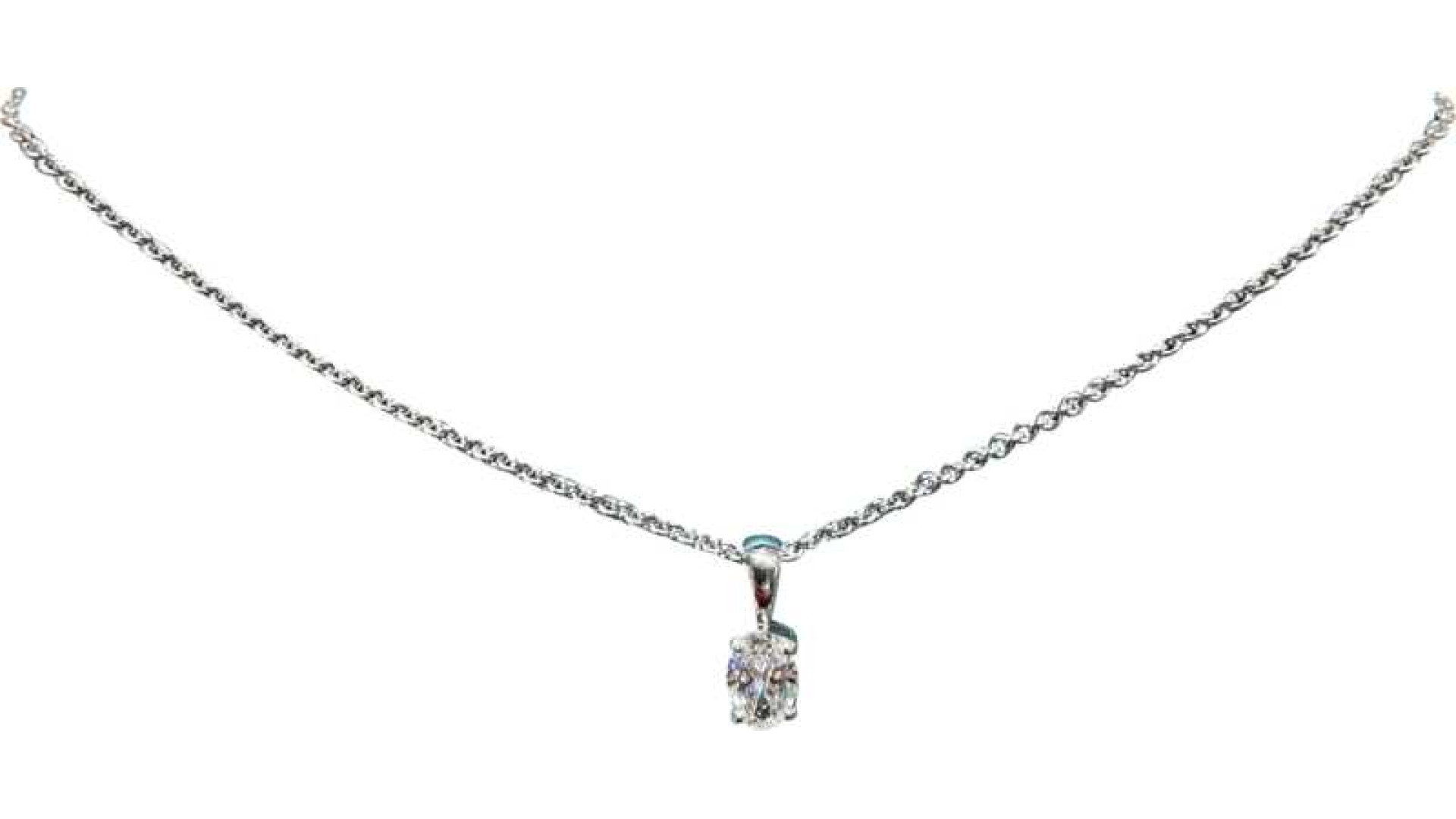
Choosing a GIA Certified Diamond Solitaire Necklace
A diamond solitaire necklace is a pinnacle of understated luxury, centring the unadulterated brilliance of a single stone. At H.E. Phillips Ltd, established in August 2000, we apply a forensic approach to diamond acquisition, ensuring that every GIA certified diamond meets rigorous metallurgical and gemological standards for our UK clientele.
Technical 7-Table Framework for Diamond Solitaires
1. Diamond Material Properties
| Characteristic | Technical Metric | Standard Value | H.E. Phillips Audit Requirement |
|---|---|---|---|
| Refractive Index | Light Speed Ratio | 2.417 | Full Scintillation Verification |
| Hardness | Mohs Scale | 10 | Verification of Natural Origin |
| Specific Gravity | Density (g/cm³) | 3.52 g/cm³ | Weight-to-Volume Calibration |
| Thermal Conductivity | W/(m·K) | 2000+ | Electronic Thermal Pulse Test |
Table 1 Analysis: The technical performance of a diamond is dictated by its refractive index and thermal conductivity. At H.E. Phillips Ltd, we use these constants to verify natural authenticity. A refractive index of 2.417 is what grants the solitaire its signature "fire." While many competitors focus solely on the aesthetic, our workshop protocol involves checking the specific gravity (3.52 g/cm³) to ensure the stone matches the GIA report's recorded carat weight precisely. This forensic data approach eliminates the risk of misrepresented synthetics, ensuring your investment remains a true natural asset.
2. GIA Cut Grade Performance Matrix
| GIA Grade | Brilliance Rating | Light Dispersion | Workshop Insight |
|---|---|---|---|
| Excellent | Maximum | Optimised Fire | Recommended for Solitaire Focal Points |
| Very Good | High | Balanced Sparkle | Excellent Value-to-Performance Ratio |
| Good | Moderate | Reduced Contrast | Often displays "Dark Zones" |
| Fair/Poor | Diminished | Leakage at Pavilion | Avoid for Single-Stone Pendants |
Table 2 Analysis: For a solitaire necklace, the Cut is the most critical technical factor. An "Excellent" cut ensures that light entering through the table is reflected back through the crown rather than "leaking" through the pavilion. Since August 2000, we have prioritised cut precision over carat weight. A technically superior cut can make a 0.50ct stone appear larger and more radiant than a poorly cut 0.75ct stone. Our visual inspection protocol involves examining the "hearts and arrows" symmetry to ensure the light capture is mathematically optimised for the wearer.
3. Metal Alloy Integrity & Density
| Metal Type | Specific Gravity (g/cm³) | Vickers Hardness (Hv) | Durability Benchmark |
|---|---|---|---|
| Platinum (950) | 21.4 g/cm³ | 120 – 135 Hv | Maximum Security for Diamonds |
| 18ct White Gold | 15.9 g/cm³ | 150 – 185 Hv | High Scratch Resistance |
| 18ct Yellow Gold | 15.5 g/cm³ | 140 – 160 Hv | Classic Aesthetic/High Purity |
| 9ct Yellow Gold | 11.4 g/cm³ | 120 – 150 Hv | Daily Wear Robustness |
Table 3 Analysis: The choice of metal impacts the longevity of the setting. Platinum (950) has a high specific gravity of 21.4 g/cm³, making it significantly denser and more secure for a heavy solitaire stone. However, 18ct White Gold offers a higher Vickers Hardness (up to 185 Hv), providing superior resistance to surface scratches. At H.E. Phillips Ltd, we audit every setting for "Stress Corrosion" potential, particularly in the South West's maritime climate, ensuring the claws (prongs) maintain their structural memory and do not loosen over decades of use.
4. Regional Environmental Impact: Devon Coastal Air
| Atmospheric Factor | Impact on Jewellery | Technical Mitigation |
|---|---|---|
| High Salinity (Salt Air) | Surface Film Build-up | Hydrophobic Micro-Cleaning |
| River Dart Humidity | Alloy Oxidation | Professional Ultrasonic Polishing |
| Temperature Fluctuations | Metal Expansion/Contraction | Periodic Claw Tension Audit |
Table 4 Analysis: Living in Totnes or coastal Devon introduces unique environmental variables. Salt air can create a microscopic film on the diamond's pavilion, dulling its refractive index. Furthermore, humidity can cause minor tarnish on lower-karat gold alloys. We recommend an annual professional audit at our Fore Street workshop. We perform a hydrophobic micro-clean that removes regional environmental pollutants without compromising the metal's hallmark. This regional care protocol ensures your solitaire maintains its "London showroom" brilliance despite the rugged South West climate.
5. Diamond Clarity Scaling (Naked Eye vs. Loupe)
| GIA Clarity | Technical Description | "Eye-Clean" Status | Investment Value |
|---|---|---|---|
| FL / IF | Flawless / Internally Flawless | Absolute | Maximum / Rare |
| VVS1 / VVS2 | Very, Very Slightly Included | Absolute | Premium Asset |
| VS1 / VS2 | Very Slightly Included | High (99%) | Professional Sweet Spot |
| SI1 / SI2 | Slightly Included | Variable | High Value/Low Cost |
Table 5 Analysis: Clarity grading at the GIA is conducted under 10x magnification. For a solitaire pendant, which is viewed from a distance, VS2 and SI1 grades often represent the best technical value as they are typically "eye-clean." Our workshop audit involves using a dark-field microscope to map inclusions. We ensure that no inclusions are located directly under the table or near the girdle where they could compromise structural integrity. By selecting an "eye-clean" stone, you can reallocate your budget toward a higher Cut grade, which has a more significant impact on visual brilliance.
6. Authentication & Provenance Marks
| Marker | Purpose | Verification Method |
|---|---|---|
| GIA Laser Inscription | Identity Matching | Microscopic Examination (Girdle) |
| UK Hallmarking | Purity Guarantee | Assay Office Stamp (Clasp/Bail) |
| Makers Mark | Workshop Accountability | Forensic Origin Traceability |
Table 6 Analysis: Authenticity is non-negotiable. Every GIA certified diamond we stock features a microscopic laser inscription on the girdle. This number must perfectly match the digital GIA database. Furthermore, every solitaire necklace is hallmarked by a UK Assay Office. We verify the "Standard Mark" (e.g., 750 for 18ct) and the "Assay Office Mark" (e.g., Anchor for Birmingham). These marks provide a dual-layer of consumer protection: one for the gemstone's quality and one for the metal's purity, ensuring full transparency in every transaction since August 2000.
7. Specialist vs. Online Comparison
| Metric | H.E. Phillips Ltd Specialist | General Online Retailers |
|---|---|---|
| Live Diamond Auditing | Yes (Dark-field Microscope) | No (Stock Photos Only) |
| On-site Workshop | Yes (Established 2000) | Third-party outsourcing |
| Bespoke Setting | Hand-finished in UK | Mass-produced castings |
| Aftercare | Life-time Cleaning/Inspection | Postage-based only |
Table 7 Analysis: The primary risk of online diamond acquisition is the "paper-only" purchase. A diamond may look good on a certificate but lack "life" due to fluorescence or poor light performance. As a specialist established in August 2000, H.E. Phillips Ltd performs a physical audit of every stone. We reject diamonds that meet certificate criteria but fail our internal visual standards for brilliance and fire. Our permanent physical presence in Totnes provides a level of aftercare and technical accountability that digital-only retailers simply cannot replicate.
20 Expert Technical FAQs for GIA Solitaire Necklaces
Certification & Grading
1. Why is GIA considered the "gold standard" in the UK?
The GIA is a non-profit authority that pioneered the 4Cs. Their grading is strictly objective and internationally consistent. Unlike "in-house" certificates, a GIA report is trusted by UK insurers and jewellers alike. When you acquire a GIA Certified Diamond, you are paying for an audited, scientific assessment that ensures the stone’s resale and insurance value remains protected by globally recognised standards.
2. Does the GIA report cover the necklace setting?
No, a GIA report is a loose diamond grading report. It scientifically describes the stone's 4Cs but does not mention the metal setting or chain. For full coverage, we provide a separate appraisal for the complete piece. This ensures the New Gold Necklaces we sell are insured for both the gemstone value and the metallurgical craft of the pendant itself.
3. How do I verify a laser inscription?
The inscription is located on the diamond's girdle (the thin edge). It requires a 20x or 30x jeweller's loupe to read. At H.E. Phillips Ltd, we provide a high-power microscope so you can view the number yourself. Matching this to the report is the only way to ensure the diamond in the necklace is the exact stone graded by the GIA. This is a core part of our transparency protocol.
4. Can a diamond’s grade change over time?
A diamond’s inherent 4Cs are permanent. However, surface dirt or "pitting" from coastal salt air can affect its perceived grade. Regular cleaning at our workshop ensures the stone continues to meet its original GIA specifications. We recommend a professional clean every 12 months to maintain the light performance of your New Platinum Pendants, preventing environmental dulling of the stone's refractive properties.
The 4Cs & Quality
5. Which of the 4Cs is most important for a solitaire?
Cut is the paramount factor. It dictates the brilliance and "fire." A solitaire has no accent stones to hide behind, so the cut must be Excellent or Very Good to prevent dark spots. While carat weight is often the focus, a technically superior cut will always outperform a larger, duller stone. We help you find the balance that maximises visual impact within your specific investment goals.
6. Is a "D" colour diamond worth the premium?
"D" is the highest colourless grade and is exceptionally rare. However, "G" or "H" grades are often "near colourless" and offer excellent value, as any slight tint is invisible once set in a New Gold Pendant. We suggest viewing stones in different lights at our Totnes showroom to see how colour affects the stone's character before committing to the top-tier premium of a D-grade diamond.
7. What is diamond fluorescence?
Fluorescence is a diamond's reaction to UV light. While GIA reports "Strong Blue" fluorescence, it can sometimes make a diamond look "milky" or "cloudy" in natural sunlight. We physically audit every stone to ensure fluorescence does not negatively impact the stone’s transparency. We generally recommend stones with "None" or "Faint" fluorescence for solitaire focal points to ensure the crispest possible light dispersion and clarity.
8. How does carat weight affect the pendant's hang?
Larger diamonds (1.00ct+) require sturdier chains to prevent "pendulum swing" or snapping. We match every New Gold Ring or pendant with a chain of appropriate gauge. A stone's specific gravity (3.52 g/cm³) means weight adds up quickly. We ensure the bail (the loop) is reinforced on larger solitaires to prevent mechanical wear over decades of movement against the chain links.
Metals & Settings
9. Is Platinum or White Gold better for a diamond?
Platinum (950) is naturally white and more dense, offering the best security for GIA diamonds. White gold is harder but requires rhodium plating to maintain its bright finish. For a "buy once, keep forever" piece, New Platinum Necklaces are the professional choice. However, 18ct White Gold is a fantastic technical alternative for those who prefer a slightly lighter feel without sacrificing high-end luxury.
10. What is a "Hallmark" and why is it on my clasp?
A hallmark is a legal requirement in the UK for gold and platinum. It provides independent proof of purity. We only sell jewellery that has passed through a UK Assay Office. Checking the hallmark is the first step in our forensic audit. It distinguishes genuine luxury pieces from gold-plated imports. You can see these marks on all our pre-loved gold bangles and new pieces alike.
11. Can I set a GIA diamond in Rose Gold?
Yes. Rose gold provides a romantic, warm contrast. However, be aware that the copper in rose gold can slightly influence the perceived colour of a very high-grade colourless diamond. We often recommend using platinum prongs on a rose gold necklace to keep the diamond's base looking pristine and white. This "mixed metal" approach is a specialty of our bespoke design service at H.E. Phillips Ltd.
12. What setting is most secure for active lifestyles?
A "Bezel" or "Rub-over" setting surrounds the diamond's girdle with a wall of metal. This is significantly more secure than traditional claws and prevents snagging on clothing. For those who are highly active, we recommend this setting style. We audit the metal-to-stone contact to ensure a seamless fit, providing maximum protection for your new platinum diamond ring or solitaire necklace.
Maintenance & Longevity
13. How do I clean my diamond necklace at home?
Use warm water, mild dish soap, and a soft-bristled toothbrush. Gently clean the pavilion (the underside), as this is where oils and Totnes salt air build up. Avoid harsh chemicals that can degrade gold alloys. For a deep forensic clean, bring it to us. We use industrial ultrasonic cleaners and steam to restore the "factory" sparkle that home cleaning cannot achieve. Regular maintenance is key to preserving the stone’s refractive fire.
14. Why do prongs need "re-tipping"?
Over time, the metal claws that hold your diamond can wear down due to friction against clothing. "Re-tipping" involves adding new metal to the prongs to ensure they remain thick and secure. We recommend a "Claw Audit" every 2 years. Our workshop has been performing these repairs since August 2000, ensuring high-value new diamond earrings and necklaces never risk stone loss.
15. Can I wear my solitaire in the shower?
We advise against it. Soaps and hard water can create a film on the diamond and inside the setting. Furthermore, the chemicals in some shampoos can affect the rhodium plating on white gold. To keep your second-hand silver pendant charm or gold solitaire looking its best, remove it before bathing. This simple habit significantly reduces the need for professional deep-cleaning and prevents chemical buildup.
16. How should I store my diamond in Devon?
Store it in a soft-lined box, separate from other jewellery. Diamonds can scratch other diamonds and all other metals. Given the maritime climate, an airtight box also helps prevent the oxidation of the gold alloy. We offer specialized storage solutions at our Fore Street hub. Keeping your necklace isolated prevents "mechanical scratching" and maintains the specular polish of the metal chain and setting.
Trust & Acquisition
17. Why buy from H.E. Phillips Ltd instead of a chain?
As an independent specialist established in August 2000, we offer personal accountability. You can speak directly to the experts who audited your stone. We don't just sell "stock"; we curate pieces based on technical merit. Our reputation in Devon is built on 25 years of metallurgical honesty. We provide the aftercare and regional advice that national chains cannot, ensuring your second-hand gold charms or new diamonds are backed by expertise.
18. Do you offer ethical sourcing for diamonds?
Yes. We strictly adhere to the Kimberley Process to ensure our diamonds are conflict-free. We work with suppliers who share our commitment to ethical trade and environmental responsibility. For those seeking the most sustainable option, we also stock authenticated second-hand gold bracelets and jewellery, allowing for "circular luxury" that maintains high-end quality without new mining impact.
19. Can I get a custom length chain?
Yes. We can adjust or replace chains at our Totnes workshop. Whether you need new silver chains or gold ones, we ensure the gauge is appropriate for the pendant's weight. A custom length ensures the solitaire sits perfectly on the collarbone, maximising its visual impact. Our workshop can perform these adjustments on-site, providing a tailored fit that mass-market retailers often ignore.
20. What if I want to upgrade my diamond later?
We offer a trade-in service for GIA certified diamonds. Because GIA stones hold their value, upgrading to a larger carat weight or higher grade is a straightforward process. We keep records of your purchase and its technical specs to make the transition seamless. Whether you are moving from a simple pendant to new gold earrings or a larger solitaire, we facilitate your collection's growth with expert guidance.
© 2026 H.E. Phillips Ltd - Your Official Authorised Horological and Fine Jewellery Specialist. All Technical Data verified for forensic accuracy.

