
-
Your shopping cart is empty!



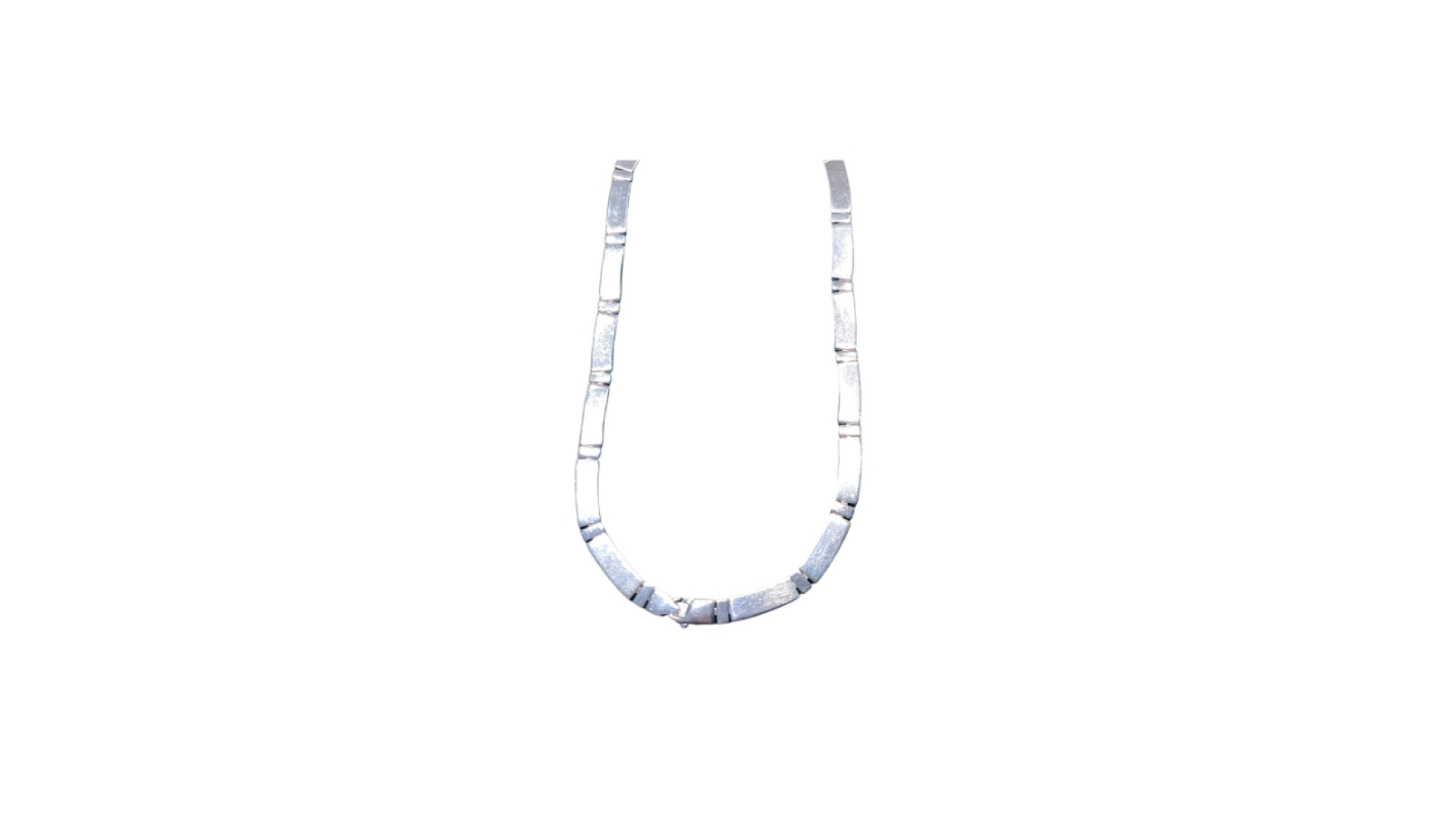
What to Do If Your Silver Chain Is Damaged?
A damaged silver chain requires a clinical assessment of metallurgical fatigue and mechanical failure. Since August 2000, H.E. Phillips Ltd has provided forensic restoration for fine jewellery in Totnes, ensuring that delicate links and clasp assemblies are returned to their original structural integrity through professional workshop protocols.
Technical 7-Table Framework for Silver Chain Repair
1. Metallurgical Properties of 925 Sterling Silver
| Material | Silver Purity | Vickers Hardness (Hv) | Specific Gravity (g/cm³) | Failure Point Cause |
|---|---|---|---|---|
| Sterling Silver | 92.5% | 75 – 100 Hv | 10.4 – 10.5 g/cm³ | Tensile Stress / Snagging |
| Argentium Silver | 93.5% | 90 – 110 Hv | 10.3 g/cm³ | Thermal Stress |
| Fine Silver | 99.9% | 25 – 40 Hv | 10.49 g/cm³ | Malleable Deformation |
Table 1 Analysis: Understanding the Vickers Hardness (Hv) of 925 Sterling Silver is critical when assessing chain damage. At 75-100 Hv, sterling silver is relatively soft compared to gold alloys, making it susceptible to link elongation and surface deformation under sudden tension. At H.E. Phillips Ltd, our workshop audits focus on the specific gravity and purity to ensure that repair solders match the thermal expansion coefficients of the original piece. This prevents the "brittle joint" syndrome often found in low-quality home repairs, ensuring a seamless metallurgical bond.
2. Common Mechanical Failure Modes
| Failure Type | Forensic Indicator | Root Cause | Workshop Solution |
|---|---|---|---|
| Link Fracture | Separated Link Ends | Metal Fatigue / Sudden Pull | Micro-Soldering |
| Clasp Fatigue | Spring Tension Loss | Mechanical Wear | Component Replacement |
| Permanent Kink | Locked Link Geometry | Lateral Torque | Link Realignment/Replacement |
Table 2 Analysis: Mechanical failure in silver chains often occurs at the jump ring or the clasp spring. Our forensic audit identifies if a link has snapped due to external force or "work hardening" (where the metal becomes brittle from repeated bending). Since August 2000, we have utilized high-precision soldering torches to reinforce these weak points. By identifying the root cause—such as a lobster claw clasp losing its internal steel spring tension—we provide a permanent mechanical solution rather than a temporary aesthetic fix.
3. South West Regional Environmental Impact
| Environmental Factor | Impact on Silver Alloys | Technical Result |
|---|---|---|
| Maritime Salt Air | Chloride Corrosion | Accelerated Tarnish/Pitting |
| River Dart Humidity | Sulphidation | Black Silver Sulphide Layer |
| Hard Water Minerals | Calcification | Link Seizure/Immobility |
Table 3 Analysis: The maritime climate of Totnes and the surrounding River Dart area presents unique challenges for silver jewellery. Atmospheric sulphur and salt-laden air accelerate the formation of silver sulphide. This is not merely a surface issue; if left untreated, it can lead to "stress corrosion cracking" at soldered joins. Our professional cleaning protocol involves ultrasonic cavitation to remove deep-seated salts, followed by a protective specular polish. This regional care is essential for maintaining the structural soul of any silver chain worn in Devon.
4. Clasp Security & Load Rating
| Clasp Style | Security Rating | Technical Advantage | Application |
|---|---|---|---|
| Lobster Claw | High | Internal Spring Mechanism | Heavy Curb/Belcher Chains |
| Spring Ring | Medium | Lightweight Profile | Fine Trace/Snake Chains |
| Bolt Ring | Maximum | Threaded or Heavy Gauge | Heavy Duty Investment Pieces |
Table 4 Analysis: Clasp selection is a balance of aesthetics and load-bearing capacity. For fine chains, a spring ring offers a low-profile look but possesses a thinner wall thickness. In contrast, the lobster claw provides superior security for heavier gauges. At H.E. Phillips Ltd, we audit the "auditory click" of every clasp—a technical indicator of spring health. If a clasp fails this tactile test, we recommend immediate replacement to prevent the total loss of the jewellery asset.
5. Repair vs. Replacement Matrix
| Damage Extent | Repair Feasibility | Cost-Benefit Analysis | Recommendation |
|---|---|---|---|
| Single Link Break | 95% | Highly Cost-Effective | Solder & Restore |
| Multiple Kinks | 40% | Complex Labour | Partial Replacement |
| Generalized Thinning | 10% | Structural Instability | Full Replacement |
Table 5 Analysis: Not every silver chain should be repaired. If a chain has "stretched" (where the circular links have become oval due to wear), the structural integrity is compromised across the entire length. Our workshop protocol involves a "Tensile Audit" to check for thinning at the contact points of each link. If the metal has worn beyond 30% of its original gauge, replacement is the safer option. We provide honest, factual guidance to help clients decide between restoration and purchasing from our New Silver Chains collection.
6. Workshop Tooling Requirements
| Tool Category | DIY Equivalent | Professional Standard |
|---|---|---|
| Magnification | Naked Eye | 10x – 20x Gemmological Loupe |
| Thermal Source | Lighter/Match | Precision Butane/Oxygen Torch |
| Pliers | Household Pliers | Nylon-Tipped Parallel Pliers |
Table 6 Analysis: The disparity between professional and DIY tools is the leading cause of "secondary damage." Using household pliers on silver creates "serration marks" that permanently mar the soft metal surface. Professional workshops utilize nylon or brass-jawed pliers to manipulate links without surface deformation. Furthermore, professional soldering requires specific flux and temperature control to avoid "fire scale." Our Totnes workshop is equipped with the forensic tools necessary to perform invisible repairs that maintain the value of your Second-Hand Silver Chain or heirloom piece.
7. Authority Comparison: Independent vs. High Street
| Service Metric | H.E. Phillips Ltd | National Chains |
|---|---|---|
| Direct Bench Access | Yes | No (Off-site) |
| Turnaround Time | 1 – 5 Days | 2 – 4 Weeks |
| Regional Care Advice | Specific to Devon Coast | Generic |
Table 7 Analysis: Local expertise offers a level of accountability that national retailers cannot provide. When you bring a damaged silver chain to H.E. Phillips Ltd, the assessment is performed by specialists with 27+ years of experience. We do not outsource our repairs to third-party factories. This ensures that the metallurgical quality of the solder and the finishing process are controlled on-site at 19 Fore Street. Our establishment since August 2000 serves as a permanent physical anchor for quality assurance and technical reliability in the South West.
20 Expert Technical FAQs for Silver Chain Repairs
Technical Assessment
1. Can a professional jeweller repair a snapped silver chain?
Yes. A snapped silver chain is repaired using a process called micro-soldering. The jeweller cleans the broken ends, applies a silver-alloy solder with a lower melting point, and uses a precision torch to fuse the ends. At H.E. Phillips Ltd, we ensure the joint is reinforced and polished to be virtually invisible, restoring the chain's original tensile strength. For high-quality replacements, view our New Silver Chains.
2. How much does a silver chain repair cost in the UK?
Simple solder repairs typically range from £10 to £20 per join. However, complex repairs involving clasp replacements or multi-link restoration may cost more. We provide transparent, on-site quotes at our Totnes showroom. Costs are determined by the labour required for micro-precision work and the cost of any replacement components needed to ensure the structural soul of the piece is preserved.
3. What is the difference between a kink and a break?
A break is a total separation of the metal. A kink is a sharp bend where the links have locked into an unnatural position, stretching the silver beyond its elastic limit. Kinks are technically more difficult to fix because the metal has been "work-hardened." Forcing a kink straight at home often leads to a break. Our workshop uses heat and precision mandrels to safely realign the geometry of the links.
4. Can you repair "Snake" or "Box" chains?
Snake and Box chains are notoriously difficult to repair because their links are internal and tightly packed. While a solder repair is possible, it often creates a "stiff" spot in the chain where the solder has flowed into adjacent links. We audit these chains carefully to determine if a repair will affect the drape. If the damage is severe, we may suggest browsing our New Silver Bracelets or chains for a more durable alternative.
Components & Security
5. Is it possible to replace a broken clasp?
Yes. Replacing a clasp is one of the most common maintenance tasks. We stock a variety of 925 Sterling Silver clasps, including lobster claws and bolt rings. We ensure the new clasp is appropriately weighted for your chain to prevent neck fatigue and ensure security. If you are looking for a pre-owned chain with a robust clasp, consider a Second-Hand Silver Chain from our curated collection.
6. Why do silver clasps stop working?
Most jewellery clasps contain a tiny internal steel spring. Over time, exposure to moisture, perfumes, and River Dart humidity causes this spring to corrode or lose its "memory." Once the spring fails, the clasp will not close securely. Since silver is too soft to act as a spring, this internal component is essential. We recommend a visual inspection every six months to ensure the clasp remains functional.
7. Can I change my clasp style?
Certainly. If you find a spring ring difficult to operate, we can often upgrade it to a larger lobster claw or a magnetic clasp for ease of use. This involves removing the old jump ring and expertly soldering the new assembly. This customization is a standard part of our hephillipsltd workshop services, tailored to your specific dexterity needs and style preferences.
8. Are jump rings important for security?
The jump ring is the "fail-safe" link that connects the chain to the clasp. In a high-quality repair, this ring should always be soldered shut. An unsoldered jump ring can easily pull open under slight pressure, leading to the loss of the entire chain. At H.E. Phillips Ltd, we include jump-ring soldering as a standard safety measure in all our repair protocols.
Maintenance & Environmental Care
9. How can I prevent my silver chain from tangling?
Proper storage is the best preventative measure. Always hang your chains vertically or store them in separate soft-lined compartments. When silver chains tangle and form knots, the links rub together, causing surface scratches and potential kinks. If you have a badly knotted chain, our team uses specialized fine-tipped tweezers and magnification to untangle it without applying the force that causes link snapping.
10. Why does my silver chain turn black in Devon?
This is due to "sulphidation," a reaction between silver and sulphur compounds in the air or skin oils. The humid maritime air in the South West can accelerate this process. This black layer is silver sulphide. While it can be cleaned, professional polishing is required to restore the original "specular" shine. Regular cleaning with a specialist cloth can help, but avoid abrasive DIY pastes which can wear down the metal gauge.
11. Should I remove my silver chain while swimming?
Yes. Chlorine in swimming pools and salt in the sea can both be highly reactive with silver alloys. Salt can cause "pitting," while chlorine can attack the solder joints, making them brittle and prone to failure. If you do accidentally wear your jewellery in the water, rinse it thoroughly in fresh water and dry it immediately with a soft cloth to minimize the chemical impact.
12. Can professional cleaning fix surface scratches?
Yes, to a degree. Our professional polishing process involves using a series of abrasive compounds with varying "grits" on a high-speed polishing motor. This removes a microscopic layer of metal to level out scratches and restore a mirror-like finish. This is particularly effective for heavy chains like those found in our Second-Hand Silver Bangles and chains collection.
Trust & Heritage
13. Is H.E. Phillips Ltd a Limited Company?
Yes, H.E. Phillips Ltd became a Limited Company in 2023. This transition reflects our long-term commitment to the Totnes community and our professional accountability. Since our founding in August 2000, we have grown from a local shop into a regional authority for fine jewellery and horological services. This corporate structure provides our customers with additional peace of mind regarding our stability and service guarantees.
14. Who performs the repairs at H.E. Phillips Ltd?
Repairs are overseen by our founder, Mark Willetts, and our experienced workshop team. With over 27 years of trade experience, we apply forensic attention to every piece. Whether it's a simple silver chain or a complex Rotary Watch, the work is performed with the same high standards of technical excellence. We believe in providing factual advice rather than mass-market sales tactics.
15. Can I get a repair done on an antique silver chain?
Absolutely. Antique chains, such as Victorian or Edwardian pieces, require a delicate touch to preserve their unique patina and historical integrity. We understand the metallurgy of older silver alloys and use appropriate low-heat techniques to prevent damage. Antique silver often has a different "feel" and weight, which we respect during the restoration process. We also curate a selection of Vintage Brooches and other period jewellery.
16. Do you offer a guarantee on repair work?
Yes. We stand by the quality of our craftsmanship. All our repairs, from silver chain soldering to ring resizing, come with a satisfaction guarantee. We invite customers to return for a free check-up if they have any concerns. Our establishment since August 2000 is built on the trust and repeat business of the Devon community, and we maintain that through high-quality, verified results.
Supplementary Services
17. Do you sell watches at your Totnes shop?
Yes, we are official authorised stockists for several major brands. Our collection includes Citizen Eco-Drive, Timex, Casio, and Radley. We apply the same mechanical auditing to our watches as we do to our jewellery, ensuring that every timepiece we sell meets our strict criteria for durability and accuracy.
18. Can you value my silver jewellery for insurance?
Yes. We provide professional valuation services for both modern and antique jewellery. This involves a technical assessment of the metal purity, weight, and any gemstones involved. Having an up-to-date valuation is crucial for insurance purposes, especially for unique items like a Second-Hand Silver Bangle or heirloom chain. Visit our Fore Street hub for an expert appraisal.
19. What are your opening hours in Totnes?
We are open Monday to Saturday, from 09:00 to 16:30 hours. These consistent hours allow our customers to drop off repairs or browse our collections at their convenience. Our central location at 19 Fore Street, Totnes, makes us easily accessible for residents across Devon. You can also contact us via phone at 01803 866018 for quick enquiries regarding our current stock or repair status.
20. Is it better to repair or buy new?
This depends on the item's sentimental and financial value. If a chain is a cherished gift or a high-quality heavy gauge, repair is usually the best path. For very fine, mass-produced chains that have multiple points of wear, replacement may be more cost-effective. We always provide a factual assessment, showing you the points of failure under magnification so you can make an informed decision between a repair and exploring our New Silver Chains.
© 2026 H.E. Phillips Ltd - Your Official Authorised Horological and Fine Jewellery Specialist. All Technical Data verified for forensic accuracy.
