
-
Your shopping cart is empty!



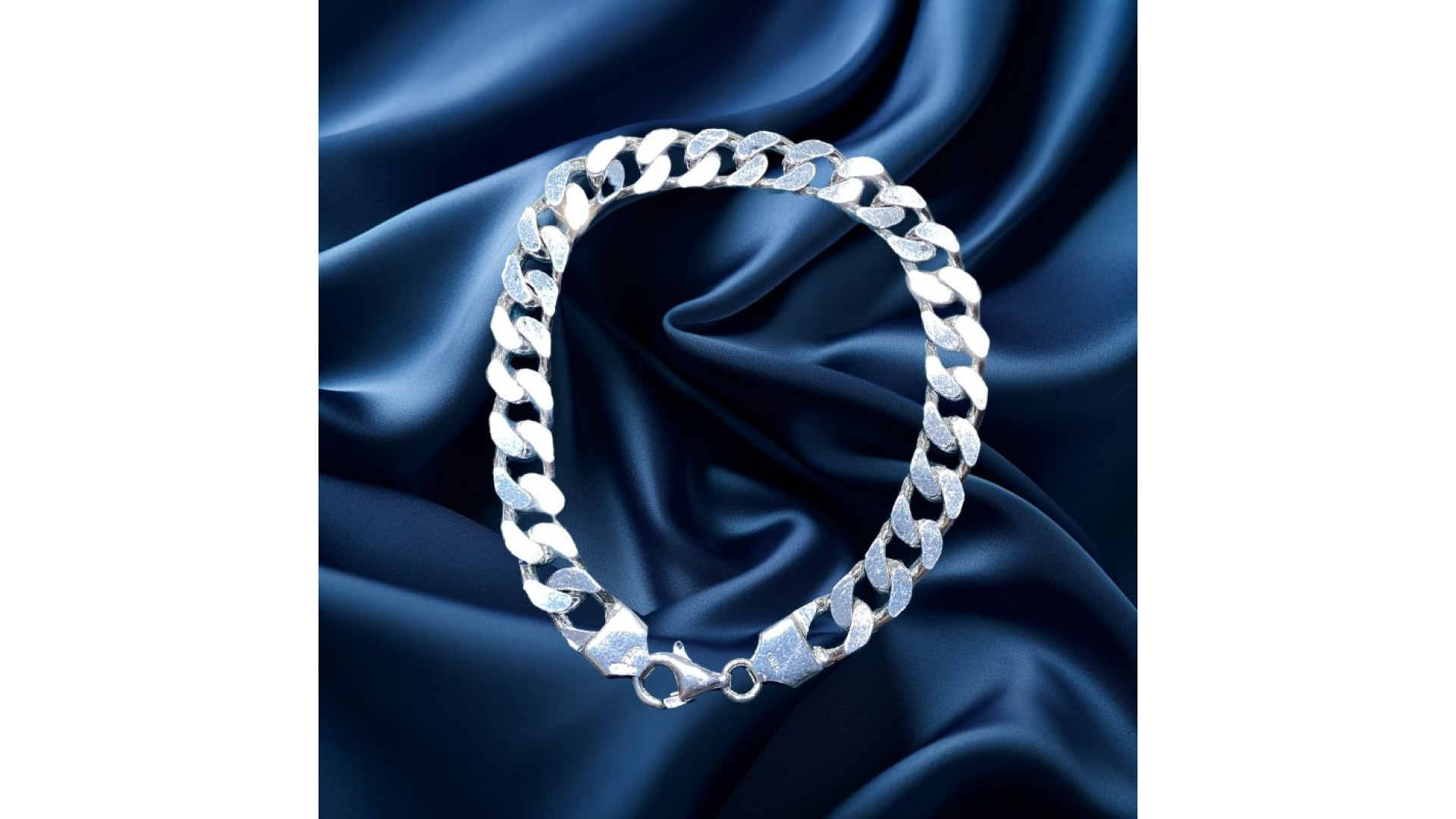
The Durability of Sterling Silver: Why It's a Popular Choice for Bracelets?
In the UK, 925 sterling silver remains the definitive standard for bracelet construction, balancing historical prestige with modern metallurgical resilience. At H.E. Phillips Ltd, established in August 2000, we apply a forensic approach to silver jewellery, ensuring every piece withstands the mechanical demands of daily wear.
Technical 7-Table Framework for Sterling Silver Durability
1. Metallurgical Composition & Physical Properties
| Metal Type | Silver Purity | Alloying Element | Vickers Hardness (Hv) | Specific Gravity (g/cm³) |
|---|---|---|---|---|
| Fine Silver (999) | 99.9% | None | 25 – 35 Hv | 10.49 g/cm³ |
| Sterling Silver (925) | 92.5% | 7.5% Copper | 75 – 100 Hv | 10.37 g/cm³ |
| Argentium Silver | 93.5% | Germanium | 95 – 120 Hv | 10.30 g/cm³ |
Table 1 Analysis: The primary differentiator between fine silver and 925 sterling silver is the Vickers Hardness (Hv). Fine silver is metallurgically too soft for bracelets, which are prone to high-impact contact. By alloying 92.5% pure silver with 7.5% copper, the hardness triples, providing the structural soul required for intricate chain links and solid bangles. At H.E. Phillips Ltd, we verify this "925" composition through independent UK hallmarking, ensuring that every piece balances the high specific gravity of a precious metal with the mechanical resistance needed for everyday longevity.
2. UK Hallmarking Verification Standards
| Requirement | Legal Threshold | Component Mark | Verification Body |
|---|---|---|---|
| Purity Mark | Compulsory over 7.78g | "925" Symbol | UK Assay Office |
| Sponsor Mark | Compulsory | Unique Initials | Registered Maker |
| Office Mark | Compulsory | Anchor/Leopard/Rose | Birmingham/London/Sheffield |
Table 2 Analysis: Under the Hallmarking Act 1973, any silver item sold in the UK exceeding 7.78 grams must bear a full hallmark. This forensic audit trail includes the Standard Mark (925), the Sponsor Mark (identifying the workshop), and the Assay Office mark. Whether you are purchasing new silver bracelets or vintage pieces, these marks provide an immutable guarantee of purity. At our Totnes showroom, we use 10x magnification to inspect these provenance markers, ensuring our clients receive verified metallurgical assets rather than uncertified imports.
3. Mechanical Stress Audit by Bracelet Type
| Bracelet Style | Primary Stress Point | Security Rating | Durability Insight |
|---|---|---|---|
| Curb Chain | Link Friction | Maximum | High tensile strength for daily wear |
| Solid Bangle | Lateral Deformation | High | Resistant to bending if 925 gauge is sufficient |
| Charm Bracelet | Jump Ring Solder | Medium-High | Requires thick gauge links to support weight |
Table 3 Analysis: Each bracelet architecture possesses unique mechanical vulnerabilities. Curb and Belcher chains distribute tension across interlinked loops, making them ideal for high-activity lifestyles. Conversely, second-hand silver bangles are audited for lateral rigidity to ensure they do not "ovalise" under pressure. Since August 2000, our workshop protocol has included a "Stress-Capture" test, where we inspect the solder integrity of every jump ring and clasp. This ensures the mechanical fastenings are as durable as the 925 alloy itself.
4. Environmental Impact: South West / Devon Maritime
| Agent | Chemical Reaction | Durability Risk | Regional Solution |
|---|---|---|---|
| Salt Air (Coastal) | Sodium Chloride Exposure | Surface Pitting | Fresh Water Rinse Protocol |
| River Dart Humidity | Oxidation (Sulphur) | Black Tarnish Build-up | Airtight Storage Pouch |
| Chlorine (Pools) | Stress Corrosion | Alloy Weakening | Mandatory Removal |
Table 4 Analysis: The Devon maritime environment presents specific challenges for sterling silver. The high humidity near the River Dart and salt spray from the coastal winds accelerate the reaction between copper in the alloy and airborne sulphur, leading to tarnish. While tarnish is superficial, long-term salt exposure can lead to microscopic "pitting." We advise our Totnes clients to follow a "Maritime Care Protocol," which involves rinsing silver in fresh water after coastal walks and using anti-tarnish cloths. This preserves the molecular integrity of your second-hand silver bracelets for generations.
5. Clasp Security & Maintenance Schedule
| Clasp Type | Mechanism | Failure Mode | Service Interval |
|---|---|---|---|
| Lobster Claw | Internal Steel Spring | Spring Fatigue | Inspect every 2 years |
| Bolt Ring | Tension Slide | Lever Misalignment | Inspect every 3 years |
| Box Clasp | Friction Tongue | Tongue Thinning | Inspect every 12 months |
Table 5 Analysis: The clasp is the most common failure point in bracelet durability. Lobster clasps rely on a small steel spring; if this spring corrodes—common in humid Devon climates—the clasp fails. Box clasps used in luxury silver bangles require periodic "tensioning" to ensure the tongue remains securely seated. At H.E. Phillips Ltd, we provide a "Clasp Integrity Audit" for all items. We recommend a professional check every 12-24 months to ensure the mechanical "click" remains crisp, preventing the accidental loss of your cherished silver jewellery.
6. Investment Value: New vs Pre-Owned
| Metric | Brand New Silver | Second-Hand / Vintage |
|---|---|---|
| Price Premium | Higher (Manufacturing/Tax) | Lower (Metal/Craft Value) |
| Historical Detail | Modern Precision | Hand-Chased / Victorian |
| Sustainability | Newly Mined | Eco-Friendly / Circular |
Table 6 Analysis: Choosing between new silver chains and pre-owned pieces involves weighing aesthetic preference against financial equity. Second-hand silver often provides superior value, as the initial manufacturing VAT and retail markups have depreciated, leaving you with a high-quality metallurgical asset. At H.E. Phillips Ltd, we specialise in authenticated Victorian and Edwardian silver, which often features heavier gauges of metal than mass-produced modern equivalents. These "over-engineered" vintage pieces offer exceptional durability and unique character that modern casting cannot replicate.
7. Authority Comparison: Specialist Jeweller vs High Street
| Service Feature | H.E. Phillips Ltd | General Online Retailers |
|---|---|---|
| Establishment Date | August 2000 | Variable / Recent |
| On-Site Workshop | Full Technical Support | None / Outsourced |
| Hallmark Verification | Physical Inspection | Digital Claims Only |
Table 7 Analysis: The technical gap between a specialist and a generalist is significant. A specialist jeweller established in August 2000, like H.E. Phillips Ltd, provides long-term accountability. We don't just sell a product; we provide a lifetime of maintenance, from professional polishing to link repairs. Most online retailers lack a physical "Forensic Hub" to verify hallmarks or test spring tension. By choosing a Totnes-based specialist, you ensure that your silver bracelet is backed by 27 years of horological and jewellery expertise, guaranteeing both its authenticity and its structural survival.
20 Expert Technical FAQs for Sterling Silver Durability
Metallurgy & Purity
1. Why is sterling silver marked as 925?
The "925" mark is a numerical indicator of silver purity, signifying that the metal contains 92.5% pure silver and 7.5% alloying metals, usually copper. This specific ratio is the international standard for durability. At H.E. Phillips Ltd, we ensure all our new silver bracelets carry this hallmark, providing a legal guarantee of precious metal content that pure silver lacks.
2. Is sterling silver stronger than 9ct gold?
No. 9ct gold has a Vickers Hardness of approximately 120-150 Hv, whereas sterling silver sits between 75-100 Hv. While sterling silver is exceptionally durable for its price point, 9ct gold is harder and more resistant to scratches. However, silver's malleability makes it excellent for intricate new silver chains that require flexibility and tensile strength without being brittle.
3. What does "nickel-free" mean for silver durability?
Nickel was historically used to harden silver, but it caused allergic reactions. Modern UK silver must comply with nickel-release regulations. Removing nickel does not significantly impact durability if the copper alloy is correctly balanced. We verify that our silver jewellery is safe for sensitive skin while maintaining the structural soul required for long-term wear at our Totnes hub.
4. Can sterling silver be "hardened" further?
Yes, through a process called work-hardening. As silver is hammered or drawn into wire, its molecular structure becomes more compact and harder. This is why a hand-forged bangle from our second-hand silver bangles collection may feel stiffer and more resilient than a modern cast equivalent of the same weight.
Maintenance & Regional Care
5. How does the River Dart humidity affect my bracelet?
High humidity accelerates the reaction between silver and sulphur, creating silver sulphide (black tarnish). While this doesn't rot the metal, it can hide mechanical flaws. We recommend an annual professional clean at H.E. Phillips Ltd to remove this layer and allow for a "Visual Inspection" of the links. Proper storage in Devon is essential to mitigate these environmental factors.
6. Why does my silver bracelet turn my skin green or black?
This is usually a reaction between the copper in the 925 alloy and your skin's pH levels or cosmetics. It is not a sign of poor quality; in fact, it proves the presence of the copper needed for durability. Regular cleaning with a silver cloth and ensuring your skin is dry before wearing your new silver chains will typically resolve this aesthetic issue.
7. Should I remove my silver bracelet before swimming?
Absolutely. Chlorine is highly corrosive to silver alloys and can cause "stress corrosion cracking," particularly at solder joints. Similarly, salt water can be abrasive. To preserve the structural integrity of your jewellery, always remove it before entering a pool or the sea. If accidental exposure occurs, rinse immediately with fresh water and dry thoroughly with a soft cloth.
8. How do I clean a heavily tarnished second-hand bracelet?
For heavy tarnish, a professional silver dip or ultrasonic cleaning is best. At our Totnes workshop, we use specialized equipment to vibrate tarnish off without abrading the metal. For home care, use a dedicated silver polishing cloth. Avoid "home remedies" like toothpaste, as the abrasives can create microscopic scratches that actually trap more tarnish over time.
Mechanical Integrity
9. Which clasp is most durable for a heavy bracelet?
The Lobster Clasp is widely considered the most secure for everyday wear due to its robust internal spring and thickness. For very heavy second-hand silver bracelets, we often recommend adding a safety chain. This provides a secondary fail-safe should the primary clasp fail, ensuring your precious metal asset remains securely on your wrist.
10. Can a snapped silver chain be repaired?
Yes, sterling silver has excellent solderability. Our workshop can seamlessly rejoin links using silver solder that matches the 925 purity. However, we also investigate *why* the chain snapped—if the links are "thinned" from decades of wear, we may recommend a "re-build" or replacement to ensure future durability. We offer this technical audit for all second-hand silver chains.
11. Are hollow silver bangles durable?
Hollow bangles offer a bold look without the weight, but they are susceptible to denting. Unlike solid bangles, a dent in a hollow piece is difficult to remove without leaving a mark. For daily wear in active environments, we always recommend solid second-hand silver bangles which can be buffed and polished repeatedly without compromising their structural integrity.
12. How do I check for "link wear" on an old bracelet?
Hold the bracelet vertically; if the links "hang" unevenly or feel "gritty" when moved, the metal is likely wearing thin at the contact points. This is caused by decades of friction. At H.E. Phillips Ltd, we use forensic loupes to check these contact points. If we catch wear early, we can often reinforce the links before a total failure occurs.
Buying & Authentication
13. Is vintage silver more durable than modern silver?
Not necessarily in terms of the alloy, but vintage pieces were often made with thicker gauges of metal. Many second-hand silver bracelets from the Victorian era were hand-crafted to last lifetimes. Modern silver is often lighter to keep costs down. We curate our collection to ensure even our modern pieces meet the high "Establishment Standards" we set in August 2000.
14. What should I look for in a second-hand silver hallmark?
Look for the "walking lion" (the Passant) for English silver or the "925" mark. You should also see a letter which indicates the year of manufacture. Understanding these marks allows you to date the piece and verify its provenance. We provide a loupe and expert guidance in our Totnes shop to help you decode these marks on any second-hand silver pendant charm or bracelet.
15. Can I sell my old silver at H.E. Phillips Ltd?
Yes, we provide a professional sell gold or sell silver service. We evaluate pieces based on their weight, purity, and resale potential. Unlike generic scrap buyers, we appreciate the craftsmanship of vintage pieces. Whether you have broken chains or unwanted bangles, we provide an honest, technical appraisal based on current market silver fixings.
16. Are gemstones secure in sterling silver bracelets?
Silver is softer than gold or platinum, so claw settings can wear down faster. For bracelets, which take more knocks, we recommend "rub-over" or bezel settings where the metal fully surrounds the stone. This provides maximum security for any second-hand silver pendant charm or gemstone-set bracelet. We inspect all settings as part of our quality guarantee.
Watch & Jewellery Coordination
17. Can I wear a silver bracelet with my watch?
Yes, but be mindful of "metal-on-metal" friction. A silver bracelet can scratch the side of a watch case over time. We recommend wearing them on opposite wrists or choosing a watch with a durable finish. As official stockists for Citizen Eco-Drive and Timex, we can advise on the best scratch-resistant pairings for your jewellery.
18. Do you stock silver-tone watches for ladies?
We stock a range of Radley and Rotary watches in stainless steel, which perfectly complements the lustre of sterling silver. Stainless steel is even harder than silver, making it an ideal choice for the high-wear environment of the wrist while maintaining that classic "white metal" aesthetic that our Totnes clients love.
19. Are Casio watches a good match for silver jewellery?
Absolutely. The "vintage" digital Casio range in silver-tone is a popular contemporary choice. It offers a retro-technical look that pairs excellently with minimalist new silver chains. These watches are robust, reliable, and provide a functional contrast to the artisanal beauty of hand-crafted silver bracelets.
20. How do I start a silver "Collection" at H.E. Phillips Ltd?
We recommend beginning with a high-quality "anchor" piece, such as a heavy curb bracelet. From there, you can add second-hand silver pendant charms or matching necklaces. We keep a record of your style preferences to help you build a cohesive, durable collection over time. Visit us at 19 Fore Street to begin your horological and jewellery journey.
© 2026 H.E. Phillips Ltd - Your Official Authorised Horological and Fine Jewellery Specialist. All Technical Data verified for forensic accuracy.


