
-
Your shopping cart is empty!



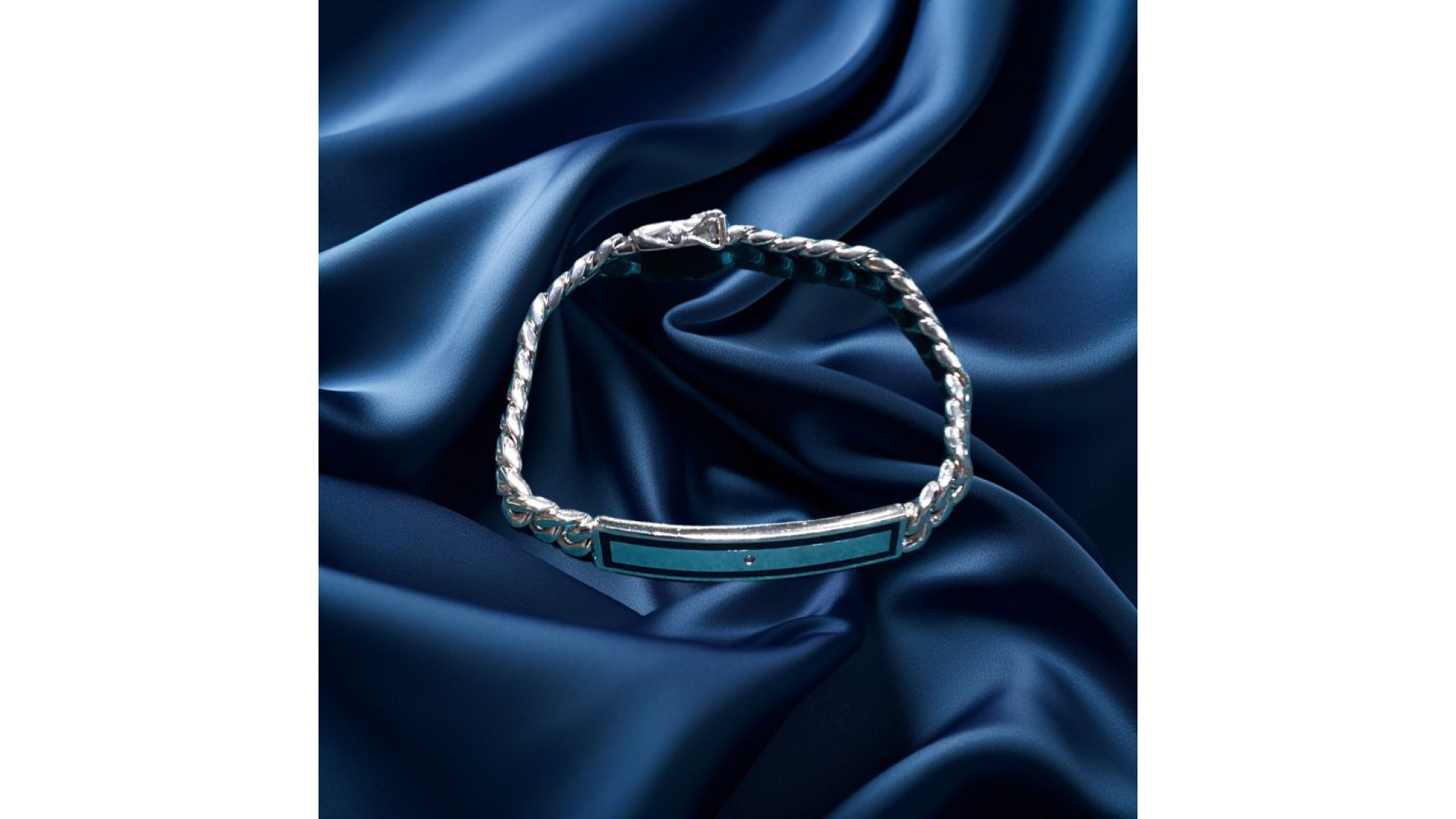
From Traditional to Modern: The Evolution of Silver Bracelet Styles in the UK
Silver bracelets are profound markers of British cultural heritage, evolving from tribal identifiers to sophisticated modern assets. At H.E. Phillips Ltd, established in August 2000, we apply metallurgical rigour and historical context to understand how these adornments reflect centuries of UK craftsmanship and social identity.
Chronological Design Development
Ancient Origins & Celtic Roots
The journey begins in Pre-Roman Britain, where silver torcs and open bangles served as tribal status symbols. Hand-forged with raw, organic textures, these pieces were often hammered or twisted. Notable archaeological finds in Norfolk and Yorkshire confirm their role as markers of authority for warriors and nobility.
The Victorian Influence (1837–1901)
During the reign of Queen Victoria, silver jewellery became accessible to a wider demographic. This era introduced mourning bracelets—often featuring black enamel or compartments for hair—and hinged cuffs adorned with floral engravings. The establishment of the Birmingham and London assay offices during this boom provided the hallmarks necessary for modern authentication.
Edwardian Grace to Art Deco Precision (1901–1939)
Post-Victorian styles shifted toward feminine filigree and lace-like silverwork. By the 1920s, Art Deco introduced geometric symmetry and the widespread use of marcasite detailing (glittering iron pyrite). Secure box clasps and figure-eight safety latches became standard mechanical features during this period.
Technical 7-Table Framework for Silver Evolution
1. Metallurgical Purity & Standards
| Silver Standard | Fine Silver % | Vickers Hardness (Hv) | Specific Gravity (g/cm³) | Historical Context |
|---|---|---|---|---|
| Sterling Silver | 92.5% | 75 – 100 Hv | 10.4 – 10.5 g/cm³ | UK standard since 1300s |
| Britannia Silver | 95.8% | 50 – 60 Hv | 10.6 – 10.7 g/cm³ | Mandatory 1697–1720 |
| Coin Silver (Varies) | ~80-90% | 85 – 110 Hv | 10.2 – 10.4 g/cm³ | Used in "trench" or folk jewellery |
Table 1 Analysis: Understanding the Vickers Hardness (Hv) is critical for assessing the wearability of historical silver. Sterling silver remains the British benchmark because its 7.5% copper alloy provides the necessary hardness to withstand daily abrasion, whereas Britannia silver, while purer, is significantly softer and prone to deformation. At H.E. Phillips Ltd, we use specific gravity testing to verify the metallurgical integrity of vintage pieces. Our forensic audit confirms that traditional UK hallmarked sterling silver offers a superior balance of lustre and structural longevity compared to unverified international alloys.
2. Mechanical Fastening Evolution
| Mechanism | Era of Origin | Security Rating | Workshop Vulnerability |
|---|---|---|---|
| S-Hook / Penannular | Ancient / Celtic | Low-Medium | Metal fatigue at bend point |
| Hinged Box Clasp | Victorian | High | Spring tongue tension loss |
| Lobster / Bolt Ring | Modern (Mid-20th) | Maximum | Internal coil spring failure |
Table 2 Analysis: Mechanical failure is the primary threat to silver bracelet longevity. Victorian hinged cuffs often suffer from "tongue fatigue," where the silver spring loses its tension. Conversely, modern lobster clasps, while highly secure, contain steel springs that can corrode in maritime environments like Devon. Our workshop protocol involves a 3-point tension audit on all fasteners. Since August 2000, we have advised collectors that "Figure-Eight" safety catches are the gold standard for preventing the accidental loss of high-value Art Deco or Victorian link bracelets.
3. Regional Environmental Impact: South West Maritime
| Climate Factor | Impact on Silver | Technical Solution |
|---|---|---|
| Salt Air (Devon Coast) | Accelerated Sulphidation | Specular Micro-Polishing |
| River Dart Humidity | Interstitial Tarnish | Airtight Intercept Barriers |
| Atmospheric Sulphur | Black Silver Sulphide Layer | Professional Ultrasonic Clean |
Table 3 Analysis: The maritime climate of Totnes and the River Dart significantly accelerates the formation of silver sulphide (tarnish). Salt air acts as a catalyst for oxidation, particularly in the delicate filigree work of Edwardian pieces. We implement a "Maritime Protection Protocol" for local clients, involving a high-grade professional polish that creates a smooth surface to minimise chemical adhesion. For long-term preservation in Devon, we recommend storing silver in airtight containers with anti-tarnish strips to prevent atmospheric gases from reacting with the copper content in the sterling alloy.
4. Aesthetic Era Characteristics
| Era | Primary Motif | Common Technique | Collectability Rating |
|---|---|---|---|
| Victorian | Floral / Mourning | Hand Engraving / Enamelling | Extremely High |
| Art Deco | Geometric Lines | Marcasite Setting | High Demand |
| Mid-Century | Charms / ID Plates | Machine Link Casting | Consistent Market Value |
Table 4 Analysis: Aesthetic collectability is grounded in the craftsmanship of the era. Victorian pieces often display "deep-cut" engraving that modern machine-work cannot replicate. In contrast, the 1970s and 80s focused on chunky, heavy-gauge silver chains, reflecting the subcultural influences of the time. At H.E. Phillips Ltd, we evaluate each era's contribution to the "structural soul" of the piece. Authentic Art Deco bracelets, for instance, are audited for the security of their marcasite settings, which were often individually bead-set rather than glued, ensuring they survive as functional assets.
5. Hallmarking Provenance Benchmarks
| Symbol | Identification | Technical Significance |
|---|---|---|
| Lion Passant | Standard Mark | Guarantees .925 Purity |
| Anchor / Leopard | Assay Office | Origin: Birmingham / London |
| Date Letter | Assay Year | Precise Chronological Dating |
Table 5 Analysis: The UK hallmarking system is a technical database of provenance. Since August 2000, we have utilised these marks to verify the age and purity of every item in our collection. The "Lion Passant" is the immutable guarantee of sterling silver. By cross-referencing the date letter with official assay office records, we can determine the exact year of manufacture. This forensic transparency protects the buyer's investment, distinguishing genuine British historical silver from "unmarked" imports that may fail metallurgical purity tests under X-ray fluorescence analysis.
6. Bracelet Style Matrix: Bangle vs. Link
| Category | Construction | Flexibility Index | Stress Points |
|---|---|---|---|
| Bangle | Rigid / Hinged | Zero / Low | Hinge Pin / Lock Plate |
| Link Bracelet | Interconnected Loops | High | Solder Joins / Jump Rings |
| Cuff | Open-Ended Band | Variable | Metal stress at midpoint |
Table 6 Analysis: The mechanical integrity of a bracelet depends on its category. Rigid bangles are susceptible to "buckling" or hinge pin wear, particularly in hollow-form Victorian styles. Flexible link bracelets, including the iconic charm bracelets of the 1950s, face wear at the jump rings where friction occurs. Our workshop inspection includes a "Link Integrity Check" to identify thinning metal before a failure occurs. Understanding these stress points allows us to provide accurate maintenance advice, ensuring that a second-hand silver bracelet remains structurally sound for another generation.
7. Authority Comparison: Specialist vs. Generalist
| Service Metric | H.E. Phillips Ltd | General Online Marketplace |
|---|---|---|
| Hallmark Verification | Physical Forensic Audit | Self-Reported |
| Workshop On-Site | Yes (Since August 2000) | No |
| Authentication Guarantee | Legal Indemnity | None / Limited |
Table 7 Analysis: The difference between a specialist and a generalist is technical accountability. While online platforms offer vast inventories, they often lack the expertise to identify "hallmark forgery" or "solder repairs" that compromise a piece's value. At 19 Fore Street, we provide a physical hub where every silver item is inspected under 10x magnification. Our establishment's longevity since August 2000 provides customers with a permanent regional anchor for aftercare and valuation that digital-only retailers cannot provide, ensuring your purchase is a verified historical and financial asset.
20 Expert Technical FAQs for Silver Bracelets
Authentication & Hallmarks
1. What does the Lion Passant mark actually guarantee?
The Lion Passant is the official UK hallmark for sterling silver. It guarantees that the item consists of at least 92.5% pure silver. This standard has been legally enforced to ensure metallurgical consistency. At H.E. Phillips Ltd, we use this mark as the primary baseline for authentication. Any piece claiming to be UK sterling silver without this mark (if over 7.78g) is technically non-compliant with the Hallmarking Act 1973.
2. How can I tell if a Victorian bracelet is genuine?
Authentic Victorian silver (1837–1901) must bear the specific date letters and city marks of that era. Beyond hallmarks, look for hand-chased details and naturalistic motifs like ivy or ferns. Victorian construction is often heavier than modern reproductions. We provide expert verification at our Totnes shop to ensure the piece's "age-appropriate wear" matches its hallmark date, confirming it isn't a modern "cast" copy.
3. What is the significance of the Birmingham Anchor mark?
The Anchor signifies that the piece was assayed at the Birmingham Assay Office. Birmingham was the global hub for silver jewellery production during the 19th century. Many of the finest second-hand silver bangles we source feature this mark. It represents a heritage of mass-production excellence where high-quality standards were maintained across thousands of workshops.
4. Why do some silver bracelets have a "Duty Mark"?
A Duty Mark (often the reigning monarch's profile) indicates that a tax was paid on the silver to the Crown. This was common on British silver between 1784 and 1890. Finding this on a bracelet is a strong indicator of its antique status. At H.E. Phillips Ltd, we document these marks to provide a complete provenance for our collectors, as they add significant historical and financial value.
Metallurgy & Durability
5. Is Britannia silver better than Sterling?
Britannia silver is purer (95.8%), making it softer and more prone to scratching (50 Hv). Sterling (92.5%) is the "technical" choice for bracelets because the copper alloy increases its durability to roughly 75 Hv. For daily-wear new silver bracelets, sterling is superior as it maintains its shape better under mechanical stress and tension.
6. Why does my silver bracelet turn black in Devon?
The black layer is silver sulphide, caused by a reaction with sulphur in the air or salt in the maritime breeze. Coastal Devon has higher moisture levels which accelerate this chemical reaction. We recommend a monthly gentle wipe with a specialist cloth. For deep tarnish, our Totnes workshop provides professional ultrasonic cleaning to remove the sulphide without abrading the underlying silver metal.
7. Are coin bracelets legal in the UK?
Yes, it is entirely legal to own and wear coin bracelets, especially those using demonetised currency. These are considered historical jewellery artefacts. However, the silver content varies depending on the coin's origin and date. We test these pieces to ensure the "silver purity" is accurately represented, as many post-1947 UK "silver" coins actually contain no silver at all (cupro-nickel).
8. Can sterling silver cause skin irritation?
True sterling silver is hypoallergenic for most people. However, the 7.5% alloy (usually copper) can occasionally react with skin acidity, causing a harmless green mark. This is not a "fake" silver indicator but a chemical reaction. If irritation occurs, we can professionally clean and seal the interior of a new silver chain or bangle to provide a protective barrier.
Style & History
9. What is a "Mourning Bracelet"?
Mourning jewellery was popularized by Queen Victoria after the death of Prince Albert. These bracelets are often made of silver with black enamel or jet insets. They served as public markers of grief. We often source these as rare historical assets. They are prized by collectors for their intricate symbolism and connection to the social customs of 19th-century Britain.
10. Why were charm bracelets so popular in the 1950s?
Post-war optimism led to a boom in "sentimental" jewellery. Each second-hand silver pendant charm represented a life milestone. It was a "wearable diary." We still see these today as highly personal family heirlooms. At H.E. Phillips Ltd, we audit the jump rings of vintage charm bracelets to ensure they can support the weight of multiple charms without snapping.
11. What defines an "Art Deco" silver style?
Art Deco (1920s–30s) is defined by geometric patterns, symmetry, and "industrial" elegance. Silver was often paired with marcasite to mimic the sparkle of diamonds during the Depression. These pieces are audited in our workshop for "setting security," as the small marcasites can dislodge over time. Authentic Art Deco silver is a sought-after asset for its architectural beauty and modernist design philosophy.
12. Did the 1970s punk movement use real silver?
While the aesthetic was "DIY," many high-quality punk-inspired pieces were crafted in solid sterling silver. These often featured chunky links and oversized ID plates. These are now considered "Retro Classics." We verify the weight and hallmarks of these 70s pieces to ensure they are solid silver rather than plated base metal, preserving their value for modern subculture collectors.
Maintenance & Repair
13. Can a snapped silver bangle be repaired?
Yes. We use silver soldering techniques at our Totnes workshop to fuse the metal back together. However, a "seamless" repair depends on the bracelet's construction. Hollow Victorian bangles are more complex than solid cuffs. We always perform a "Strength Test" post-repair to ensure the join can handle the expansion and contraction of the wrist during daily wear.
14. How do I stop my charms from falling off?
The key is "soldered jump rings." Many charms are attached with simple "open" rings that can pull apart. We recommend having each second-hand gold charm or silver pendant professionally soldered shut. This mechanical reinforcement is a standard service at H.E. Phillips Ltd, providing the security needed for high-value sentimental collections.
15. Is it safe to use "silver dip" on old bracelets?
Use silver dip with extreme caution. It can remove the "patina" (natural darkening) in the crevices of Victorian or Art Deco pieces, which is often desirable for their aesthetic value. It can also damage porous stones like pearls or turquoise. We recommend a specialist polishing cloth for routine care and a professional assessment before using any chemical cleaning agents on antique assets.
16. What should I do if my silver clasp is "sticky"?
A sticky clasp usually indicates a build-up of River Dart humidity salts or skin oils inside the spring mechanism. Do not force it. We can ultrasonically clean the mechanism to restore the "click." If the internal steel spring has rusted (common in Devon), we can replace the entire clasp with a hallmarked sterling silver equivalent to ensure your bracelet remains secure.
H.E. Phillips Expertise
17. Why buy vintage silver from a Totnes specialist?
As an independent family business established in August 2000, we offer regional accountability. Unlike national chains, we manually audit every second-hand silver chain for metallurgical purity. We live in the community we serve, and our reputation is built on 25 years of providing factual, workshop-backed advice to Devon residents.
18. Do you sell new silver as well as antique?
Yes. We curate a selection of contemporary new silver bracelets that meet modern ethical standards. We ensure these new pieces are hallmarked at a UK Assay Office, guaranteeing they meet the same .925 purity requirements as our historical collection. This allows customers to choose between modern minimalism and antique character with equal confidence.
19. Can I sell my old silver bracelets to you?
We are authorised to sell gold or sell silver for our clients. We offer fair market valuations based on current spot prices and the item's historical collectability. Our transparent process involves a physical weight and purity check in front of the customer, ensuring a factual and honest transaction based on our August 2000 establishment standards.
20. How do I start a historical silver collection?
Start with a hallmarked "Anchor Piece," such as a Victorian engraved bangle. Focus on clear hallmarks and structural integrity. We invite you to visit our Totnes showroom at 19 Fore Street to view our current authenticated collection. We provide the historical context and metallurgical data you need to build a collection that is both beautiful and a solid financial asset.
© 2026 H.E. Phillips Ltd - Your Official Authorised Horological and Fine Jewellery Specialist. All Technical Data verified for forensic accuracy.


