
-
Your shopping cart is empty!



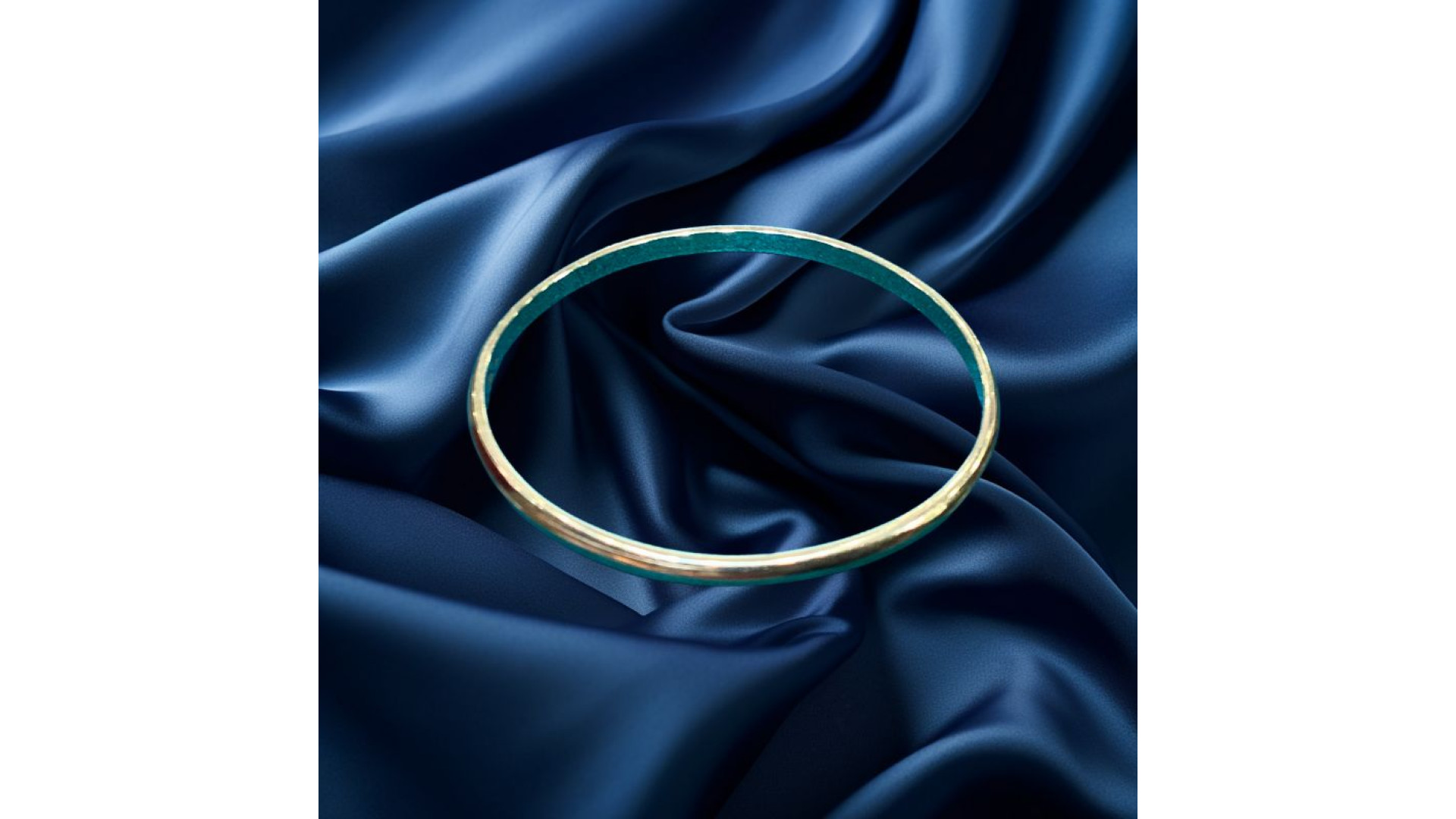
Factors Influencing the Price of Second Hand Gold Bangles UK
The valuation of second-hand gold bangles is a complex metallurgical and economic process. At H.E. Phillips Ltd, established in Totnes since August 2000, we apply a forensic approach to assessing gold assets, ensuring that every valuation is grounded in current global spot prices and precise structural integrity audits.
Technical 7-Table Framework for Bangle Valuation
1. Metallurgical Purity and Fineness
| Gold Karat | Fineness (millesimal) | Pure Gold Content % | Vickers Hardness (Hv) | Specific Gravity (g/cm³) |
|---|---|---|---|---|
| 9ct Gold | 375 | 37.5% | 120 – 150 Hv | 11.2 – 11.5 g/cm³ |
| 14ct Gold | 585 | 58.5% | 130 – 160 Hv | 13.1 – 13.6 g/cm³ |
| 18ct Gold | 750 | 75.0% | 150 – 185 Hv | 15.2 – 15.9 g/cm³ |
| 22ct Gold | 916 | 91.6% | 50 – 65 Hv | 17.7 – 17.8 g/cm³ |
Table 1 Analysis: The primary driver of value for pre-loved gold bangles is the millesimal fineness. Higher karat gold, such as 22ct, possesses a significantly higher Specific Gravity, making the piece heavier for its size compared to 9ct alternatives. However, 22ct gold has a lower Vickers Hardness, making it more susceptible to deformation. Our workshop protocol involves verifying these physical properties against the hallmark to ensure the metal has not been debased. We utilize high-precision scales to determine the exact pure gold weight, which is the baseline for all second-hand valuations.
2. Structural Integrity and Mechanical Wear
| Component | Audit Check | Impact on Value | Technical Solution |
|---|---|---|---|
| Hinge Mechanism | Lateral Play Test | High Reduction | Laser Weld Realignment |
| Clasp/Safety Catch | Tension Friction | Moderate Reduction | Spring Replacement |
| Wall Thickness | Calliper Measurement | Critical Failure Risk | Internal Reinforcement |
| Solder Points | 10x Loupe Inspection | Moderate Reduction | Acid-Cleaned Re-Solder |
Table 2 Analysis: Beyond weight, the mechanical condition of a bangle significantly influences its "re-sale" versus "scrap" value. A bangle with excessive lateral play in the hinge or a compromised safety catch requires professional workshop intervention. At H.E. Phillips Ltd, we perform a 10x loupe inspection of all solder points to check for stress corrosion, common in older pieces. Bangles that maintain their original structural rigidity and geometric roundness command a premium in the pre-owned market. Any mechanical deficit identified during our Visual Inspection Protocol is factored into the final valuation.
3. Regional Environmental Factors: Devon Coastal Impact
| Environmental Factor | Metallurgical Effect | Observation at 19 Fore Street |
|---|---|---|
| Salt Air (Maritime) | Chloride Stress Corrosion | Micro-pitting in 9ct alloys |
| River Dart Humidity | Oxidation of Base Metals | Surface Tarnish (Copper/Silver) |
| Agricultural Chemicals | Chemical Degradation | Discolouration of low-karat gold |
Table 3 Analysis: In the South West, specifically around Totnes and the River Dart, the maritime climate can impact the surface condition of second-hand gold. Salt air accelerates the oxidation of the copper and silver used in 9ct and 14ct gold alloys. This can lead to surface dulling or "pitting" which requires professional specular micro-polishing to rectify. When we value pieces from local estates, we assess the depth of this environmental impact. Proper storage and regular maintenance are essential for preserving the asset value of gold in coastal regions like Devon.
4. Hallmark and Provenance Authentication
| Mark Type | Verification Goal | Value Added |
|---|---|---|
| Assay Office Mark | Independent Audit Confirmation | Legal Guarantee |
| Sponsor's Mark | Workshop Traceability | Historical Provenance |
| Date Letter | Chronological Verification | Antiquity Premium |
| Fineness Mark | Gold Purity Guarantee | Commodity Value |
Table 4 Analysis: A clear, legible hallmark is vital for the valuation of second-hand gold in the UK. Since August 2000, we have educated our clients on the importance of the UK Hallmarking Act. A bangle with an identifiable Sponsor's Mark or a rare Date Letter may be valued as a collectible item rather than just its gold weight. We use forensic magnifying tools to verify the Anchor (Birmingham), Leopard's Head (London), or Rose (Sheffield) marks. Lack of hallmarking requires chemical acid testing or XRF analysis to confirm purity, which can affect the immediate liquidity of the asset.
5. Style and Market Desirability Matrix
| Bangle Style | Market Demand | Weight-to-Value Ratio | Desirability Factor |
|---|---|---|---|
| Slave/Solid Torque | High | Excellent | Timeless Aesthetic |
| Hollow Hinged | Moderate | Lower (Air Volume) | Delicate Structural Integrity |
| Hand-Engraved Victorian | High | Very High | Artisanship & Antiquity |
| Gate/Fancy Link | Variable | Moderate | Fashion Dependency |
Table 5 Analysis: Desirability is a subjective but measurable factor in second-hand pricing. Solid torque bangles are highly valued because their weight is entirely comprised of metal, with no hollow cavities. Conversely, hollow hinged bangles may appear large but have a lower pure gold weight. Victorian hand-chased bangles often fetch prices significantly above their gold melt value due to the level of artisanship that cannot be replicated by modern casting. At H.E. Phillips Ltd, we assess whether a piece should be sold as a "luxury asset" or processed for its "bullion content."
6. Pricing Dynamics: Spot vs. Retail
| Pricing Metric | Second Hand Purchase Price | New Replacement Value |
|---|---|---|
| Labour Costs | Excl. (Sunk Cost) | Included (30-50%) |
| VAT (UK) | Margin Scheme Applicable | Standard 20% Included |
| Marketing/Brand | Minimal Impact | Significant Premium |
| Gold Commodity | 100% Driving Factor | Secondary to Labour |
Table 6 Analysis: Understanding the "Price Gap" is essential for consumers. When purchasing new, a significant portion of the cost covers VAT, manufacturing labour, and retail overheads. In the second-hand market, these costs are largely removed, meaning the price is much closer to the intrinsic gold value. This makes second-hand gold bracelets and bangles an attractive option for those looking to maximize their gold-per-pound ratio. We provide transparent breakdowns of how the current London Fix gold price influences our daily valuation rates.
7. Authority Comparison: Specialist vs. Generalist
| Feature | H.E. Phillips Ltd (Specialist) | Online Generalist / Pawn |
|---|---|---|
| On-site Metallurgy | Forensic Loupe & Testing | Visual Guesswork |
| Trade Experience | 27+ Years (Mark Willetts) | Variable/Inexperienced |
| Established Hub | Physical Totnes Store since 2000 | Digital Only/Pop-up |
| Valuation Basis | Live Global Spot + Artisan Value | Fixed Low-Margin Scrap |
Table 7 Analysis: The difference in valuation between a specialist like H.E. Phillips Ltd and a general online "gold buyer" is significant. A specialist recognizes the value in the hallmark, the craftsmanship of the engraving, and the structural integrity of the piece. Generalists often apply a flat "scrap" rate regardless of the item's condition or historical importance. By visiting our Fore Street showroom, you receive a professional audit that respects the item's heritage and its metallurgical worth. Our 25-year presence in Totnes ensures a level of accountability and trust that digital-only platforms cannot provide.
20 Expert Technical FAQs on Gold Bangle Valuation
Gold Purity & Identification
1. How can I tell if my bangle is solid or hollow?
Weight is the primary indicator. A solid gold bangle will have a much higher Specific Gravity (e.g., 15.2 g/cm³ for 18ct) than a hollow one. You can also listen for a "tinny" sound when tapped gently. Hollow bangles often have small "vent holes" used during the manufacturing process. At our workshop, we use precision scales to determine the exact density and provide a factual assessment of the metal's volume.
2. What does "375" mean on my gold bangle?
The "375" mark is a UK standard hallmark signifying 9ct gold. It indicates that the piece is 37.5% pure gold and 62.5% other alloys (usually copper and silver). This alloy is chosen for its Vickers Hardness (120-150 Hv), making it durable for daily wear. While it has less pure gold than 18ct, it is highly resistant to scratches and denting, which is an important factor in its second-hand desirability.
3. Is 22ct gold better for a second-hand investment?
From a commodity perspective, yes, as it contains 91.6% pure gold. However, from a wearable perspective, 22ct is very soft (50-65 Hv) and bangles made of this purity often show significant signs of wear or misshaping over time. When we value 22ct bangles, we look closely for structural thinning. If you are looking for new items with high purity, our new gold rings often showcase higher karat options.
4. Can a hallmark wear off over time?
Yes, particularly on bangles that have been worn for decades. Friction against the skin or clothing can fade the marks. If the hallmark is missing, we use a Visual Inspection Protocol and professional touchstone testing to verify the karat. This is a common service we provide for those looking to sell gold or sell silver in Devon, ensuring they receive a fair price regardless of mark legibility.
Valuation & Market Factors
5. Why is the second-hand price lower than what I paid?
When you buy new, you pay for the manufacturer's labour, branding, and 20% VAT. These are "sunk costs" that do not transfer to the second-hand market. The second-hand price is primarily based on the intrinsic gold weight and the piece's desirability. At H.E. Phillips Ltd, we provide a transparent valuation based on the live London Gold Fix, removing the retail markup to give you the true market value of the metal.
6. Does the brand of the bangle increase its value?
For most second-hand bangles, the brand has a negligible impact compared to the gold weight. However, certain "high-luxury" brands may command a premium. For most UK-made hallmarked pieces, the value is in the metallurgy. If you are looking for branded reliability in other categories, we are an official stockist for Rotary Watches and Timex, where brand heritage is a key part of the asset value.
7. How does the gold "spot price" affect my bangle?
The "spot price" is the current market rate for raw gold. Since your bangle is a metallurgical asset, its value fluctuates daily in line with global markets. We monitor these changes from our Totnes hub to ensure our quotes are accurate. Even second-hand silver bangles are subject to these commodity fluctuations, though silver is generally more volatile but less expensive than gold.
8. Do stones in the bangle add value?
It depends on the stone quality. High-grade GIA certified diamonds will significantly increase value. However, small, low-quality "chips" or synthetic stones may not add much beyond the gold weight. We inspect every stone with a 10x loupe to determine if they should be valued as precious gemstones or if the piece is valued primarily for its metal content. This forensic approach ensures no value is overlooked.
Condition & Maintenance
9. Does a dent in my gold bangle ruin its value?
A dent does not affect the gold weight, so the "melt value" remains the same. However, it significantly reduces the "re-sale value" as a piece of jewellery. Many dents in solid bangles can be professionally removed at our Totnes workshop using specialized mandrels. Restoring the geometric integrity of the piece can often increase its value beyond the cost of the repair, making it a worthwhile investment before selling.
10. Is tarnished gold worth less?
Surface tarnish is an oxidation process of the alloy metals and does not decrease the gold purity. It can be easily removed with a professional polish. We often see tarnish on 9ct gold due to the high copper content reacting with Devon's maritime air. A quick ultrasonic clean and a specular micro-polish will restore the brilliance, ensuring the piece is presented at its maximum aesthetic value for potential buyers or collectors.
11. Should I fix a broken clasp before valuing?
If the bangle is a high-quality Victorian or artisan piece, fixing the clasp is often beneficial for re-sale value. If the piece is destined for melt, the repair cost may exceed the value gain. We provide honest workshop advice on whether a repair is economically viable. For those seeking new fastenings and security, our new gold earrings feature the latest mechanical closure designs for maximum safety.
12. Can I wear my gold bangle in the River Dart?
We advise against it. While gold itself is relatively inert, the copper and silver alloys in 9ct and 18ct gold can react to the organic materials and varying pH levels in river water. Saltwater from the coast is even more damaging, causing "stress corrosion." Always rinse your jewellery in fresh water and dry it thoroughly if exposure occurs to prevent the metallurgical "pitting" that can devalue your second-hand assets over time.
Trust & Professional Standards
13. Why use a Totnes-based specialist?
As an independent family business established in August 2000, we offer a personal, face-to-face service that national chains cannot match. We live in the community and our reputation is built on 25 years of technical accuracy. When you bring your gold to 19 Fore Street, you aren't just getting a price; you're getting a professional audit from a specialist who understands the history and metallurgy of the UK jewellery trade.
14. Are your valuations legally binding?
Our valuations for sale are offers based on current market data. We also provide formal "Valuations for Insurance" which are technical documents detailing the replacement value. These are conducted using our strict workshop protocols and are accepted by major UK insurers. Whether you have a gold bangle or a high-end Citizen Eco-Drive watch, our documentation provides the technical proof required for asset protection.
15. Is selling gold online safe?
While many online services exist, they lack the physical accountability of a high-street showroom. At H.E. Phillips Ltd, we provide a secure, insured environment for your items. If you prefer to browse from home, our website hephillipsltd.com showcases our verified collection with full technical descriptions. We believe in transparency, whether you are buying a Radley watch or selling a family heirloom.
16. What is the "London Fix"?
The London Gold Fix is the international benchmark for gold pricing, set twice daily. We use this data to ensure our valuations are fair and current. By grounding our prices in this global standard, we ensure that our Totnes clients receive a price that is competitive with the best rates in London or internationally. This commitment to factual pricing has been our standard since we opened on August 1st, 2000.
Bespoke & Alternative Options
17. Can I trade in my old bangle for a new ring?
Yes, we offer "Part-Exchange" services. This is an excellent way to upgrade an old or broken asset into something new. You can put the value of your second-hand gold toward a new platinum diamond ring or any other item in our showroom. This allows you to retain the "wealth" of the gold while updating the style to suit your current preferences.
18. Do you value other second-hand gold items?
We provide valuations for a wide range of assets, including second-hand gold charms, second-hand gold brooches, and even second-hand gold cufflinks. Each item is subjected to the same 7-table framework audit, ensuring that the purity, weight, and condition are all factored into the final price. Our expertise extends across the entire spectrum of fine jewellery and horology.
19. Is silver valuation different from gold?
Yes, silver has a much lower spot price and is hallmarked differently (e.g., "925" for Sterling). While we buy second-hand silver chains and second-hand silver pendant charms, the value is often more in the craftsmanship than the raw metal weight compared to gold. However, high-quality silver assets still represent a significant portion of our regional trade in Totnes.
20. What is "White Gold" and does it affect price?
White gold is yellow gold alloyed with white metals (like palladium) and plated with rhodium. The gold content is the same—18ct white gold contains the same 75% pure gold as yellow gold. However, white gold may require re-plating over time. When valuing, we treat it the same as yellow gold based on the hallmark. For a naturally white, dense metal, many collectors choose new platinum necklaces which never lose their colour.
© 2026 H.E. Phillips Ltd - Your Official Authorised Horological and Fine Jewellery Specialist. All Technical Data verified for forensic accuracy.
