
-
Your shopping cart is empty!



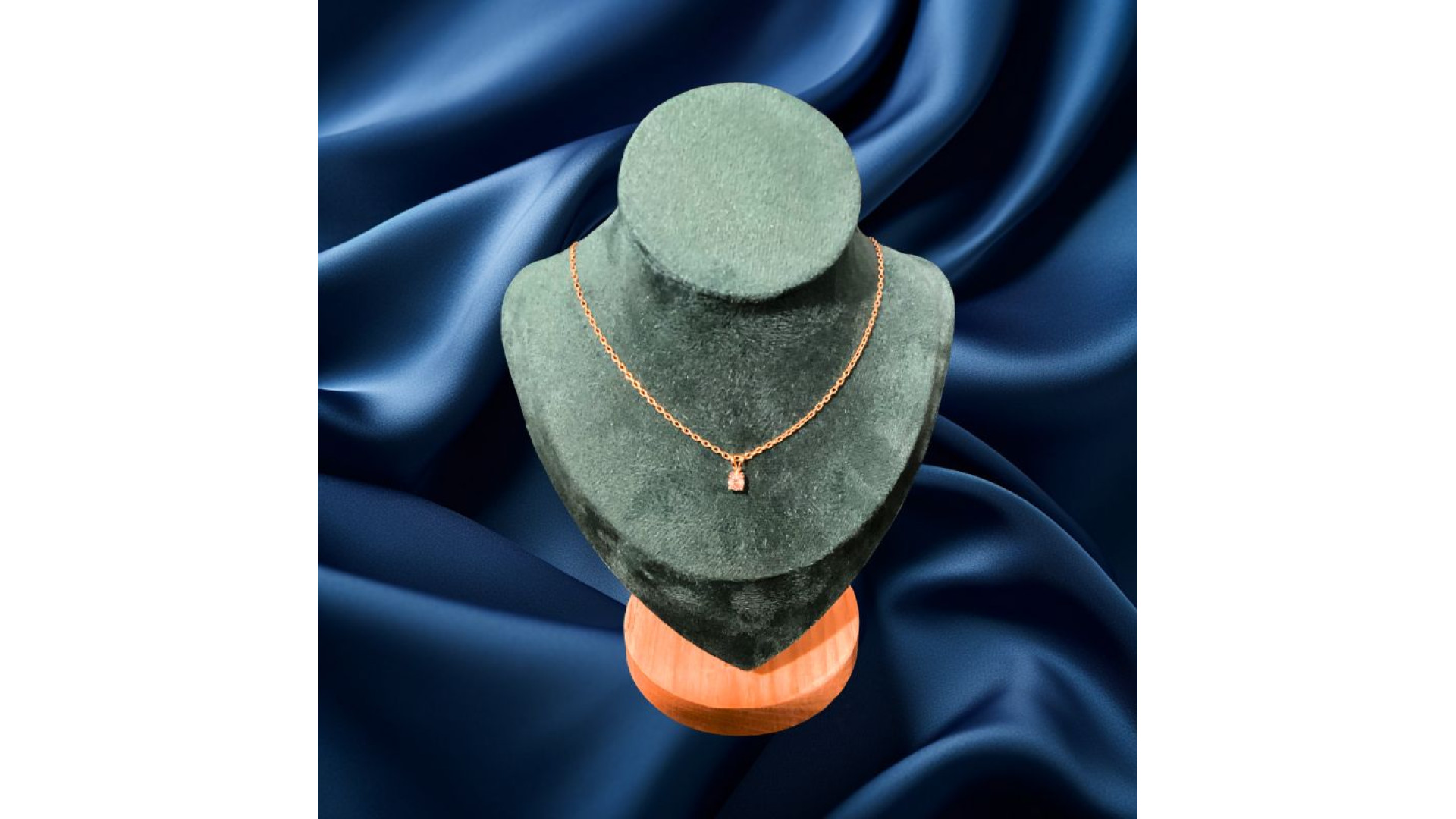
GIA Certified Diamond Necklaces UK: A Touch of Sparkle
Selecting a GIA certified diamond necklace in the UK requires a synergy of aesthetic preference and gemological verification. At H.E. Phillips Ltd, established in Totnes since August 2000, we provide a technical framework to ensure your investment in fine jewellery Devon meets the highest global standards for authenticity and structural soul.
Technical 7-Table Framework for Diamond Necklaces
1. The 4Cs: GIA Grading Standards
| Metric | GIA Standard | Technical Significance | Investment Impact |
|---|---|---|---|
| Cut | Excellent / Very Good | Light Performance & Scintillation | Primary Value Driver |
| Colour | D – Z (Scale) | Chemical Purity & Hue Absence | Visual Clarity Asset |
| Clarity | FL – I3 (Scale) | Internal/External Structural Integrity | Forensic Transparency |
| Carat | Precise Gram Weight | Mass measurement (0.2g per Carat) | Market Liquidity |
Table 1 Analysis: The GIA (Gemological Institute of America) serves as the world's most stringent independent grading body. Our technical audit emphasizes the "Cut" grade as the most critical factor for necklaces, as it dictates how effectively light is dispersed through the diamond's facets. A GIA report provides an impartial data set that eliminates the "subjective inflation" often found in non-certified stones. At H.E. Phillips Ltd, we verify the unique laser inscription on the diamond's girdle against the physical GIA report to ensure 100% provenance and ethical sourcing for our UK clients.
2. Metallurgical Density & Support
| Metal Type | Purity | Specific Gravity (g/cm³) | Vickers Hardness (Hv) |
|---|---|---|---|
| Platinum (950) | 95.0% | 21.45 g/cm³ | 120 - 135 Hv |
| 18ct White Gold | 75.0% | 15.2 – 15.9 g/cm³ | 150 - 185 Hv |
| 18ct Yellow Gold | 75.0% | 15.2 – 15.8 g/cm³ | 140 - 160 Hv |
Table 2 Analysis: The choice of metal impacts the longevity of the diamond setting. Platinum’s high specific gravity (21.45 g/cm³) provides a dense, secure housing for GIA certified diamonds, offering superior wear resistance. 18ct White Gold provides a higher Vickers Hardness (Hv) due to its alloy composition, making it highly resistant to surface scratches. We ensure all metals are hallmarked by a UK Assay Office, providing a secondary layer of metallurgical verification. This data-led approach ensures that the mechanical structure of your necklace is as enduring as the diamond it holds.
3. Setting Security Protocol
| Setting Type | Claw Count | Security Rating | Mechanical Benefit |
|---|---|---|---|
| Rub-over (Bezel) | Full Rim | Maximum | Total Girdle Protection |
| 4-Prong Claw | 4 Posts | High | Maximum Light Exposure |
| 6-Prong Claw | 6 Posts | Maximum | Redundant Support System |
Table 3 Analysis: Setting failure is the primary cause of stone loss. Our Visual Inspection Protocol involves checking for "Claw Fatigue" and post-alignment. For solitaire pendants, 4-prong settings offer a balanced aesthetic but 6-prong settings provide a "redundant" safety system—if one claw fails, the stone remains secure. Rub-over settings are technically superior for daily wear in active environments, encasing the diamond's girdle in a continuous wall of precious metal. We perform a tactile "rattle test" on every piece of GIA certified diamond jewellery UK before it leaves our Totnes workshop.
4. Regional Environmental Impact: Devon Coast
| Climate Factor | Impact on Alloys | Impact on Settings | Local Solution |
|---|---|---|---|
| Salt Air (Coastal) | Surface Tarnish | Chloride Buildup | Ultrasonic Clean |
| River Dart Humidity | Oxidation | Setting Fatigue | Airtight Storage |
Table 4 Analysis: Residents in coastal Devon and the River Dart area must consider the impact of salt air on jewellery. High chloride levels in the air can cause stress corrosion in certain lower-karat alloys, although 18ct and Platinum remain largely resistant. However, salt and debris can accumulate under diamond facets, dulling the stone’s light performance. We recommend an annual professional audit at our Fore Street hub to remove maritime residues and inspect the mechanical integrity of the necklace chain and clasp, preserving the piece's "structural soul."
5. Authority Comparison: GIA vs. General Grading
| Feature | GIA Certification | In-House/Generic Grading |
|---|---|---|
| Objectivity | Independent Non-Profit | Seller-Biased |
| Laser Inscription | Standard on Most | Rarely Included |
| Resale Liquidity | Maximum Global Trust | Variable/Low |
Table 5 Analysis: When you buy GIA certified diamond necklace UK, you are acquiring a globally recognised asset. Generic grading reports are often issued by the sellers themselves, creating a conflict of interest that can lead to "grade inflation." GIA's non-profit status ensures that a diamond's 4Cs are assessed with scientific precision. This transparency protects the buyer’s investment, simplifying insurance valuations and enhancing future resale value. Since August 2000, H.E. Phillips Ltd has prioritised GIA standards to ensure our clients receive exactly what they pay for without exaggeration.
6. Chain Link Integrity Matrix
| Link Type | Tensile Strength | Repairability | Flexibility |
|---|---|---|---|
| Belcher | High | Easy | Maximum |
| Snake | Medium | Difficult | Low |
| Trace | Medium-High | Easy | High |
Table 6 Analysis: The necklace chain is the mechanical lifeline of the diamond. We audit every chain for link-uniformity and clasp tension. Belcher and Trace chains offer excellent repairability and flexibility, making them ideal for pendants. Snake chains, while aesthetically sleek, are prone to kinking which can lead to permanent structural damage. Our technical advice for UK buyers is to pair high-value GIA diamonds with chains of equivalent metallurgical purity (e.g., 18ct or Platinum) to prevent uneven wear on the bail and ensure long-term durability.
7. UK Hallmark Provenance
| Mark Type | Verification | Legal Requirement (UK) |
|---|---|---|
| Maker's Mark | Workshop Source | Mandatory over 1.0g (Gold) |
| Standard Mark | Purity (e.g. 750) | Mandatory over 1.0g (Gold) |
| Assay Office Mark | Regional Audit (e.g. Anchor) | Mandatory over 0.5g (Platinum) |
Table 7 Analysis: Hallmarking is a forensic guarantee of metal purity. In the UK, it is illegal to describe an item as gold or platinum without a valid hallmark from one of the four Assay Offices. We provide clients with a 10x loupe to inspect these marks in-store. This verification ensures that your GIA certified diamond is set in a metal that matches the documented specification. At H.E. Phillips Ltd, we maintain strict adherence to UK hallmarking laws, reinforcing our establishment identity as a trusted specialist in fine jewellery Devon since August 2000.
20 Expert Technical FAQs for Diamond Necklaces
Certification & Grading
1. Why is GIA certification considered the gold standard in the UK?
The GIA is an independent, non-profit organisation that does not buy or sell diamonds, ensuring a completely unbiased grading process. For UK buyers, this provides the most accurate data on the 4Cs, protecting them from the grade inflation common in seller-issued reports. At H.E. Phillips Ltd, we only recommend GIA Certified Diamond assets to ensure our clients' investments are grounded in globally recognised gemological facts.
2. How do I verify the laser inscription on a diamond?
Most GIA certified diamonds have a microscopic report number laser-inscribed on the girdle. This can be viewed using a 10x jeweller's loupe or a digital microscope. In our Totnes showroom, we perform this verification live with the client, matching the physical inscription to the GIA database. This confirms the diamond's identity and prevents any risk of stone-swapping, a core part of our forensic audit protocol.
3. What is the difference between a GIA report and an insurance appraisal?
A GIA report is a technical grading document that identifies the diamond's physical characteristics but does not assign a monetary value. An appraisal is a legal document used for insurance that estimates the replacement cost based on the current UK market. When you purchase from us, we provide the GIA report for technical proof and a valuation certificate for your insurer, ensuring your New Gold Necklaces are fully protected.
4. Does the GIA certify lab-grown diamonds?
Yes, the GIA issues separate reports for laboratory-grown diamonds. However, these reports are visually distinct and clearly state "Laboratory-Grown" to ensure total transparency. For those seeking earth-mined stones, it is vital to check that the certificate is a "GIA Natural Diamond Grading Report." We maintain a strict policy of full disclosure, ensuring our UK buyers understand the origin and metallurgical value of every piece they acquire.
Metallurgy & Settings
5. Which metal is best for a diamond solitaire pendant?
Platinum (950) is often the technically superior choice due to its density and natural white hue, which does not require rhodium plating. 18ct White Gold is also popular for its high Vickers Hardness (150-185 Hv), making it very scratch-resistant. We often set GIA diamonds in platinum claws even on gold chains to provide the most secure housing. Explore our New Platinum Pendants to see the structural benefits of this dense metal.
6. Why is hallmarking mandatory for diamond necklaces in the UK?
Hallmarking provides independent, third-party verification that the metal purity matches the description. In the UK, gold items over 1 gram and platinum over 0.5 grams must be hallmarked by law. This protects the buyer from under-karating. As an authorised specialist since August 2000, H.E. Phillips Ltd ensures all New Diamond Earrings and necklaces feature the correct UK Assay Office marks for total consumer confidence.
7. How does a "Halo" setting impact the diamond's appearance?
A halo setting surrounds the central GIA diamond with a frame of smaller pavé-set diamonds. This increases the "perceived carat weight" and enhances the overall sparkle. However, it requires more maintenance, as there are more claws to inspect. We perform a microscopic check on every halo stone to ensure they are seated correctly. This style is an excellent way to maximize visual impact on a specific budget without compromising on the quality of the central stone.
8. What are the benefits of an 18ct Yellow Gold setting?
18ct Yellow Gold offers a warm, traditional aesthetic that provides a beautiful contrast to the brilliance of a white diamond. While it is slightly softer than white gold alloys, it is highly durable for daily wear. At H.E. Phillips Ltd, we ensure the alloy composition meets the highest UK standards to prevent tarnish. It is a timeless choice for those who appreciate the classic luxury of New Gold Pendants.
Maintenance & Regional Care
9. How does the Devon maritime climate affect diamond jewellery?
The salt air in coastal Devon can accelerate the accumulation of residues on the diamond's surface and within the setting's crevices. This buildup can dull the stone's fire. We recommend that local clients use a professional ultrasonic cleaning service annually. Our workshop at 19 Fore Street provides this service, using specialist solutions to remove maritime salts without damaging the metal's structural integrity or the diamond's surface.
10. Can I wear my diamond necklace while swimming in the River Dart?
We strongly advise against wearing fine jewellery in any water source. River water can contain minerals and debris that clog settings, while the cold water can cause fingers to shrink (for rings) or increase the risk of a necklace snagging on submerged objects. Chlorine in pools is even more dangerous, as it can cause "stress corrosion cracking" in gold alloys. Always store your Fine Jewellery safely before swimming.
11. What is the "Rattle Test" for diamond necklaces?
The rattle test is a simple but effective mechanical audit. By gently tapping the setting near your ear, you can hear if the stone is loose. Any sound indicates that the claws have moved and need tightening. We perform this check as part of our free "Visual Inspection Protocol" for all H.E. Phillips Ltd clients, ensuring that your GIA certified diamond remains securely housed in its precious metal setting.
12. How often should I have my necklace chain inspected?
We recommend a professional inspection every 12 to 18 months. We check the clasp’s spring tension and the wear on the "jump rings" (the links connecting the clasp to the chain). In Devon, frequent exposure to humidity can sometimes affect the internal springs of lobster clasps. Replacing a worn clasp is a low-cost way to prevent the loss of a high-value New Platinum Necklace.
Style & Investment
13. Is a diamond tennis necklace a good investment?
A diamond tennis necklace features a continuous line of GIA certified diamonds. It is a high-value asset due to the significant total carat weight. Because it uses many stones, the consistency of the 4Cs across the entire piece is vital. We ensure that every diamond in our tennis necklaces is "face-up" white and matches in clarity, providing a cohesive and liquid asset. Visit our store to discuss New Platinum Diamond options that match this level of luxury.
14. How do I choose the right necklace length?
The standard length for a pendant is 18 inches (45cm), which typically sits on the collarbone. However, for a more dramatic look, 20 or 22 inches may be preferred. We provide adjustable chains that allow you to vary the length depending on your attire. This flexibility ensures your GIA diamond is always perfectly positioned. Our Totnes team can help you select the ideal chain from our New Silver Chains or gold collections.
15. Can I upgrade my GIA diamond later?
Yes, many clients choose to "trade up" their GIA certified diamond for a larger or higher-grade stone in the future. Because GIA diamonds maintain their value effectively, they are excellent candidates for upgrade programmes. We offer a fair valuation for H.E. Phillips Ltd pieces when traded against a new purchase. This allows your jewellery collection to grow with you. Check our Sell Gold or Silver page for more on our valuation services.
16. What makes an "Excellent" cut so special?
A GIA "Excellent" cut grade means the diamond has been crafted to maximize brilliance (white light), fire (coloured light), and scintillation (sparkle during movement). This is achieved through perfect facet symmetry and proportions. Even a smaller diamond with an Excellent cut will often out-sparkle a larger stone with a "Fair" cut. We prioritize light performance data in every New Platinum Diamond Ring or necklace we stock.
Trust & Ethics
17. Why choose an independent Totnes jeweller?
As an independent family business established in August 2000, we offer personal accountability that national chains cannot match. You speak directly with the specialists who curate the collection and perform the workshop audits. Our reputation in Devon is built on 25 years of technical honesty and verified quality. Learn more about our family history and trade expertise on the hephillipsltd homepage.
18. Are your GIA diamonds conflict-free?
Absolutely. We strictly adhere to the Kimberley Process, ensuring that our diamonds are sourced from conflict-free regions. GIA certification adds a layer of ethical assurance, as the GIA's rigorous tracking systems are designed to uphold the highest standards of integrity in the global supply chain. This commitment to ethical trade is a cornerstone of H.E. Phillips Ltd's establishment identity since the 1st of August 2000.
19. Do you stock watches to complement diamond necklaces?
Yes, we are official stockists for premium brands including Citizen Eco-Drive, Rotary, and Timex. A sophisticated watch can perfectly balance the sparkle of a GIA necklace. We audit all our timepieces for the same mechanical integrity as our fine jewellery, providing a comprehensive luxury experience for our Totnes and online clients.
20. Can I get a bespoke GIA necklace made?
We specialise in creating bespoke pieces tailored to your specific technical requirements. You can select a loose GIA certified diamond from our database, and we will work with you to design a setting in your preferred metal (Platinum, White, Yellow, or Rose Gold). This ensuring the final piece is a unique "wearable asset" that reflects your personal style and our workshop expertise. Contact us at our Fore Street hub to begin the design process.
© 2026 H.E. Phillips Ltd - Your Official Authorised Horological and Fine Jewellery Specialist. All Technical Data verified for forensic accuracy.

