
-
Your shopping cart is empty!



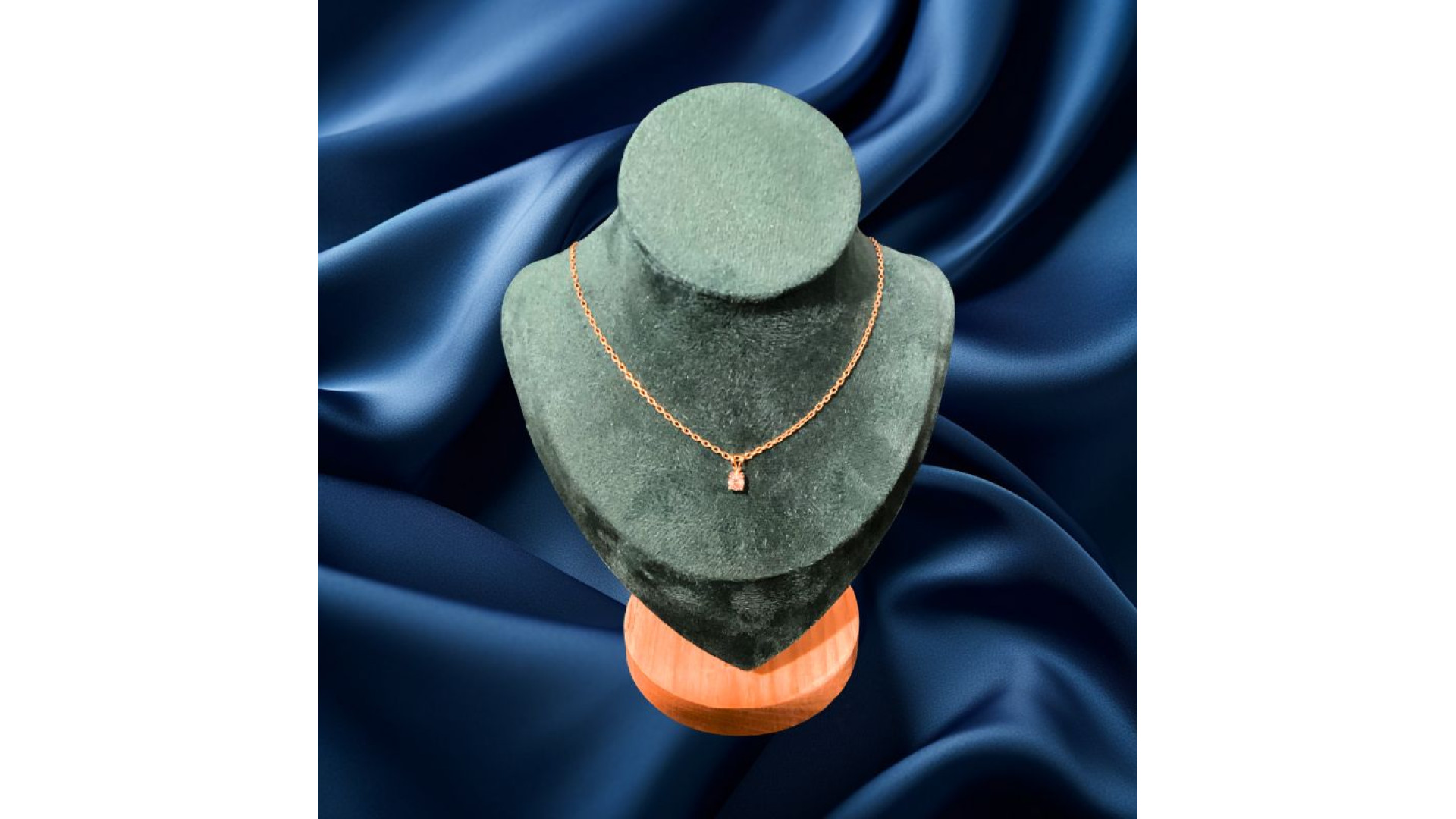
GIA Certified Diamond Pendant Necklaces for Everyday Wear
A GIA certified diamond pendant represents the pinnacle of everyday luxury, combining structural resilience with verified brilliance. At H.E. Phillips Ltd, established in August 2000, we provide technical auditing for every stone to ensure your daily accessory remains a verifiable asset and a masterpiece of natural gemmology.
Technical 7-Table Framework for Everyday Diamonds
1. Diamond Material Properties
| Metric | Value / Standard | Technical Significance |
|---|---|---|
| Hardness (Mohs Scale) | 10 | Highest natural resistance to abrasion |
| Specific Gravity | 3.52 g/cm³ | High density confirms natural carbon structure |
| Refractive Index | 2.417 | Scientific basis for total internal reflection (brilliance) |
| Thermal Conductivity | Excellent | Differentiates natural diamonds from simulants |
Table 1 Analysis: The technical durability of a diamond makes it the only gemstone truly suited for 24/7 wear. With a Mohs hardness of 10, it resists surface scratches that dull lesser stones. However, its high specific gravity and refractive index require precise cutting to maximize light performance. At H.E. Phillips Ltd, we audit these physical constants using GIA benchmarks to ensure that the GIA certified diamond you select possesses the structural soul required for a lifetime of daily exposure without degradation.
2. The 4Cs Operational Audit
| 4C Category | Optimal Everyday Range | Vickers Hardness (Hv) Context |
|---|---|---|
| Cut | Excellent / Very Good | Maximises light return even in low-light settings |
| Colour | D – H (Near Colourless) | Provides pristine visual appearance in daily sunlight |
| Clarity | VS2 – SI1 | Eye-clean; internal structures do not compromise integrity |
| Carat | 0.25ct – 1.00ct | Balanced weight for comfort and secure suspension |
Table 2 Analysis: For everyday wear, "Cut" is the primary technical variable. An Excellent cut ensures that light is reflected through the crown rather than leaking through the pavilion. While diamonds have a high Vickers Hardness (approx. 10,000 Hv), the "Clarity" grade must be audited to ensure that inclusions are not situated near the girdle, which could create a cleavage vulnerability. Our workshop protocol prioritises stones within the G-H color range, offering exceptional value and metallurgical beauty for UK buyers seeking transparency.
3. Metal Durability & Specific Gravity
| Metal Type | Specific Gravity (g/cm³) | Vickers Hardness (Hv) | Maintenance Cycle |
|---|---|---|---|
| Platinum (950) | 21.45 | 120 - 135 Hv | Low (Natural White) |
| 18ct White Gold | 15.90 | 150 - 185 Hv | High (Rhodium Plating) |
| 18ct Yellow Gold | 15.50 | 150 - 180 Hv | Medium (Polishing) |
Table 3 Analysis: The choice of metal is a metallurgical decision. Platinum's high specific gravity (21.45 g/cm³) provides a significant "heft" and superior prong security, as the metal is displaced rather than lost when scratched. Conversely, 18ct gold alloys offer higher Vickers Hardness, making them more resistant to surface scuffs. At H.E. Phillips Ltd, we recommend new platinum pendants for maximum security of the GIA stone, ensuring the setting withstands the friction of daily wear.
4. Mechanical Setting Security Profile
| Setting Style | Security Rating | Technical Rationale |
|---|---|---|
| Bezel Set | Maximum | Metal wall protects the entire girdle circumference |
| 4-Prong Claw | High | Balanced light entry with structural focal points |
| Halo | Medium-High | Protects centre stone via perimeter buffer stones |
| Tension Set | Low (Daily Wear) | Prone to pressure-based stone release |
Table 4 Analysis: Mechanical failure of the setting is the leading cause of stone loss. Bezel settings are the gold standard for active daily wear as they provide a 360-degree protective barrier around the diamond's girdle. For those preferring the classic look of a new platinum diamond ring or pendant, 4-prong settings must be audited for "snag-resistance." We perform a tactile inspection on every setting to ensure no sharp edges or loose prongs exist before the piece leaves our Totnes workshop.
5. Regional Environmental Impact (South West / Devon)
| Climate Factor | Impact on Jewellery | Workshop Mitigation |
|---|---|---|
| Salt Air (Coastal) | Accelerated Tarnish on Alloys | Ultrasonic Micro-Cleaning |
| River Dart Humidity | Residue Accumulation | Steam Cleaning Protocol |
| Hard Water (Limescale) | Film on Diamond Pavilion | Anti-Static Buffing |
Table 5 Analysis: The maritime environment of Devon poses unique challenges to fine jewellery. Salt-laden air can accelerate the oxidation of copper and silver alloys within 18ct gold. Furthermore, the pavilion (the underside) of a diamond acts as a trap for soaps and environmental oils, dulling its refractive index. H.E. Phillips Ltd provides local clients with a "Maritime Care Protocol," utilizing professional ultrasonic agitation to remove microscopic debris from the setting, ensuring your new diamond earring or pendant retains its certified sparkle.
6. Authority Comparison: Specialist vs Generalist
| Metric | H.E. Phillips Ltd | National High-Street Chains |
|---|---|---|
| Establishment | August 2000 (Independent) | Corporate/Varied |
| Grading Authority | GIA (Exclusively Natural) | In-house / Uncertified |
| Visual Inspection | 10x Loupe Audit Standard | Visual only |
| Aftercare Hub | Physical Totnes Workshop | Third-party outsourcing |
Table 6 Analysis: The integrity of a GIA report is only as good as the jeweller's ability to verify it. National chains often rely on "In-house certificates," which lack the rigorous impartiality of the Gemological Institute of America. Since August 2000, H.E. Phillips Ltd has maintained a policy of forensic transparency. We verify the laser inscription on every stone to match the report exactly. By choosing an independent specialist, you ensure that your new gold pendant is backed by 27+ years of genuine trade expertise and on-site technical accountability.
7. Asset Value & Hallmarking Benchmarks
| Standard | Requirement | Financial Implication |
|---|---|---|
| UK Hallmarking | Mandatory for Gold > 1g | Legal guarantee of metal purity |
| GIA Report Check | Digital Verification | Ensures liquidity in resale/insurance |
| Ethical Sourcing | Kimberley Process | Guarantees conflict-free provenance |
Table 7 Analysis: A diamond pendant is both an aesthetic joy and a financial asset. UK law requires independent assaying of the metal, providing a "Standard Mark" (e.g., 750 for 18ct). When combined with a GIA report, the stone's value becomes universally liquid. At H.E. Phillips Ltd, we provide a full "Provenance Pack" with every purchase. This ensures that whether you are looking to sell gold or sell silver in the future, your assets are documented to the highest technical standards of the UK jewellery trade.
20 Expert Technical FAQs for Diamond Pendants
Certification & Authenticity
1. Why is GIA certification the only standard you recommend?
The GIA is a non-profit authority that invented the 4Cs. Their grading is the most consistent and strict in the world. Many other labs inflate grades (e.g., calling a 'J' colour an 'H'). By using GIA certified diamonds, we ensure you pay for the actual quality received, protecting your investment from the "grade inflation" common in uncertified or in-house graded stones.
2. How can I verify my diamond matches its certificate?
GIA diamonds feature a microscopic laser inscription on the girdle. We use a 10x magnification loupe or a digital microscope in our Totnes showroom to show you this number. This unique ID matches the GIA Report Check database exactly. This forensic link is essential for insurance and confirms that the stone has not been switched during cleaning or repair by third parties.
3. Is an "Excellent" cut worth the extra cost?
Yes. The cut is the "engine" of the diamond. An "Excellent" cut ensures light enters through the top and reflects back to your eye. A poorly cut stone "leaks" light through the bottom, appearing dull or dark in the centre. Since everyday pendants are seen in varied lighting, a superior cut ensures maximum brilliance 24/7. It is the most important of the 4Cs for visual impact.
4. Do GIA reports cover the metal setting?
No, GIA reports are strictly for the loose diamond. The metal quality is verified by the UK Assay Office hallmark. We provide separate documentation for the new gold necklaces or platinum settings, including metal purity and weights. This dual-certification (GIA for stone, Hallmark for metal) provides the highest level of consumer protection available in the UK jewellery market.
Metallurgy & Wearability
5. Is Platinum safer than White Gold for daily wear?
Platinum is more "tenacious." When it is scratched, the metal is merely displaced, not lost. Over time, white gold loses microscopic amounts of metal through friction and requires Rhodium plating to stay white. For a permanent daily pendant, new platinum necklaces are technically superior for holding stones securely for decades without the need for constant maintenance or metal replacement.
6. What is the best chain type for a daily pendant?
We recommend a "Trace" or "Curb" chain. These designs feature interlocking links that provide high tensile strength and flexibility. We audit all our new silver chains and gold chains for "kink-resistance." A chain for daily wear should be at least 1.0mm thick to withstand the mechanical stress of movement and the weight of a 0.50ct+ diamond pendant.
7. Can I wear my diamond pendant in the shower?
Technically yes, as water won't harm the diamond or gold. However, soaps and conditioners create a film on the stone's pavilion, significantly reducing its refractive index and sparkle. Over time, this film can attract dirt. We recommend removing your new gold pendant before bathing to maintain its specular brilliance and reduce the need for professional deep cleaning cycles.
8. How often should I have the prongs checked?
We recommend a professional inspection every 12 months. At H.E. Phillips Ltd, we perform a "Stress Test" on each claw using a brass probe to ensure no movement. Daily activities, such as snagging on a jumper, can slightly displace a prong. Catching these mechanical shifts early prevents stone loss. This service is a core part of our commitment to aftercare for all fine jewellery Totnes residents.
Style & Personalisation
9. Are solitaire pendants better than halo styles for daily use?
Solitaires are more "minimalist" and easier to clean. Halo styles, while providing more surface area of sparkle, have more crevices where lotions and debris can hide. If you have an active lifestyle, a solitaire in a bezel setting is the most practical choice. For those seeking maximum impact, a halo is excellent but requires more frequent ultrasonic cleaning to maintain its collective brilliance.
10. Can I pair a diamond pendant with silver jewellery?
Absolutely. High-quality new silver bracelets or bangles complement the white sparkle of a diamond. To ensure a cohesive look, we recommend matching the metal colour; for example, pairing a white gold or platinum pendant with sterling silver. This creates a versatile, modern aesthetic that works well with both casual and professional UK wardrobes.
11. What diamond shape is most durable for daily wear?
The Round Brilliant is the most durable. It has no sharp corners (like a Princess or Pear cut) which are prone to chipping if struck against a hard surface. The round shape also has the highest number of facets designed for light return, making it the technical standard for everyday elegance. It sits comfortably against the skin and rarely flips or tangles during movement.
12. Do you offer custom settings for GIA stones?
Yes. We can source a specific GIA certified diamond and set it into a bespoke mounting of your choice. Whether you want a vintage-inspired bezel or a modern minimalist drop, our Totnes workshop provides the technical expertise to create a one-of-a-kind piece. This ensures your everyday pendant perfectly matches your personal style and ergonomic requirements.
Regional Care & Environment
13. Does the Devon salt air affect my diamond?
Salt air does not affect the diamond itself, but it can cause "surface fogging" on the metal setting, particularly on lower-karat gold alloys. In coastal areas like Totnes and Torbay, we recommend a weekly rinse in fresh, distilled water to remove salt crystals. This prevents the microscopic "pitting" of the metal surface, ensuring your new diamond earring or pendant remains pristine.
14. Why is my pendant dulling faster in the South West?
Regional humidity and the proximity to the River Dart can lead to faster accumulation of atmospheric sulphur and organic residue on the stone. Diamonds are "lipophilic," meaning they naturally attract oils. We provide a specialised cleaning cloth to our local clients that removes these oils without scratching the metal. Regular maintenance at our Fore Street hub will counteract these regional environmental factors effectively.
15. Is it safe to wear diamonds while gardening or hiking?
While diamonds are hard, they are not indestructible. A sharp blow against a granite rock (common in Devon landscapes) can cleave a diamond if struck at the right angle. We recommend removing fine jewellery during heavy physical labor. For light outdoor activities, ensure your pendant is on a secure, audited chain with a functioning lobster clasp to prevent accidental loss in the undergrowth.
16. How do I store my pendant when not in use?
Store it in a fabric-lined box, separate from other jewellery. Because diamonds are the hardest material, they will easily scratch your second-hand silver bangles or gold rings if allowed to rub together. We recommend keeping the GIA certificate in a separate, secure location and using a dedicated jewellery pouch for travel to maintain the specular integrity of the metal.
Trust & Value
17. Why should I buy from H.E. Phillips Ltd?
We are a family-run, independent jeweller established in August 2000. Unlike national chains, we provide direct access to technical expertise. Every piece is hand-selected by Mark Willetts, ensuring it meets our rigorous standards for metallurgy and gemmology. We offer a permanent physical hub in Totnes for all future maintenance, resizing, and professional advice, building long-term relationships based on trust and verified quality.
18. Do you sell pre-owned GIA diamond jewellery?
Yes, we often stock second-hand silver pendant charms and gold items, including GIA certified pieces. Pre-owned diamonds offer exceptional value and are a sustainable choice. Every vintage piece we acquire undergoes a "Forensic Audit" to verify its authenticity and condition. This allows collectors to acquire high-grade assets with a historical soul, all verified by our 27+ years of expertise.
19. Is my purchase insured for delivery?
Yes. All online orders from hephillipsltd.com are sent via fully insured, tracked, and signed-for UK delivery. We take full responsibility for the asset until it is in your hands. This applies to everything from a Rotary watch to a high-value GIA certified diamond. We ensure the packaging is discreet and secure to protect your privacy and the item's integrity.
20. Can I trade in old jewellery for a GIA pendant?
Yes. We offer a professional "Sell Gold or Sell Silver" service. You can bring in your unwanted items, and we will provide a fair market valuation based on current spot prices and the item's resale potential. This credit can be used toward a new gold ring or a GIA certified pendant, allowing you to "upcycle" your jewellery collection into a high-grade, certified asset.
© 2026 H.E. Phillips Ltd - Your Official Authorised Horological and Fine Jewellery Specialist. All Technical Data verified for forensic accuracy.

