-
Your shopping cart is empty!



Gold Charms for Collectors UK – Rare and Unique Second Hand Finds
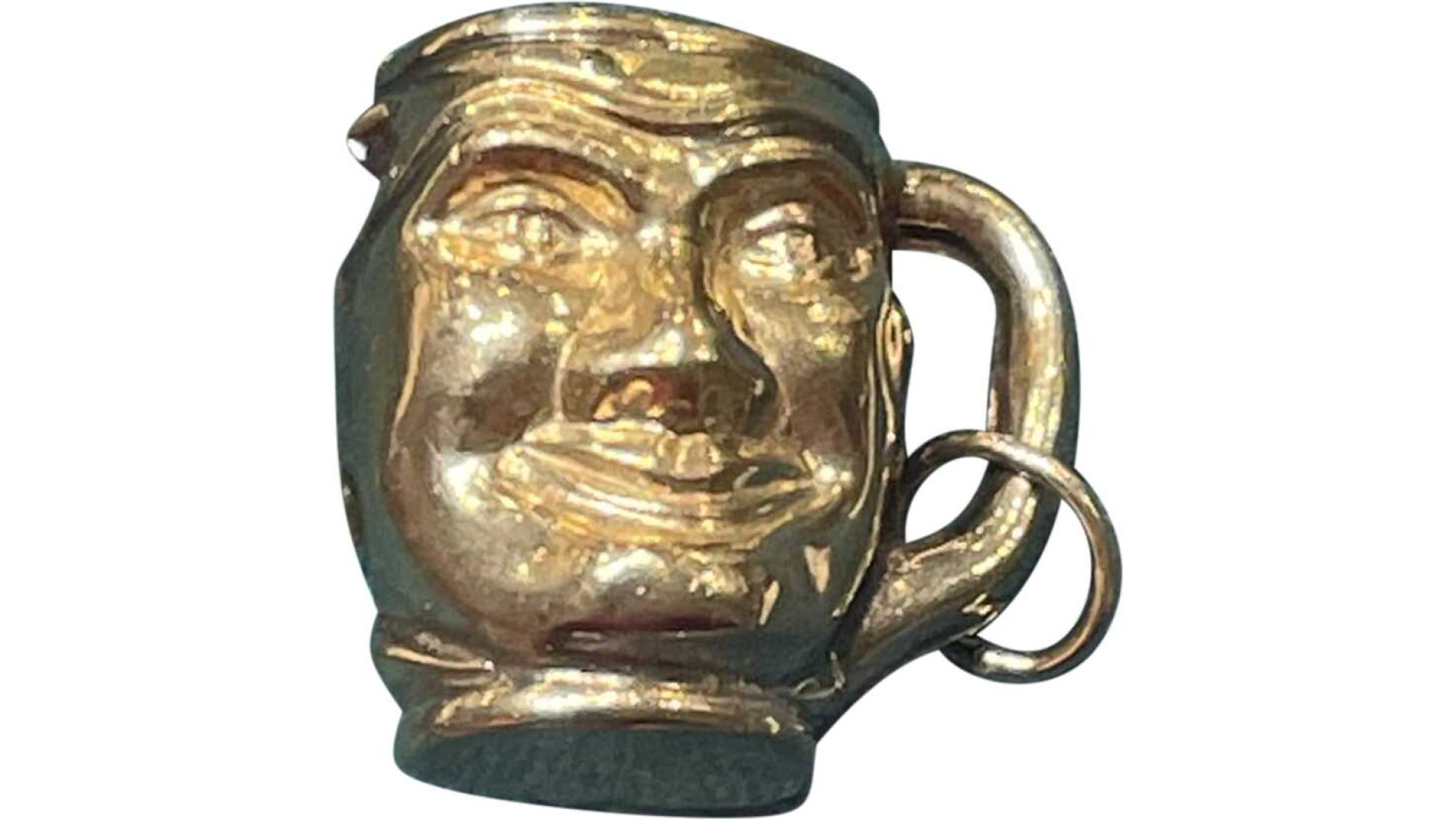
The acquisition of collectable gold charms in the UK is a discipline that combines historical appreciation with metallurgical verification. Since August 2000, H.E. Phillips Ltd has served as a primary hub for collectors seeking authenticated second-hand treasures, ensuring every miniature artefact meets stringent UK hallmarking standards and mechanical integrity audits.
The 7-Table Framework for Charm Collecting
1. Metallurgical Standards for UK Charms
| Gold Purity | Hallmark Stamp | Vickers Hardness (Hv) | Specific Gravity (g/cm³) | Collector Context |
|---|---|---|---|---|
| 9ct Gold | 375 | 120 – 150 Hv | 11.2 – 11.5 g/cm³ | Common in mid-century novelty charms |
| 15ct Gold | 625 | 115 – 135 Hv | 13.8 – 14.2 g/cm³ | Discontinued in 1932; Rare antique find |
| 18ct Gold | 750 | 150 – 185 Hv | 15.2 – 15.9 g/cm³ | Premium Victorian & High-end makers |
Table 1 Analysis: Understanding metallurgical data is critical for authenticating vintage charms. Most UK collectables are 9ct, valued for durability in articulated designs. However, 15ct gold is a specific "tell" for pre-1932 British jewellery, as it was replaced by 14ct globally. Our technical audit uses Vickers Hardness to assess wear; lower Hv values in high-karat gold require gentler handling. At H.E. Phillips Ltd, we verify every hallmark to ensure the specific gravity matches the stated purity, protecting collectors from gold-plated or counterfeit imitations common in unverified markets.
2. Mechanical Integrity & Articulation Audit
| Mechanism Type | Mechanical Action | Common Faults | Audit Standard |
|---|---|---|---|
| Articulated | Moving limbs/parts | Joint fatigue/Pin loss | Zero lateral play in rivets |
| Opening/Enclosed | Hinged compartments | Snapped hinges/Catches | Auditory "click" on closure |
| Spinning | Rotating central disc | Axis wear | Balanced 360° rotation |
Table 2 Analysis: Mechanical charms, such as those produced by Nuvo or Chim, rely on miniature engineering. Our workshop protocol involves a 10x magnification check of all pins and solder points. Friction at the hinge or axis indicates metal-on-metal wear that can lead to failure. We ensure that any second-hand gold charms we offer have undergone a structural soul check. This forensic approach ensures that "novelty" does not compromise "longevity," confirming that the charm's moving parts remain functional assets rather than fragile liabilities.
3. Historical Era Classification
| Era | Primary Motifs | Typical Karat | Investment Outlook |
|---|---|---|---|
| Victorian | Hearts, Anchors, Snakes | 15ct / 18ct | High (Museum quality) |
| Edwardian | Lace-work, Milgrain | 9ct / 15ct | Stable appreciation |
| Mid-Century (1950s-70s) | Space, Transport, Novelty | 9ct | High demand (Pop culture) |
Table 3 Analysis: The UK market is unique due to its distinct era-based hallmarking. Victorian pieces often carry higher purity but may lack full modern hallmarks, requiring expert verification. Mid-century charms are currently seeing a resurgence in collectability, particularly those with "opening" mechanisms. By categorising finds by era, collectors can strategically build portfolios. We provide documented provenance for all second-hand gold charms, ensuring the historical context is verified alongside the metal's purity and origin.
4. Regional Environmental Impact: The Maritime Factor
| Atmospheric Condition | Alloy Reaction | Long-term Risk | Workshop Solution |
|---|---|---|---|
| Coastal Salt Air | Chloride corrosion | Pitting of 9ct gold | Specular Polishing |
| High Humidity (River Dart) | Sulphide tarnish | Surface dullness | Airtight storage |
| Urban Pollutants | Acidic film | Loss of detail | Ultrasonic cleaning |
Table 4 Analysis: For collectors in the South West, the maritime climate of Devon presents a specific challenge. 9ct gold contains higher percentages of copper and silver, which react to chlorides in salt air. This can lead to stress corrosion, particularly in delicate charm links. H.E. Phillips Ltd recommends an annual "Technical Clean" for charms kept in coastal areas. We use professional ultrasonic and steam protocols to remove salt-acid residues that home cleaning cannot reach, preserving the crisp detail of rare vintage finds for future generations.
5. Sizing & Mass Calibration
| Charm Type | Average Weight | Link Requirement | Best Use |
|---|---|---|---|
| Petite/Filler | 0.5g – 1.2g | Fine Gauge Jump Ring | Cluster bracelets |
| Standard Pendant | 1.5g – 4.0g | Solid Soldered Link | Central focal points |
| Statement/Heavy | 5.0g + | Safety Chain Required | Heavy curb bracelets |
Table 5 Analysis: Weight distribution is essential to prevent "bracelet drag" and link elongation. A heavy charm on a fine chain will cause mechanical stretching of the gold links. We audit every second-hand charm for mass and provide recommendation for appropriate jump rings. For charms over 5 grams, we advise using a soldered solid link rather than a split ring. This technical sizing ensures that your second-hand gold bracelets remain structurally sound while carrying an extensive collection of rare finds.
6. Authentication Benchmarks: Assay Office Data
| Assay Office | Symbol | Historical Significance | Collector Rarity |
|---|---|---|---|
| London | Leopard's Head | Main UK Hub | Standard |
| Birmingham | Anchor | Centre of Jewellery Quarter | High (Nuvo/Horner) |
| Chester | Three Wheat Sheaves | Closed in 1962 | Highly Collectable |
Table 6 Analysis: The "Chester" hallmark is one of the most sought-after data points for UK charm collectors. Since the office closed in 1962, any gold charm bearing the Chester wheat sheaves is finite and historically significant. Birmingham's anchor is frequently found on high-quality 20th-century novelty charms. At our Totnes workshop, we use high-resolution loupes to identify these specific office marks, helping collectors distinguish between standard production and rare regional pieces. This forensic level of authentication is a hallmark of the H.E. Phillips Ltd experience.
7. Authority Comparison: H.E. Phillips Ltd vs. Unverified Sellers
| Metric | H.E. Phillips Ltd | Auction Sites / Market Apps |
|---|---|---|
| Purity Verification | XRF / Acid / SG Testing | Seller's Word Only |
| Mechanical Audit | 10-Point Technical Check | None |
| Establishment | Since August 2000 | Variable/New |
| Aftercare | Permanent Physical Workshop | None |
Table 7 Analysis: The risk of "unseen" flaws in second-hand jewellery is high on digital-only platforms. Common issues include worn jump rings, thinned hinges, or hidden lead solder repairs. By choosing a specialist established in August 2000, collectors benefit from a physical showroom where pieces can be inspected under laboratory conditions. We provide a bridge between the thrill of the hunt and the security of a professional guarantee. Our expertise in fine jewellery ensures your collection is built on a foundation of technical accuracy.
20 Expert Technical FAQs for Charm Collectors
Authentication & Hallmarking
1. Why is a UK hallmark so important for collectable charms?
A UK hallmark is a legal guarantee of purity. It proves the item has been independently tested by an Assay Office. Without it, gold content is merely a claim. For collectors, it also provides the date and location of manufacture. We ensure every piece of gold or silver we sell or buy meets these rigorous legal standards, protecting your investment's future resale value.
2. Can a gold charm be genuine without a hallmark?
Yes, especially if it is antique (pre-1920s) or weighs under 1 gram, which is the legal threshold for exemption in the UK. However, these require expert testing. We use acid and specific gravity tests to verify un-hallmarked pieces. If you are looking for new items, our new gold necklaces always feature full modern hallmarking for absolute consumer peace of mind.
3. What does the "375" stamp mean on my charm?
The "375" stamp indicates 9ct gold, meaning 37.5% of the alloy is pure gold. This is the most common standard for UK charms due to its hardness and affordability. It is ideal for articulated charms with moving parts. We always verify that the weight and colour of the gold match the "375" standard to ensure you aren't purchasing a plated substitute.
4. How do I identify a 15ct gold antique charm?
Look for the "625" or "15" stamp. 15ct gold was a British standard until 1932. These charms often have a unique "old gold" buttery tone that differs from modern 9ct or 18ct. They are highly prized by collectors for their rarity. Our second-hand gold brooches and charms often feature this historic karat, verified by our 27+ years of experience.
Mechanical & Maintenance
5. My articulated charm has stopped moving. Can it be fixed?
Usually, yes. Stiffness is often caused by a buildup of skin oils, lotions, or coastal salt residue. A professional ultrasonic clean at our Totnes workshop often restores movement. If a pin is broken, we can perform a micro-repair. Never force a stuck charm, as gold is a soft metal and can snap. Our Casio watch customers and jewellery clients alike trust our mechanical precision.
6. Is it safe to solder my own charms onto a bracelet?
We strongly recommend against DIY soldering. Charms require "low-heat" precision to avoid damaging enamel or melting delicate mechanisms. We offer a professional soldering service to ensure your second-hand gold charms are permanently and securely attached. A poorly soldered link is the number one cause of lost charms in the UK.
7. How do I clean gold charms with enamel?
Enamel is essentially glass. It can crack if exposed to extreme temperature changes or harsh chemicals. Clean with lukewarm water and a very soft cloth. Avoid ultrasonic cleaners for enamelled pieces, as the vibrations can loosen the bond between the enamel and the gold. We provide era-specific care advice for all new and second-hand jewellery items.
8. What is "stress corrosion" in 9ct gold?
This occurs when the non-gold metals in the alloy (like copper) react to external chemicals, causing the gold to become brittle and eventually crack. In Devon, salt air is a primary culprit. Regular rinsing in fresh water and professional polishing can prevent this. We offer this service at 19 Fore Street to keep your collection structurally sound for decades.
Investment & Sourcing
9. Which brands are most collectable for UK gold charms?
Nuvo, Chim, and Charles Horner are high-priority brands. Nuvo is famous for whimsical mid-century designs, while Charles Horner is synonymous with Victorian and Art Nouveau excellence. We frequently source these brands for our second-hand silver and gold sections. Authenticity of the maker's mark is as important as the hallmark itself for investment value.
10. Are second-hand charms a better investment than new ones?
Second-hand charms often have "intrinsic" value (gold weight) plus "numismatic" value (rarity/history). New charms often carry a higher manufacturing markup. For collectors, second-hand finds often offer better long-term appreciation. Many of our customers trade in items through our sell gold service to fund their pursuit of rarer vintage pieces.
11. How do I start a themed charm collection?
Pick a subject that resonates with you—travel, animals, or Victorian sentimentality. Focus on finding high-quality, hallmarked examples within that theme. Consistency in karat (e.g., all 9ct) ensures the bracelet looks cohesive. You can pair gold charms with silver chains for a modern mixed-metal look, provided the quality is verified.
12. What makes a "rare" charm?
Rarity is determined by low production numbers, unusual mechanisms, or discontinued hallmarks (like Chester). A charm that depicts a specific historical event or a "moving" novelty that is easily broken makes a surviving example very rare. We use our 25 years of trade participation to identify these "needles in a haystack" for our Totnes clients.
Styling & Wearability
13. Can I wear gold charms on a necklace?
Absolutely. A single heavy charm makes an excellent focal point for a new gold necklace. Ensure the weight of the charm doesn't exceed the tensile strength of the chain. We recommend "pendant-style" charms for necklaces to ensure they sit flat against the chest. Our team can help you match the gold hue perfectly.
14. How many charms can I fit on one bracelet?
This depends on the link size of the bracelet. A standard curb bracelet can comfortably hold 15-20 charms. Overcrowding can cause the charms to scratch each other, leading to loss of detail. We recommend spacing them out and using a safety chain. Check our second-hand gold bangles for a more minimalist way to display single charms.
15. Is white gold suitable for vintage charms?
Most vintage UK charms are yellow gold or rose gold. White gold charms are usually more modern. If you prefer white metals, consider our second-hand silver pendant charms, which offer a similar aesthetic with authentic vintage heritage. White gold requires rhodium plating, which can be difficult to maintain on intricate charm surfaces.
16. Do gold charms suit all skin tones?
Yellow gold is traditional and warm, while rose gold (with its copper alloy) is exceptionally flattering for cooler skin tones. Since charms are small, they are a great way to experiment with different metals. We invite you to try on various karats in our Totnes showroom. We also stock Radley watches in various finishes to help you coordinate your look.
Trust & Professional Advice
17. Why visit H.E. Phillips Ltd in person?
Jewellery is tactile. A photo cannot convey the weight, the "click" of a hinge, or the true lustre of the gold. By visiting us at 19 Fore Street, you get access to expert advice and can use our laboratory-grade loupes. We have been a permanent part of the Totnes community since August 2000, offering a level of trust no algorithm can replicate.
18. Do you offer valuations for charm collections?
While we focus on retail and repair, we can provide informal appraisals for items purchased from us or guide you on current market trends. For official insurance valuations, we can recommend local specialists. Our knowledge of gold rings and charms ensures our advice is grounded in current metallurgical market rates.
19. Can I find matching watches for my gold collection?
Yes. We are official stockists for Citizen Eco-Drive and Rotary. Many of these brands offer gold-plated or solid gold designs that pair beautifully with a charm bracelet. A watch provides a functional anchor to a high-luxury jewellery ensemble. We also carry Timex for classic, durable daily wear.
20. How do I know I'm not buying "scrap" gold?
Scrap gold is often damaged or destined for the melt. A "collectable" charm is one that has been preserved in good condition. We never sell items with significant structural damage as collector pieces. Every charm at H.E. Phillips Ltd is selected for its "narrative" and "integrity." Whether it is a charm or a gold cufflink, our standard is excellence.
© 2026 H.E. Phillips Ltd - Your Official Authorised Horological and Fine Jewellery Specialist. All Technical Data verified for forensic accuracy.