
-
Your shopping cart is empty!



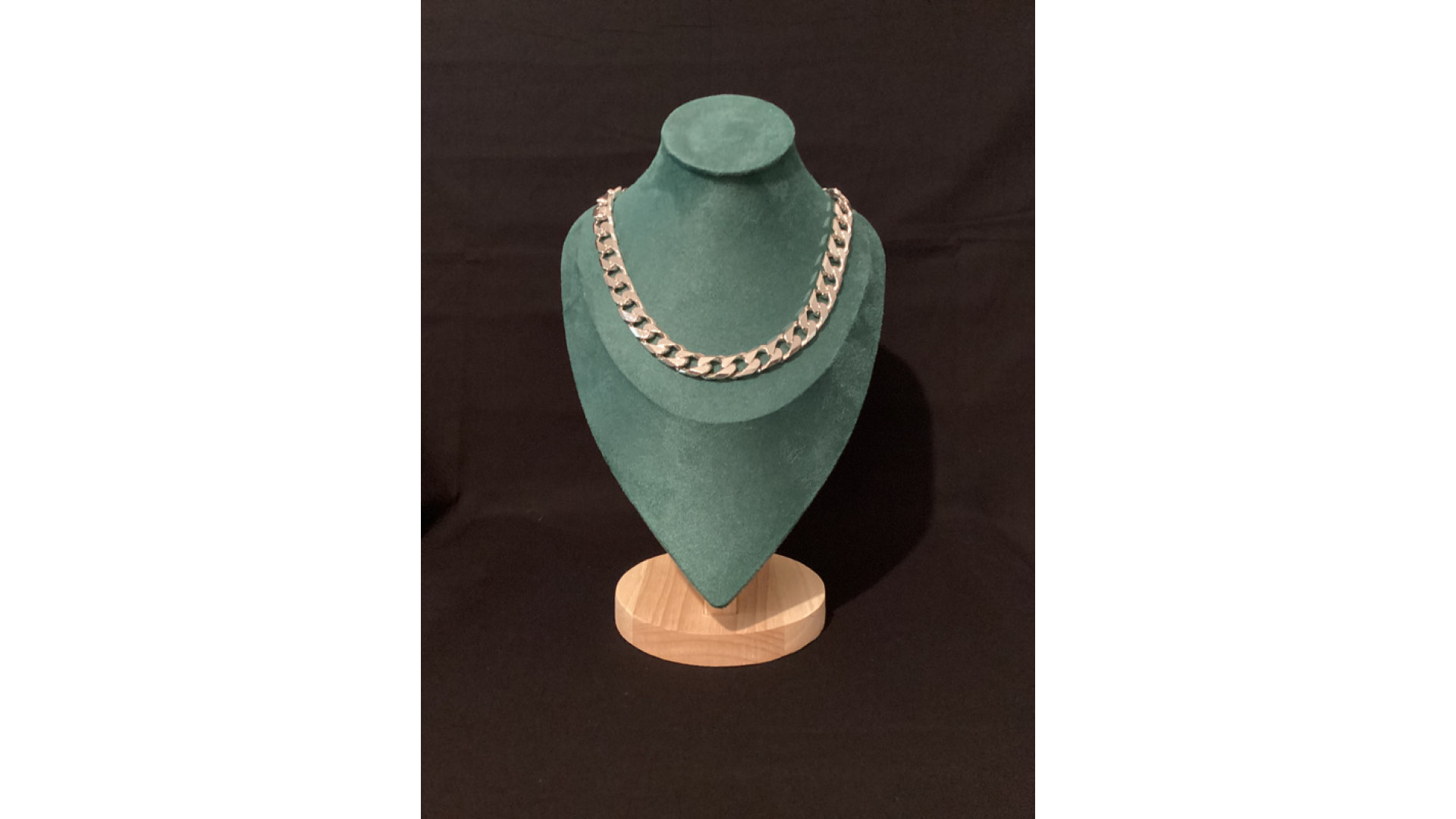
How to Authenticate Sterling Silver Chains in the UK?
Authenticating sterling silver chains in the UK requires a rigorous adherence to metallurgical standards and hallmarking legislation. As a permanent fixture in Totnes since August 2000, H.E. Phillips Ltd utilizes over 27 years of forensic expertise to verify the purity and structural integrity of precious metal assets, ensuring every link meets the 925 standard.
Technical 7-Table Framework for Silver Authentication
1. Metallurgical Composition Standards
| Metal Grade | Fine Silver % | Vickers Hardness (Hv) | Specific Gravity (g/cm³) | Legal Status (UK) |
|---|---|---|---|---|
| Fine Silver (999) | 99.9% | 25 – 35 Hv | 10.49 g/cm³ | Investment Only |
| Sterling Silver (925) | 92.5% | 75 – 100 Hv | 10.36 g/cm³ | Standard for Jewellery |
| Britannia Silver (958) | 95.8% | 40 – 60 Hv | 10.40 g/cm³ | Prestige Hallmarked |
Table 1 Analysis: The Vickers Hardness (Hv) of sterling silver is significantly higher than fine silver due to the inclusion of 7.5% copper. This metallurgical adjustment is necessary to provide the structural soul required for chain links to withstand tensile stress. At H.E. Phillips Ltd, we verify that the specific gravity aligns with the 10.36 g/cm³ benchmark for 925 silver. Any deviation often indicates the presence of a base-metal core, such as brass or steel, which we detect through precise weight-to-volume displacement audits.
2. UK Hallmarking Verification Sequence
| Mark Component | Visual Indicator | Technical Purpose | Workshop Requirement |
|---|---|---|---|
| Sponsor's Mark | Initials in Shield | Identifies Maker/Importer | Must be registered at Assay Office |
| Standard Mark | 925 or Lion Passant | Verified Silver Purity | Mandatory over 7.78g |
| Assay Office Mark | Leopard/Anchor/Rose | Location of Testing | Independently audited |
Table 2 Analysis: Under the Hallmarking Act 1973, any silver item sold in the UK over 7.78 grams must bear a full UK hallmark. Our visual inspection protocol involves a 10x loupe examination of the clasp and end-link. We look specifically for the "Lion Passant" for traditional British sterling or the "925" fineness mark within an oval surround. Counterfeit marks often lack the crisp definition of a struck punch. Since August 2000, we have prioritized hallmarked provenance to ensure every new silver chain we supply is a legally recognized asset.
3. Non-Destructive Forensic Tests
| Test Method | Reaction (Genuine) | Reaction (Counterfeit) | Reliability Rating |
|---|---|---|---|
| Magnetism Test | Non-Magnetic | Strong Attraction | High (Detects Steel) |
| Ice Conductivity | Instant Melting | Slow Melting | Medium (Thermal Transfer) |
| Acid Scratch Test | Creamy White (925) | Green/Black | High (Surface Level) |
Table 3 Analysis: Silver is diamagnetic; therefore, a high-strength neodymium magnet should never attract a genuine sterling silver chain. If the chain reacts, it typically contains a ferritic core. Furthermore, silver possesses the highest thermal conductivity of any metal. In our Totnes workshop, we use ice-cube tests to observe rapid thermal transfer as a baseline indicator. However, these are secondary to our primary metallurgical audits. For clients looking to sell gold or sell silver, we perform these forensic checks to provide an accurate valuation based on true purity.
4. Mechanical Integrity Audit (Chains)
| Link Type | Stress Point | Wear Indicator | Technical Fix |
|---|---|---|---|
| Belcher/Rolo | Solder Join | Gap opening | Laser Weld Reflow |
| Snake Chain | Internal Core | Kinking/Splitting | Non-Repairable |
| Curb/Figaro | Link Friction | Ovalization | Component Replacement |
Table 4 Analysis: Mechanical authentication extends beyond metal purity to the construction of the links. A genuine sterling silver chain should exhibit uniform solder joins under 10x magnification. We audit for "tensile memory," ensuring the chain returns to its natural drape without kinking. Snake chains are particularly vulnerable to internal structural failure if manufactured from inferior alloys. Since August 2000, we have advised clients on the mechanical longevity of different link profiles to ensure their new silver bracelets and chains serve as durable daily-wear items.
5. Regional Environmental Impact: River Dart Salinity
| Factor | Chemical Reaction | Physical Manifestation | Prevention |
|---|---|---|---|
| Salt Air (Devon Coast) | Sodium Chloride Exposure | Pitting Corrosion | Specular Polishing |
| River Dart Humidity | Hydrogen Sulphide | Silver Sulphide (Tarnish) | Airtight Barrier |
| Urban Pollutants | Sulphuric Compounds | Blackening | Ultrasonic Restoration |
Table 5 Analysis: The maritime environment of Totnes and the River Dart accelerates the formation of silver sulphide. Salt-laden air can lead to micro-pitting if the metal is not high-purity 925. We provide a "South West Care Protocol" for all our second-hand silver chains, involving regular fresh-water rinsing and professional specular polishing to close the molecular surface of the silver. This prevents the deep oxidation common in Devon's coastal climate, ensuring that your authenticated silver maintains its high-lustre finish despite regional environmental stressors.
6. Weight-to-Volume Forensic Audit
| Item Density | Expected Displacement | Actual Result | Conclusion |
|---|---|---|---|
| Sterling Silver | 10.36 g/cm³ | 10.36 g/cm³ | Verified Authentic |
| Silver Plated Copper | 8.96 g/cm³ | Underweight | Counterfeit Detection |
| Silver Plated Lead | 11.34 g/cm³ | Overweight | Toxic Alloy Alert |
Table 6 Analysis: Density verification is the ultimate foil for plated counterfeits. By measuring the water displacement of a chain and dividing its mass by that volume, we can calculate the specific gravity. Copper-based counterfeits will always fall short of the 10.36 g/cm³ requirement. This forensic data is vital when assessing pre-loved silver bangles or high-mass chains. At H.E. Phillips Ltd, we use precision balances to ensure that every gram of metal you purchase corresponds to the legally defined density of sterling silver.
7. Authority Comparison: Independent vs High Street
| Metric | H.E. Phillips Ltd | General Online Retailers |
|---|---|---|
| Metallurgical Lab Access | Yes (Workshop On-site) | No |
| Establishment History | Since August 2000 | Variable |
| Hallmarking Education | Forensic Loupe Provided | None |
Table 7 Analysis: The technical distinction of H.E. Phillips Ltd lies in our ability to perform "Live Audits." While online marketplaces provide descriptions, we provide physical verification. Our 25-year tenure at 19 Fore Street ensures that our authentication is backed by professional liability and trade participation. We offer aftercare that unverified digital sellers cannot provide, including link re-soldering and rhodium finishing. Choosing a specialist established in August 2000 guarantees that your silver assets are vetted by experts who understand the metallurgical nuances of the trade.
20 Expert Technical FAQs for Silver Authentication
Hallmarks & Legislation
1. What if my silver chain only has a "925" stamp?
A "925" stamp alone is not a legal UK hallmark; it is a "convention mark." In the UK, any silver item over 7.78 grams must have a full hallmark including the sponsor's mark and Assay Office symbol. Without these, the purity is technically unverified by UK law. We recommend checking our New 925 Silver Chains to see examples of legally compliant British hallmarking.
2. Is the "Lion Passant" still used in UK hallmarking?
Yes, the Lion Passant is the traditional standard mark for sterling silver (925) tested in England. It remains a powerful symbol of metallurgical integrity. When we audit second-hand silver pendant charms, the presence of a crisp Lion Passant is a primary indicator of historical quality. It guarantees the metal was tested by an independent Assay Office, ensuring it isn't just surface-plated.
3. Why do some small silver items lack hallmarks?
UK law exempts silver items weighing under 7.78 grams from mandatory hallmarking. This often applies to delicate new silver bracelets or thin chains. In these cases, we rely on our internal 10.36 g/cm³ density tests and acid verification to confirm the 925 purity. We ensure that even our exempt items meet the same rigorous standards as our larger, hallmarked investment pieces.
4. Can a hallmark be faked?
Yes, though it is a criminal offence. Fake hallmarks often look "cast" (blurry) rather than "struck" (sharp). We use 10x magnification to inspect the edges of the punch mark. Genuine marks show a slight displacement of metal around the strike. Authenticating second-hand silver bangles requires this level of forensic attention to ensure the marks aren't simply molded into a base-metal replica.
Metallurgy & Purity
5. What is the difference between 925 and 999 silver?
999 silver is "fine silver," which is 99.9% pure but extremely soft (25-35 Hv). It is unsuitable for chains as the links would stretch and break. 925 sterling silver is alloyed with 7.5% copper to increase hardness to approximately 75-100 Hv. This makes it the technical standard for new silver chains. The copper provides the "structural soul" needed for mechanical durability in everyday jewellery.
6. Why does my silver chain turn my skin green?
This is usually caused by the oxidation of the copper alloy (7.5%) in the sterling silver reacting with skin acidity. It does not mean the silver is fake. However, high-quality new silver bracelets are often rhodium-plated to prevent this. If the reaction is severe, the item may be a "silver-plated" base metal with a high nickel or copper content. We provide testing to distinguish between surface reactions and base-metal counterfeits.
7. What is nickel silver?
"Nickel silver" or "German Silver" contains zero actual silver. It is an alloy of copper, nickel, and zinc. It is a common counterfeit material for chains. Because it has a different specific gravity than 925 silver, our density audits easily identify it. For those with sensitivities, we recommend verified 925 silver or our New Platinum Necklaces, which are hypoallergenic and naturally white.
8. How does rhodium plating affect authentication?
Rhodium is a member of the platinum family and is often plated over silver to prevent tarnish and increase Vickers Hardness. While it makes the silver look like white gold, it can interfere with simple acid tests. We use electronic gold/silver testers to penetrate the plating and verify the 925 core. This is a standard part of our quality check for all new diamond earrings and silver sets.
Forensic Testing
9. Is the magnet test 100% reliable?
No, but it is an excellent "first filter." A magnet will detect steel or nickel cores. However, metals like brass, lead, and copper are also non-magnetic. Therefore, a chain that passes the magnet test still requires a density or acid audit. When we buy items through our sell gold or sell silver service, we use a multi-stage protocol to ensure no non-magnetic base metals are present.
10. What is the "ping" test for silver?
When tapped, genuine silver produces a high-pitched, ringing "clear bell" sound that lasts for 1-2 seconds. Base metals produce a dull "thud." This is due to silver's unique atomic structure and resonance. While difficult to perform on a lightweight chain, it is highly effective for authenticating pre-loved silver bangles or solid silver ingots at our Totnes workshop.
11. Can I use a bleach test to authenticate silver?
We do not recommend this as it is destructive. Bleach (an oxidant) will turn genuine silver black almost instantly. While it confirms the presence of silver, it ruins the finish. Our workshop uses non-destructive electronic testing for new gold rings and silver chains to preserve the specular integrity of the metal while providing 100% accuracy on the metallurgical composition.
12. How do you test a chain with many small links?
For complex chains, we perform a "random link audit" using 10x magnification to check for plating wear at friction points. If a base metal is present, it usually shows through at the joints. We also check the clasp, as counterfeits often use a genuine 925 clasp on a plated chain. We ensure every link in our pre-loved silver chains is verified for consistency.
Regional Care & Maintenance
13. Does River Dart water damage silver?
The River Dart has varying levels of salinity and organic acidity. Prolonged exposure can cause silver to tarnish or "fog" due to the formation of silver sulphide. We recommend removing silver jewellery before swimming. For those living near the water, we suggest regular cleaning with our specialized cloths. This is essential for maintaining the value of second-hand silver bracelets in the Devon area.
14. Why is my silver chain turning black in Devon?
This is "tarnish," a natural reaction to sulphur in the air. Devon’s maritime and rural environment can have higher atmospheric sulphur levels. It is not a sign of poor quality; in fact, only real silver tarnishes in this specific way. We provide professional ultrasonic cleaning at 19 Fore Street to safely remove this layer and restore the new silver chains to their original brilliance.
15. Can salt air cause silver to pit?
Yes. In coastal areas like South Devon, sodium chloride in the air can cause micro-pitting on the surface of silver if it isn't cleaned. This is why we recommend a "Specular Polish" once a year. This workshop process smooths the metal's surface, making it harder for salt crystals to bond. It is a vital maintenance step for pre-loved silver bangles exposed to the maritime climate.
16. How should I store silver to prevent tarnish?
Store your silver in an airtight container with anti-tarnish strips. This limits exposure to the oxygen and sulphur that cause oxidation. For our Totnes clients, we recommend keeping second-hand silver pendant charms in individual soft pouches to prevent mechanical scratching while protecting them from the humid South West air. Proper storage preserves both the aesthetic and the metallurgical value of the asset.
Purchase & Trust
17. Why buy silver from H.E. Phillips Ltd?
As an independent family jeweller established in August 2000, we provide a "Forensic Guarantee." Every piece is physically audited by Mark Willetts, who has 27+ years of trade experience. We don't rely on third-party descriptions; we verify the metallurgy ourselves. This level of technical accountability is why we are the trusted hub for fine jewellery Totnes. Learn more about our standards on our hephillipsltd.com homepage.
18. Do you sell matching silver sets?
Yes. We often coordinate new silver chains with matching new silver bracelets or pendants. We ensure that the silver hue and hallmarking are consistent across the entire set. This "Metals Matching" service is part of our commitment to quality. We also stock Casio Watches and Timex for those looking to coordinate their silver jewellery with high-quality horological instruments.
19. Can I authenticate an heirloom at your shop?
We provide a verbal authentication service for heirlooms at our Fore Street workshop. We can identify the age, hallmark origin, and silver purity of your second-hand silver bangles or family chains. If you wish to sell gold or sell silver, we provide a transparent, data-backed offer based on current market fix prices and verified metallurgical weight. Our establishment since August 2000 ensures a fair and professional process.
20. Do you offer tracked delivery for online silver?
Yes. All silver purchased via our website is sent with fully insured, tracked UK delivery. Whether you are buying a new silver chain or a Rotary Watch, we ensure the item is securely packaged to prevent mechanical damage during transit. We maintain the same forensic standards for our digital clients as we do for our in-store visitors in Totnes.
© 2026 H.E. Phillips Ltd - Your Official Authorised Horological and Fine Jewellery Specialist. All Technical Data verified for forensic accuracy.
