
-
Your shopping cart is empty!



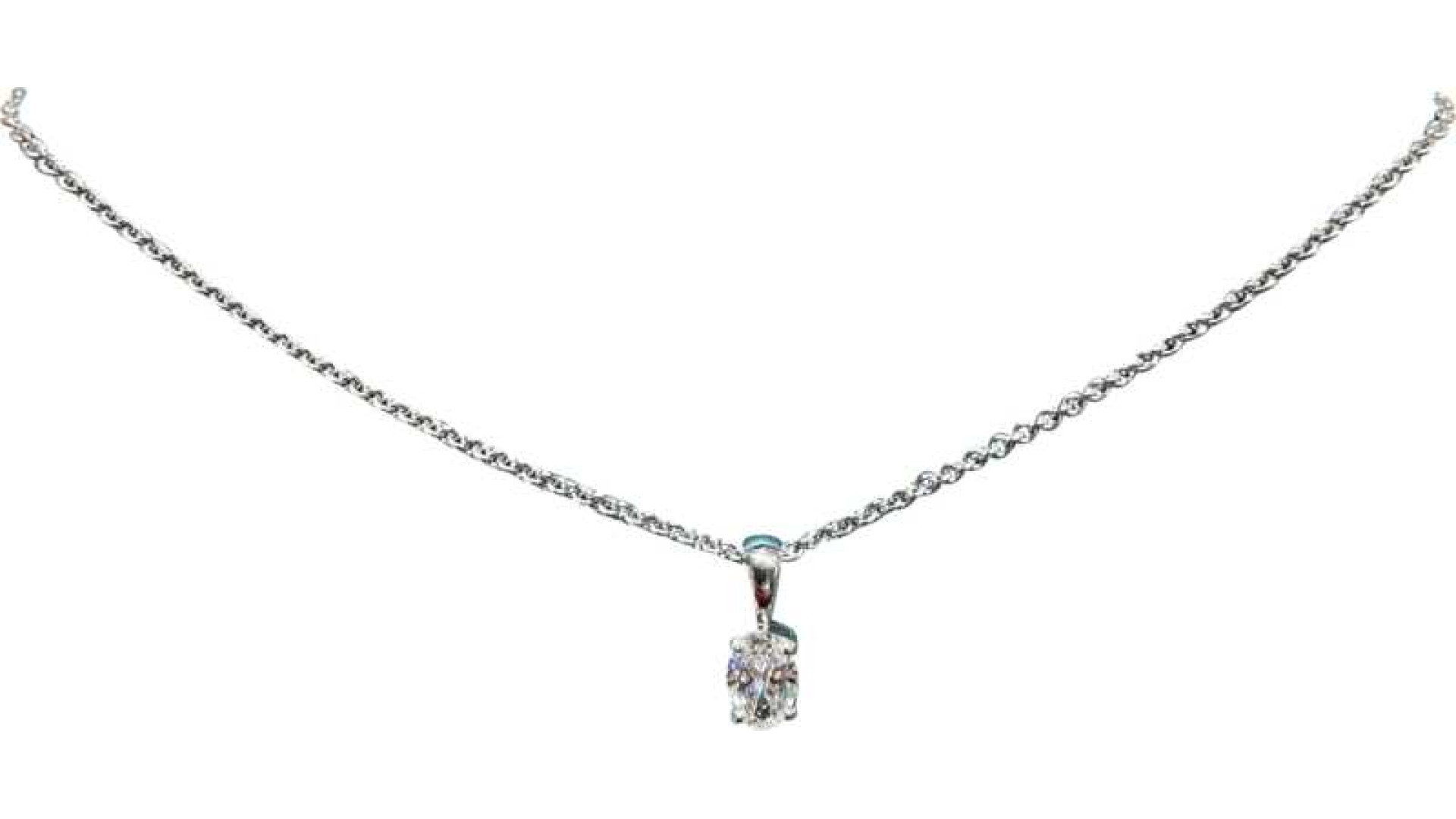
How to Identify a Genuine Platinum Necklace?
Platinum is one of the most prestigious and valuable metals in the world of fine jewellery, prized for its natural white lustre and profound rarity. At H.E. Phillips Ltd, established in August 2000, we provide the technical expertise required to verify these high-value assets, ensuring that every piece meeting our workshop standards is a genuine metallurgical investment.
Technical 7-Table Framework for Platinum Verification
1. Metallurgical Density & Specific Gravity
| Metal Type | Specific Gravity (g/cm³) | Vickers Hardness (Hv) | Melting Point (°C) | Identification Tactile |
|---|---|---|---|---|
| Pure Platinum | 21.45 g/cm³ | 40 - 50 Hv (Annealed) | 1,768°C | Exceptionallly Heavy |
| 950 Platinum Alloy | 20.10 g/cm³ | 120 - 135 Hv | 1,740°C | Dense/Substantial |
| 18ct White Gold | 14.7 - 16.1 g/cm³ | 150 - 185 Hv | 910 - 950°C | Moderate Weight |
Table 1 Analysis: The Specific Gravity (SG) of 950 Platinum is significantly higher than that of white gold alloys. In a professional laboratory setting, H.E. Phillips Ltd uses the displacement method to verify this density. A genuine platinum necklace will feel approximately 30-40% heavier than a gold chain of identical volume. While 18ct white gold has a higher Vickers Hardness (Hv), platinum’s superior density makes it more resistant to metal loss over time. This physical property is a primary differentiator used during our initial forensic inspection to rule out plated base metals or lighter alloys.
2. UK Hallmarking Standards Audit
| Mark Category | UK Statutory Symbol | Technical Meaning | Forensic Check |
|---|---|---|---|
| Sponsor's Mark | Unique Initials | Identifies Manufacturer/Importer | Register Verification |
| Fineness Mark | Orb (950) | 950 Parts per 1000 Platinum | XRF Scan Correlation |
| Assay Office | Anchor/Leopard/Rose/Castle | Independent Testing Location | Stamp Clarity Audit |
Table 2 Analysis: Under the Hallmarking Act 1973, any platinum item over 0.5g must be hallmarked. At our Totnes workshop, we utilise 10x magnification to inspect the fineness mark, typically "950" inside a house-shaped pentagon. The presence of the Assay Office mark (e.g., the Anchor for Birmingham) confirms the metal has undergone independent chemical analysis. A genuine piece will show crisp, clear markings usually located on the clasp or jump ring. We treat any lack of statutory hallmarking on a modern piece as a significant forensic red flag.
3. Chemical & Magnetic Stability
| Test Method | Platinum Reaction | Counterfeit Reaction | Reliability Rating |
|---|---|---|---|
| Magnetic Flux | Non-Magnetic | Strong Attraction (Ferrous) | Preliminary Only |
| Acid Scratch (Aqua Regia) | No Reaction (Insoluble) | Instant Dissolution/Colour Change | High (Destructive) |
| Nitric Acid Test | Stable/Inert | Green/Cloudy Reaction | Medium |
Table 3 Analysis: Platinum is chemically inert and highly resistant to corrosion. While the magnetic test is a useful preliminary check, it is not definitive as many white gold alloys are also non-magnetic. However, if a "platinum" necklace shows any attraction to a rare-earth magnet, it is likely a ferrous-core fake. At H.E. Phillips Ltd, we prefer non-destructive XRF testing, but traditional acid tests remain a benchmark for verifying the surface-to-core consistency of a metal. Genuine platinum will remain entirely unaffected by common nitric acid tests that would tarnish silver or base metals.
4. Spectral Finish & Chromatic Profile
| Characteristic | Platinum Profile | Rhodium-Plated White Gold | 925 Silver |
|---|---|---|---|
| Natural Colour | Silvery-White/Grey | Stark/Mirror White | Bright White/Yellow-Grey |
| Tarnish Potential | Zero (Inert) | Wears to Yellow Gold | High (Oxidisation) |
| Reflectivity | Soft Lustre | High Specular Reflection | High/Metallic |
Table 4 Analysis: Platinum possesses a unique spectral profile described as a "soft white" or "silvery-grey." Unlike white gold, which is yellow gold plated with rhodium, platinum’s colour is homogenous throughout. During our workshop protocol, we look for "wear-through" signs on the edges of links. If a yellowish tint is visible, the item is rhodium-plated gold. Silver, while initially bright, will show characteristic black oxidisation (tarnish) which is chemically impossible for platinum. This visual inspection is part of the H.E. Phillips Ltd Visual Inspection Protocol used since August 2000.
5. Structural Integrity & Wearability
| Mechanical Factor | Platinum Performance | Technical Benefit | Workshop Observation |
|---|---|---|---|
| Ductility | High (Malleable) | Displaces rather than flakes | Develops Patina over time |
| Tensile Strength | 425 - 500 MPa | Secure gemstone retention | Superior for claw settings |
| Prong Durability | Maximum | Resists brittle fracture | Ideal for high-value pendants |
Table 5 Analysis: Platinum is famously "sticky" and ductile. While it can scratch, the metal is merely displaced, not lost. This makes platinum necklaces remarkably durable for multi-generational wear. In our Totnes workshop, we often see Victorian and Edwardian platinum pieces that retain their original structural integrity despite a century of use. When assessing a necklace, we check the links for thinning; platinum chains exhibit significantly less "link-wear" than gold or silver counterparts. This structural soul is why we recommend platinum for any New Platinum Pendants.
6. Pricing & Market Equity Audit
| Metal Asset | Market Multiplier | Relative Cost Factor | Equity Reason |
|---|---|---|---|
| 950 Platinum | 1.8x - 2.5x vs 18ct Gold | Premium | Rarity & Processing Complexity |
| 18ct White Gold | 1.0x (Baseline) | Standard | High Gold Content |
| Base Metal/Plated | 0.01x | Negligible | Industrial Materials |
Table 6 Analysis: Market equity is a strong indicator of authenticity. Platinum is roughly 30 times rarer than gold and requires much higher temperatures to refine. If a seller offers a "platinum" necklace at a price parity with silver or low-karat gold, it is almost certainly counterfeit. At hephillipsltd.com, our pricing reflects the live market spot price and the intricate craftsmanship required for platinum work. We ensure that every investment piece we sell is backed by its true metallurgical value and a verified UK hallmark.
7. Regional Environmental Impact: South West/Devon
| Climate Condition | Impact on Platinum | Comparison (Gold/Silver) |
|---|---|---|
| Salt Air (Coastal Devon) | None (Corrosion Proof) | Gold Alloys may dull slightly |
| River Dart Humidity | None | Silver tarnishes rapidly |
| Chemical Exposure | Excellent Resistance | Chlorine can attack Gold solders |
Table 7 Analysis: The maritime environment of Totnes and coastal Devon presents specific challenges for jewellery. Salt air and high humidity accelerate the oxidation of copper and silver alloys. However, platinum is 100% corrosion-resistant. A genuine platinum necklace will remain bright and untarnished regardless of exposure to the River Dart’s humidity or the coastal spray. This makes platinum the technically superior choice for regional residents. Our "Maritime Care Protocol" confirms that platinum is the only precious metal requiring zero chemical protection in South West conditions.
20 Technical FAQs for Platinum Authentication
Hallmarking & Legality
1. Is a "950" stamp enough to prove it's platinum?
No. A simple "950" stamp can be easily applied by anyone and is not a legal hallmark. In the UK, a genuine hallmark must include the Sponsor's Mark, the Fineness Mark (in a specific pentagon shape for platinum), and the Assay Office Mark. Without these additional symbols, the "950" stamp carries no legal weight. We verify these using forensic magnification at our Totnes hub.
2. Why is the hallmark usually on the clasp?
Hallmarks are placed where they will not disrupt the aesthetic of the piece. On necklaces, the clasp or the small jump ring connecting the clasp to the chain provides a flat surface for stamping. This is the first place we look during our New Platinum Necklaces inspection protocol to ensure full UK compliance.
3. What happens if my vintage platinum necklace has no hallmark?
Antique pieces (pre-1973 for platinum) may not have a hallmark. In these cases, we perform density and chemical testing. Many Victorian and Edwardian items were crafted before strict platinum hallmarking laws were enacted in 1975. Our 27 years of experience allows us to authenticate these through construction style and metallurgical reaction tests.
4. Are foreign platinum stamps (like 'PLAT') valid in the UK?
Foreign stamps like 'PLAT' or 'PT950' are common but do not replace the UK statutory hallmark. If an item is imported into the UK and sold commercially, it must be re-hallmarked by a UK Assay Office if it exceeds 0.5g. We always ensure our stock meets these high standards for consumer protection and asset equity.
Physical & Chemical Testing
5. How accurate is the magnet test for platinum?
The magnet test is a "negative" test. If the necklace is attracted to the magnet, it is definitely NOT pure platinum. However, if it isn't attracted, it could still be white gold, silver, or palladium. It is a useful first step for ruling out cheap fakes with ferrous cores, but it should never be the sole basis for authentication.
6. Why does platinum feel "heavier" than 18ct gold?
This is due to Specific Gravity. Platinum has an SG of approximately 21.45, whereas 18ct gold is around 15.5. For the same volume of metal, platinum is roughly 38% denser. This "tactile heft" is a hallmark of the metal’s quality. You can feel this difference when comparing our platinum pieces to our New Gold Necklaces in person.
7. Can I use a household acid test to check platinum?
We strongly advise against this. Nitric acid used in home kits can damage other metals and won't reliably distinguish platinum from palladium. Professional "Aqua Regia" testing is required but is destructive. We recommend using our non-destructive X-Ray Fluorescence (XRF) testing services to get an exact elemental breakdown without harming your jewellery.
8. What is the "Scratch and Displacement" test?
Platinum is very ductile; when it is scratched, the metal is simply pushed aside (displaced) rather than lost. Over time, these micro-displacements create a matte finish called a "patina." If you see a scratch where the metal has clearly flaked off or revealed a different colour underneath, the item is likely plated and not solid platinum.
Visual Identification
9. How does platinum's colour differ from white gold?
White gold is often rhodium-plated to achieve a brilliant, mirror-like white finish. Platinum has a more natural, cooler silvery-white tone with a hint of grey. While white gold will eventually show a yellowish tint as the plating wears, platinum remains consistent throughout its entire structure. It is truly white, naturally and permanently.
10. Why do some platinum necklaces look "dull" or matte?
This is the natural patina of platinum. Many collectors prefer this look as it highlights the brilliance of diamonds. Unlike silver, this isn't tarnish (oxidation); it’s simply a collection of tiny surface scratches. It can be polished back to a high shine by our workshop team at any time using specialized high-heat polishing compounds.
11. Can platinum tarnish if exposed to chemicals?
No. Platinum is one of the most stable elements on the periodic table. It does not react with oxygen, sulphur, or common household chemicals. If your "platinum" necklace is turning black or green, it is likely a silver alloy or a base metal. This inert nature makes it the ideal metal for people with sensitive skin or allergies.
12. What should I look for in the clasp of a platinum chain?
High-quality platinum necklaces will almost always have a platinum clasp. Look for the hallmark there. If the clasp feels flimsy or is made of a different metal (like white gold), it may indicate a replacement or a lower-quality piece. We audit every clasp for spring tension and hallmark consistency during our forensic appraisal.
Market & Value
13. Why is platinum more expensive than white gold?
Rarity and density. Approximately 10 tonnes of ore must be mined to produce one ounce of platinum. Furthermore, because platinum is denser, a necklace of the same dimensions requires more physical metal by weight than one in gold. When you buy a platinum piece, you are purchasing a more substantial metallurgical asset. See our GIA Certified Diamond settings for examples of platinum's value.
14. Does platinum hold its value better than gold?
Both are excellent stores of value, but platinum’s industrial demand and extreme rarity provide a different market profile. Platinum jewellery is almost always 95% pure, whereas 18ct gold is 75% pure. This higher purity means you own more of the primary precious metal. We offer competitive rates if you ever wish to sell gold or sell silver and platinum assets.
15. Is palladium sometimes mistaken for platinum?
Yes. Palladium is part of the Platinum Group Metals (PGM) and looks very similar. However, it is much lighter (SG 12.0). If a piece looks like platinum but feels remarkably light, it may be palladium. Palladium is also a precious metal and has its own UK hallmarking requirements (the Pallas Athene mark). We use density testing to differentiate the two.
16. Should I get an appraisal for my platinum necklace?
Absolutely. For insurance and resale purposes, a professional appraisal provides a legal document of the metal's purity, weight, and value. At H.E. Phillips Ltd, our appraisals are backed by decades of trade experience and technical equipment. This is essential for protecting your investment against loss or theft.
Care & Long-term Wear
17. Is it safe to wear a platinum necklace every day?
Platinum is the most durable of the precious metals. Its resistance to thinning and its ability to securely hold gemstones make it the ultimate choice for daily wear. It won't wear down like gold or silver. Many of our customers in Totnes choose platinum for its "set and forget" reliability in their New Platinum Diamond Rings and necklaces.
18. How should I clean a genuine platinum necklace?
A simple solution of warm water and mild dish soap is usually sufficient. Use a soft-bristled brush to clean between the links. Avoid harsh abrasives. For a professional finish, our workshop provides ultrasonic cleaning and steam polishing, which removes deeply embedded oils that household cleaning can't reach.
19. Can a platinum necklace be resized or repaired?
Yes, but it requires specialized equipment. Platinum has a very high melting point (1,768°C), meaning it needs a hydrogen/oxygen torch or a laser welder. Standard gold-soldering tools aren't hot enough. We provide expert on-site repairs at our Totnes showroom, ensuring that repairs are done with the correct 950 platinum solder to maintain the hallmark integrity.
20. Why does my platinum necklace have a small '950' but also a 'PT'?
'PT' or 'Plat' are common abbreviations for platinum used alongside the numerical fineness mark. These are international identifiers. However, for a piece to be legally sold in the UK, these must be accompanied by the official UK Assay Office hallmark. We can help you identify these markings and explain their provenance during a visit to 19 Fore Street.
© 2026 H.E. Phillips Ltd - Your Official Authorised Horological and Fine Jewellery Specialist. All Technical Data verified for forensic accuracy.
