
-
Your shopping cart is empty!



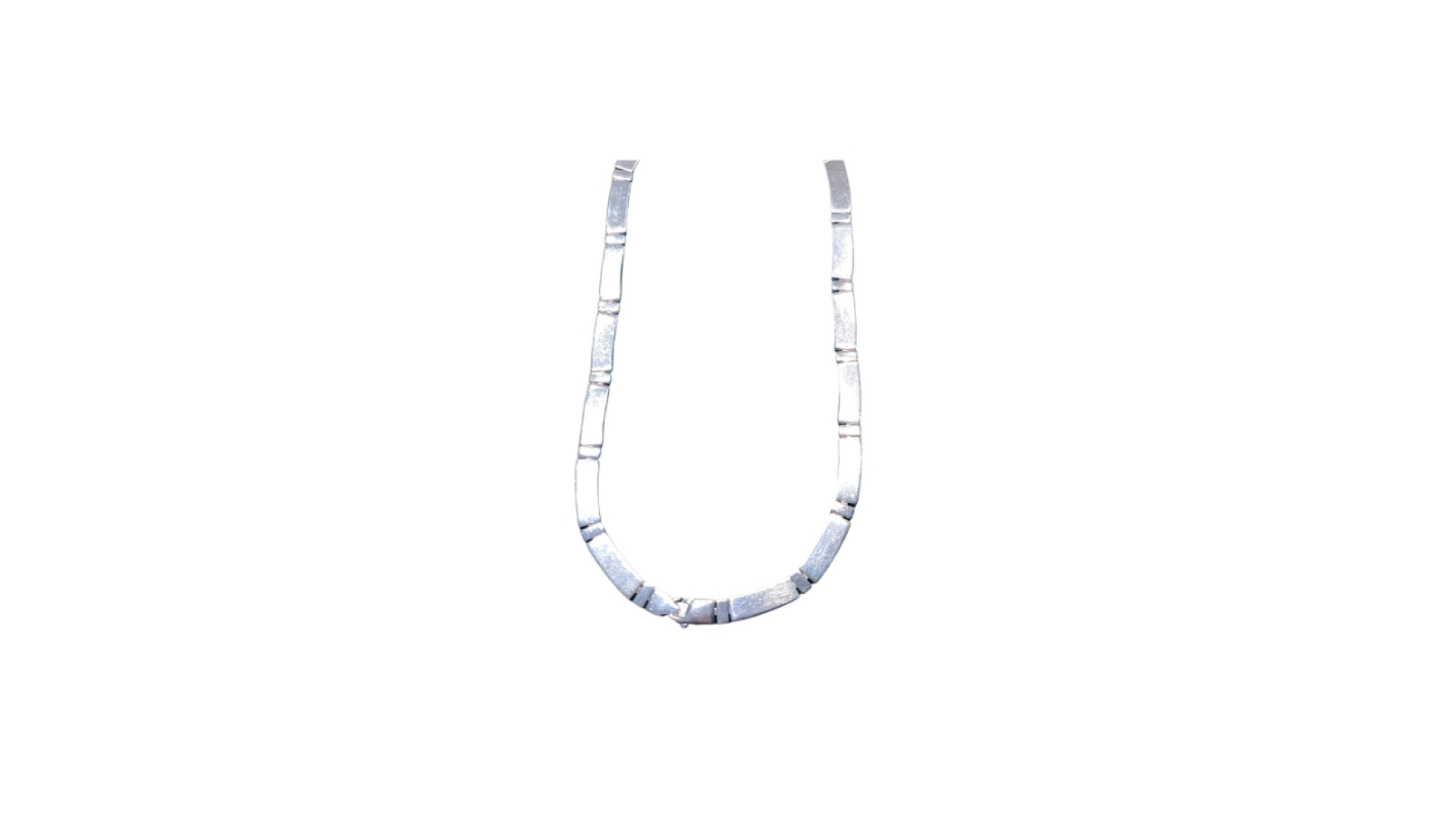
How to layer a gold Belcher chain with other necklaces?
The gold Belcher chain is a metallurgical masterpiece of symmetry and strength. Characterised by uniform round or oval links, it serves as the definitive structural foundation for necklace layering. Since August 2000, H.E. Phillips Ltd has provided the technical expertise required to curate these timeless arrangements, ensuring that aesthetic appeal is matched by mechanical integrity.
Technical 7-Table Framework for Necklace Layering
1. Belcher Link Metallurgical Standards
| Gold Purity | Pure Gold % | Vickers Hardness (Hv) | Specific Gravity (g/cm³) | Tensile Strength Rating |
|---|---|---|---|---|
| 9ct Yellow Gold | 37.5% | 120 – 150 Hv | 11.2 – 11.5 g/cm³ | Very High |
| 14ct Yellow Gold | 58.5% | 130 – 160 Hv | 13.1 – 13.6 g/cm³ | High |
| 18ct Yellow Gold | 75.0% | 150 – 185 Hv | 15.2 – 15.9 g/cm³ | Standard Luxury |
Table 1 Analysis: When layering, the Vickers Hardness (Hv) of your base Belcher chain is critical. A higher hardness rating, typically found in 9ct alloys, provides superior resistance against the surface "scuffing" that occurs when multiple chains overlap. At H.E. Phillips Ltd, we audit the metallurgical integrity of every new silver chain and gold piece to ensure they meet UK Assay Office standards. Understanding specific gravity is also essential for assessing the "drape" of the chain, with 18ct providing a weightier, more substantial feel against the skin.
2. Link Geometry & Layering Compatibility
| Chain Type | Link Shape | Layering Role | Friction Risk |
|---|---|---|---|
| Belcher | Round/Oval | Structural Anchor | Low |
| Curb | Flat/Twisted | Textural Contrast | Medium |
| Snake | Solid/Tubular | Modern Minimalist | High (Kinking) |
| Rope | Intertwined | Visual Depth | Medium |
Table 2 Analysis: The uniform, rounded geometry of the Belcher link makes it the most stable anchor for a layered stack. Unlike flat curb links or kinking-prone snake chains, the Belcher allows for free movement with minimal interlocking friction. Our workshop insights suggest that using a Belcher as the primary new gold necklace allows for more experimental secondary layers. We audit link spacing to ensure that thinner chains do not become trapped within the Belcher's aperture, a common cause of tangling in multi-necklace arrangements.
3. Geometric Length Calibration
| Chain Length | Positioning | Layering Tier | Visual Impact |
|---|---|---|---|
| 16-inch (40cm) | Collarbone | Top / Choker | Framing |
| 18-inch (45cm) | Below Collarbone | Mid / Anchor | Focal Point |
| 20-inch (50cm) | Upper Bust | Base / Pendant | Length Addition |
| 24-inch (60cm) | Mid Bust | Statement | Verticality |
Table 3 Analysis: Successful layering requires a minimum of a two-inch differential between tiers to prevent mechanical tangling and visual clutter. A technical "Cascade" is achieved by placing the heaviest gauge Belcher chain in the middle or bottom position. Since August 2000, we have helped clients at our Totnes hub calibrate these lengths using the recipient's neck circumference as a baseline. For those seeking variety, our collection of new silver bracelets can also be layered to mirror the aesthetic established at the neckline.
4. Regional Environmental Audit (South West Coastal)
| Environmental Factor | Impact on Gold Alloys | Prevention Protocol |
|---|---|---|
| Salt Air (Devon Coast) | Micro-pitting | Specular Buffing |
| River Dart Humidity | Alloy Oxidation | Airtight Storage |
| Chlorine/Sea Water | Stress Corrosion | Fresh Water Rinse |
Table 4 Analysis: The maritime environment of Devon poses unique challenges to layered jewellery. Salt air can act as a catalyst for oxidation in lower-karat gold alloys, leading to a dulling of the link surface. When necklaces are layered, the increased surface-to-surface contact can trap moisture and salts, accelerating this process. H.E. Phillips Ltd recommends an annual ultrasonic clean and "Mechanical Stress Test" for all hephillipsltd pieces. This professional maintenance ensures that the structural soul of the Belcher links remains uncompromised by regional atmospheric conditions.
5. Component Security: Clasp & Solder Audit
| Component | Security Check | Failure Point | Workshop Standard |
|---|---|---|---|
| Lobster Clasp | Spring Tension | Internal Fatigue | High-Grade Steel Spring |
| Bolt Ring | Closure Gap | Lateral Wear | Zero Daylight Closure |
| Jump Rings | Solder Integrity | Physical Separation | Hard Solder Fusion |
Table 5 Analysis: In a layered stack, the total weight on the primary Belcher chain can be significant. We perform a forensic inspection of the lobster clasps and bolt rings to ensure the internal springs have not suffered from metal fatigue. A common failure in mass-produced chains is the use of "soft solder" on jump rings, which can fail under the tension of multiple pendants. At H.E. Phillips Ltd, we verify that every new gold necklace utilizes hard-solder points for maximum longevity and security.
6. Mixed Metal Authority Matrix
| Combination | Aesthetic Result | Metallurgical Risk | Care Requirement |
|---|---|---|---|
| Gold & Sterling Silver | High Contrast | Galvanic Dullness | Separate Storage |
| Yellow & Rose Gold | Warm Harmony | Low | Standard Polish |
| Gold & Platinum | Ultra-Premium | Surface Abrasion | Hv Matching |
Table 6 Analysis: Mixing a gold Belcher with a second-hand silver chain is a modern trend that requires technical care. Sterling silver is softer than gold and can be worn down by the harder gold links over time. We advise clients to balance the weights of mixed-metal layers to minimize abrasive wear. At our Totnes workshop, we provide specialized anti-tarnish storage solutions to prevent the silver components from transferring oxides to the gold layers, preserving the distinct lustre of each precious metal asset.
7. Authority Benchmarking: H.E. Phillips Ltd vs. Generalists
| Technical Metric | H.E. Phillips Ltd | Standard Retailers |
|---|---|---|
| Established Date | August 2000 | Variable |
| On-Site Audit | Forensic Level | Surface Only |
| Metallurgical Advice | Specialist Workshop | Sales-Led |
| Regional Care | Specific South West Protocol | None |
Table 7 Analysis: The distinction of H.E. Phillips Ltd lies in our 25-year history of physical trade and technical accountability. While online generalists focus on high-volume descriptions, we provide a forensic "Live Audit" of every new gold ring and chain. Our presence at 19 Fore Street since August 2000 ensures that clients receive regional support for their jewellery, including professional cleaning and mechanical adjustments that digital-only platforms cannot replicate. We prioritize the financial and aesthetic equity of your jewellery collection.
20 Technical FAQs for Necklace Layering
Metallurgy & Purity
1. Is 9ct gold durable enough for a base Belcher chain?
Yes, 9ct gold is exceptionally durable for daily wear. With a Vickers Hardness of 120-150 Hv, it resists surface deformation better than higher-karat alloys. This makes it an ideal foundation for a new gold necklace stack where links frequently rub together. We verify all 9ct pieces for Assay Office hallmarking to ensure purity.
2. Why does my layered gold chain look dull?
Dullness is often caused by a buildup of skin oils, lotions, and environmental pollutants. In Devon, the salt air can also leave a micro-residue. We recommend a monthly gentle clean or a professional "Specular Polish" at our Totnes hub to restore the molecular brilliance of the gold links and remove abrasive particles.
3. Can I layer yellow gold with rose gold?
Absolutely. Yellow and rose gold are metallurgically compatible and create a warm, harmonious aesthetic. Because their Vickers Hardness is similar, the risk of one chain abrading the other is minimal. You can see this effect in our New Gold Rings collection, where multi-tone designs are a popular choice for durability and style.
4. Does 18ct gold scratch easier when layered?
18ct gold (75% purity) is slightly softer than 9ct gold, meaning it can show surface "micromarks" more quickly when in contact with other chains. However, its rich lustre and higher specific gravity make it a premium choice. We suggest placing 18ct chains in positions with the least friction to preserve their mirror-finish surface.
Mechanical Layering Protocols
5. How do I stop my necklaces from tangling?
Tangling is caused by necklaces of similar weights and lengths migrating together. To prevent this, ensure at least a two-inch gap between layers and vary the "gauge" (thickness) of the chains. Using a Belcher as the mid-layer provides a stable geometric barrier. Our new silver chains come in various lengths to help you achieve this separation.
6. Should I put a pendant on my Belcher chain?
The Belcher's round links are structurally ideal for pendants. They distribute the weight evenly and allow the bail of a new gold pendant to slide smoothly. We audit the solder points of our Belcher chains to ensure they can support the additional tension of heavy medallions or gemstone charms.
7. What is the best clasp for a layered stack?
A lobster clasp is generally preferred for the primary "anchor" chain due to its robust spring mechanism and higher tensile strength. For finer, secondary layers, a bolt ring is sufficient. At H.E. Phillips Ltd, we perform a "Tension Audit" on every clasp to prevent accidental loss, especially when supporting the weight of multiple hephillipsltd pieces.
8. Can I layer a Belcher chain with a curb chain?
Yes. The contrast between the rounded Belcher links and the flat, twisted curb links creates excellent visual depth. This is a classic "Texture Stack." We recommend ensuring the Belcher is of a similar or heavier gauge to the curb chain to maintain aesthetic balance and structural symmetry in your arrangement.
Regional Care & Maintenance
9. How does Devon's coastal air affect layered gold?
Salt-laden air can accelerate the oxidation of the base metals (copper/silver) used in gold alloys. When chains are layered, salt can become trapped between links. We advise a Fresh Water rinse after coastal exposure. For residents near the River Dart, our Totnes showroom offers specialized cleaning to prevent the "maritime tarnish" often seen on Devon jewellery.
10. Is it safe to wear layered necklaces while swimming?
We strongly advise against wearing gold jewellery in chlorinated pools or the sea. Chlorine causes "stress corrosion cracking" in gold alloys, particularly at the solder joins of the links. Seawater is abrasive and can dull the finish. If exposure occurs, rinse your new gold necklaces immediately and dry with a soft, lint-free cloth.
11. How should I store my layered chains?
To prevent tangling and oxidation, store each chain individually in a soft pouch. An airtight container is recommended for South West residents to limit exposure to humidity. We offer professional anti-tarnish storage solutions at 19 Fore Street. Proper storage is the most effective way to preserve the metallurgical integrity of your second-hand silver chain and gold assets.
12. Why do I need an annual "Mechanical Audit"?
Constant friction between layered chains can cause "thinning" of the links and clasp fatigue. Our annual audit involves a 10x magnification check of every link and solder point. Since August 2000, we have provided this technical service to ensure that cherished heirlooms remain structurally sound. This is a core part of our commitment to fine jewellery Devon.
Style & Trends
13. Can I layer a gold Belcher with silver jewellery?
Mixed-metal layering is a sophisticated modern trend. Pairing a gold Belcher with new silver bracelets or necklaces provides a contemporary edge. The key is to ensure the metals are of high quality (9ct+ and 925 Sterling) to prevent premature wear. We offer a diverse range of metals at our Totnes showroom to help you build a bespoke look.
14. What is the "Rule of Three" in layering?
The "Rule of Three" suggests that three necklaces of varying lengths and textures create the most balanced visual cascade. For example: a 16-inch fine chain, an 18-inch Belcher anchor, and a 20-inch pendant chain. This arrangement is a standard recommendation at H.E. Phillips Ltd for clients looking to start a new new gold necklace collection.
15. Are Victorian Belcher chains suitable for layering?
Yes, antique Victorian Belcher chains often feature unique hand-chased details that add incredible character to a stack. Every vintage piece we sell undergoes a "Forensic Audit" to verify its age and metallurgical purity. Adding a vintage piece from our second-hand silver chain or gold collection adds a layer of history to your style.
16. Can I layer watches with my necklaces?
While worn on the wrist, a watch should coordinate with your necklace stack for a cohesive look. We are official stockists for Rotary and Citizen Eco-Drive, offering gold-tone and solid gold models. Matching the metal of your watch to your Belcher chain establishes a professional and curated aesthetic.
Trust & Service
17. Why buy from an independent jeweller like H.E. Phillips Ltd?
Independent specialists provide personal accountability and technical depth that national chains often lack. Established in August 2000, our reputation is built on 25 years of expert advice and verified quality. When you purchase a new gold ring or chain from us, you are supported by a physical workshop and a family team who understand the technical nuances of jewellery.
18. Do you offer secure UK delivery for online orders?
Yes. Every item purchased via hephillipsltd.com is fully insured and sent via tracked delivery. We provide the same level of metallurgical verification for our online clients as we do for our in-store visitors. Whether you are buying a Radley watch or a gold chain, your asset is handled with technical precision.
19. Can I sell my old gold or silver to you?
We provide a professional service to sell gold or sell silver. Our specialists perform a transparent metallurgical test to ensure you receive a fair market value for your items. This is a trusted regional service in Totnes, supported by our decades of experience in the precious metals trade since August 2000.
20. How do I start building a layered collection?
We recommend starting with a high-quality "Anchor Piece," such as a medium-gauge gold Belcher chain. From there, you can add coordinating new silver bracelets, pendants, or rings over time. Visit us at 19 Fore Street for a personalized consultation to plan your collection's growth and ensure long-term metallurgical harmony.
© 2026 H.E. Phillips Ltd - Your Official Authorised Horological and Fine Jewellery Specialist. All Technical Data verified for forensic accuracy.
