
-
Your shopping cart is empty!



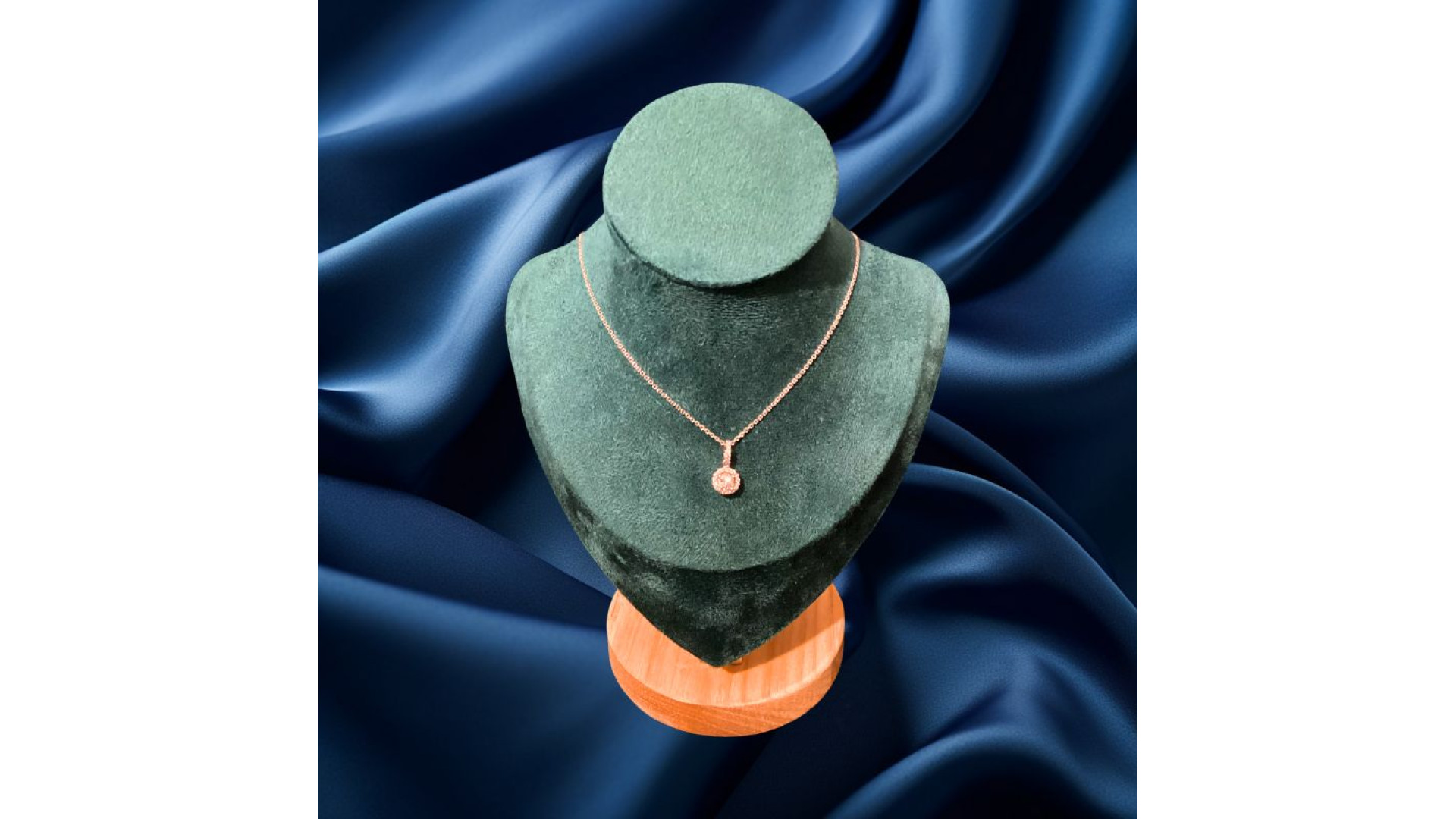
Investing in GIA Certified Diamond Jewellery
Investing in diamond jewellery is a sophisticated merger of aesthetic appreciation and asset management. By prioritising GIA certified stones, investors in Totnes and across the UK ensure their acquisitions are backed by the world's most rigorous gemological standards, providing a verifiable foundation for long-term value retention.
Technical 7-Table Framework for Diamond Investment
1. The 4Cs: Valuation Metrics
| Metric | Technical Definition | Investment Impact | GIA Standard |
|---|---|---|---|
| Carat | Mass (1ct = 0.2g) | Exponential Price Curve | Measured to 2 decimal places |
| Cut | Light performance | Primary Brilliance Factor | Scale: Excellent to Poor |
| Colour | Chemical Purity | Rarity/Scarcity Factor | Scale: D (Colourless) to Z |
| Clarity | Internal/External flaws | Structural Integrity | Scale: FL (Flawless) to I3 |
Table 1 Analysis: The 4Cs form the mathematical basis of a diamond's market value. For investment purposes, the GIA grading report provides an impartial, scientific audit that removes retail bias. Our workshop experience indicates that "Cut" is often the most undervalued "C" by novices, yet it remains the primary driver of light dispersion and secondary market desirability. At H.E. Phillips Ltd, we examine every 4C metric under 10x magnification to ensure the GIA certificate matches the physical stone, protecting the financial equity of your investment.
2. Metallurgical Properties of Settings
| Alloy Type | Pure Content % | Vickers Hardness (Hv) | Specific Gravity (g/cm³) |
|---|---|---|---|
| 18ct Yellow Gold | 75.0% | 150 – 185 Hv | 15.2 – 15.9 g/cm³ |
| Platinum (950) | 95.0% | 120 – 135 Hv | 21.45 g/cm³ |
| 18ct White Gold | 75.0% | 130 – 160 Hv | 14.7 – 15.2 g/cm³ |
Table 2 Analysis: The setting material significantly impacts the durability and value of GIA certified jewellery. Platinum’s high Specific Gravity (21.45 g/cm³) offers a density that ensures diamond security through "metal displacement" rather than wear. Conversely, 18ct gold alloys provide superior Vickers Hardness (up to 185 Hv), making them more resistant to surface scratching during daily wear. H.E. Phillips Ltd verifies all hallmarking to ensure metallurgical purity aligns with UK Assay Office standards, ensuring the mounting is as valuable as the stone.
3. Grading Authority Comparison
| Institution | Status | Grading Rigour | Market Acceptance |
|---|---|---|---|
| GIA | Non-Profit / Educational | Maximum (Scientific) | Universal / Global |
| EGL | Commercial | Variable | Regional / Moderate |
| In-House Labs | Retail-Owned | Subjective | Limited |
Table 3 Analysis: The GIA's non-profit status is critical for investors. Unlike commercial labs that may "soft grade" to assist retail sales, the GIA adheres to a strict, scientific protocol. This transparency is the cornerstone of liquidity; a GIA certified stone is tradable worldwide with zero ambiguity regarding its quality. Our 27+ years of trade experience at 19 Fore Street confirms that GIA certified pieces consistently hold higher resale percentages in the UK market due to this undisputed global trust.
4. Regional Environmental Impact (Devon Coastal)
| Climate Factor | Impact on Jewellery | Technical Consequence |
|---|---|---|
| Salt Air (Coastal Devon) | Setting Oxidation | Prong Weakening over decades |
| River Dart Humidity | Base Metal Tarnish | Surface Brilliance Loss |
| Abrasive Sand/Silt | Erosion of Details | Loss of Hallmarking Clarity |
Table 4 Analysis: Living in the South West, specifically near the River Dart, exposes high-value jewellery to unique environmental stressors. Salt-laden air can penetrate micro-fractures in lower-quality alloys. We recommend an annual "Forensic Inspection" at our Totnes showroom to check for stress corrosion. Maintaining the molecular surface integrity of the gold or platinum setting is vital to ensuring the GIA certified diamond remains securely mounted and the piece retains its investment-grade condition despite Devon's maritime climate.
5. Diamond Scarcity and Rarity Index
| Clarity/Colour Grade | Rarity Level | Liquidity Rating |
|---|---|---|
| D / Flawless | Extreme (Museum Grade) | High (Collectors) |
| E-F / VVS1-2 | Very High (Investment Grade) | Maximum |
| G-H / VS1-2 | Commercial Luxury | Moderate-High |
Table 5 Analysis: For pure investment, scarcity drives appreciation. Diamonds in the D-F colour range and VVS clarity tiers represent a small fraction of global mining output. These "top-tier" stones are the most sought after in London and international auction houses. While stones in the G-H/VS range offer excellent visual value for wearing, the GIA certificate acts as the "title deed" that proves the rarity required for a diversified financial portfolio.
6. Investment Liquidity Benchmarks
| Asset Type | Time to Liquidate | Verification Requirement |
|---|---|---|
| Loose GIA Diamond | Fast (B2B Trade) | Certificate Match |
| GIA Jewellery | Moderate (Retail/Auction) | Appraisal + GIA Report |
| Non-Certified Stone | Slow (Needs Recertification) | Mandatory Independent Lab |
Table 6 Analysis: Liquidity is the ease with which an asset can be converted to cash without losing value. GIA certified diamonds are highly liquid because their quality is a "known quantity." A non-certified stone often requires shipping to a lab before a buyer will commit, adding costs and delays. By purchasing GIA certified pieces from H.E. Phillips Ltd, you bypass these hurdles, ensuring your asset is ready for trade or resale at a moment's notice.
7. Authority Comparison: H.E. Phillips Ltd vs Generalists
| Feature | H.E. Phillips Ltd | General Online Sellers |
|---|---|---|
| Established | August 2000 | Variable |
| Workshop Audit | On-Site Physical Inspection | Digital Only |
| Personal Advice | Face-to-Face Expertise | Chatbots/Support Staff |
Table 7 Analysis: The technical distinction of H.E. Phillips Ltd lies in our 25-year history of trade participation in Totnes. Unlike digital-only retailers, we perform a physical "Visual Inspection Protocol" on every item. We don't just pass along a certificate; we verify the stone's girdle inscription and setting security in our own workshop. This dual-layer verification (GIA + Expert Workshop Audit) provides the ultimate security for UK investors seeking tangible, high-value assets.
20 Expert Technical FAQs for Diamond Investment
Certification & Authentication
1. Why is GIA certification mandatory for investment?
GIA (Gemological Institute of America) is a non-profit entity that provides the world's most consistent and unbiased grading. For an investment, you need a guarantee that the diamond's quality is exactly as stated. GIA reports are the gold standard for GIA Certified Diamond assets, ensuring global liquidity and accurate valuation.
2. Can I verify my GIA report online?
Yes. Every GIA report has a unique identification number that can be entered into the GIA Report Check database. This provides an unalterable digital record of the diamond's 4Cs. At H.E. Phillips Ltd, we assist clients in performing this verification in-store to ensure the physical diamond and digital record are perfectly aligned.
3. What is a GIA laser inscription?
Most GIA diamonds have the report number microscopically laser-inscribed on the girdle (the outer edge). This allows a jeweller to match the diamond to its certificate without removing it from the setting. We use a high-powered microscope at our Totnes workshop to show you this inscription, providing absolute proof of authenticity.
4. Is a GIA report the same as an insurance appraisal?
No. A GIA report is a technical grading of quality (The 4Cs). An insurance appraisal provides a monetary value based on current market replacement costs. You need both: the GIA report to prove quality and a professional appraisal from hephillipsltd to document the financial value for coverage purposes.
The 4Cs & Technical Value
5. Which 'C' is most important for resale value?
While all 4Cs matter, 'Cut' is technically the most critical for visual appeal, while 'Carat' and 'Colour' often drive rarity and price. An 'Excellent' cut grade ensures the stone captures light efficiently, making it more desirable on the secondary market. We recommend prioritising a high cut grade for any New Diamond Earring purchase.
6. Does diamond fluorescence affect investment?
Fluorescence can sometimes make a diamond look "milky" or "hazy" in sunlight, which can decrease its value. However, in lower colour grades (I-M), it can actually make the stone look whiter. GIA reports clearly state the level of fluorescence. We advise investors to generally seek "None" or "Faint" for maximum price stability.
7. What is 'Eye-Clean' clarity?
A diamond is eye-clean if its inclusions are not visible to the naked eye. This typically starts at the VS2 grade. For investment, higher grades like VVS1 or IF (Internally Flawless) are preferred due to their extreme scarcity. You can view various clarity grades in our New Platinum Diamond Rings collection.
8. Why are D-colour diamonds so expensive?
D is the highest colour grade, representing a completely colourless stone. These are chemically pure and extremely rare in nature. As scarcity increases, the price rises exponentially. For those looking to sell gold or sell silver to fund a diamond purchase, D-F stones represent the peak of investment quality.
Settings & Durability
9. Is Platinum better than Gold for diamond settings?
Platinum is denser and more durable, making it the superior choice for securing high-value diamonds. It does not wear away over time; rather, the metal shifts. For a lifetime investment like a New Platinum Necklace, it provides the most secure housing for your GIA stone compared to gold alloys.
10. What is the risk of a loose setting?
A loose stone can "rattle," which eventually wears down the metal prongs, leading to stone loss. Our workshop protocol involves a tactile "vibration test" to ensure every stone is seated perfectly. Regular inspections at our Totnes hub are essential for maintaining the structural soul of your New Gold Earrings.
11. How does salt air affect my jewellery?
In coastal Devon, salt air can cause micro-corrosion in gold solder points. While the diamond is unaffected, the setting can weaken. We recommend a maritime-specific cleaning protocol. If you also wear New Silver Bracelets, you'll notice they tarnish faster; gold is more resistant but still requires expert care.
12. Can I wear my diamond jewellery every day?
Diamonds are the hardest natural substance (10 on Mohs scale), but settings are softer. To preserve investment value, avoid wearing high-value pieces during heavy manual work or in chlorinated pools. For daily elegance, consider our New Gold Rings which are engineered for both beauty and structural resilience.
Market & Resale
13. Do diamonds appreciate in value?
High-quality, GIA certified diamonds have historically held their value well and appreciated over long periods. Scarcity of top-tier stones (D-F colour, IF-VVS clarity) drives this growth. Unlike mass-market jewellery, GIA Certified Diamonds are viewed as portable wealth with a global resale market.
14. How do I sell an investment diamond?
The GIA certificate is your most important tool for resale. It allows buyers to bid confidently based on verified data. At H.E. Phillips Ltd, we provide advice on the resale market. Whether you are looking to sell gold or sell silver or a diamond, our 25-year reputation ensures a fair and technical valuation.
15. Is it better to buy a loose stone or set jewellery?
Loose stones offer the most flexibility for pure investors. However, jewellery allows you to enjoy the asset. If buying set jewellery, ensure the mounting is high-quality (18ct or Platinum). Our New Gold Pendants often feature GIA diamonds that balance wearability with financial prudence.
16. What are "blood diamonds" and how do I avoid them?
Ethical sourcing is vital. We only work with suppliers who adhere to the Kimberley Process. GIA certification also adds a layer of traceability. By choosing an established jeweller like hephillipsltd, you ensure your investment is ethical, sustainable, and free from conflict origins.
Supplementary Luxury Assets
17. Do you stock watches to complement diamonds?
Yes. We are official stockists for Citizen Eco-Drive and Rotary. A high-quality watch is another form of functional investment. Pairing a GIA diamond ring with a precision timepiece creates a cohesive luxury profile of lasting metallurgical and mechanical value.
18. Are pre-loved gold items a good investment?
Absolutely. Pre-loved gold bangles and second-hand gold bracelets often carry lower premiums over their intrinsic metal value. When combined with a GIA certified diamond, these pieces represent a "Circular Luxury" investment that is both financially smart and environmentally responsible.
19. Do you stock antique jewellery?
We specialise in authenticated Victorian and Edwardian pieces. Items like second-hand gold brooches offer unique craftsmanship that modern machinery cannot replicate. Every antique piece undergoes our forensic audit to verify its age and purity before being offered at our Totnes showroom.
20. Can I find high-quality silver assets?
For those starting a collection, second-hand silver chains or second-hand silver bangles offer entry-level access to precious metals. While diamonds remain the primary investment vehicle, 925 Sterling Silver provides a durable and beautiful complement to any fine jewellery collection.
© 2026 H.E. Phillips Ltd - Your Official Authorised GIA Diamond and Horological Specialist. All Technical Data verified for forensic accuracy.

