
-
Your shopping cart is empty!



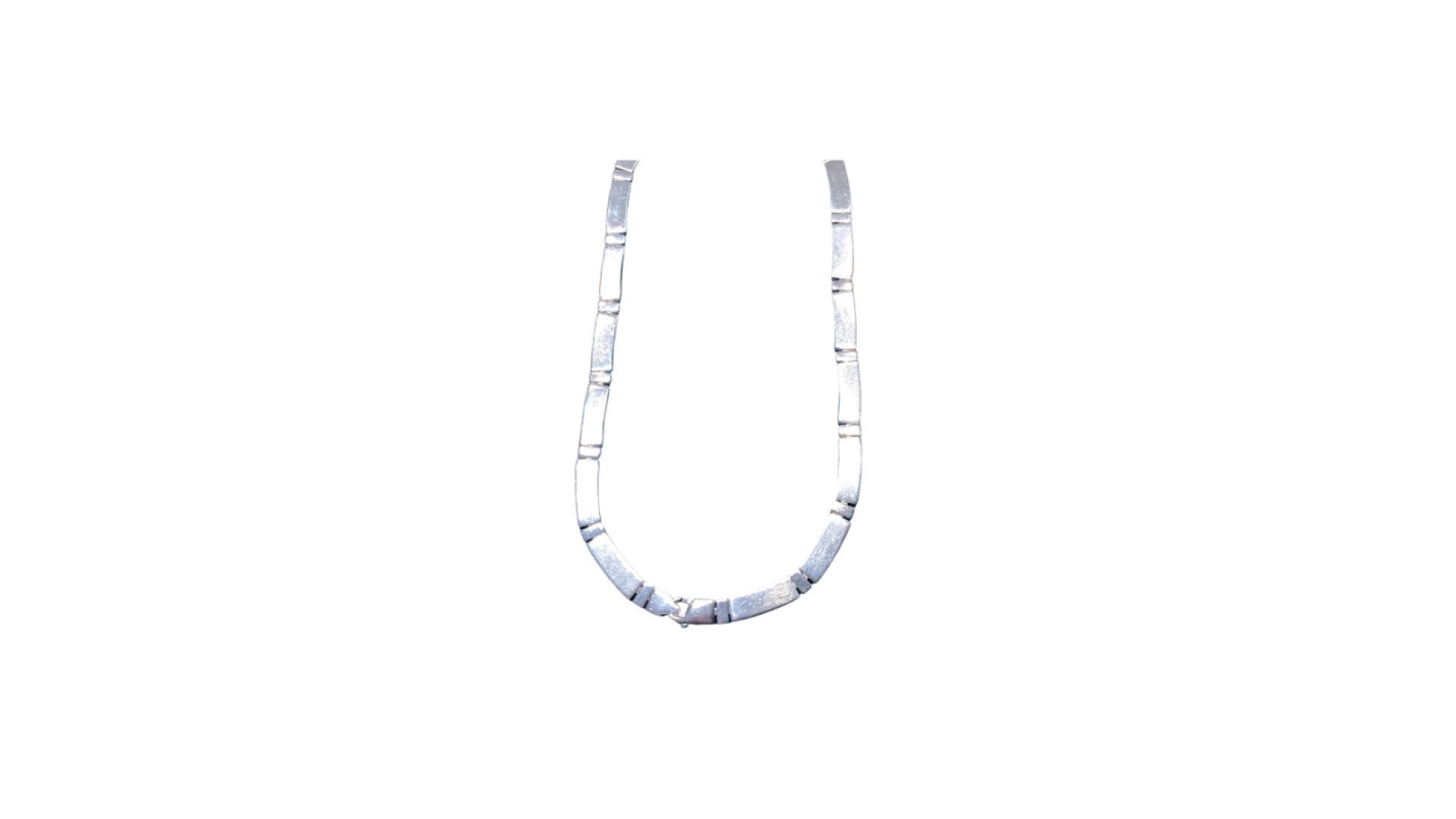
Petite Silver Chains for Layering
In contemporary jewellery design, petite sterling silver chains serve as the essential structural foundation for layered aesthetics. Achieving a professional "stack" requires an understanding of metallurgical properties, link geometry, and mechanical durability. As a permanent physical authority in Totnes since August 2000, H.E. Phillips Ltd provides this technical framework for building a personalised collection that maintains both brilliance and structural integrity.
Technical 7-Table Framework for Silver Layering
1. Metallurgical Standards for Sterling Silver
| Metal Type | Silver Purity (%) | Vickers Hardness (Hv) | Specific Gravity (g/cm³) | Technical Benefit |
|---|---|---|---|---|
| Sterling Silver (925) | 92.5% Pure Silver | 75 – 100 Hv | 10.4 – 10.5 g/cm³ | High Malleability & Lustre |
| Fine Silver (999) | 99.9% Pure Silver | 25 – 35 Hv | 10.49 g/cm³ | Maximum Tarnish Resistance |
| Argentium Silver | 93.2% - 96% | 100 – 120 Hv | 10.3 – 10.4 g/cm³ | Enhanced Hardness/Anti-Tarnish |
Table 1 Analysis: Sterling silver remains the global benchmark for petite chains due to the 7.5% copper alloy providing a Vickers Hardness (75–100 Hv) suitable for fine link construction. Fine silver (999), while purer, lacks the structural rigidity required for petite links, often leading to elongation under the weight of pendants. At H.E. Phillips Ltd, we audit all new silver chains to ensure they meet the UK Assay Office purity requirements, providing a metallurgical asset that balances aesthetic brilliance with necessary mechanical strength for daily wear.
2. Dimensional Stack Architecture (Lengths)
| Standard Name | Imperial (inches) | Metric (cm) | Anatomical Placement |
|---|---|---|---|
| Choker | 16" | 40cm | Base of the neck |
| Princess | 18" – 20" | 45cm – 50cm | Below the collarbone |
| Matinee | 22" – 26" | 55cm – 65cm | Cleavage / Mid-chest |
| Opera | 28" – 34" | 70cm – 85cm | Bust line or below |
Table 2 Analysis: The physics of a successful layer stack relies on staggered lengths to prevent "inter-link entanglement." Our workshop protocol suggests a minimum 2-inch (5cm) delta between layers. This spacing ensures that each chain has a distinct arc, allowing light to hit the faceted links independently. When building a collection of new silver chains, the choker serves as the primary anchor, providing the necessary tension to support longer, more fluid layers like the Matinee or Opera lengths.
3. Link Geometry & Mechanical Durability
| Link Type | Geometry Profile | Tangle Resistance | Tensile Strength |
|---|---|---|---|
| Box Chain | Square Interlocked | Maximum | High |
| Curb Chain | Flat Oval Twisted | Medium-High | Very High |
| Snake Chain | Plate-Tube System | Low | Medium |
| Rope Chain | Spiral Intertwined | High | High |
Table 3 Analysis: Link geometry dictates the "drape" of the necklace. Box chains, with their square internal profiles, offer the highest resistance to kinking and tangling, making them the ideal base for layering. Conversely, snake chains provide a liquid-like aesthetic but require more careful handling to prevent permanent crimping of the plate-tube structure. Since August 2000, we have recommended mixing textures—such as a smooth snake chain against a faceted rope chain—to create visual depth while maintaining the mechanical integrity of the overall stack.
4. Regional Environmental Impact: South West Devon
| Climate Factor | Atmospheric Impact | Regional Care Protocol |
|---|---|---|
| River Dart Humidity | Oxidation Acceleration | Airtight Silica Storage |
| Coastal Salt Air | Surface Pitting | Fresh Water Rinse Cycle |
| Sulphur Content | Black Tarnish (Ag2S) | Professional Specular Polish |
Table 4 Analysis: The maritime environment of Totnes and the River Dart significantly increases the rate of silver sulphide (tarnish) formation. High humidity acts as a catalyst for the reaction between atmospheric sulphur and the copper within sterling silver. We advise our Devon clients to utilise a "Fresh Water Rinse" if chains are exposed to sea air, followed by storage in airtight pouches. At H.E. Phillips Ltd, we provide specialist polishing services that restore the molecular surface integrity, removing tarnish without abrasive loss of the precious metal.
5. Personalisation & Pendant Load Matrix
| Pendant Weight | Recommended Chain Link | Clasp Requirement |
|---|---|---|
| < 1.0g (Petite) | 0.8mm Trace / Snake | Bolt Ring |
| 1.0g – 5.0g | 1.2mm Box / Curb | Lobster Claw |
| > 5.0g (Heavy) | 1.5mm+ Rope / Heavy Curb | Reinforced Lobster |
Table 5 Analysis: Adding a second-hand silver pendant charm requires a technical check of the chain's gauge. A 0.8mm petite chain is suitable only for light charms; excessive weight can cause "link-stretch," compromising the tensile strength of the silver. We perform a "Clasp Tension Audit" on all personalised pieces to ensure the fastener can withstand the increased dynamic load of a pendant moving during daily activity. Proper weight distribution is key to ensuring the longevity of your layered jewellery.
6. Authentication & Hallmark Benchmarks
| Mark Type | Verification Symbol | Legal Meaning |
|---|---|---|
| Fineness Mark | 925 | Sterling Silver Standard |
| Assay Office | Anchor / Leopard | UK Hallmarking Verification |
| Maker's Mark | Initials / Logo | Workshop Traceability |
Table 6 Analysis: In the UK, any silver item weighing over 7.78 grams must be hallmarked. For petite chains below this weight, the "925" fineness mark and the reputation of the jeweller are your primary guarantees of quality. At our Totnes showroom, we verify every link under 10x magnification to check for metallurgical consistency. This forensic approach distinguishes genuine hephillipsltd stock from inferior flash-plated alloys often found in generalist online retail.
7. Authority Comparison: Specialist vs Generalist
| Service Metric | H.E. Phillips Ltd | General Online Retailers |
|---|---|---|
| Workshop Audit | On-site (Since 2000) | None |
| Technical Data | Vickers & Specific Gravity | Generic Description |
| South West Aftercare | Regional Care Specialist | Digital Support Only |
Table 7 Analysis: The technical distinction of H.E. Phillips Ltd lies in our commitment to physical accountability. While generalist retailers focus on volume, we focus on the metallurgical longevity of every second-hand silver chain and new piece we curate. Our 25-year presence in Totnes allows us to provide physical maintenance, such as link soldering and professional ultrasonic cleaning, which is essential for maintaining the intricate links of petite silver chains in a maritime climate.
20 Expert Technical FAQs for Silver Layering
Metallurgy & Purity
1. Is sterling silver hypoallergenic for daily layering?
Yes, sterling silver (925) is generally hypoallergenic as it contains no nickel, which is the primary cause of skin irritation. However, it does contain 7.5% copper. While rare, individuals with extreme copper sensitivity may notice a slight green tint on the skin if the silver oxidises due to sweat or perfumes. We audit all our new silver chains to ensure they are nickel-free and of the highest purity.
2. How does Vickers Hardness affect my layered stack?
Vickers Hardness (Hv) measures a metal's resistance to deformation. Sterling silver sits around 75-100 Hv. In a layered stack, harder links like Box chains can potentially scratch softer, high-polish links if they rub together constantly. We recommend selecting chains with similar hardness ratings or using spacer lengths to minimise direct surface-to-surface abrasion, preserving the high-specular finish of your collection.
3. What is Rhodium plating on silver chains?
Some silver chains are plated with Rhodium, a member of the platinum family, to provide a bright, tarnish-resistant finish. While it increases surface hardness, the plating can wear down over time, especially in a layered setup where chains interact. We offer re-plating services at our Totnes workshop to maintain that "ultra-white" look for your fine jewellery.
4. Why do some silver chains turn black quickly in Devon?
This is due to "Chemical Tarnish," specifically the formation of silver sulphide. The South West's coastal air and River Dart humidity contain higher levels of moisture and salt, which accelerate the chemical reaction between silver and atmospheric sulphur. Storing your second-hand silver chain in an airtight pouch when not in use is the best regional prevention method.
Mechanical Integrity
5. Which clasp is best for a multi-layered look?
The "Lobster Claw" clasp is technically superior for layered looks as it offers a more robust internal spring mechanism and higher tensile resistance than a standard bolt ring. For petite chains, a mini-lobster clasp provides security without being visually intrusive. We inspect every clasp in our showroom for "Spring Fatigue" before sale to ensure your stack remains secure during daily wear.
6. How do I resolve constant chain tangling?
Tangling is caused by using chains of the same weight and length. To prevent this, use a "Weight Variance" strategy: pair a heavier curb chain with a very light trace chain. The difference in mass changes their swing physics, reducing inter-linking. Additionally, using a multi-strand clasp can keep the anchors separated at the nape of the neck. See our new silver bracelets for matching textural sets.
7. Can a snapped petite silver chain be repaired?
Yes, most petite links can be micro-soldered. However, snake chains are the exception; once the internal plate structure is crushed or snapped, the repair is often visible. Link-based chains like Box, Curb, or Trace are much easier to restore. Our on-site workshop at hephillipsltd specialises in precision silver repairs, ensuring the structural soul of your jewellery is preserved.
8. What is the "Tensile Limit" of a 0.8mm silver chain?
A 0.8mm sterling silver chain is designed for aesthetic layering and very light pendants (<1g). Subjecting these petite links to heavy loads or sudden snags can lead to "Grain Boundary Failure" in the metal. If you plan to wear a heavy heirloom, we recommend upgrading to a 1.2mm or 1.5mm new silver chain for improved mechanical safety.
Style & Personalisation
9. Is it acceptable to layer silver with gold?
Mixed-metal layering is a major contemporary trend. Pairing sterling silver with yellow gold creates a striking high-contrast look. Technically, you must ensure both metals have similar hardness to prevent one from "eating" into the other. We often suggest pairing silver with new gold necklaces to create a diverse and valuable metallurgical collection.
10. Can I add charms to any part of the chain?
Charms should generally be restricted to the central "V" of the chain to maintain balance. Adding charms to the side of a petite chain can cause the clasp to rotate toward the front. For a "Station" look, charms should be professionally soldered into place. Explore our second-hand silver pendant charms for unique, authenticated additions to your stack.
11. How many layers are too many?
From a technical perspective, 3 to 5 layers is the ideal limit for petite chains. Beyond 5, the cumulative weight on the nape of the neck can become uncomfortable, and the risk of significant tangling (the "bird's nest" effect) increases exponentially. A well-curated 3-layer stack—Choker, Princess, and Matinee—provides the best balance of visual depth and mechanical safety.
12. Are vintage silver chains better for layering?
Vintage chains often feature unique hand-finished links that are not found in modern mass-production. However, they must be audited for "Link Wear" at the friction points. We perform a forensic audit on every second-hand silver chain to ensure the links have not thinned significantly over time, guaranteeing a safe and durable purchase.
Maintenance & Care
13. Should I remove silver chains before swimming in the River Dart?
Yes. Freshwater can contain minerals and organic matter that promote tarnish, and saltwater is even more corrosive. Furthermore, cold water can shrink your fingers/neck slightly, making it easier for jewellery to slip off. We recommend removing all fine jewellery before any water-based activity to protect the metallurgical finish and prevent accidental loss.
14. What is the safest way to clean petite links?
Avoid using abrasive "silver dips" on petite chains, as the chemicals can be difficult to rinse out of small links, leading to internal corrosion. Instead, use a mild pH-neutral soap and warm water with a very soft brush. For a professional finish, bring your pieces to our Totnes hub for an ultrasonic clean, which uses sound waves to remove debris from the tightest link geometries.
15. Can I use a polishing cloth on all chain types?
A silver polishing cloth is excellent for flat-link chains like Curb or Box. However, for Rope or Snake chains, the cloth fibres can snag on the intricate links. For these textures, professional cleaning is safer. We stock high-quality anti-tarnish cloths and provides expert cleaning advice at our 19 Fore Street location. See our hephillipsltd homepage for workshop hours.
16. How does perfume impact my silver stack?
Perfumes, lotions, and hairsprays contain chemicals that react with the copper alloy in sterling silver, causing rapid discolouration. Always apply these products and let them dry completely before putting on your jewellery. This "Last On, First Off" rule is the most effective way to maintain the structural and aesthetic brilliance of your new silver chains.
Purchasing & Trust
17. How do I know if a silver chain is "solid" or "hollow"?
Specific Gravity (g/cm³) is the technical giveaway. Solid sterling silver has a density of approximately 10.4 g/cm³. Hollow chains will feel significantly lighter than their volume suggests. While hollow chains are more affordable, they are much more prone to denting and cannot be easily repaired. At H.E. Phillips Ltd, we prioritise solid link construction for our new silver chains to ensure long-term durability.
18. Do you offer matching silver bracelets for layering?
Yes, we carry a wide range of new silver bracelets and second-hand silver bracelets. Coordinating your wristwear with your necklace stack creates a cohesive aesthetic. We can help you match link types—such as pairing a Curb chain necklace with a Curb link bracelet—to maintain a consistent design language across your jewellery collection.
19. Can I sell my old silver to upgrade my stack?
Absolutely. We provide a professional service to sell gold or sell silver. We offer competitive rates based on the current market spot price and the purity of your items. This is an excellent way to recycle old, broken, or unwanted pieces into credit toward a new, high-quality layered silver collection at our Totnes showroom.
20. What makes H.E. Phillips Ltd a technical authority?
Our authority is built on 25 years of trade participation and forensic auditing. Unlike online-only retailers, we have a physical workshop at 19 Fore Street where we perform "Live Audits" on all precious metals. Our establishment date of August 2000 reflects a quarter-century of serving the Devon community with metallurgical honesty and expert craftsmanship. Learn more about us at hephillipsltd.
© 2026 H.E. Phillips Ltd - Your Official Authorised Fine Jewellery Specialist. All Technical Data verified for forensic accuracy.
