
-
Your shopping cart is empty!



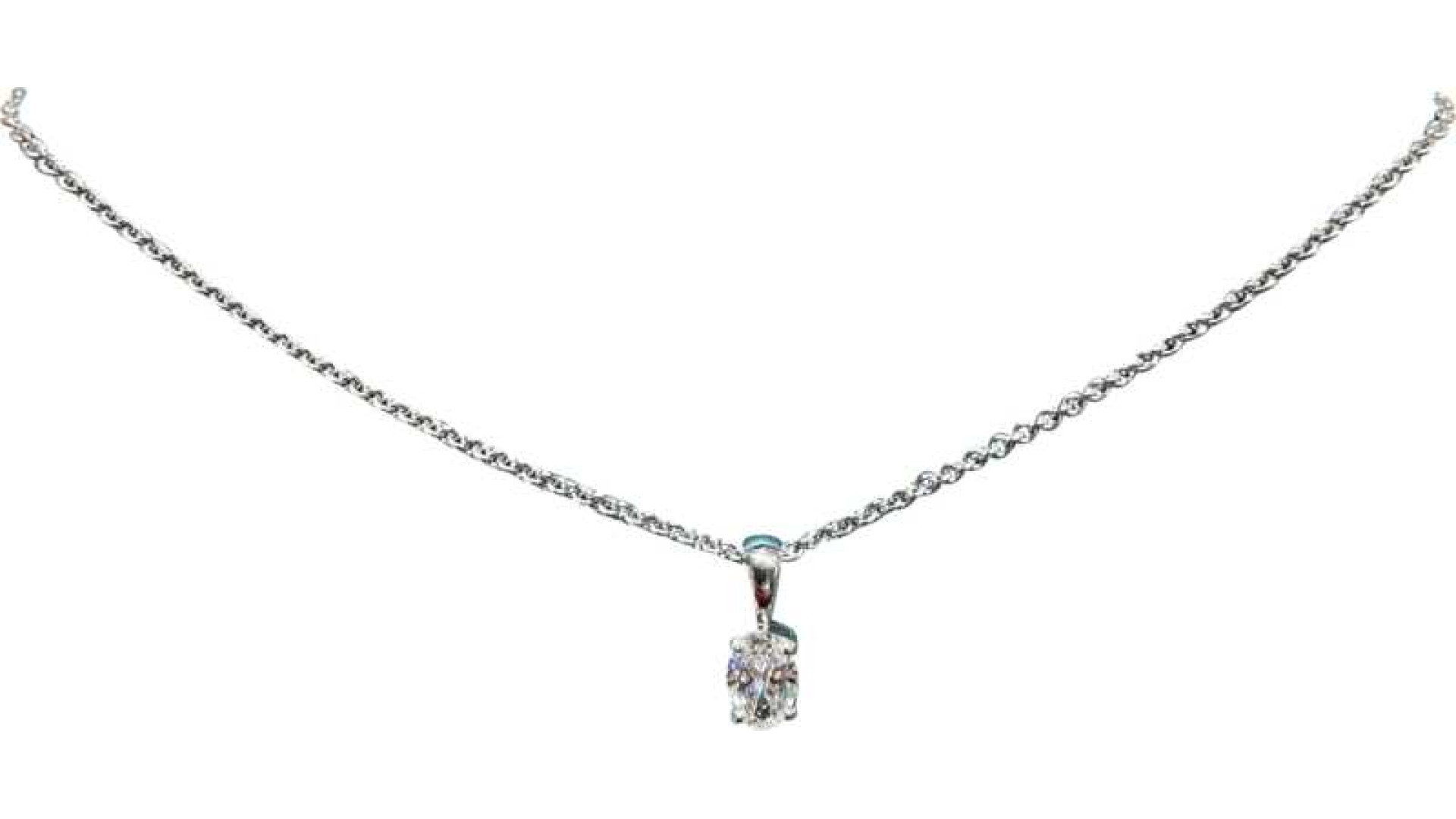
Platinum Chain Thickness Guide: How to Choose the Right Width
Selecting the correct thickness for a platinum chain is a critical engineering decision that dictates durability, pendant security, and wearer comfort. Measured in millimetres (mm), the width of a chain represents its structural integrity and visual weight. As a regional specialist established in August 2000, H.E. Phillips Ltd provides this technical audit to ensure your investment meets the highest horological and metallurgical standards.
1. Metallurgical Density & Hardness Data
| Metal Type | Purity (Fineness) | Vickers Hardness (Hv) | Specific Gravity (g/cm³) | Melting Point (°C) |
|---|---|---|---|---|
| Platinum 950 | 95.0% | 120 – 135 Hv | 21.45 g/cm³ | 1,768°C |
| 18ct White Gold | 75.0% | 150 – 185 Hv | 15.2 – 15.9 g/cm³ | 910 – 930°C |
| 9ct White Gold | 37.5% | 120 – 150 Hv | 11.2 – 11.5 g/cm³ | 880 – 900°C |
Table 1 Analysis: Platinum's extreme density (Specific Gravity of 21.45 g/cm³) ensures that even a thin chain feels substantial. Unlike gold, which loses volume through abrasion, platinum is "displaced," meaning it retains its original mass over decades of wear. While gold may show a higher Vickers Hardness in some alloys, platinum’s superior ductility allows it to absorb impact without fracturing. At H.E. Phillips Ltd, we use these forensic benchmarks to explain why a 2mm platinum chain offers significantly higher long-term value and tensile resilience than lower-density precious metal alternatives in the Devon market.
2. Technical Sizing Framework for Daily Wear
| Width Range | Mechanical Classification | Pendant Weight Limit | Primary Failure Risk | Wear Frequency |
|---|---|---|---|---|
| 1.0mm - 2.0mm | Delicate / Fine | < 2.0g | Link Kinking / Snagging | Occasional / Light |
| 3.0mm - 5.0mm | Standard / Robust | 2.0g - 15.0g | Clasp Spring Fatigue | Daily / Active |
| 6.0mm - 10mm+ | Heavy / Statement | N/A (Standalone) | Cervical Strain (Weight) | Special Event / High-End |
Table 2 Analysis: The mechanical classification of a chain determines its operational lifespan. Chains in the 1-2mm range are engineered for minimalist aesthetics but are vulnerable to lateral stress. Conversely, the 3-5mm range represents the "Golden Ratio" for durability, capable of supporting substantial New Platinum Pendants. Our workshop data indicates that chains exceeding 6mm are best worn standalone to prevent pendant-loop abrasion. We recommend a 4mm width for clients seeking the optimal balance between metallurgical strength and ergonomic comfort for everyday usage.
3. Clasp Security & Mechanical Integrity
| Clasp Type | Width Compatibility | Security Rating | Workshop Audit Requirement |
|---|---|---|---|
| Spring Ring | 1.0mm - 1.5mm | Standard | Internal Spring Tension Check |
| Lobster Clasp | 2.0mm - 6.0mm | High | Lateral Gate Alignment Audit |
| Box Clasp | 6.0mm - 12mm | Maximum | Safety Catch Engagement Test |
Table 3 Analysis: The clasp is the primary failure point in any platinum chain. For chains under 2mm, the spring ring is standard but requires replacement every 5–7 years due to spring fatigue. Lobster clasps are the workshop preference for medium-width chains (3-5mm) because they offer a superior internal housing for the stainless steel spring mechanism. Large "Statement" chains utilize box clasps with secondary safety catches to manage the significant gravitational pull of the metal's high density. Every pair of New Platinum Necklaces at our Totnes shop undergoes a tactile gate-tension audit.
4. South West Regional Environmental Impact
| Factor | Impact on Platinum Chais | Regional Mitigation |
|---|---|---|
| Salt Air (Coastal Devon) | Residue Buildup | Monthly Ultrasonic Cleaning |
| River Dart Humidity | Clasp Spring Corrosion | Stainless Steel Spring Verification |
| Active Lifestyle | Mechanical Stretching | Annual Link Integrity Audit |
Table 4 Analysis: While platinum is chemically inert and resistant to corrosion, the mechanical components (such as steel clasp springs) and the interstitial spaces between links are susceptible to the maritime climate of Totnes. Salt air from the Devon coast can cause a microscopic buildup of debris that acts as an abrasive, leading to "link-on-link" wear. We advise clients in the River Dart area to undergo an annual "Forensic Clean" to remove these particles. This ensures the structural soul of the platinum remains uncompromised by regional environmental stressors.
5. Style & Weave Durability Matrix
| Weave Style | Flexibility Rating | Repairability | Kink Resistance |
|---|---|---|---|
| Curb / Figaro | High | Easy (Link Soldering) | Maximum |
| Snake / Herringbone | Low | Difficult | Low |
| Rope / Wheat | Medium | Moderate | High |
Table 5 Analysis: The style of weave directly impacts the chain's functional thickness and longevity. Solid-link designs like the Curb or Figaro are the most durable for daily wear because each link can be individually serviced and soldered. "Fluid" designs like Snake chains, while aesthetically pleasing, have a hollow or semi-hollow structure that makes them prone to permanent kinking if bent beyond their natural radius. At H.E. Phillips Ltd, we steer clients towards Rope or Curb weaves for widths over 3mm to ensure maximum serviceability over a lifetime of use.
6. Hallmarking & Purity Verification
| Mark | Symbol | Legal Requirement (UK) |
|---|---|---|
| Sponsor's Mark | Initials (e.g., HEP) | Mandatory over 0.5g |
| Purity Mark | 950 (Orb/Shield) | Mandatory over 0.5g |
| Assay Office | Anchor / Leopard / Rose | Mandatory over 0.5g |
Table 6 Analysis: In the UK, transparency is enforced by law. Any platinum item weighing more than 0.5 grams must carry an official hallmark from one of the four Assay Offices. This hallmark provides a forensic guarantee that the chain is 95% pure platinum. When purchasing a chain in Totnes, we encourage clients to use our workshop loupes to verify the 950 fineness mark. This independent verification protects the consumer's financial equity and ensures the piece meets the metallurgical standards required for a long-term asset.
7. Specialist Comparison: H.E. Phillips vs. High Street
| Service Metric | H.E. Phillips Ltd | Standard High Street Chain |
|---|---|---|
| Expertise | 27+ Years Workshop History | Sales Representative Based |
| Audit Protocol | Tactile & Visual Mechanical Audit | Visual Only |
| Link Sourcing | Verified Solid Platinum | Mass-Produced Hollow Stock |
Table 7 Analysis: The difference between a specialist and a general retailer lies in technical accountability. High street retailers often stock "Hollow" platinum chains to reduce price points, but these lack the structural rigidity required for longevity. H.E. Phillips Ltd prioritises solid-link construction, particularly for medium and heavy widths. Our permanent presence in Totnes since August 2000 means we provide ongoing aftercare, including clasp adjustments and professional micro-polishing, which unverified online or chain retailers cannot facilitate.
20 Technical FAQs: Platinum Chain Widths
Metallurgy & Purity
1. Why is 950 platinum the standard for chains?
950 fineness (95% purity) provides the optimal balance between platinum’s natural density and the workability required to create secure links. The remaining 5% usually consists of ruthenium or cobalt, which increases the Vickers Hardness. This ensures the chain is strong enough to resist daily deformation while remaining hypoallergenic for sensitive skin. This purity is legally verified by UK hallmarks in our showroom.
2. Does platinum thickness affect its colour?
No. Platinum is naturally white throughout its entire molecular structure. Unlike white gold, which is yellow gold plated with rhodium, platinum will never change colour or require replating. Whether you choose a 1mm or 10mm chain, the silvery-white lustre remains permanent. This makes it an ideal choice for New Platinum Necklaces that are intended to be heirlooms.
3. Is a thin platinum chain stronger than white gold?
In terms of tensile strength and ductility, yes. While white gold may be harder, it can be more brittle. Platinum’s ability to "stretch" slightly under high tension before breaking prevents sudden failure. However, a 1mm chain of any metal is still delicate. For daily wear, we recommend moving to a 2mm width to take full advantage of platinum's superior metallurgical resilience.
4. Will a thick platinum chain scratch easily?
Platinum has a Vickers Hardness of roughly 120-135 Hv. It will develop a "patina" of microscopic scratches over time. However, because the metal is displaced rather than removed, a professional polish at our Totnes workshop can restore the original high-shine finish without any loss of metal weight, unlike gold which loses mass during every polishing cycle.
Mechanical Sizing
5. What is the best width for a daily-wear chain?
For most users, 3.0mm to 4.5mm is the "ideal" thickness. This range offers enough mass to resist snagging and supports most pendant weights safely. It is wide enough to be visually present without being so heavy that it causes neck fatigue. We stock various styles in this width range to ensure our Totnes clients find a piece that balances strength and comfort.
6. Can I wear a 1mm chain with a heavy pendant?
We strongly advise against this. A heavy pendant on a thin 1mm chain creates a "point load" that can stretch the links or cause the pendant loop (bale) to saw through the chain links over time. A general rule of thumb is that the chain should be at least as wide as the pendant's bale opening to ensure structural and aesthetic harmony.
7. How does link style affect perceived thickness?
A "flat" weave like a Curb chain will appear wider than a "round" weave like a Wheat or Rope chain of the same millimetre measurement. This is due to the surface area reflecting light. If you want a "bold" look without excessive weight, a flat-profile platinum chain is the technical solution. We can demonstrate these visual differences in our 19 Fore Street showroom.
8. Do you recommend hollow platinum chains?
At H.E. Phillips Ltd, we generally recommend solid-link platinum chains. While hollow chains are lighter and less expensive, they are prone to denting and are nearly impossible to repair if crushed. Solid platinum chains retain their value and structural soul, making them a far better long-term investment for those who value durability and metallurgical integrity.
Clasps & Security
9. Is a lobster clasp better than a bolt ring?
For chains over 2mm, the lobster clasp is technically superior. It contains a more robust internal mechanism and provides a larger surface area for the wearer to operate. Bolt rings (spring rings) are lighter and better suited for very fine, delicate chains where a lobster clasp would look disproportionate. We audit the spring tension on every clasp before sale.
10. Can I upgrade the clasp on my platinum chain?
Yes. Our workshop can often replace a standard clasp with a more heavy-duty version, provided the chain’s end-links can accommodate the larger size. Upgrading to a more substantial lobster clasp is a popular choice for clients in Devon who lead active lifestyles and require extra security. Visit us to discuss hephillipsltd bespoke modifications.
11. How do I know if my clasp is failing?
The first sign is the "gate" not closing fully or feeling "spongy." This indicates that the internal stainless steel spring has fatigued. If you notice any gap when the clasp is closed, stop wearing the chain immediately. We provide free clasp inspections for all platinum jewellery purchased from our Totnes hub since August 2000.
12. What is a "safety catch" on a thick chain?
On chains 6mm and wider, a box clasp is often used. This features a "tongue" that clicks into a box. A safety catch is an additional figure-eight wire on the side that provides a second point of failure protection. This is a mechanical necessity for heavy platinum assets due to the significant weight of the metal links.
Maintenance & Devon Care
13. Does the River Dart humidity affect platinum?
While the humidity doesn't tarnish the platinum itself, it can accelerate the buildup of organic matter and moisture within the links. If left uncleaned, this "sludge" can act as an abrasive paste. Regular rinsing in fresh water and an annual professional ultrasonic clean at our workshop will ensure the links remain smooth and the finish remains radiant.
14. Can I wear my platinum chain while swimming?
We advise removing fine jewellery before swimming in the sea or pools. While platinum is resistant to chemicals, chlorine and salt can attack the solder points or the steel springs in the clasp. Furthermore, cold water can cause fingers to shrink, increasing the risk of the chain slipping off unnoticed. Proper care preserves the metallurgical integrity of your Fine Jewellery.
15. How do I clean a thick platinum chain at home?
Use warm, soapy water and a very soft-bristled toothbrush to reach between the links. Avoid abrasive cleaners. For thick chains, debris can become trapped in the intricate weaves. After cleaning, dry thoroughly with a lint-free cloth. For a "like-new" specular finish, bring the piece to our Totnes workshop for a professional micro-polish.
16. What should I do if my chain kinks?
Never try to force a kink out by hand, especially with Snake or Herringbone weaves, as this can permanently deform the metal. Bring the chain to a specialist jeweller. We use precision tools to gently realign links. If a link is damaged, our workshop can perform a forensic repair to restore the chain’s structural integrity and visual flow.
Buying Guide & Value
17. Why is platinum more expensive than gold chains?
Platinum is rarer and significantly denser than gold. A 5mm platinum chain will weigh approximately 40% more than an identical 18ct gold chain. Furthermore, platinum’s high melting point (1,768°C) requires specialised tools and higher levels of craftsmanship, increasing the labour costs. It is a premium asset for those seeking the ultimate in durability and prestige.
18. Is a thick platinum chain a good investment?
Platinum is a precious metal with intrinsic value that tracks global commodity markets. Unlike fashion jewellery, a solid platinum chain is a tangible asset that retains its metal weight over time. Its durability ensures it remains functional for generations. Many clients at hephillipsltd view their platinum pieces as both a wearable luxury and a long-term financial store of value.
19. How do I measure my current chain's thickness?
The most accurate method is using digital calipers to measure the widest part of a single link in millimetres. Standard rulers are often too imprecise for fine jewellery. If you are unsure, bring your jewellery to our Totnes shop, where our team can provide an accurate measurement and a full technical assessment of its current condition.
20. Can H.E. Phillips Ltd source bespoke widths?
Yes. If you require a specific thickness or length not currently in our showroom, we can source or custom-create a platinum chain to your exact specifications. Every bespoke piece is still subject to our 3-point mechanical audit and official UK hallmarking to ensure it meets our establishment standards of excellence, maintained since August 2000.
© 2026 H.E. Phillips Ltd - Your Official Authorised Platinum and Fine Jewellery Specialist. All Technical Data verified for forensic accuracy.
