
-
Your shopping cart is empty!



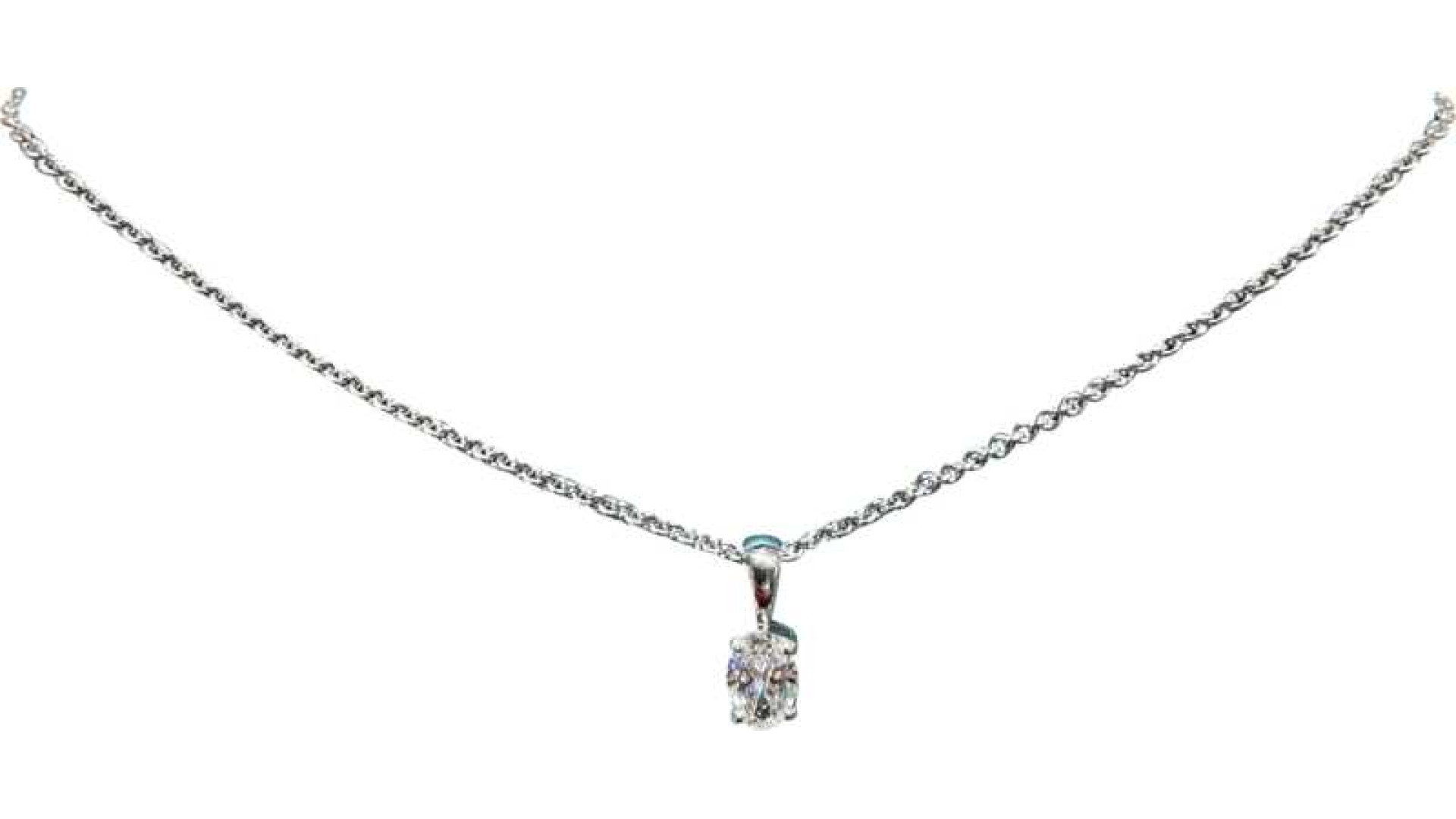
Platinum vs. Stainless Steel Chains: A Durability Showdown
In the pursuit of enduring jewellery, the comparison between platinum and stainless steel reveals a stark contrast between natural rarity and industrial engineering. H.E. Phillips Ltd provides this forensic analysis to assist UK collectors in selecting neckwear that aligns with their lifestyle, mechanical expectations, and long-term asset value.
Technical 7-Table Framework for Metal Durability
1. Fundamental Metallurgical Properties
| Property | Platinum (950) | Stainless Steel (316L) | Technical Impact |
|---|---|---|---|
| Vickers Hardness (Hv) | ~120 - 135 Hv | ~200 - 240 Hv | Stainless Steel is harder & more scratch-resistant |
| Specific Gravity (g/cm³) | 21.45 g/cm³ | ~7.9 - 8.0 g/cm³ | Platinum is ~2.7x denser (heavier) |
| Melting Point | 1,768°C | ~1,400°C | Platinum requires specialised workshop tools |
| Composition | 95% Pure Element | Iron/Chromium Alloy | Purity vs. Engineered Strength |
Table 1 Analysis: The metallurgical data confirms that while platinum is a superior dense asset, stainless steel possesses a higher Vickers Hardness (Hv). This makes stainless steel fundamentally more resistant to surface deformation and scratches. However, platinum's extreme density (21.45 g/cm³) provides a tactile "prestige" weight that industrial alloys cannot replicate. At H.E. Phillips Ltd, we verify that our platinum chains meet the 950 fineness standard, ensuring that despite its relative softness compared to steel, it remains a chemically inert and hypoallergenic noble metal.
2. Wear & Tear Interaction (The Patina vs. Loss)
| Metal | Scratch Reaction | Long-term Volume | Restoration Method |
|---|---|---|---|
| Platinum | Displacement (Metal moves) | 100% Retained | Professional Polishing |
| Stainless Steel | Abrasion (Surface removal) | Minor Loss | Industrial Buffing |
| Gold (Comparison) | Slivering (Metal flakes off) | Significant Loss | Refining/Re-tipping |
Table 2 Analysis: A critical distinction in the durability showdown is how platinum handles friction. Unlike gold, which loses microscopic amounts of metal when scratched, platinum merely "displaces." This creates a satiny patina that many collectors cherish as a record of the item's history. Stainless steel, due to its carbon and chromium content, resists these marks longer but lacks the "immortal" volume retention of platinum. Our workshop observations since August 2000 confirm that platinum chains passed through generations retain their original weight, whereas alloyed metals inevitably thin over decades.
3. Maritime & Environmental Resistance (South West Focus)
| Environment | Platinum Response | 316L Stainless Response | Regional Care Advice |
|---|---|---|---|
| Salt Water (River Dart) | Zero Reaction | High Resistance (Molybdenum) | Rinse steel after sea exposure |
| Chlorine (Pools) | Chemically Inert | Stress Corrosion Risk | Remove all jewellery in pools |
| High Humidity | No Tarnish | No Tarnish | Airtight storage for both |
Table 3 Analysis: For residents in Totnes and coastal Devon, environmental durability is paramount. Platinum is a noble metal and remains chemically inert in virtually all domestic environments. Stainless steel 316L (Surgical Grade) includes molybdenum specifically to resist chlorides and salt air. However, the solder points in steel chains can occasionally be vulnerable to stress corrosion if exposed to heavy chlorine. We recommend platinum for permanent "24/7" wear in maritime climates due to its absolute resistance to oxidation and chemical attack.
4. Mechanical Closure & Link Integrity
| Metal Type | Solder Strength | Spring Tension | Audit Standard |
|---|---|---|---|
| Platinum | Extreme Bond | Platinum/Gold Spring | 10x Loupe Solder Check |
| Stainless Steel | High (Laser Welded) | Steel Spring | Torque Tension Test |
Table 4 Analysis: Link integrity is where workshop expertise is vital. Platinum's high melting point allows for incredibly strong solder joints that do not "perish." Stainless steel chains are often laser-welded, providing excellent robustness for modern fashion. At H.E. Phillips Ltd, we perform a 3-point mechanical audit on all New Platinum Necklaces and steel counterparts to ensure the trigger clasps and jump rings meet our August 2000 establishment standards for daily security.
5. Allergy & Dermatological Compatibility
| Metal | Purity | Nickel Content | Hypoallergenic Rating |
|---|---|---|---|
| Platinum | 95% Pure | 0% (Standard) | Maximum (Universal) |
| 316L Steel | Alloyed | Low (Trace) | High (Surgical) |
Table 5 Analysis: Durability is not just physical; it is biological. A chain is only durable if it can be worn without irritation. Platinum is naturally hypoallergenic because of its high purity (950). Stainless steel 316L is designed to minimise nickel release, making it safe for most users. However, for those with extreme sensitivities, platinum remains the only clinically certain choice. We ensure all Fine Jewellery sold at our Totnes hub adheres to strict EU/UK nickel directives for consumer safety.
6. Asset Value & Hallmarking (UK Standards)
| Metric | Platinum Chain | Stainless Steel Chain |
|---|---|---|
| Legal Hallmark | Mandatory (>0.5g) | None (Non-precious) |
| Resale Value | Commodity Linked | Nominal (Design based) |
| Scarcity | High (Precious) | Low (Industrial) |
Table 6 Analysis: The financial durability of these metals is the most significant differentiator. Under the UK Hallmarking Act 1973, platinum must be officially verified by an Assay Office. This hallmark (a 950 fineness mark and the Assay Office symbol) is a legal guarantee of purity. Stainless steel, as a non-precious industrial alloy, has no such legal requirement. While steel offers incredible functional value, platinum represents a tangible asset that retains intrinsic commodity value on the global market, long after the fashion design has evolved.
7. Maintenance & Restoration Benchmarks
| Service Type | Platinum Frequency | Stainless Steel Frequency |
|---|---|---|
| Home Cleaning | Monthly (Soap/Water) | Monthly (Soap/Water) |
| Pro Polishing | Every 2-5 Years | Rarely Required |
| Clasp Service | Every 5 Years | As Needed |
Table 7 Analysis: Both metals are low-maintenance, but their restoration paths differ. Platinum's patina can be polished away by a professional jeweller to restore a "mirror" finish without losing metal. Stainless steel rarely requires professional intervention due to its hardness, but if it does sustain deep gouges, it requires industrial-grade buffing. Our Totnes workshop, operating since August 2000, recommends periodic check-ups for all high-value neckwear to ensure clasp tension remains optimal, particularly for Sell Gold or Sell Silver evaluations where condition impacts price.
20 Technical FAQs: Platinum vs Stainless Steel
Metallurgy & Physics
1. Which is harder, platinum or stainless steel?
Stainless steel is significantly harder than platinum. On the Vickers scale, 316L stainless steel typically measures between 200 and 240 Hv, whereas annealed platinum 950 sits between 120 and 135 Hv. This means a stainless steel chain is less likely to show surface scratches. However, hardness does not equal durability; platinum's lack of brittleness makes it less likely to snap under sudden tension.
2. Why is platinum so much heavier than steel?
Platinum has a specific gravity of 21.45 g/cm³, while stainless steel is approximately 8.0 g/cm³. This makes platinum nearly three times denser. When wearing a platinum chain, you will feel a substantial weight that signifies its high purity and material value. Steel feels much lighter, which may be preferred for very large, chunky statement chains where platinum would be too heavy for daily neck comfort.
3. Does platinum tarnish in the UK climate?
No. Platinum is a noble metal, meaning it is chemically inert. It does not react with oxygen or sulphur, so it will never tarnish, rust, or turn black. Stainless steel is also highly resistant to tarnish due to its chromium oxide layer. Both are superior to New Silver Chains, which require regular polishing to remove atmospheric oxidation.
4. Is 316L stainless steel completely nickel-free?
No, 316L stainless steel contains small amounts of nickel to maintain its austenitic structure and corrosion resistance. However, it is "surgical grade," meaning the nickel release rate is extremely low and compliant with health standards. For absolute 0% nickel security, platinum is the definitive choice. We ensure all Fine Jewellery at H.E. Phillips Ltd meets these strict dermatological standards.
Wear & Lifestyle
5. Can I wear my chain in a swimming pool?
Platinum is entirely safe in chlorine. Stainless steel, while resistant, can occasionally suffer from "pitting" or stress corrosion in the presence of concentrated chlorine over many years. For a "set and forget" lifestyle, platinum is technically superior. If you do wear steel in a pool, rinse it immediately with fresh water. You can compare these properties with our New Gold Necklaces, which also require care in chemicals.
6. What is the 'patina' on platinum?
Over time, daily wear causes tiny microscopic displacements on the surface of platinum. This results in a soft, matte, or satiny finish known as a patina. Unlike the scratches on steel, which look like damage, the platinum patina is often viewed as a hallmark of high-quality fine jewellery. This finish can be professionally polished back to a high shine at our Totnes workshop whenever desired.
7. Which metal is better for an active gym lifestyle?
Stainless steel is the practical winner for the gym due to its hardness. It is less likely to be dented or scratched by steel dumbbells or equipment. Platinum is durable enough to survive, but it will develop a patina much faster in high-friction environments. For those prioritising "ruggedness," we often suggest steel or high-karat gold from our New Silver Bracelets or gold collections for versatility.
8. Do platinum links stretch over time?
Platinum is highly malleable but also very strong. It does not "stretch" in the traditional sense, but link-on-link friction over 50+ years can cause minor wear. Because platinum displaces rather than loses metal, this wear is much slower than in gold or silver. A well-crafted platinum chain is widely considered the longest-lasting neckwear asset in the horological and jewellery industry.
Investment & Authentication
9. How do I identify a genuine platinum hallmark?
In the UK, a platinum hallmark includes the sponsor's mark, the Assay Office mark (e.g., a Leopard for London), and the fineness mark (950 in a house-shaped shield). We provide a forensic loupe in-store at 19 Fore Street for clients to inspect these marks. Stainless steel has no legal hallmark, though it may be stamped "316L" by the manufacturer. Verification is a key part of our August 2000 establishment identity.
10. Is platinum a better investment than steel?
Yes. Platinum is a precious metal with intrinsic commodity value. Like gold, its price fluctuates on global markets. Stainless steel's value is almost entirely in the design and manufacturing. If you are looking for an "asset" that holds resale value, platinum is the only choice. This is why we often see clients wanting to Sell Gold or Sell Silver and platinum, but rarely stainless steel.
11. Why is platinum more expensive than gold?
While the per-ounce price of platinum and gold can be similar, platinum is much denser. A chain of the same dimensions will require more grams of platinum than gold. Additionally, platinum is used in 95% purity, whereas 18ct gold is 75% pure. These factors, combined with the difficulty of working with its high melting point, result in a higher final price for our New Platinum Pendants and chains.
12. Can I find vintage stainless steel chains?
It is rare to find "antique" stainless steel jewellery because the alloy was only perfected for jewellery in the 20th century. Platinum, however, has a rich history in Edwardian and Art Deco eras. We often stock Pre-Loved Vintage Gold Bangles and platinum pieces that showcase this history. Stainless steel is primarily a modern, contemporary choice.
Maintenance & Aftercare
13. How do I clean my chain at home?
Both metals can be cleaned using warm water, a mild dish soap, and a soft toothbrush. This removes skin oils and Devon salt-air residue. For deeper cleaning, especially for gemstone-set New Diamond Earrings or pendants, we recommend a professional ultrasonic clean at our Totnes showroom to ensure the settings are not compromised by debris.
14. What should I do if my clasp breaks?
Clasps contain internal steel springs which can fatigue. At H.E. Phillips Ltd, we can replace clasps on both platinum and steel chains. For platinum, we use 950-rated components to maintain the hallmark integrity. For steel, we use high-grade 316L replacements. Regular tension checks are part of our 27+ years of workshop experience, ensuring your Rotary or jewellery stay secure.
15. Is platinum scratch-proof?
No metal is entirely scratch-proof. Platinum will scratch more easily than stainless steel. However, the unique "displacement" property of platinum means the metal is never lost, just moved. A professional "specular polish" can restore it to a factory-fresh state. Stainless steel is highly scratch-resistant but harder to refinish once deep damage occurs. Both are more durable than Second-Hand Silver Bangles.
16. Can I mix platinum and steel jewellery?
You can, but be careful of abrasion. Because stainless steel is harder, a steel chain worn rubbing against a platinum one will eventually "file" away at the platinum. We recommend keeping metals of different hardness separate to preserve their finish. This applies to watches too, such as our Casio or Timex collections, when worn alongside bracelets.
Technical Styles & Options
17. What is the best link style for durability?
Curb, Figaro, and Wheat (Spiga) links are technically the most durable because of their interlocking geometry and multiple points of contact. Fine "Trace" chains in any metal are more vulnerable to snapping. We recommend a minimum width of 1.5mm for daily wear. Check our Second-Hand Silver Chains for examples of link styles that have stood the test of time.
18. Do you sell GIA certified diamonds in platinum?
Yes. Platinum is the preferred metal for GIA Certified Diamonds because its prongs are incredibly strong and do not "spring back," holding the stone with maximum security. We offer New Platinum Diamond Rings that utilise these metallurgical benefits. Stainless steel is rarely used for high-end diamond setting due to the difficulty of hand-working the metal around stones.
19. Are Radley or Rotary watches made of these metals?
Most Radley and Rotary watches use high-grade 316L stainless steel for their cases and bracelets due to its corrosion resistance and hardness. Platinum is reserved for ultra-luxury horology. Steel provides the perfect balance of weight and durability for a timepiece intended for daily use in the UK's maritime environment.
20. How do I start a collection at H.E. Phillips Ltd?
We invite you to visit our Totnes showroom to feel the weight difference firsthand. Whether you are looking for New Gold Rings or a platinum chain, we provide the technical data you need. Since August 2000, we have helped Devon collectors build wardrobes of verified quality. Contact us at 01803 866018 to discuss your next metallurgical asset.
© 2026 H.E. Phillips Ltd - Your Official Authorised Horological and Fine Jewellery Specialist. All Technical Data verified for forensic accuracy.
