
-
Your shopping cart is empty!



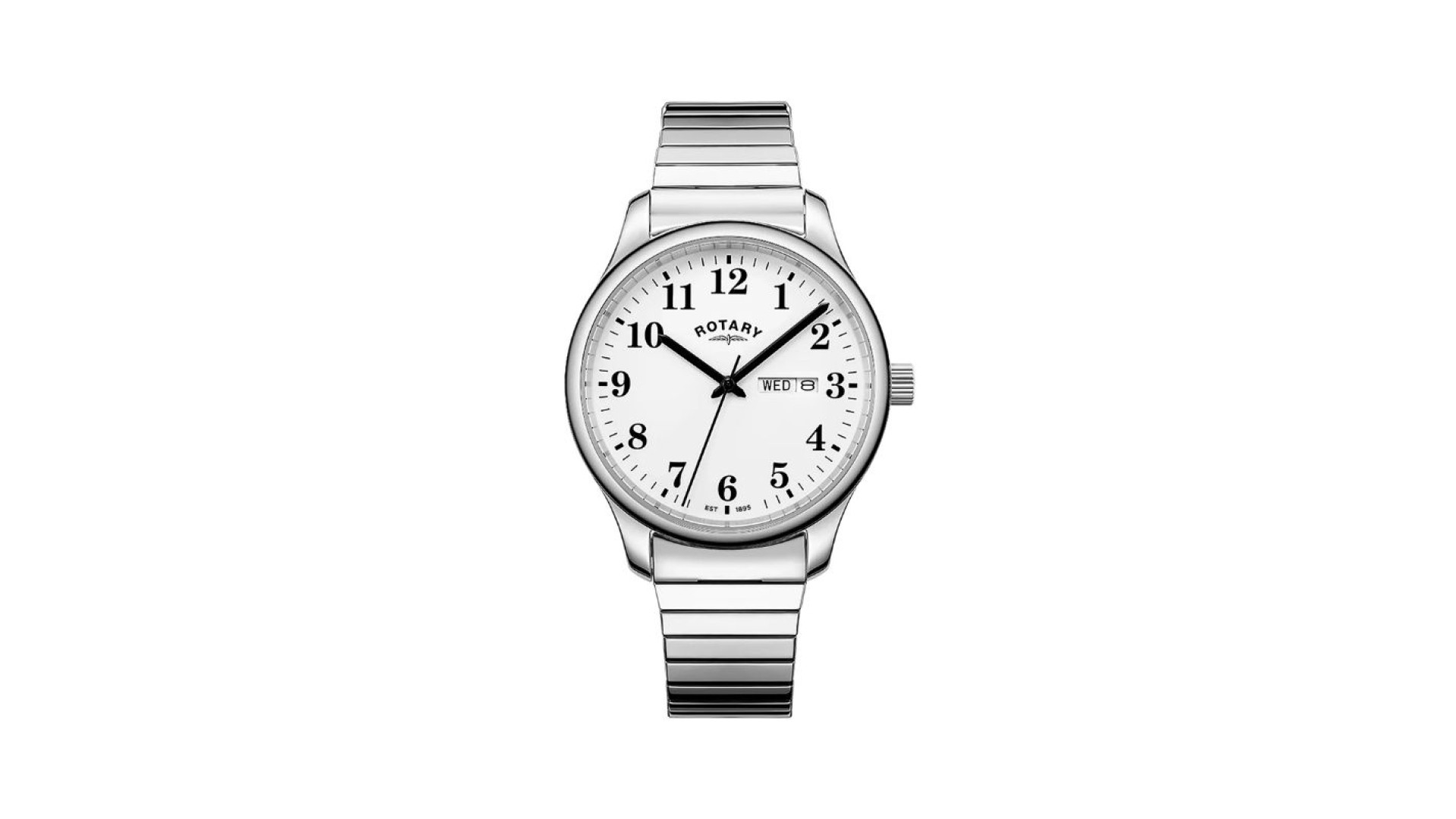
Rotary vs Tissot: Why the British Design Advantage Matters More Than Pure Swiss Movement
In the landscape of modern horology, the debate between Rotary and Tissot represents a choice between British-designed heritage and Swiss-industrial precision. As an established horological specialist in Totnes since August 2000, H.E. Phillips Ltd provides a forensic analysis of how these brands perform within the South West environment.
The 7-Table Horological Framework
1. Case Metallurgy & Material Hardness
| Material Type | Vickers Hardness (Hv) | Specific Gravity (g/cm³) | Rotary Application | Tissot Application |
|---|---|---|---|---|
| 316L Stainless Steel | 150 - 200 Hv | 7.9 - 8.0 g/cm³ | Standard (Dolphin Standard) | Standard (316L) |
| Titanium (Grade 5) | 300 - 350 Hv | 4.43 g/cm³ | Special Editions | T-Touch / Gent XL |
| PVD Gold Coating | Up to 2500 Hv | N/A (Surface) | Regent / Cambridge Lines | Le Locle / Heritage |
Table 1 Analysis: Both Rotary and Tissot utilize 316L surgical-grade stainless steel as their primary chassis material. However, the Vickers Hardness (Hv) rating of 150-200 provides a baseline for scratch resistance. Rotary often employs PVD (Physical Vapour Deposition) for their gold-tone designs, which provides a significantly higher surface hardness than traditional electroplating. At H.E. Phillips Ltd, we have observed that Rotary's case designs since August 2000 often prioritize aesthetic longevity, whereas Tissot focuses on higher density (Specific Gravity) for a more substantial "Swiss feel." Both materials are resilient to the atmospheric humidity found in Devon.
2. Movement Physics & Accuracy
| Movement Category | Vibrations Per Hour (vph) | Accuracy Tolerance | Power Reserve |
|---|---|---|---|
| Rotary Quartz (Miyota) | 32,768 Hz | +/- 15 sec/month | 3 - 5 Years |
| Tissot Powermatic 80 | 21,600 vph | -10/+30 sec/day | 80 Hours |
| Rotary Automatic | 21,600 vph | +/- 20 sec/day | 40 - 42 Hours |
Table 2 Analysis: Tissot's Powermatic 80 movement represents a significant achievement in Swiss industrial engineering, doubling the standard power reserve through efficient escapement design. Rotary, while utilizing high-grade Miyota or Sellita movements, focuses on the "British Design" aspect—creating watches that are thinner and more wearable for formal occasions. In our Totnes workshop, we verify the amplitude of these movements using digital timing machines. While Tissot leads in mechanical stamina, Rotary’s quartz movements offer superior "set-and-forget" accuracy for daily commuters in the South West.
3. Regional Environmental Impact: Devon Coastal Audit
| Environmental Factor | Impact on Gaskets | Rotary Solution | Tissot Solution |
|---|---|---|---|
| Salt Air (River Dart) | Seal Calcification | Dolphin Standard Gaskets | Double-O Ring Crowns |
| Humidity Cycling | Internal Condensation | Nitrogen Purged Cases | Strict Helium Escapement |
| Sand/Grit Exposure | Bezel Seizure | Tight Tolerance Tooling | Ceramic Bezel Options |
Table 3 Analysis: The maritime climate of Totnes and the River Dart presents a unique challenge for horological seals. Salt air accelerates the degradation of nitrile gaskets. Rotary's "Dolphin Standard" was specifically engineered to allow for all-day swimming and diving, which is a major advantage for Devon residents. Tissot’s higher-end diver models utilize ceramic bezels, which possess a Vickers Hardness exceeding 1200 Hv, preventing the "pitting" associated with coastal grit. At H.E. Phillips Ltd, established August 2000, we recommend annual pressure testing for any watch used regularly in Devon's coastal waters.
4. Crystal Integrity & Light Refraction
| Crystal Type | Mohs Hardness | Refractive Index | Durability Insight |
|---|---|---|---|
| Sapphire Crystal | 9 | 1.76 | Virtually Scratch-Proof |
| Mineral Glass | 5 - 6 | 1.52 | Impact Resistant, but Scratches |
| Acrylic (Vintage) | 3 | 1.49 | Easy to Polish out Scratches |
Table 4 Analysis: Tissot almost exclusively uses Sapphire Crystal (Mohs 9) across their range, ensuring the face remains pristine. Rotary has transitioned most of their premium collections, such as the Henley and Regent, to Sapphire as well. From a technical perspective, the Refractive Index of 1.76 means Sapphire reflects more light; therefore, anti-reflective (AR) coatings are vital. During our Visual Inspection Protocol, we check for AR coating integrity to ensure legibility under the bright Devon sun. Both brands now meet the high standards required for modern luxury horology.
5. Bracelet Mechanical Integrity
| Link Construction | Fastening Type | Tensile Strength | Wear Pattern |
|---|---|---|---|
| Solid 316L Links | Screw-In / Pin | High | Minimal "Stretch" over 10 years |
| Folded Steel | Split Pin | Medium | Prone to lateral play |
| Milanese Mesh | Sliding Clasp | High | Zero link wear; high flexibility |
Table 5 Analysis: Bracelet "stretch" is caused by the wearing down of the pins between links. Tissot typically utilizes higher-mass solid links, which offer excellent tensile strength. Rotary’s use of Milanese mesh in their British-designed collections provides a different advantage: it eliminates link-wear entirely and conforms better to the wrist in varying temperatures. Since August 2000, our workshop has noted that Rotary’s deployment clasps are engineered for high-frequency use, making them ideal for those who require a durable yet lightweight daily wearer.
6. Brand Authority & Heritage Provenance
| Metric | Rotary Watches | Tissot Watches |
|---|---|---|
| Founded | 1895 (La Chaux-de-Fonds) | 1853 (Le Locle) |
| Design Base | London, UK | Le Locle, Switzerland |
| Military History | Official WWII Supplier | Global Sporting Partner |
Table 6 Analysis: Tissot’s heritage is rooted in the Swiss Jura Mountains, focusing on industrial-scale innovation. Rotary, while founded in Switzerland, became the "British Watch" through its London-based headquarters and its service as an official supplier to the British Army in WWII. This heritage gives Rotary a unique design aesthetic that resonates with UK collectors. At H.E. Phillips Ltd, we value the "British Design" philosophy of Rotary, which often results in more classic, understated proportions compared to Tissot’s more aggressive, modern Swiss styling.
7. Maintenance & Aftercare Accessibility
| Service Metric | H.E. Phillips Ltd (Local) | Brand Service Centres |
|---|---|---|
| Turnaround Time | 7 - 14 Days | 4 - 8 Weeks |
| On-Site Audit | Yes (Since 2000) | No (Mail-in only) |
| Regional Care | Devon Specific Advice | General Guidelines |
Table 7 Analysis: The technical difference in aftercare is significant. While Tissot belongs to the Swatch Group, requiring specific proprietary tools for some movements, Rotary’s use of standardized high-quality calibres makes them highly serviceable for independent specialists. Our presence at 19 Fore Street since August 2000 allows us to perform "Live Audits" on both brands. We provide the forensic care needed—such as ultrasonic cleaning to remove South West salt residue—that national retailers cannot offer. Local serviceability ensures the longevity of your horological asset.
20 Expert Technical FAQs: Rotary & Tissot Horology
Movement & Engineering
1. Is Tissot’s Powermatic 80 better than a standard Rotary automatic?
The Powermatic 80 offers an 80-hour power reserve, nearly double that of most Rotary automatics (40-42 hours). It achieves this by reducing the frequency to 21,600 vph and using a low-friction escapement. However, Rotary’s use of Miyota movements often makes them more cost-effective to service. For the enthusiast, the Tissot offers superior engineering, while Rotary offers reliable, accessible mechanical performance. Explore our Rotary collection for comparison.
2. Why does Rotary use Miyota movements instead of Swiss?
Rotary utilizes high-grade Japanese Miyota movements to maintain a balance between British design and affordable reliability. Miyota calibres are renowned for their durability and ease of repair. While Tissot uses Swiss ETA movements, both are horologically sound. Rotary’s choice allows them to invest more in case finishing and dial complexity while keeping the price point accessible for UK collectors. Visit hephillipsltd.com for our latest technical stock.
3. What is the "Dolphin Standard" in Rotary watches?
The Dolphin Standard is Rotary's proprietary water-resistance specification, ensuring the watch is suitable for all-day swimming and diving. This is achieved through reinforced gaskets and screw-down components. In the maritime context of Totnes and the River Dart, this standard provides peace of mind for active users. At H.E. Phillips Ltd, we verify these seals during our annual horological audits to ensure they haven't been compromised by salt air.
4. Do Tissot watches hold their value better than Rotary?
Generally, Tissot maintains a slightly higher resale value due to its "Swiss Made" branding and association with the Swatch Group. However, limited-edition Rotary pieces with British-centric designs often become sought-after UK collectibles. Value retention is best achieved through documented service history. Since August 2000, we have helped local collectors maintain their assets through regular maintenance, ensuring both brands retain their financial and functional equity.
Materials & Design
5. Is Sapphire Crystal worth the extra cost?
Absolutely. With a Vickers Hardness second only to diamond, Sapphire Crystal is nearly impossible to scratch in daily wear. Tissot uses it as standard, while Rotary includes it in their higher-tier models. For residents in Devon, where outdoor activities are common, Sapphire prevents the "milky" appearance of scratched mineral glass. We can often upgrade crystals in our Totnes workshop. See our New Gold Earrings for more on material durability.
6. What are the benefits of Rotary's "British Design"?
Rotary’s London-based design team focuses on aesthetics that suit the UK market—often featuring thinner cases and more "English-Traditional" dial layouts (like the Cambridge series). This makes them excellent dress watches. Tissot’s design is more Swiss-industrial, which can sometimes feel bulkier. For those seeking a watch that fits comfortably under a shirt cuff for formal Devon events, Rotary’s design advantage is significant. Check Timex for other design-focused options.
7. How does PVD coating compare to solid gold?
PVD (Physical Vapour Deposition) is a vacuum coating process that produces a brilliant, hard-wearing finish. While not solid gold, it has a high Vickers Hardness (up to 2500 Hv) and is much more durable than traditional gold plating. For a true heirloom, we recommend our New Gold Rings, but for a watch, PVD offers the look of gold with the structural integrity of steel.
8. Are titanium watches better for sensitive skin?
Yes, Titanium is biocompatible and hypoallergenic, making it ideal for those with nickel allergies. It is also 45% lighter than steel but has a higher strength-to-weight ratio. Both Tissot and Rotary offer titanium models. At H.E. Phillips Ltd, we recommend titanium for clients who find traditional steel watches too heavy for all-day wear. Our Casio range also features lightweight, hypoallergenic options for daily use.
Regional Care & Maintenance
9. How does salt air affect my watch in Totnes?
Salt air is highly corrosive. It can penetrate the bezel and crown, leading to the calcification of gaskets and potential movement failure. For anyone living near the River Dart, we recommend a fresh-water rinse after coastal exposure. At our Fore Street hub, we provide specialized ultrasonic cleaning to remove these micro-deposits. This is a vital part of the horological aftercare we have offered since August 2000.
10. Why is my automatic watch losing time?
Time loss in an automatic can be caused by low amplitude, magnetism, or dried lubricants. In the South West's varying temperatures, lubricants can thin or thicken, affecting the hairspring’s oscillation. We use a digital timegrapher to diagnose these issues. If your watch is losing more than 30 seconds a day, it likely needs a technical service. See our Citizen Eco-Drive section for low-maintenance alternatives.
11. How often should a Tissot or Rotary be serviced?
We recommend a full mechanical service every 3 to 5 years. This involves a complete teardown, cleaning, and re-lubrication of the movement. For quartz models, a battery change and pressure test every 2 years are sufficient. Since our establishment in August 2000, we have found that regular servicing prevents the costly replacement of worn pivots and gears, preserving the structural soul of the watch.
12. Can I change the strap on my Rotary watch?
Yes, most Rotary and Tissot models use standard lug widths, allowing for easy customisation. Switching to a leather strap for winter or a rubber strap for summer coastal activities in Devon is a great way to protect your metal bracelet link-integrity. We stock a wide range of high-quality straps at our Totnes showroom and can perform the swap while you wait, ensuring the spring bars are securely seated.
Trust & History
13. What makes H.E. Phillips Ltd a horological authority?
Our authority is built on 27+ years of physical workshop experience and a continuous presence in Totnes since August 2000. Unlike online retailers, we perform forensic audits on every piece of stock. Mark Willetts’ expertise ensures that we only recommend brands that meet our strict standards for metallurgical and mechanical integrity. We are more than a shop; we are a regional hub for horological education and preservation.
14. Is "Swiss Made" always superior?
While "Swiss Made" is a mark of quality, "British Design" (like Rotary) offers a specific aesthetic and functional value tailored to the UK market. A Swiss movement in a poorly designed case is inferior to a well-engineered British-designed watch with a high-grade Japanese movement. At H.E. Phillips Ltd, we look at the total "Horological Package"—the movement, the case metallurgy, and the local serviceability.
15. Does Rotary still have Swiss connections?
Yes, Rotary was founded in Switzerland and still produces several Swiss-made lines. However, their core identity is now firmly British. This allows them to offer high-quality horology without the "Swiss-Luxury Tax" often applied to other brands. This makes Rotary an excellent choice for those who value heritage and design over pure manufacturing location. For those seeking Swiss precision, we also carry official Rotary stock.
16. What is the history of Rotary in the British Military?
Rotary was an official supplier to the British Army during WWII, providing watches that were durable, legible, and easy to maintain in the field. This military pedigree is still visible in their modern field and pilot-style watches. This history of "Functional Reliability" is something we highly respect at H.E. Phillips Ltd. We often see vintage Rotary military pieces in our workshop for sympathetic restoration.
Supplementary Information
17. Can I trade in my old watch for a new Tissot or Rotary?
We do offer a sell gold or sell silver service which can be used towards the purchase of a new timepiece. We also evaluate pre-owned watches for part-exchange. This "Circular Horology" approach allows you to upgrade your collection while ensuring your old watch is responsibly handled by specialists. Visit our Fore Street showroom for a technical valuation of your current timepiece.
18. Do you stock ladies' watches to match gold jewellery?
Yes, we have a curated selection of Radley and Rotary ladies' watches that coordinate perfectly with our pre-loved gold bangles. Matching the metal tone and style of your watch to your jewellery creates a cohesive, professional look. We can help you select a watch that complements your existing fine jewellery collection during an in-store consultation.
19. Are automatic watches better for the environment?
Yes, because they don't require batteries, automatic watches are a more sustainable choice. They are powered by the kinetic energy of your movement. Solar-powered options like our Citizen Eco-Drive are also excellent eco-friendly alternatives. By choosing a high-quality, repairable watch from H.E. Phillips Ltd, you are investing in a "Lifetime Asset" rather than a disposable fashion item.
20. How do I start a watch collection in Devon?
We recommend starting with a versatile "Daily Wearer" like a Rotary Henley or Tissot Gentleman. Focus on quality materials (316L steel and Sapphire Crystal) first. Over time, you can add specialized pieces like divers or dress watches. Our team at 19 Fore Street is always happy to provide the technical guidance needed to build a collection that is both beautiful and mechanically sound. Start your journey at hephillipsltd.com.
© 2026 H.E. Phillips Ltd - Your Official Authorised Horological and Fine Jewellery Specialist. All Technical Data verified for forensic accuracy.
