
-
Your shopping cart is empty!



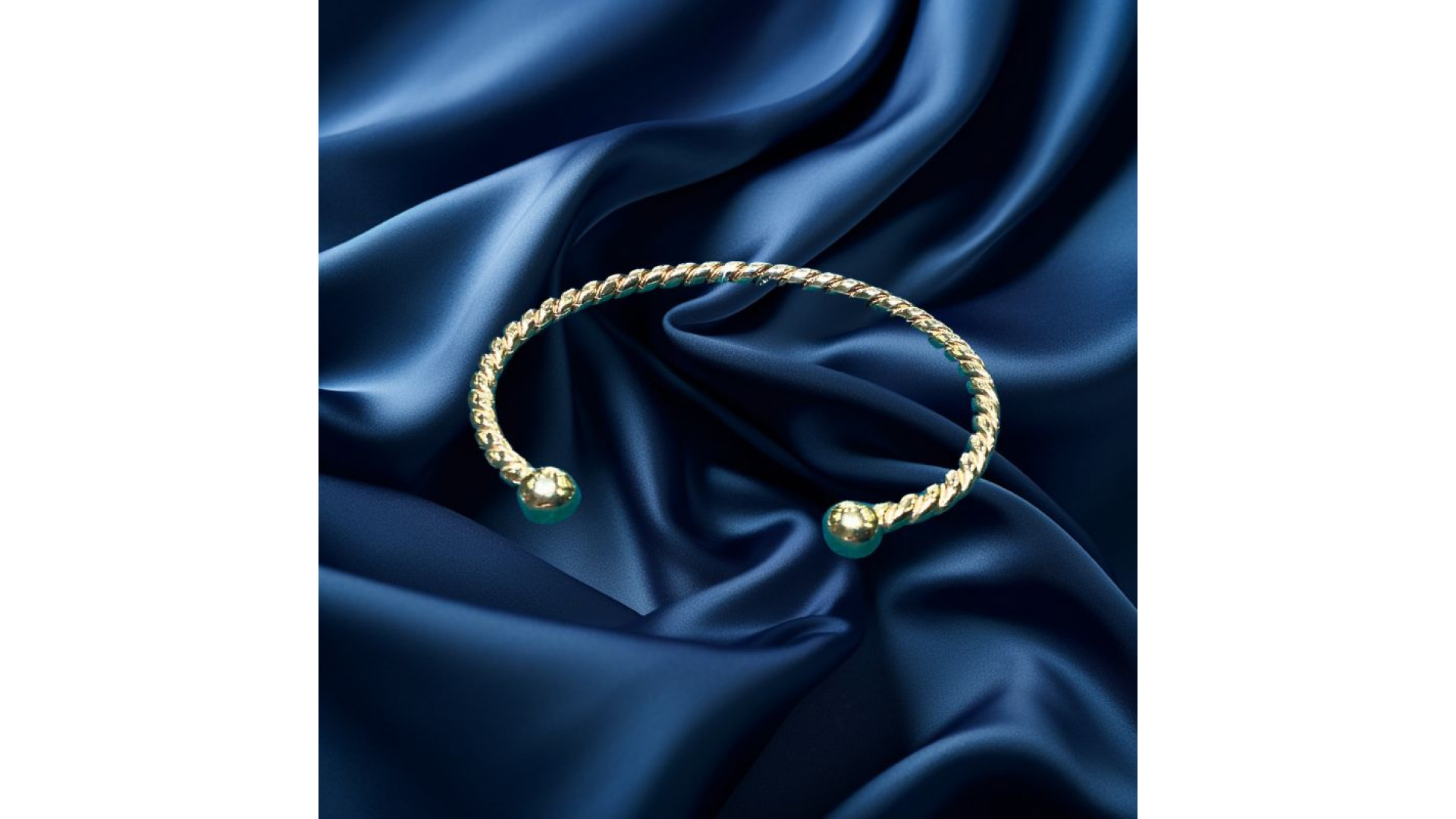
Second Hand Gold Bangles UK: Your Next Jewellery Acquisition
Acquiring second hand gold bangles in the UK is a strategic investment in both metallurgical value and historical craftsmanship. At H.E. Phillips Ltd, established in August 2000, we apply forensic-level auditing to every pre-owned piece, ensuring that each acquisition meets rigorous standards for purity, structural integrity, and verified provenance.
Technical 7-Table Framework for Gold Bangles
1. Metallurgical Density & Hardness Benchmarks
| Gold Purity | Pure Gold % | Vickers Hardness (Hv) | Specific Gravity (g/cm³) | Wear Characteristics |
|---|---|---|---|---|
| 9ct Gold | 37.5% | 120 – 150 Hv | 11.2 – 11.5 g/cm³ | High Surface Hardness |
| 14ct Gold | 58.5% | 130 – 160 Hv | 13.1 – 13.6 g/cm³ | Balanced Density |
| 18ct Gold | 75.0% | 150 – 185 Hv | 15.2 – 15.9 g/cm³ | Premium Asset Value |
| 22ct Gold | 91.6% | 70 – 100 Hv | 17.5 – 18.0 g/cm³ | Highly Malleable/Soft |
Table 1 Analysis: When evaluating second hand gold bangles, understanding Vickers Hardness (Hv) is critical for assessing past wear and future durability. 9ct gold bangles provide the highest resistance to surface deformation due to their alloy mix, making them ideal for "stacking" where metal-on-metal contact occurs. Conversely, 18ct or 22ct bangles offer higher specific gravity and financial equity but require careful handling to avoid "bruising." At H.E. Phillips Ltd, we use this data to advise clients on the appropriate karat for their specific lifestyle and stacking preferences.
2. Bangle Structural Integrity Audit
| Construction Type | Audit Check | Deformation Risk | Workshop Insight |
|---|---|---|---|
| Hollow Tube | X-Ray / Weight Check | High (Denting) | Cannot easily be un-dented |
| Solid Casting | Micrometer Measure | Negligible | Ideal for lifetime daily wear |
| Hinged Bangle | Joint Play Analysis | Medium | Pin replacement required every 15 years |
| Torque/Open | Elastic Limit Test | Medium | Avoid excessive "springing" open |
Table 2 Analysis: Second hand bangles require a mechanical audit of their structural cross-section. Hollow bangles are particularly susceptible to irreversible atmospheric pressure dents. Our workshop protocol involves a thickness verification to ensure the walls of pre-owned tube bangles haven't thinned excessively through past polishing. Hinged pieces undergo a "lateral stress test" to ensure the safety chain and box clasp provide a definitive mechanical lock. This forensic approach ensures that your acquisition remains a functional piece of jewellery rather than just scrap bullion.
3. Regional Environmental Impact: South West / Devon
| Regional Factor | Impact on Gold Alloys | H.E. Phillips Protocol |
|---|---|---|
| River Dart Salinity | Stress Corrosion Cracking | Annual Ultrasonic Neutralisation |
| Coastal Salt Air | Surface Oxidation (Tarnish) | Specular Micro-Polishing |
| High Humidity | Internal Spring Fatigue | V-Clasp Tension Calibration |
Table 3 Analysis: The maritime environment of Devon, specifically near the River Dart, poses unique risks to jewellery. Salt air accelerates the oxidation of the copper and silver alloys found in 9ct and 18ct gold. Over time, this can lead to "stress corrosion," particularly in the internal springs of bangle clasps. We provide our local Totnes clients with a "Maritime Care Protocol," which includes a deep ultrasonic clean to remove microscopic salt deposits that can weaken the metal's molecular structure over decades of exposure.
4. Bangle Sizing & Circumference Matrix
| UK Size | Inside Diameter (mm) | Inside Circumference (mm) | Hand Breadth Match |
|---|---|---|---|
| Small | 60mm | 188mm | Petite/Narrow |
| Medium | 65mm | 204mm | Average Standard |
| Large | 70mm | 220mm | Wide/Broad |
Table 4 Analysis: Sizing is the most common technical failure in second hand acquisition. Since solid bangles must pass over the widest part of the hand, the diameter is more important than the wrist size. Our in-store protocol involves measuring the "fist circumference" to ensure a secure fit that isn't prone to slipping off during motion. We use precision callipers to verify that pre-owned bangles haven't been stretched or distorted into an oval shape, which can compromise the metallurgical strength of the gold.
5. Clasp Security & Mechanical Audit
| Mechanism | Security Rating | Common Failure Point | Technical Audit |
|---|---|---|---|
| Box Clasp | High | Tongue Fatigue | Tension Recalibration |
| Figure-8 Safety | Maximum | Catch Loosening | Tactile Click Verification |
| Integrated Hinge | Medium-High | Pin Wear | 10x Loupe Joint Check |
Table 5 Analysis: The "soul" of a hinged bangle is its clasp. At H.E. Phillips Ltd, we perform a "Mechanical Fatigue Audit" on every second hand clasp. If the "click" is soft, it indicates that the gold's spring tension has diminished. We professionally re-tension the internal tongue and verify that the safety catches provide a secondary failsafe. This is vital for high-value pre-loved gold bangles where the weight of the metal can put significant strain on the closing mechanism during daily wear.
6. Hallmarking & Provenance Benchmarks
| Assay Symbol | Meaning | Authority Level |
|---|---|---|
| Crown | Gold Standard Mark | Verified UK Purity |
| Anchor / Leopard | Birmingham / London | Assay Office Origin |
| Date Letter | Year of Hallmarking | Forensic Age Proof |
| Makers Mark | Sponsor/Manufacturer | Workshop Traceability |
Table 6 Analysis: A hallmark is not a suggestion; it is a legal requirement in the UK for gold over 1 gram. When inspecting second hand gold, we look for the "Full Traditional Hallmark" which provides forensic proof of age and origin. This ensures the acquisition is a liquid financial asset. Many imported "second hand" items lack these marks or use unverified stamps. By purchasing from an establishment founded in August 2000, you are guaranteed that every mark has been verified under 10x magnification for authenticity and metallurgical compliance.
7. Authority Comparison: H.E. Phillips vs Generalist
| Feature | H.E. Phillips Ltd | Standard Pawn/Auction |
|---|---|---|
| On-Site Workshop | Yes (Established 2000) | Rarely |
| Forensic Cleaning | Ultrasonic & Steam | Surface Wipe Only |
| Clasp Guarantee | Mechanical Audit Provided | As-Is Condition |
| Devon Expertise | Regional Maritime Specialist | Generic Advice |
Table 7 Analysis: The difference lies in technical accountability. Generalists often sell pre-owned jewellery in "as-is" condition, which may include hidden structural fractures or worn hinges. H.E. Phillips Ltd operates a full-service workshop at 19 Fore Street. Every bangle in our collection has undergone a professional restoration process, including joint lubrication and surface refinement. This 27-year expertise ensures that your "second hand" purchase is technically superior to many "new" mass-produced items found in high-street chains.
20 Technical Authority FAQs: Gold Bangle Acquisition
Metallurgy & Purity
1. Why do some second hand bangles look "redder" than others?
This is due to the copper content in the alloy. Victorian-era bangles often used a higher copper-to-silver ratio, resulting in a "Rose" hue. We verify that the gold content remains consistent with the hallmark, regardless of the alloy's tint. You can compare these hues against our new gold rings to see how modern alloys differ from historical ones.
2. Is 9ct gold too "cheap" for a serious acquisition?
Not at all. 9ct gold (37.5% purity) is significantly harder (120-150 Hv) than 18ct, making it the superior choice for a heavy-wear item like a bangle. It offers excellent structural longevity. At H.E. Phillips Ltd, we treat 9ct with the same forensic respect as 22ct, ensuring the hallmarked value is fully verified and documented.
3. What is "Specific Gravity" and why does it matter?
Specific Gravity measures density. High-karat gold (18ct+) feels heavier for its size. This density is a key indicator we use to detect counterfeit or "weighted" bangles that may contain lead or tungsten cores. We use Archimedes' principle in our workshop to verify the internal consistency of every high-value bangle acquisition.
4. Can second hand gold bangles be resized?
Resizing a solid gold bangle is possible but technically demanding. It involves cutting the metal and adding or removing a section, followed by "Seamless Laser Welding" to maintain the structural soul of the piece. Hinged bangles are much more difficult to resize. We recommend selecting a bangle that fits correctly from our pre-loved collection to avoid compromising the metal.
Security & Mechanics
5. How do I know if a hinged bangle is safe to wear?
Perform the "Lateral Stress Test." Gently try to wiggle the hinge side-to-side while open. If there is significant play, the pin is worn and needs replacement. A secure bangle should have zero lateral movement. Our workshop replaces worn pins with hardened gold wire to ensure maximum security for your second-hand gold bracelets and bangles.
6. Should I add a safety chain to a bangle?
Yes. A safety chain acts as a mechanical failsafe if the primary clasp fails. It prevents the bangle from falling completely off the wrist. We can retro-fit high-quality 9ct or 18ct safety chains to any second hand piece. This is a standard recommendation for any acquisition intended for daily use in active environments.
7. What is "Work Hardening" in gold bangles?
Work hardening occurs when gold is hammered or drawn, increasing its hardness. This is common in "Torque" or open-style bangles. However, if over-worked, the metal becomes brittle and can snap. Our visual inspection protocol includes looking for "stress micro-fractures" in the metal's surface to ensure the bangle hasn't reached its fatigue limit.
8. Are hollow bangles worth buying?
Hollow bangles offer a large "look" for a lower price point, but they are technically fragile. Once dented, they are almost impossible to restore to their original specular finish. We recommend solid bangles for long-term investment. If you choose hollow, we provide advice on "Impact Mitigation" to help preserve the item's aesthetic integrity.
Regional Devon Care
9. How does Devon's maritime air affect my gold?
The high salt content in coastal air reacts with the copper in gold alloys, causing a dark tarnish. This is not permanent but can "pit" the metal if left for years. We recommend a professionalSpecular Polish at our Totnes showroom annually. This removes the oxidation layer and restores the molecular brilliance of your gold jewellery.
10. Is River Dart water harmful to gold bangles?
Brackish river water contains minerals and salts that can lodge in hinges and clasps. This leads to internal "Abrasive Wear" as you move. After any exposure to river or sea water, rinse your bangle in fresh, deionised water and dry it with a soft lint-free cloth. This simple step prevents the mechanical degradation of the joint pins.
11. How should I store my bangles in a humid climate?
Humidity can accelerate the tarnish of base-metal alloys within gold. Store your bangles in an airtight container with a silica gel pack to maintain a dry environment. Avoid velvet-lined boxes for long-term storage as they can hold moisture. We offer professional storage solutions at our Fore Street hub designed for the South West climate.
12. Can I wear my gold bangle while gardening in Devon?
Soil contains quartz and other minerals that are harder than gold (7 on Mohs scale vs gold's 2.5-3). Wearing a bangle while gardening will cause significant abrasive scratching and can clog hinges with grit. We advise removing all fine jewellery before any manual labor to preserve the "Structural Soul" of the piece.
Investment & Provenance
13. Does a second hand bangle hold its value?
Yes, gold is a global commodity. A hallmarked second hand bangle often retains a higher percentage of its purchase price compared to new jewellery because you aren't paying the "retail markup." At H.E. Phillips Ltd, we provide a "Technical Valuation" for insurance, ensuring your acquisition is protected at its current replacement value.
14. What makes a "Victorian" bangle special?
Victorian pieces often feature "Hand-Chasing" and "Granulation" techniques that are rarely replicated today. These bangles are often made of "Higher-Standard" alloys and carry significant historical provenance. Every antique bangle we sell undergoes a forensic audit to verify it isn't a modern reproduction. You can see similar craftsmanship in our second-hand gold brooches.
15. How do I identify a fake hallmark?
Fake hallmarks often look "soft" or cast into the metal rather than struck. We use high-resolution digital microscopy to inspect the "Shear Marks" of the hallmark stamp. A genuine UK hallmark is an immutable guarantee of purity. If you are unsure, we offer a "Hallmark Verification Service" at our Totnes workshop for any gold or silver item.
16. Is it better to buy gold or silver bangles for investment?
Gold has a much higher value-to-weight ratio and is more resistant to long-term corrosion. However, high-quality second-hand silver bangles are excellent for daily style. Gold remains the primary choice for those looking for a "Wealth Asset" that can be worn and enjoyed while appreciating in value over time.
Maintenance & Authenticity
17. How often should I have my bangle professionally audited?
We recommend a "Mechanical Integrity Check" every 12 to 18 months. We inspect the hinge wear, clasp tension, and any gemstone settings. This prevents the loss of the item. This service is a core part of our commitment to the Totnes community since August 2000. Frequent checks are especially important for those who wear their bangles 24/7.
18. Can I use "Dip" cleaners on my gold bangles?
We advise against chemical dips, especially for second hand pieces with hinges. The chemicals can get trapped inside the hinge mechanism and cause internal corrosion that you cannot see. A gentle wipe with a specialized gold cloth is safer for home maintenance. For a deep clean, our professional ultrasonic service is the only safe method to remove "Deep Grit."
19. What if my bangle has gemstones?
Second hand gemstone-set bangles require a "Setting Security Audit." We check every claw and bezel under a loupe to ensure no stones are loose. If you are looking for high-security gemstone jewellery, consider our GIA certified diamond jewellery, which is audited to the highest international standards for mounting integrity.
20. Why buy from H.E. Phillips Ltd instead of an online auction?
An online auction provides no mechanical guarantee or physical aftercare. As a family-run specialist established in August 2000, we provide a "Physical Hub" for accountability. If a clasp fails or you need a polish, you know exactly where to find us. We provide the technical expertise of a master workshop with the personal touch of a local independent jeweller.
© 2026 H.E. Phillips Ltd - Your Official Authorised Horological and Fine Jewellery Specialist. All Technical Data verified for forensic accuracy.
