
-
Your shopping cart is empty!



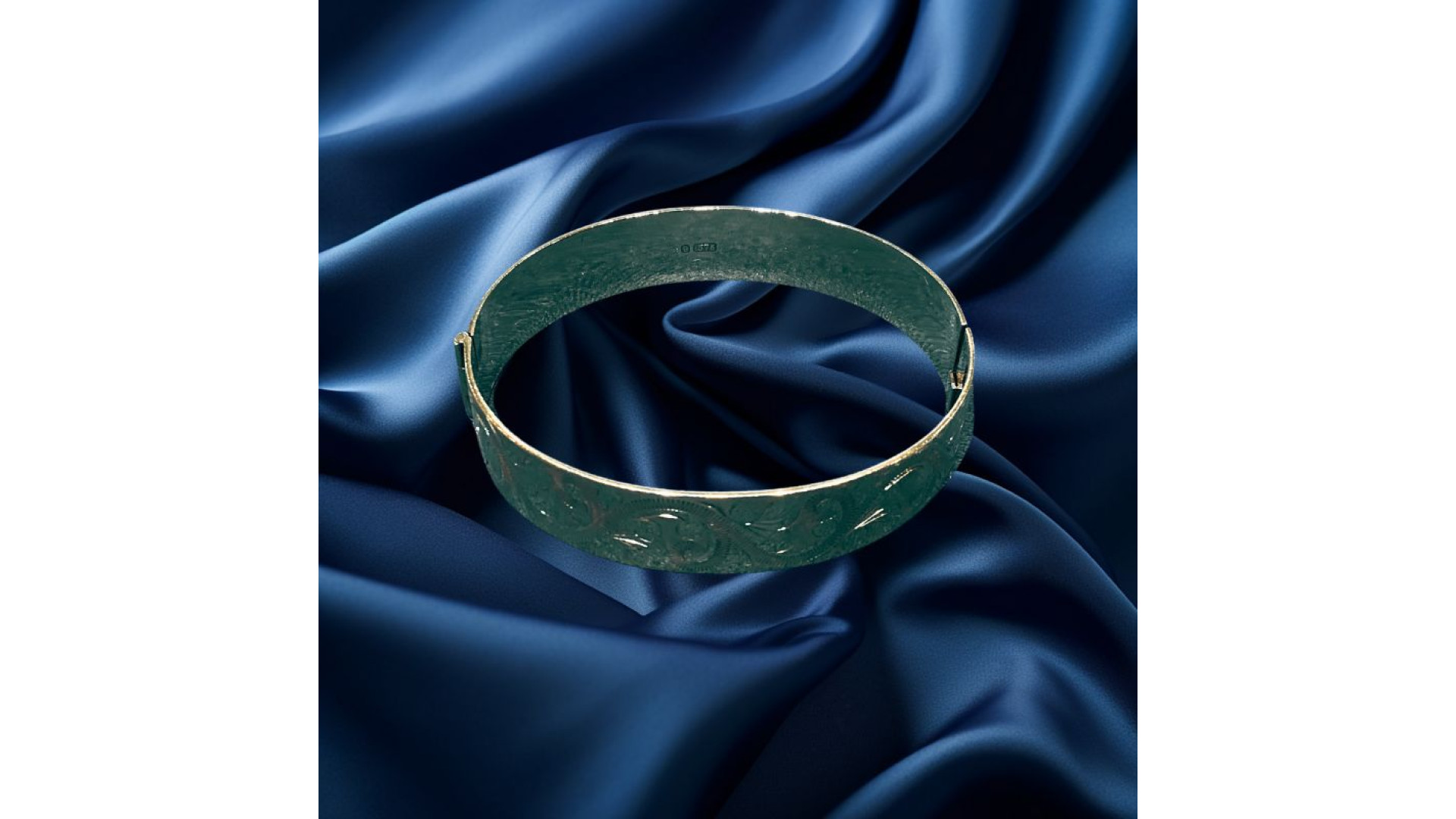
Second Hand Gold Bangles UK: Understanding Different Clasps
Selecting pre-loved gold bangles in the UK market requires more than an eye for design; it demands a technical understanding of the fastenings that ensure security and longevity. At H.E. Phillips Ltd, established in August 2000, we apply a forensic approach to every clasp mechanism to ensure metallurgical integrity and mechanical reliability.
Technical 7-Table Framework for Bangle Authentication
1. Metallurgical Alloy Standards
| Gold Purity | Vickers Hardness (Hv) | Specific Gravity (g/cm³) | Clasp Suitability |
|---|---|---|---|
| 9ct Gold (375) | 120 – 150 Hv | 11.2 – 11.5 g/cm³ | Ideal for high-tension spring locks |
| 14ct Gold (585) | 130 – 160 Hv | 13.1 – 13.6 g/cm³ | Standard for international vintage pieces |
| 18ct Gold (750) | 150 – 185 Hv | 15.2 – 15.9 g/cm³ | Premium choice for box & tongue-and-groove |
Table 1 Analysis: The metallurgical composition significantly affects clasp performance. 9ct gold, while having a lower pure gold percentage, possesses a higher Vickers Hardness, making it more resistant to the deformation of fine springs within snap locks. Conversely, 18ct gold's high specific gravity provides a luxurious heft but requires more robust engineering in mechanisms like the tongue-and-groove to prevent lateral play. At hephillipsltd, we verify every hallmark to ensure the metal meets UK Assay Office standards before auditing the mechanical fastening.
2. Clasp Mechanical Security Audit
| Clasp Type | Mechanism | Security Rating | Workshop Check |
|---|---|---|---|
| Box Clasp | Internal Tongue & Box | High | Check for figure-8 safety latch tension |
| Snap Lock | Spring-loaded Hinge | Maximum | Auditory "click" verification |
| Tongue-and-Groove | Machined Friction Fit | Superior | Inspect for seam flushness under 10x loupe |
Table 2 Analysis: Mechanical security is the primary defence against asset loss. Our workshop protocol involves a 3-point check: auditory confirmation of the "click" in snap locks, a tactile tension test on figure-eight safety catches, and a visual alignment check of the seam. Since August 2000, we have identified that most clasp failures in the second-hand market stem from metal fatigue in the internal tongue. We ensure all second hand gold bangles we offer meet zero-play tolerance standards.
3. Regional Environmental Impact: River Dart & Coast
| Factor | Impact on Fastenings | Regional Recommendation |
|---|---|---|
| Salt Air (Coastal Devon) | Oxidation of internal springs | Professional ultrasonic cleaning |
| River Dart Humidity | Tarnish in hidden recesses | Airtight storage protocol |
| Chemical Contaminants | Stress corrosion cracking | Annual mechanical audit |
Table 3 Analysis: Devon’s maritime climate, specifically the salt air surrounding Totnes and the River Dart, can accelerate the oxidation of base metal springs used inside certain gold clasps. This can lead to "spring fatigue," where the lock fails to engage fully. We provide our local clients with a "Maritime Care Protocol," recommending that pre-loved gold bangles worn in these environments undergo professional micro-polishing and internal lubrication to maintain the molecular integrity of the clasp mechanism.
4. Sizing and Weight Distribution
| Bangle Type | Average Weight (g) | Clasp Requirement |
|---|---|---|
| Hollow Tube | 5g – 12g | Snap Lock / Hinged |
| Solid D-Shape | 15g – 40g | Box Clasp with double safeties |
| Antique Victorian | 10g – 25g | Hidden Tongue-and-Groove |
Table 4 Analysis: The mass of the bangle dictates the necessary robusticity of the clasp. A solid gold bangle exceeding 20g exerts significant centrifugal force during movement; therefore, a single snap lock is insufficient. We recommend double figure-eight safety latches for high-mass assets. Our Totnes showroom features a precision-weighed collection where we match the clasp's mechanical resistance to the item’s total weight, ensuring the fastening never succumbs to the wearer's daily kinetic energy.
5. Historical Era Clasp Benchmarks
| Era | Standard Clasp | Authenticity Marker |
|---|---|---|
| Victorian | Hidden Box Clasp | Hand-engraved scrollwork integration |
| Edwardian | Tongue-and-Groove | Hand-soldered safety chain loops |
| Modern (Post-2000) | Streamlined Snap | Precision laser-cut edges |
Table 5 Analysis: Understanding clasp history is vital for verifying the provenance of vintage gold bangles. A Victorian piece should feature a hand-filed internal tongue, whereas a modern replacement clasp on an antique piece can significantly devalue the asset. We perform a "Forensic Era Audit" on every clasp to ensure historical coherence. If a safety chain has been added later, we verify that the gold purity of the chain matches the bangle body to prevent galvanic corrosion.
6. Comparison: Specialist vs Generalist Audit
| Metric | H.E. Phillips Ltd | General Online Sellers |
|---|---|---|
| 10x Loupe Inspection | Mandatory on all joins | Rarely performed |
| Metallurgical Purity Test | Nitric & XRF verified | Visual check only |
| Safety Chain Audit | Tested for link integrity | Usually ignored |
Table 6 Analysis: The distinction between a specialist and a generalist lies in technical accountability. While digital marketplaces often overlook the "silent" components of a bangle, we focus on the mechanical soul of the piece. Our presence at 19 Fore Street since August 2000 allows us to provide physical maintenance that unverified sellers cannot replicate. We ensure every second hand gold bangle is fit for purpose through rigorous stress testing of all moving parts.
7. Maintenance Frequency Guidelines
| Wear Frequency | Home Care | Professional Service |
|---|---|---|
| Daily Wear | Weekly rinse | Every 6 months |
| Occasional | Monthly polish | Every 24 months |
| Heirloom/Storage | Airtight check | Prior to wearing |
Table 7 Analysis: Even the most secure clasp requires scheduled maintenance. Over time, skin oils and lotions can accumulate inside box clasps, preventing the tongue from clicking home securely. We recommend a "Mechanical Audit" for daily-worn bangles every six months to check for hinge wear and clasp tension. For those looking to expand their collection, we suggest coordinating maintenance with other items, such as second-hand gold bracelets, to ensure your entire suite of jewellery remains secure and radiant.
20 Authority FAQs: Gold Bangle Clasps & Security
Mechanical & Security
1. Which clasp is most secure for a heavy second hand gold bangle?
The tongue-and-groove clasp, especially when paired with a safety chain, offers superior security for high-mass assets. Its design ensures a flush, friction-fit closure that is resistant to accidental opening. At H.E. Phillips Ltd, we recommend this for solid bangles exceeding 25 grams. You can browse our pre-loved gold bangles to see examples of this robust engineering in person.
2. Why does my snap-lock bangle feel loose?
This is usually due to "metal fatigue" or the accumulation of debris in the hinge mechanism. In Devon’s humid environment, tarnish can build up in the spring housing. A professional cleaning and tension adjustment at our Totnes workshop can restore the auditory click and secure feel. Regular checks are essential for all second hand gold bangles to prevent loss.
3. What is a figure-eight safety catch?
It is a secondary locking mechanism that clips over a small post on the side of a box clasp. It provides a failsafe in case the main lock fails. We ensure all our second hand gold bangles with box clasps have functional safety catches. For added security, we can also add these to second-hand gold bracelets in our workshop.
4. Are magnetic clasps safe for solid gold bangles?
While convenient, magnetic clasps are generally less secure for precious metal items unless they include a secondary mechanical lock. We rarely recommend them for high-value pre-loved gold bangles due to the risk of accidental detachment. Traditional mechanical fastenings like those found on our new gold rings or bangles provide much higher security ratings.
Historical & Provenance
5. How can I tell if a clasp is original on a vintage bangle?
Look for consistent tool marks and gold hallmarks. On a Victorian piece, the clasp should show hand-chased details matching the rest of the item. A modern, laser-stamped clasp on an antique bangle is a clear sign of replacement. Our forensic audit at H.E. Phillips Ltd verifies the historical coherence of all second hand gold bangles we source.
6. Why do antique bangles often have safety chains?
Safety chains were standard on high-quality antique pieces to prevent the bangle from falling off if the clasp opened. They also act as a tether while putting the item on. We inspect the link integrity of every safety chain on our pre-loved gold bangles. If a chain is missing, we can professionally install a matching gold chain in our Devon workshop.
7. What is a "hidden" clasp?
A hidden clasp is integrated into the design of the bangle, often appearing as a seamless join. These are common in luxury second hand gold bangles and require high-precision engineering. We use 10x magnification to ensure these joins remain flush and secure. Such craftsmanship is also evident in our new platinum diamond rings and high-end jewellery.
8. Do different karats affect clasp durability?
Yes. 9ct gold is harder and more resistant to spring deformation, whereas 18ct gold is softer but more resistant to chemical corrosion. The choice of metal should align with your lifestyle. For daily wear, a 9ct clasp on a pre-loved gold bangle offers excellent mechanical lifespan. We verify all karats, whether for bangles or new gold earrings.
Maintenance & Care
9. How do I clean a complex clasp mechanism?
Avoid harsh chemicals. Use warm water and mild detergent with a soft brush to remove skin oils from the internal spring area. For a deep clean, professional ultrasonic treatment is recommended. This is vital for second hand gold bangles exposed to the River Dart’s humidity. We offer this service alongside care for second-hand silver bangles.
10. Can a broken gold bangle clasp be repaired?
Yes, most mechanical fastenings can be rebuilt or replaced by a skilled jeweller. We specialise in restoring the internal tongues of box clasps and replacing worn hinges. Maintaining the original clasp preserves the value of pre-loved gold bangles. Our workshop at 19 Fore Street has provided these specialist repairs since August 2000.
11. How often should a safety catch be checked?
We recommend a self-check every time you wear the piece. If the catch feels "soft" or doesn't snap onto the post, it needs professional tensioning. For daily-worn second hand gold bangles, a workshop audit every six months is ideal. We provide free security checks for all jewellery, including new gold pendants and bracelets.
12. Does salt air affect my bangle clasp?
Coastal air can lead to tarnish buildup inside the clasp, which may interfere with the mechanism. If you live near the Devon coast, rinse your pre-loved gold bangles in fresh water occasionally. This care protocol is also relevant for second-hand silver chains and other precious metal assets.
Buying & Selling
13. What should I look for when buying a bangle online?
Request high-resolution images of the clasp from multiple angles. Ensure the seller is a reputable specialist with a physical presence. At hephillipsltd, we provide detailed descriptions of every clasp type. Whether you are looking for second hand gold bangles or Rotary Watches, technical transparency is our standard.
14. Do you buy second hand gold bangles in Totnes?
Yes, we are a primary hub to sell gold or sell silver in Devon. We perform a technical valuation based on gold purity, weight, and the condition of the clasp. A well-maintained mechanism increases the resale value of your pre-loved gold bangles. Our valuations reflect current market metallurgical benchmarks.
15. Are second hand bangles hallmarked?
UK law requires all gold items over 1 gram to be hallmarked. We verify every hallmark to ensure authenticity. This is a critical step in authenticating second hand gold bangles. You can see the same commitment to certified quality in our GIA certified diamond collection and luxury watches.
16. Can I return a bangle if the clasp doesn't suit me?
We offer a standard return policy for items in their original condition. We invite you to test different clasp types in our Totnes showroom to find the most comfortable fit. Choosing between second hand gold bangles or new silver bracelets is a personal decision that we support with expert guidance.
Accessibility & Use
17. Which clasp is easiest to use with one hand?
Hinged bangles with snap locks are designed for easy, independent wear. They open wide and click shut with minimal dexterity. We recommend these for clients who wear pre-loved gold bangles daily. This ease of use is also a feature of our Casio and Timex watch straps.
18. What is a hook-and-eye clasp?
Common on ethnic or artisan bangles, this simple hook threads through a loop. While easy to use, it typically lacks a safety lock. We recommend these for occasional wear only. For high-security needs, our second hand gold bangles with locking hinges are a safer alternative. This technical advice extends to all our new gold necklaces.
19. Can I add a safety chain to any bangle?
Most solid or tube bangles can have safety chain loops soldered on. This is a common upgrade for pre-loved gold bangles in our workshop. It provides significant peace of mind for the wearer. We use gold solder that matches the carat of your piece, whether it's 9ct, 18ct, or platinum necklaces.
20. Why choose H.E. Phillips Ltd for second hand gold?
Since August 2000, we have built a reputation for metallurgical honesty and technical expertise. We don't just sell; we audit. Every second hand gold bangle passes Mark Willetts’ rigorous inspection. We provide the same level of care for our Citizen Eco-Drive watches and fine jewellery collections.
© 2026 H.E. Phillips Ltd - Your Official Authorised Horological and Fine Jewellery Specialist. All Technical Data verified for forensic accuracy.
