
-
Your shopping cart is empty!



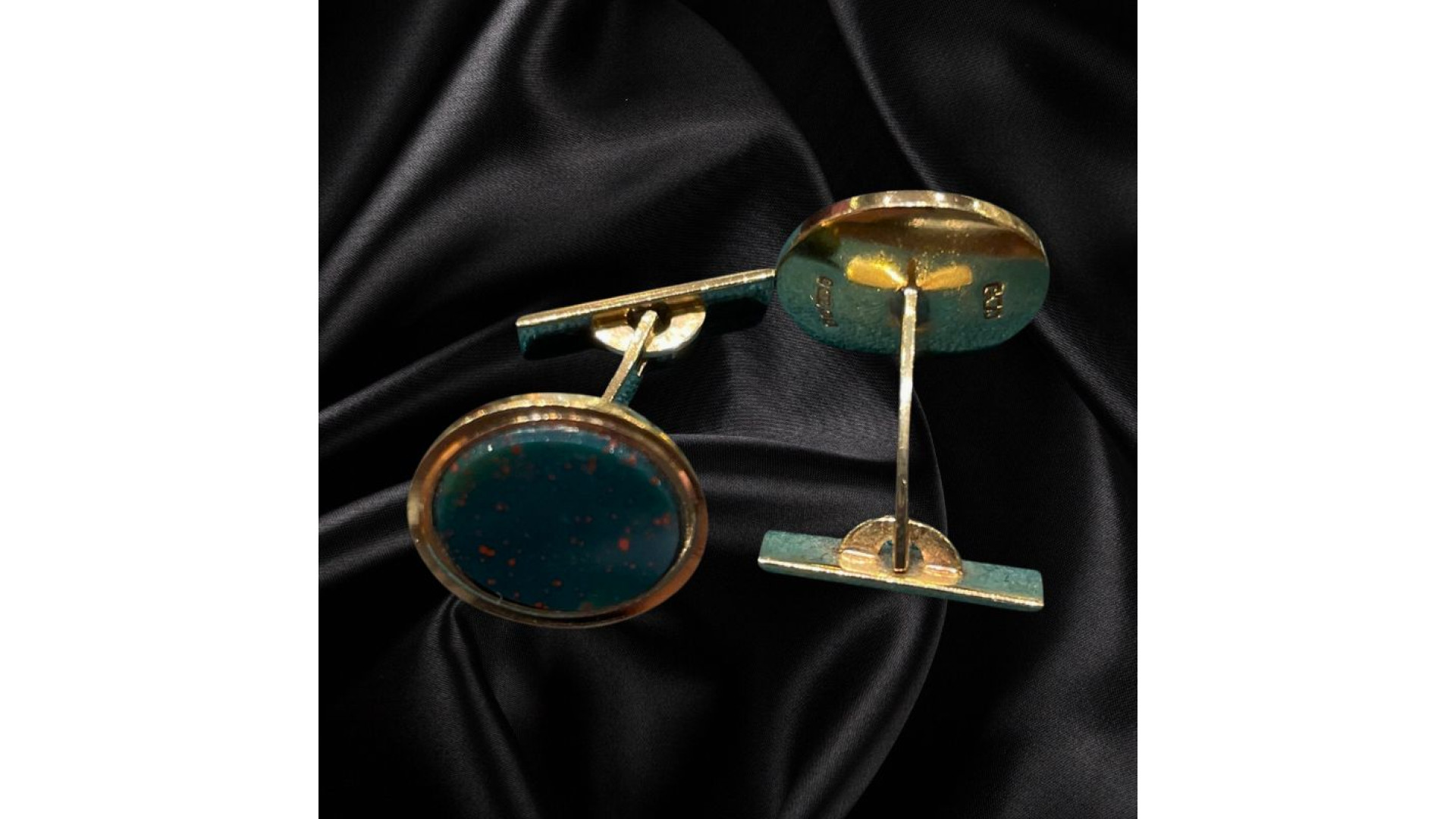
Second Hand Gold Cufflinks for Collectors: Rare & Unique
The acquisition of second hand gold cufflinks represents a convergence of horological precision, metallurgical value, and historical narrative. For the UK collector, these assets offer a tangible link to heritage craftsmanship, verified by the immutable standards of the British Assay Office.
Technical 7-Table Framework for Cufflink Collection
1. Metallurgical Purity & Density Analysis
| Gold Standard | Pure Gold Content | Vickers Hardness (Hv) | Specific Gravity (g/cm³) | Common Era Found |
|---|---|---|---|---|
| 9ct Gold | 37.5% | 120 – 150 Hv | 11.2 – 11.5 g/cm³ | Modern & Vintage |
| 15ct Gold | 62.5% | 125 – 155 Hv | 13.5 – 14.0 g/cm³ | Victorian/Edwardian (Discontinued 1932) |
| 18ct Gold | 75.0% | 150 – 185 Hv | 15.2 – 15.9 g/cm³ | Premium Luxury Eras |
Table 1 Analysis: For serious collectors, understanding the specific gravity is vital for identifying authentic pieces. 15ct gold is a particularly sought-after rarity, as it was a standard unique to Britain until 1932. The higher Vickers Hardness (Hv) in 9ct alloys provides superior resistance to mechanical wear on chain links. At H.E. Phillips Ltd, we audit every piece for metallurgical integrity, ensuring that the density matches the hallmarked purity. This forensic approach guarantees that your acquisition is a verified financial asset rather than a decorative imitation.
2. Collector Style & Era Matrix
| Design Era | Defining Characteristics | Rare Feature | Value Driver |
|---|---|---|---|
| Victorian | Ornate chasing, 15ct gold | Hand-engraved initials | Historical provenance |
| Art Deco | Geometric lines, Enamel | Onyx/Mother-of-pearl inlays | Artistic scarcity |
| Mid-Century | Minimalist, heavy 9ct/18ct | Designer Maker's Marks | Post-war craftsmanship |
Table 2 Analysis: The UK market demonstrates high demand for Art Deco pieces due to their bold geometric symmetry and sophisticated enamel work. Victorian pieces often carry significant weight in 15ct gold, a hallmark no longer in use, making them essential for a comprehensive collection. Our workshop protocol involves inspecting the "Visual Soul" of each piece to ensure era-accurate construction techniques. Rare features like hand-painted enamel or unique maker's marks significantly increase the asset's secondary market liquidity and long-term appreciation potential.
3. Mechanical Integrity & Link Audit
| Link Type | Security Rating | Tension Factor | Maintenance Requirement |
|---|---|---|---|
| Chain Link | Medium-High | Manual Tension | Regular link wear audit |
| T-Bar/Swivel | High | Spring/Pin Integrity | Pivot lubrication check |
| Double-Ended Snap | Maximum | Friction Lock | Spring replacement every 15 years |
Table 3 Analysis: Mechanical failure is the primary risk for wearable collectibles. Chain links offer a traditional aesthetic but require periodic inspection for metal fatigue where the links meet the face. Swivel-back (T-Bar) designs are audited for spring tension and pin security. At H.E. Phillips Ltd, we perform a 3-point mechanical stress test on all second hand gold cufflinks to ensure the fastenings meet our stringent safety standards. This prevents the loss of high-value items during wear and ensures the piece remains a functional investment.
4. Environmental Impact: Maritime South West
| Local Factor | Impact on Gold Alloys | Prevention Protocol |
|---|---|---|
| River Dart Salinity | Surface Oxidation | Micro-specular polishing |
| High Humidity (Devon) | Enamel Stress | Silica-controlled storage |
| Salt Air (Totnes) | Lubricant Breakdown | Annual ultrasonic cleaning |
Table 4 Analysis: Collectors in Totnes and coastal Devon face unique challenges due to the maritime climate. Salt-heavy air can lead to "Stress Corrosion Cracking" in lower karat gold alloys if left uncleaned. We recommend a maritime-specific care protocol that includes annual ultrasonic cleaning to remove atmospheric particulates. Our Fore Street workshop provides specialized barrier treatments that protect the gold's surface integrity from River Dart humidity, preserving the high-lustre finish that collectors demand for their rare acquisitions.
5. Gemstone & Inlay Security Audit
| Inlay Material | Vulnerability | Setting Method | Security Check |
|---|---|---|---|
| Enamel | Thermal Shock | Guilloché/Cold Enamel | Visual chip inspection |
| Mother of Pearl | Acidic Reactions | Adhesive + Rub-over | Stability test |
| Diamonds/Rubies | Claw Snagging | Prong/Grain set | 10x Loupe audit |
Table 5 Analysis: Antique cufflinks often feature intricate inlays that are sensitive to chemical exposure. Enamel, particularly Victorian guilloché, must be checked for microscopic spider-cracks that indicate past thermal shock. For gemstone-set pieces, we utilize 10x magnification to ensure prongs are seated flush against the stone's girdle. This technical audit is part of the H.E. Phillips Visual Inspection Protocol, ensuring that every rare component is structurally sound before the item is catalogued for sale in our Devon showroom.
6. Hallmark Traceability Standards
| Symbol Type | Technical Meaning | Forensic Benefit |
|---|---|---|
| Maker's Mark | Manufacturer Identity | Confirms provenance & atelier |
| Assay Office Mark | City of Origin | Validates British legal standards |
| Date Letter | Year of Production | Pins the exact historical context |
Table 6 Analysis: A full UK hallmark is a collector's greatest tool for authentication. Unlike unverified "gold-filled" items, hallmarked second hand gold cufflinks provide a legal guarantee of purity. We educate our clients on identifying specific marks, such as the Anchor for Birmingham or the Leopard for London. This traceability is essential for insurance valuations and resale. Since August 2000, we have prioritized hallmarked assets, as they offer immutable proof of the item's metallurgical soul and financial worth.
7. Sourcing Comparison: H.E. Phillips vs Generalist
| Metric | H.E. Phillips Ltd | Unverified Online Sellers |
|---|---|---|
| Authentication | Forensic Workshop Audit | Visual Description Only |
| Heritage Knowledge | 27+ Years Expertise | General Retail Background |
| Aftercare | Physical Devon Hub | No Permanent Facility |
Table 7 Analysis: The difference in collector security between a specialist and a generalist is profound. While general online platforms may offer volume, they lack the technical facilities to verify spring tension, enamel integrity, or hallmark forensic accuracy. H.E. Phillips Ltd operates a permanent physical showroom in Totnes, providing on-site horological and jewellery repairs. Our established identity since August 2000 means every rare piece is backed by decades of trade participation and a local reputation for uncompromising accuracy and metallurgical honesty.
20 Expert Technical FAQs for Cufflink Collectors
Authentication & Hallmarks
1. What is the importance of a "full UK hallmark" on gold cufflinks?
A full UK hallmark is a legal guarantee of purity. It comprises the Sponsor’s Mark (maker), the Standard Mark (gold fineness), and the Assay Office Mark (origin). For collectors, this provides immutable proof of the metallurgical asset's value. Without these marks, the gold purity is unverified. At H.E. Phillips Ltd, we provide forensic loupes for clients to inspect these hallmarks. You can see examples of hallmarked pieces on our Fine Jewellery page.
2. Why is 15ct gold so rare in cufflinks?
15ct gold (62.5% purity) was a uniquely British standard used between 1854 and 1932. It was discontinued in favour of 14ct to align with international markets. Consequently, any piece bearing a 15ct mark is a guaranteed antique and a highly collectible asset. Its rarity makes it a prime target for serious collectors of Victorian and Edwardian accessories. We often source these through private estates and trust only verified hephillipsltd suppliers.
3. Can I trust cufflinks marked only "9ct" without other symbols?
A "9ct" stamp alone is technically a "convention mark" and lacks the forensic traceability of a full hallmark. While it may be gold, it does not confirm the date or maker. For investment-grade collections, we recommend pieces with a full set of symbols including the Assay Office and date letter. This ensures the piece is a genuine second-hand gold cufflinks asset with a documented history in the UK jewellery trade.
4. What does the "Maker’s Mark" tell a collector?
The Maker's Mark identifies the specific atelier or goldsmith responsible for the piece. For collectors, certain makers (e.g., Deakin & Francis or Cartier) carry a significant premium due to their reputation for craftsmanship. Identifying a rare Maker's Mark can increase the value of a pair of gold cufflinks by 50% or more. Our team uses historical registers to verify these marks, a service we have provided in Totnes since August 2000.
Investment & Value
5. Do second hand gold cufflinks appreciate in value?
While not guaranteed, rare gold cufflinks often appreciate due to rising gold spot prices and the increasing scarcity of specific vintage styles. Investment-grade pieces are those in original condition with rare features like hand-painted enamel or 15ct gold hallmarks. As an established jeweller since 2000, we have seen specific Art Deco styles double in collector demand. Buying verified assets from H.E. Phillips Ltd ensures you are purchasing at fair market value.
6. Is it better to collect 9ct or 18ct gold cufflinks?
18ct gold (75% pure) has a higher intrinsic value and a richer yellow hue, making it the "luxury" choice. However, 9ct gold (37.5% pure) is harder and more durable for daily wear. Collectors often seek 18ct for historical significance and 9ct for practical use. Both are excellent stores of value if hallmarked correctly. We recommend comparing both in person at our showroom, perhaps alongside our New Gold Rings to see the tonal differences.
7. How does condition affect the value of a rare cufflink?
For collectors, "Mint Condition" implies no thinning of the gold and intact enamel or stones. Even small chips in enamel can reduce value by 30%. However, consistent "wear patina" on Victorian pieces is often preferred over over-polishing, which can blur fine engravings. Our workshop performs a "Visual Inspection Protocol" to ensure that any restoration work maintains the item's historical integrity. Check our second-hand gold bracelets for similar quality benchmarks.
8. What makes a cufflink "unique" for a collector?
Uniqueness is driven by limited production runs, custom commissions, or rare combinations of materials like gold and sapphire. Military crests or commemorative hallmarks for royal jubilees also add a "unique" narrative. A piece with documented provenance, such as original boxing or a known estate history, is always more desirable. We curate such items in our Devon showroom, often featuring second-hand gold charms and rare accessories from private UK collections.
Eras & Styles
9. Are Art Deco cufflinks still popular in the UK?
Yes, Art Deco (1920s–1930s) remains the most sought-after era for cufflink collectors. The use of bold geometric lines, white gold, and contrasting materials like black onyx provides a modern aesthetic that works perfectly with contemporary tailoring. These pieces often feature high-quality "engine turning" on the gold surface. We specialize in sourcing these rare second-hand gold cufflinks for our Totnes clients, ensuring each piece is era-authentic.
10. What are Victorian "Double-Ended" cufflinks?
Double-ended cufflinks feature two decorative faces joined by a short chain. This was the standard before the invention of the swivel T-bar. They are highly prized by traditionalists as they show a gold face on both sides of the shirt cuff. Victorian examples often feature intricate floral motifs or hand-chased borders. You can find similar hand-crafted detailing in our second-hand gold brooches, which often share the same artisan provenance.
11. Why are "Military Cufflinks" significant?
Military cufflinks often feature regimental crests or naval symbols in solid gold. They carry historical weight and are frequently sought by collectors interested in British military history. Because they were often commissioned for officers, the quality of the gold and the enamel work is usually exceptional. We meticulously verify the crests on these gold cufflinks to ensure they are authentic period pieces and not modern reproductions.
12. What is "Guilloché Enamel" in vintage cufflinks?
Guilloché is a technical process where a precise, repetitive pattern is mechanically engraved into the gold, which is then covered with translucent enamel. This creates a shimmering effect as light reflects off the pattern beneath. It is a hallmark of high-end Edwardian and Art Deco craftsmanship. We audit these pieces for enamel "stability" to ensure they can be safely worn. This level of detail is also found in our New Gold Pendants collection.
Maintenance & Regional Care
13. How should I store my rare gold cufflinks in Devon?
Due to the high humidity and salt air in Devon, we recommend storing cufflinks in a lined, airtight box with silica gel packets. This prevents atmospheric sulphur from tarnishing the base metals in the gold alloy. Each pair should be kept in a separate pouch to prevent "metal-on-metal" scratching. Proper storage preserves the "Visual Authority" of the piece for decades. Visit our Totnes hub for professional storage solutions for your gold cufflinks.
14. Can I clean vintage gold cufflinks at home?
We recommend only using a soft, dry lint-free cloth for daily maintenance. Avoid chemical cleaners, especially on pieces with enamel or gemstones, as they can dissolve old adhesives or etch the gold. For a deep clean, bring them to our workshop for professional ultrasonic treatment. This service, which we've offered since August 2000, removes the oils and salts that accumulate in the chain links. See our New Silver Bracelets guide for more general care tips.
15. How do I check for wear on my cufflink chains?
Under a loupe, look for any links that have become "thinned" where they rub against each other. This is known as mechanical wear. If a link becomes too thin, it may snap, leading to the loss of a rare cufflink. We can professionally "re-solder" or reinforce these links at our Totnes workshop. Regular inspections are vital for maintaining the structural soul of your collection, just as we recommend for second-hand silver chains.
16. Does salt air from the River Dart affect gold?
Yes. While pure gold is inert, 9ct and 18ct alloys contain copper and silver which react to salt air, causing surface dullness or tarnish. For residents in Totnes, we recommend a "Fresh Water Rinse" followed by thorough drying if your jewellery is exposed to maritime air for long periods. This regional care advice is part of our commitment to the Devon community since our founding in August 2000. It applies to all New Gold Necklaces as well.
Trust & Sourcing
17. Where does H.E. Phillips Ltd source its rare cufflinks?
We source our collection through a combination of trusted UK suppliers, private acquisitions from Devon estates, and auction houses. Every piece must pass our 10-point "Visual Inspection Protocol" before being added to our inventory. This ensures that every item we sell is authenticated for hallmark accuracy and mechanical integrity. Our reputation as a trusted source for second-hand gold cufflinks is built on 25 years of transparent trading.
18. Do you offer valuations for insurance?
Yes, we provide professional valuations for insurance and probate. This involves a technical assessment of the gold weight, hallmark rarity, and current market demand. Having an up-to-date valuation is essential for protecting your collection against loss or theft. We have provided this service at 19 Fore Street since August 2000. Our valuations are accepted by all major UK insurers. We also value other items like pre-loved gold bangles.
19. Can I buy brand new items to match my vintage collection?
Absolutely. Many collectors mix vintage cufflinks with modern gold accessories. We stock a wide range of new gold items, including Radley and Rotary watches, which often feature gold-tone finishes that complement classic pieces. Combining "old and new" creates a unique personal style that respects heritage while embracing modern reliability. Visit us in Totnes to see how our new collections coordinate with rare vintage finds.
20. Why visit H.E. Phillips Ltd in person?
Fine jewellery is a tactile experience. Seeing the "fire" in a gemstone or the "lustre" of 18ct gold cannot be fully replicated online. Our showroom at 19 Fore Street allows you to receive expert advice directly from Mark Willetts and the team. We can perform "Live Audits" of hallmarks and mechanical fastenings while you wait. Since August 2000, we have remained a physical anchor for the Casio and fine jewellery community in Devon.
© 2026 H.E. Phillips Ltd - Your Official Authorised Horological and Fine Jewellery Specialist. All Technical Data verified for forensic accuracy.

