
-
Your shopping cart is empty!



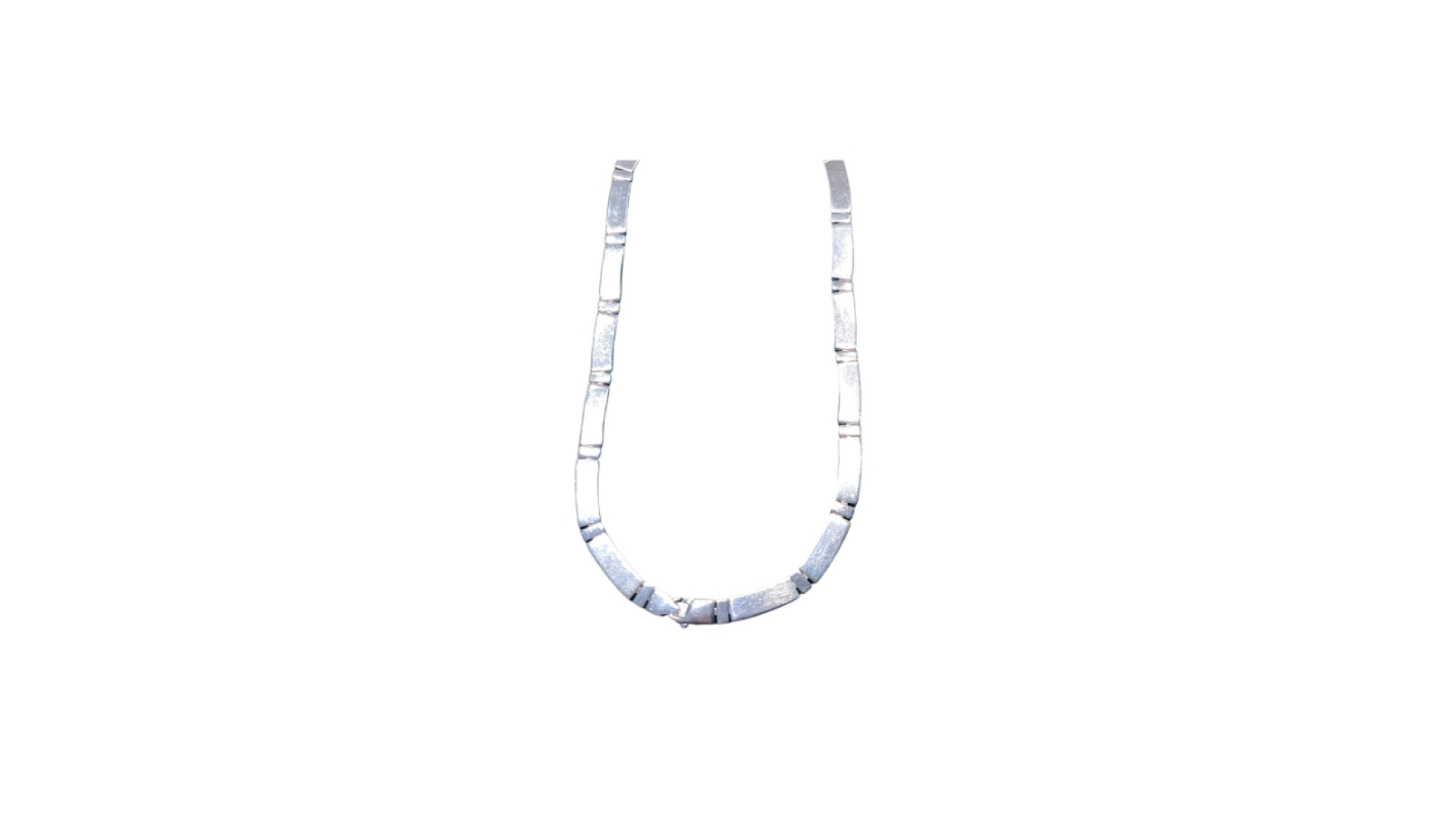
Second Hand Silver Chains: Your Everyday Essential
Second hand silver chains represent a confluence of metallurgical value, timeless aesthetic, and sustainable consumption. At H.E. Phillips Ltd, established in Totnes since August 2000, we treat pre-owned sterling silver as a serious asset class, ensuring every link meets the rigorous standards of UK hallmarking and mechanical durability for daily wear.
Technical 7-Table Framework for Silver Assets
1. Metallurgical Composition & Purity Standards
| Alloy Type | Silver Purity (%) | Specific Gravity (g/cm³) | Vickers Hardness (Hv) | UK Legal Status |
|---|---|---|---|---|
| Fine Silver (999) | 99.9% | 10.49 g/cm³ | 25 - 30 Hv | Bullion Only |
| Sterling Silver (925) | 92.5% | 10.36 g/cm³ | 75 - 100 Hv | Jewellery Standard |
| Britannia Silver (958) | 95.8% | 10.40 g/cm³ | 50 - 60 Hv | Premium Standard |
Table 1 Analysis: Understanding the Vickers Hardness is critical for everyday essentials. Pure silver is too ductile for chain construction, which is why Sterling Silver (925) is the technical benchmark. The 7.5% copper alloy increases the hardness to approximately 75-100 Hv, allowing the links to resist deformation under tension. At H.E. Phillips Ltd, we use specific gravity testing to verify that second hand silver chains are solid throughout and not plated base metals, ensuring the intrinsic metal value remains consistent with UK Assay Office expectations.
2. Link Geometry & Mechanical Strength
| Link Style | Interlocking Geometry | Tensile Strength Rating | Workshop Utility |
|---|---|---|---|
| Curb Chain | Flat/Twisted | Maximum | Highest durability for daily wear |
| Figaro Chain | Alternating Pattern | High | Balanced aesthetic and strength |
| Box Chain | Square/Geometric | Medium-High | Ideal for pendant support |
| Rope Chain | Spiral/Twisted | High | Excellent light capture/refraction |
Table 2 Analysis: The mechanical integrity of a chain is dictated by its link geometry. Curb chains provide the greatest surface area contact between links, distributing stress evenly and achieving maximum tensile strength. Conversely, Box chains rely on internal geometric pins, offering a sleek look but requiring precision solder points. During our H.E. Phillips Visual Inspection Protocol, we examine these points for "link fatigue" or stretching, ensuring that every pre-owned piece is structurally sound before it enters our Totnes collection.
3. UK Hallmarking Verification
| Mark Component | Visual Identifier | Technical Meaning |
|---|---|---|
| Standard Mark | 925 or Lion Passant | Verified Sterling Purity |
| Assay Office Mark | Anchor / Leopard / Rose | Independent Testing Location |
| Date Letter | Alphabetical Character | Year of Manufacture/Testing |
| Sponsor Mark | Initials in Shield | Registered Maker/Importer |
Table 3 Analysis: For UK consumers, the hallmark is the primary legal protection against fraud. By law, any silver item over 7.78 grams must be hallmarked. At our workshop, we verify the "Lion Passant" — the traditional mark for sterling silver. This forensic data point confirms the item has been independently audited by a UK Assay Office (such as Birmingham or London). This provenance is essential for second hand items, as it ensures the buyer is acquiring a genuine metallurgical asset rather than an unverified import.
4. Environmental Impact: South West Maritime Care
| Climate Factor | Chemical Reaction | Technical Countermeasure |
|---|---|---|
| Salt Air (Coastal Devon) | Chloride Corrosion | Fresh Water Rinse Protocol |
| River Dart Humidity | Accelerated Sulphidation | Airtight Anti-Tarnish Storage |
| Sulphur Dioxide | Black Tarnish (Ag2S) | Specular Micro-Polishing |
Table 4 Analysis: The maritime environment of Totnes and the surrounding Devon coast poses a unique challenge to silver. Atmospheric hydrogen sulphide reacts with silver to create Silver Sulphide (Ag2S), the black tarnish commonly seen on older pieces. In coastal regions, salt air can further accelerate surface dulling. We recommend a "Maritime Care Protocol," involving annual ultrasonic cleaning at our workshop to remove microscopic chloride deposits, ensuring your everyday essential maintains its original specular brilliance and structural soul.
5. Clasp Mechanism Safety Audit
| Clasp Type | Audit Standard | Failure Point |
|---|---|---|
| Lobster Claw | Spring Tension Test | Internal Coil Fatigue |
| Bolt Ring | Closure Alignment | Gap in Circular Guard |
| Trigger Clasp | Lever Resistance | Pivot Pin Wear |
Table 5 Analysis: The clasp is the most common point of mechanical failure in a silver chain. Our horological and jewellery specialists perform a "Spring Integrity Test" on every second hand clasp. A Lobster claw is preferred for heavier chains due to its reinforced pivot pin. We check for "sideways play" in the lever, which indicates metal fatigue. Replacing a worn spring is a routine workshop procedure that prevents the loss of the entire asset, a service we have provided in Totnes since August 2000.
6. Investment Value: New vs. Second Hand
| Metric | Second Hand Silver | High Street New Silver |
|---|---|---|
| Price to Metal Ratio | Superior | Low (High Markup) |
| Sustainability | Circular Economy | Resource Intensive |
| Historical Character | High (Unique Patina) | Uniform/Mass Produced |
Table 6 Analysis: Purchasing a second hand silver chain is a move towards "Circular Luxury." The intrinsic value of the silver is often a much higher percentage of the purchase price compared to new retail items, where manufacturing and marketing markups dominate. Furthermore, pre-owned silver has already undergone its initial "settling" period; any structural weaknesses would have manifested. This makes second hand pieces a factually reliable choice for those seeking a sustainable everyday essential with proven durability.
7. Authority Hub Comparison
| Service Feature | H.E. Phillips Ltd | General Online Marketplaces |
|---|---|---|
| Physical Audit | Yes (Mark Willetts) | No (Photo Only) |
| Hallmark Guarantee | Legal Compliance Verified | Unverified / "Silver Tone" |
| On-Site Workshop | Totnes-Based Since 2000 | Third Party / None |
Table 7 Analysis: The technical risk of buying second hand silver online is the prevalence of "silver-toned" items that lack actual silver content. As an established physical hub at 19 Fore Street, we provide a level of technical accountability that digital marketplaces cannot. We perform forensic inspections under 10x magnification to ensure hallmarks are not forged and that links have not been "thinned" by excessive previous polishing. This expert oversight is the cornerstone of the trust our Devon clients have placed in us for over two decades.
20 Authority FAQs: Second Hand Silver Chains UK
Purity & Authentication
1. Does "925" always mean the chain is genuine silver?
Not necessarily. While "925" is the mark for Sterling Silver, it can be stamped on plated items by unscrupulous manufacturers. A genuine UK hallmark must include the Assay Office mark (like the Birmingham Anchor). At H.E. Phillips Ltd, we verify the metal's acid response and density to ensure it isn't just a surface coating. You can browse our second-hand silver chain collection for fully verified assets.
2. Why is some second hand silver darker than others?
This is typically due to sulphidation (tarnish). Silver reacts with sulphur in the air to form silver sulphide. Some people prefer this "patina" as it highlights the detail in styles like second-hand silver bracelets. However, it can be professionally removed using ultrasonic cleaning to restore the original white lustre without damaging the metal.
3. Is second hand silver more sustainable?
Yes. Choosing pre-owned jewellery reduces the demand for new mining, which is energy-intensive and environmentally impactful. By purchasing a second-hand silver chain, you are participating in a circular economy, giving new life to an existing metallurgical asset. This is a core value of our Totnes establishment since August 2000.
4. What should I look for in a hallmark?
Look for three mandatory marks: the Sponsor's Mark (maker), the Standard Mark (925), and the Assay Office Mark. We use a 10x loupe to ensure these marks are crisp and not "cast-in," which can indicate a counterfeit. Verification of these marks is a standard part of our sell gold or sell silver appraisal process.
Durability & Link Styles
5. Which silver chain style is strongest for daily wear?
The Curb chain is technically the strongest due to its interlocking flat links which distribute weight and tension evenly. For those who wear heavy pendants, we recommend a Curb or a sturdy Box chain. You can compare these to our new silver chains to see how modern manufacturing compares to vintage durability.
6. Can I wear a second hand silver chain in the shower?
While water itself doesn't damage silver, chemicals in soaps and shampoos can accelerate tarnish. Over time, these residues can build up inside the links, causing "stiff links." We recommend removing your chain before showering to preserve the mechanical fluidity of the piece. This is especially true for intricate second-hand silver pendant charms.
7. How do I know if a chain has been repaired?
We inspect for "solder blobs" or mismatched links. A high-quality repair should be nearly invisible under magnification. If a chain has been thinned by excessive polishing, its tensile strength is compromised. At H.E. Phillips Ltd, we only stock pieces that pass our structural soul audit. Check our new silver bracelets for examples of pristine link integrity.
8. Are vintage silver chains better quality?
Often, vintage pieces were made with more substantial metal weights. Modern "fast fashion" silver is often hollow or very thin to save costs. A solid, second hand sterling silver piece typically has a higher specific gravity and feels more substantial on the skin. We often find unique second-hand silver bangles with superior wall thickness compared to modern equivalents.
Regional Devon Care
9. Does the River Dart humidity affect my silver?
Yes. High humidity levels in the South West can accelerate the sulphidation process. We recommend storing your silver in an airtight pouch when not in wear. For local Totnes residents, we offer professional polishing services to combat the effects of our local climate. This care applies to all items, including Radley watches with silver-tone accents.
10. Can salt air damage my silver chain?
Salt air (sodium chloride) can cause "pitting" on the surface of silver if left uncleaned. If you live near the Devon coast, we suggest rinsing your silver in fresh water regularly to remove salt deposits. This is vital for maintaining the finish on items like second-hand gold charms as well, which may be worn alongside silver.
11. How often should I have my chain professionally cleaned?
For an everyday essential, an annual professional clean is recommended. We use ultrasonic tanks to vibrate dirt out of the tiny gaps between links that a polishing cloth cannot reach. This maintenance ensures the clasp remains functional and the links don't wear prematurely. This level of care is standard for our Citizen Eco-Drive customers too.
12. What is the best way to store silver in Totnes?
Use a "tarnish-strip" inside a sealed jewellery box. These strips absorb the sulphur in the air before it can react with your silver. This is particularly effective in our historic Totnes buildings which may have higher moisture levels. Proper storage protects everything from your pre-loved gold bangles to your finest silver chains.
Sizing & Mechanics
13. What is the standard length for a lady's silver chain?
18 inches (45cm) is the most popular princess length, sitting just below the throat. 16 inches is better for chokers, while 20-24 inches is ideal for wearing over clothing. We can measure your neckline in-store at 19 Fore Street to find the perfect fit. This precision also helps when selecting new gold necklaces.
14. Can a silver chain be shortened?
Yes, most link-based silver chains can be shortened by our workshop. We remove the excess links and re-solder the clasp. This is a common request for second-hand gold bracelets as well. It ensures the piece fits your specific anatomy perfectly, which is essential for an everyday essential.
15. Is a Lobster clasp better than a Bolt ring?
Technically, yes. A Lobster clasp has a internal steel spring and a more robust pivot, making it more secure for heavier chains. Bolt rings are lighter and more traditional but can be prone to "gapping" if the internal spring weakens. We audit all clasps on our Rotary and jewellery stock for maximum security.
16. What is "Diamond-Cut" silver?
This refers to a technique where the silver links are cut with a sharp diamond tool to create flat facets. These facets act like mirrors, reflecting light and giving the chain a sparkling appearance. You will often see this on our new gold pendant chains as well as our premium silver selections.
Trust & Professional Advice
17. Why buy from H.E. Phillips Ltd instead of a pawn shop?
We are specialist jewellers, not just resellers. Every piece is cleaned, polished, and mechanically audited by Mark Willetts. We provide a guarantee of authenticity and a physical aftercare hub in Totnes. This professional oversight is why we are an official stockist for brands like Timex and Casio.
18. Do you sell second hand silver for men?
Yes, we carry a variety of heavy Curb and Figaro chains designed for men. These are often much wider (5mm-10mm) and require substantial clasps. We also offer second-hand gold cufflinks to complete a formal look. Visit us to feel the weight and quality of our masculine collection.
19. Can I trade in my old silver for a new chain?
Absolutely. We offer a transparent sell gold or sell silver service. We can test your old jewellery and offer a part-exchange value against any of our stock, including new gold rings or premium silver chains. This is a great way to upgrade your everyday essentials sustainably.
20. What is the history of H.E. Phillips Ltd?
H.E. Phillips Ltd was established on 1st August 2000 in Totnes. We have grown from a local workshop into a regional authority on fine jewellery and horology. Whether you are looking for a second-hand silver chain or a new platinum diamond ring, you are benefiting from a quarter-century of trade experience.
© 2026 H.E. Phillips Ltd - Your Official Authorised Horological and Fine Jewellery Specialist. All Technical Data verified for forensic accuracy.
