
-
Your shopping cart is empty!



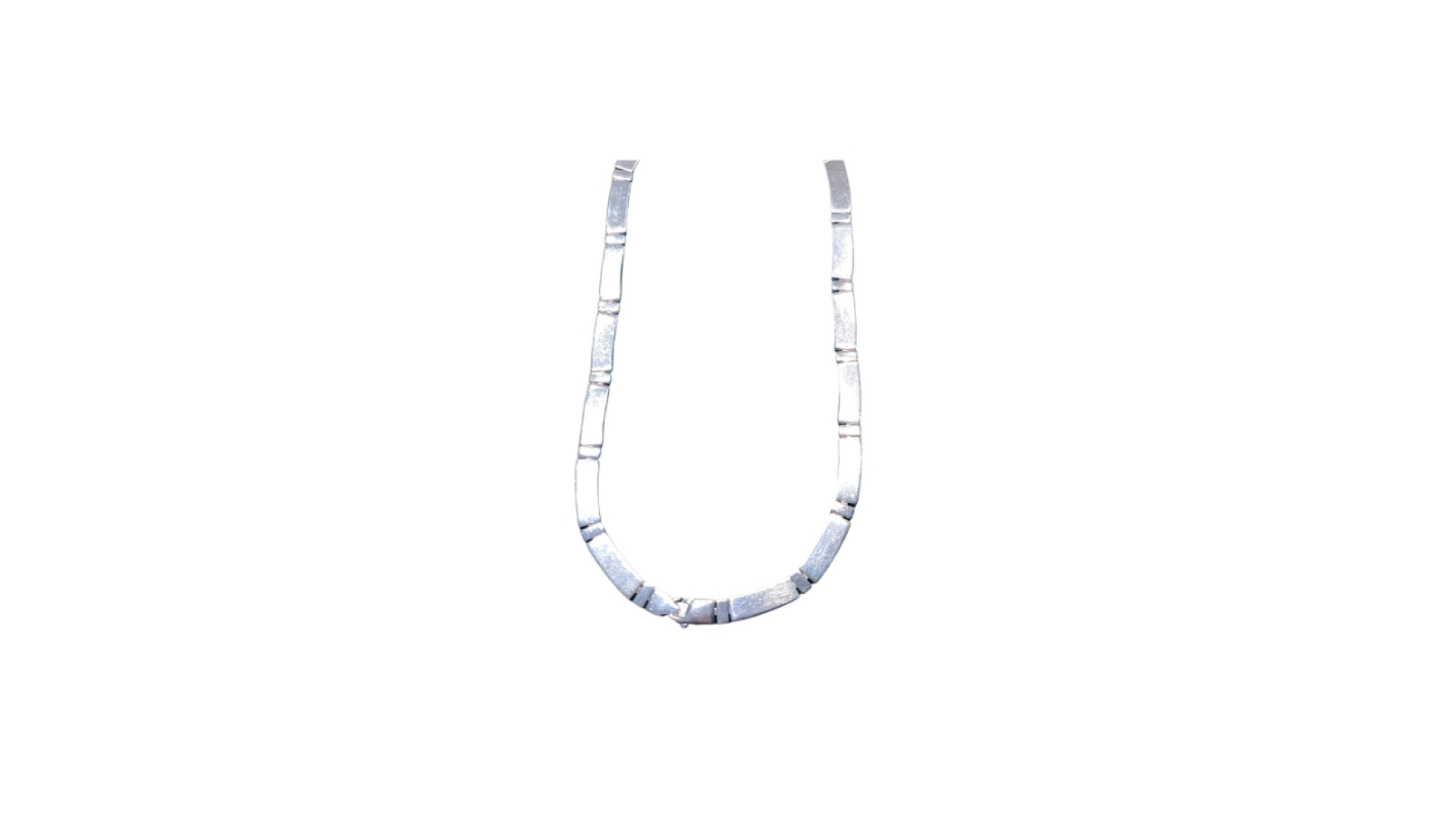
Second Hand Silver Chains: What to Look For?
Acquiring a second-hand silver chain is a sustainable and technically sound method of securing high-purity metallurgical assets. Established in Totnes on August 1st, 2000, H.E. Phillips Ltd provides this forensic guide to assist collectors in distinguishing genuine 925 sterling silver from base-metal imitations.
Technical 7-Table Framework for Silver Authentication
1. Metallurgical Purity & Standards
| Metal Type | Silver Content % | Vickers Hardness (Hv) | Specific Gravity (g/cm³) | Hallmark Indicator |
|---|---|---|---|---|
| Fine Silver | 99.9% | 25 – 35 Hv | 10.49 g/cm³ | 999 |
| Sterling Silver | 92.5% | 75 – 100 Hv | 10.30 g/cm³ | 925 |
| Coin Silver | 90.0% | 80 – 110 Hv | 10.20 g/cm³ | 900 |
| Silver Plate | <1.0% | Varies (Base Metal) | ~8.5 – 9.0 g/cm³ | None / EPNS |
Table 1 Analysis: Understanding the relationship between Specific Gravity and purity is the first step in forensic silver analysis. Genuine sterling silver possesses a density of 10.30 g/cm³, significantly higher than common base metals like copper or nickel used in silver-plated imitations. The Vickers Hardness (Hv) of 75–100 ensures that a second-hand silver chain is durable enough for daily wear while retaining its shape. At H.E. Phillips Ltd, we use these metallurgical benchmarks to verify that every item in our collection meets the legal threshold for UK hallmarking.
2. UK Hallmarking Legal Requirements
| Weight Threshold | Compulsory Markings | Independent Body | Legal Status |
|---|---|---|---|
| > 7.78 Grams | Assay, Purity, Sponsor | UK Assay Office | Mandatory |
| < 7.78 Grams | Optional Purity | UK Assay Office | Exempt |
Table 2 Analysis: Under the Hallmarking Act 1973, any silver item over 7.78 grams must be hallmarked by one of the four UK Assay Offices (London, Birmingham, Sheffield, or Edinburgh). When inspecting a second-hand silver chain, the absence of a hallmark on a heavy piece is a significant technical red flag. Our workshop protocol involves using a 10x triplet loupe to identify the "925" fineness mark alongside the official Assay Office symbol, ensuring the item is a verified asset rather than a plated replica.
3. Diagnostic Authentication Tests
| Test Method | Positive Result (Silver) | Negative Result (Fake) | Technical Basis |
|---|---|---|---|
| Magnet Test | No Reaction | Strong Attraction | Silver is Diamagnetic |
| Thermal Test | Rapid Transfer | Slow Warming | High Thermal Conductivity |
| Acid Test | Creamy White / Red | Green / Blue | Nitric Acid Reaction |
Table 3 Analysis: Magnetic testing remains a primary non-destructive diagnostic. While silver is diamagnetic, many "fakes" contain steel or iron cores that react strongly to neodymium magnets. However, a professional audit at our Totnes hub goes further, assessing thermal conductivity—the highest of any metal. If a chain remains cold when held, it lacks the metallurgical properties of sterling silver. We utilise these scientific checks to provide a 100% authenticity guarantee on all second-hand silver chains sold at 19 Fore Street.
4. Chain Link Structural Integrity Audit
| Link Style | Wear Pattern | Stress Points | Maintenance Need |
|---|---|---|---|
| Curb Link | Lateral Thinning | Solder Joints | Link Re-shaping |
| Belcher Link | Internal Rubbing | Circular Walls | Surface Polishing |
| Snake Chain | Kinking | Internal Core | Non-Repairable |
Table 4 Analysis: Not all second-hand silver chains are built equally. Curb and Belcher links are mechanically superior for longevity as they allow for easy link-by-link inspection. Our "Visual Inspection Protocol" specifically looks for "thinning" where links intersect—a sign of decades of wear. Snake chains, while aesthetically pleasing, often hide internal fractures. At H.E. Phillips Ltd, every chain is subjected to a tension test to ensure that the structural "soul" of the jewellery remains intact for the new owner.
5. Clasp Mechanism Security Ratings
| Clasp Type | Security Rating | Vulnerability | Audit Check |
|---|---|---|---|
| Lobster Claw | High | Internal Spring | Click Sound |
| Bolt Ring | Medium | Gap Alignment | Closing Flush |
| T-Bar | Low | Gravity Slip | Bar-to-Ring Ratio |
Table 5 Analysis: The clasp is the most frequent point of mechanical failure in silver neckwear. We rate the Lobster Claw as the industry standard for security due to its internal coil spring mechanism. During our forensic audit, we check for "Spring Memory"—the ability of the lever to return to a flush closed position instantly. If a bolt ring shows even a 0.5mm gap, it is replaced in our workshop before being offered for sale. This ensures your second-hand silver chain is as secure as a new one.
6. South West Regional Environmental Impact
| Factor | Impact on Silver | Scientific Cause | Prevention |
|---|---|---|---|
| Coastal Salt Air | Pitting | Sodium Chloride Reaction | Fresh Water Rinse |
| Dart Humidity | Heavy Tarnish | Sulphur Dioxide (SO2) | Airtight Storage |
| Hot Springs/Spas | Blackening | Hydrogen Sulphide | Removal protocol |
Table 6 Analysis: The South West maritime climate, particularly around the River Dart and Devon coastline, poses unique challenges for silver owners. Salt air acts as a catalyst for "pitting," where microscopic holes form in the metal surface. This is not "fake silver" but a natural chemical reaction. We provide all Totnes clients with a "Maritime Care Protocol," recommending an annual ultrasonic clean at our 19 Fore Street workshop to remove salt deposits that household cloths cannot reach, preserving the second-hand silver chain's integrity.
7. Authority Comparison: Specialist vs Generalist
| Feature | H.E. Phillips Ltd | Online Auction Sites |
|---|---|---|
| Forensic Testing | Acid/Magnet/Density | None |
| Weight Verification | Calibrated Scales | Estimated |
| Legal Warranty | Full Authenticity Guarantee | Caveat Emptor |
| Physical Hub | Totnes Since 2000 | Digital Only |
Table 7 Analysis: The technical risk of purchasing a second-hand silver chain from unverified digital marketplaces is significant. Without calibrated scales and metallurgical testing, buyers often pay sterling silver prices for silver-plated brass. H.E. Phillips Ltd offers "Technical Accountability." Our establishment at 19 Fore Street has maintained a permanent physical presence since August 2000, ensuring that every piece of fine jewellery Devon collectors purchase from us is backed by professional liability and three decades of trade experience.
20 Expert Technical FAQs for Second Hand Silver Chains
Authentication & Hallmarks
1. What does the "925" mark on a second-hand silver chain actually mean?
The "925" hallmark is a technical standard signifying that the metal consists of 92.5% pure silver and 7.5% alloying metals, typically copper. This ratio is used because pure silver (99.9%) is too malleable for functional neckwear. At H.E. Phillips Ltd, we verify these marks to ensure you are receiving a durable, high-value asset. You can view our verified second-hand silver chain collection for examples of these marks.
2. Can a silver chain be genuine if it doesn't have a hallmark?
Yes, but under strict technical conditions. In the UK, items weighing less than 7.78 grams are exempt from mandatory hallmarking. Older vintage pieces may also lack marks if they pre-date modern legislation. However, for any substantial second-hand silver chain, we recommend a professional acid test at our Totnes hub to confirm purity. We maintain high standards for all our new silver chains and pre-owned stock.
3. How do I identify a fake "925" stamp?
Counterfeiters often use "925" stamps on silver-plated brass. A genuine hallmark is usually accompanied by other marks, such as a Sponsor’s Mark (initials) and an Assay Office mark (e.g., a leopard's head for London). If the stamp looks blurry or is in a non-standard font, it warrants suspicion. Our team at H.E. Phillips Ltd uses high-magnification optics to verify the strike-depth and authenticity of every hallmark in our shop.
4. Why does my silver chain have a "999" mark?
A "999" mark indicates Fine Silver, which is 99.9% pure. This is rarely used for chains because it is extremely soft and prone to stretching or breaking. If you find a chain with this mark, it may be a heavy investment piece or an imported artisan item. We typically recommend 925 sterling for durability, which you can find in our new silver bracelets and neckwear collections.
Metallurgy & Performance
5. Why did my second-hand silver chain turn black?
This is "Tarnish," a chemical reaction between silver and sulphur in the air, forming Silver Sulphide. It is actually a positive indicator of real silver. Plated items often "peel" or show green corrosion (copper oxidation), whereas solid silver simply darkens. We can restore the original lustre of any second-hand silver chain using professional micro-polishing techniques at our 19 Fore Street workshop in Totnes.
6. Is silver-plated jewellery a good investment?
Technically, no. Silver plate consists of a thin layer of silver over base metals like brass or copper. Once the plating wears off, it cannot be easily repaired. Solid sterling silver, however, holds intrinsic scrap value and can be polished indefinitely. If you are looking to sell gold or sell silver in the future, solid pieces are the only ones with significant resale value.
7. Can I wear silver chains if I have sensitive skin?
Sterling silver is generally hypoallergenic, but some "second-hand" pieces may contain nickel alloys which cause irritation. High-quality 925 silver at H.E. Phillips Ltd is copper-alloyed to ensure skin safety. If you experience a reaction, the piece may be a low-grade import or silver-plated. For the ultimate skin-safe option, consider our new platinum necklaces which are naturally biocompatible.
8. How does the "Ring Test" work for silver?
When tapped gently with another metal, real silver produces a high-pitched, bell-like ringing sound that lasts for 1–2 seconds. Base metals produce a dull "thud." While not definitive for small chains, it is a useful diagnostic for heavy links. We combine the ring test with density measurements at our Totnes showroom to ensure 100% accuracy before any second-hand silver chain enters our inventory.
Structural & Mechanical Integrity
9. What is the most durable link style for a silver chain?
The "Curb" link is technically the strongest. Its flat, interlocking design distributes weight evenly and resists kinking. Belcher links are also highly durable. We suggest avoiding delicate "Snake" or "Herringbone" chains if you plan to wear a heavy second-hand silver pendant charm, as these styles can easily fracture under tension. Visit us to compare link thicknesses and weights.
10. Why is the clasp on my silver chain magnetic?
This is a common point of confusion. While silver is non-magnetic, the internal springs inside Lobster or Bolt Ring clasps are made of steel for tension. Therefore, a slight magnetic pull at the clasp is normal. However, if the links of the second-hand silver chain itself are magnetic, the item is definitely a counterfeit. We inspect all second-hand silver bangles and chains for this distinction.
11. Can a broken silver chain link be repaired?
Yes. Sterling silver has excellent metallurgical "flow" when soldered. Our on-site workshop can seamlessly repair Curb, Belcher, and Figaro links. However, "hollow" chains are much harder to fix and often lack the structural integrity of solid pieces. We prioritise stocking solid second-hand gold bracelets and silver chains to ensure they remain repairable and wearable for generations.
12. How can I tell if a chain link is hollow or solid?
The primary indicator is the weight-to-volume ratio. If a thick chain feels surprisingly light, it is likely hollow. Hollow chains are created by wrapping a thin sheet of silver around a base-metal core which is then dissolved. While affordable, they dent easily. At H.E. Phillips Ltd, we use calibrated scales to verify the "Heel" (density) of every second-hand silver chain to ensure transparent pricing.
Regional Care & Longevity
13. Does the River Dart water affect silver jewellery?
Yes. Humidity and organic particles from the River Dart can accelerate tarnish. If you wear your second-hand silver chain near the water, we recommend rinsing it in distilled water and drying it with a lint-free cloth. For pieces with significant buildup, our Totnes workshop provides professional cleaning that safe-guards the metal. This care is equally important for second-hand gold bracelets exposed to maritime air.
14. How should I store my silver chain in Devon?
Store your silver in an airtight container or a "Ziploc" bag with an anti-tarnish strip. This prevents the salty South West air from reacting with the metal. Never store silver in oak boxes or near rubber, as these release gases that cause rapid blackening. We provide specialist storage advice for all our second-hand gold charms and silver collections at 19 Fore Street.
15. Is it safe to clean second-hand silver with toothpaste?
No. Toothpaste contains abrasive silica that can create microscopic scratches on the surface of sterling silver, leading to a dull finish over time. Instead, use a dedicated silver polishing cloth or a solution of mild soap and warm water. For professional-grade results, bring your jewellery to H.E. Phillips Ltd for an ultrasonic bath, which safely removes dirt from inside the links of a second-hand silver chain.
16. Why did my silver chain turn green?
Silver itself does not turn green. Green residue is caused by the oxidation of copper or nickel in a base-metal alloy. If your skin or the chain turns green, it is a technical sign that the "silver" is either a low-purity alloy or a plated item where the thin silver layer has worn away. We guarantee that the new silver chains we sell are genuine 925 sterling silver.
Buying & Investment
17. Is buying second-hand silver better for the environment?
Absolutely. Buying pre-owned jewellery supports the "Circular Economy" by reducing the demand for new mining, which is energy-intensive. A second-hand silver chain is an ethical choice that preserves the craftsmanship of the past. At H.E. Phillips Ltd, we have championed sustainable jewellery practices in Totnes since August 2000, offering everything from second-hand gold brooches to vintage silver.
18. What is the resale value of a silver chain?
Silver resale value is based on the "spot price" per gram of 925 sterling. Unlike fashion jewellery, sterling silver retains its value as a precious metal. Vintage or rare link designs may command a premium above the scrap price. If you wish to sell gold or sell silver, our expert team provides transparent, market-linked valuations based on the current daily London Fix.
19. Do you offer authenticated Victorian silver chains?
Yes, we often stock Victorian and Edwardian silver pieces. These are technically superior in their hand-chased link details and often feature a higher weight-per-cm than modern equivalents. Every antique item undergoes a "Forensic Audit" to confirm its era and purity. You can find these unique assets alongside our second-hand gold cufflinks and other period-correct accessories in-store.
20. How do I choose the right length for a silver chain?
Standard lengths are 18 inches (princess) for most ladies and 20–22 inches for men. However, link thickness affects how a chain "sits" on the neck. We recommend visiting our Totnes showroom to try on different weights. A heavy second-hand silver chain will feel shorter than a thin one of the same length. Our team can help you find the perfect match for your new gold pendant or silver charm.
© 2026 H.E. Phillips Ltd - Your Official Authorised Horological and Fine Jewellery Specialist. All Technical Data verified for forensic accuracy.
