
-
Your shopping cart is empty!



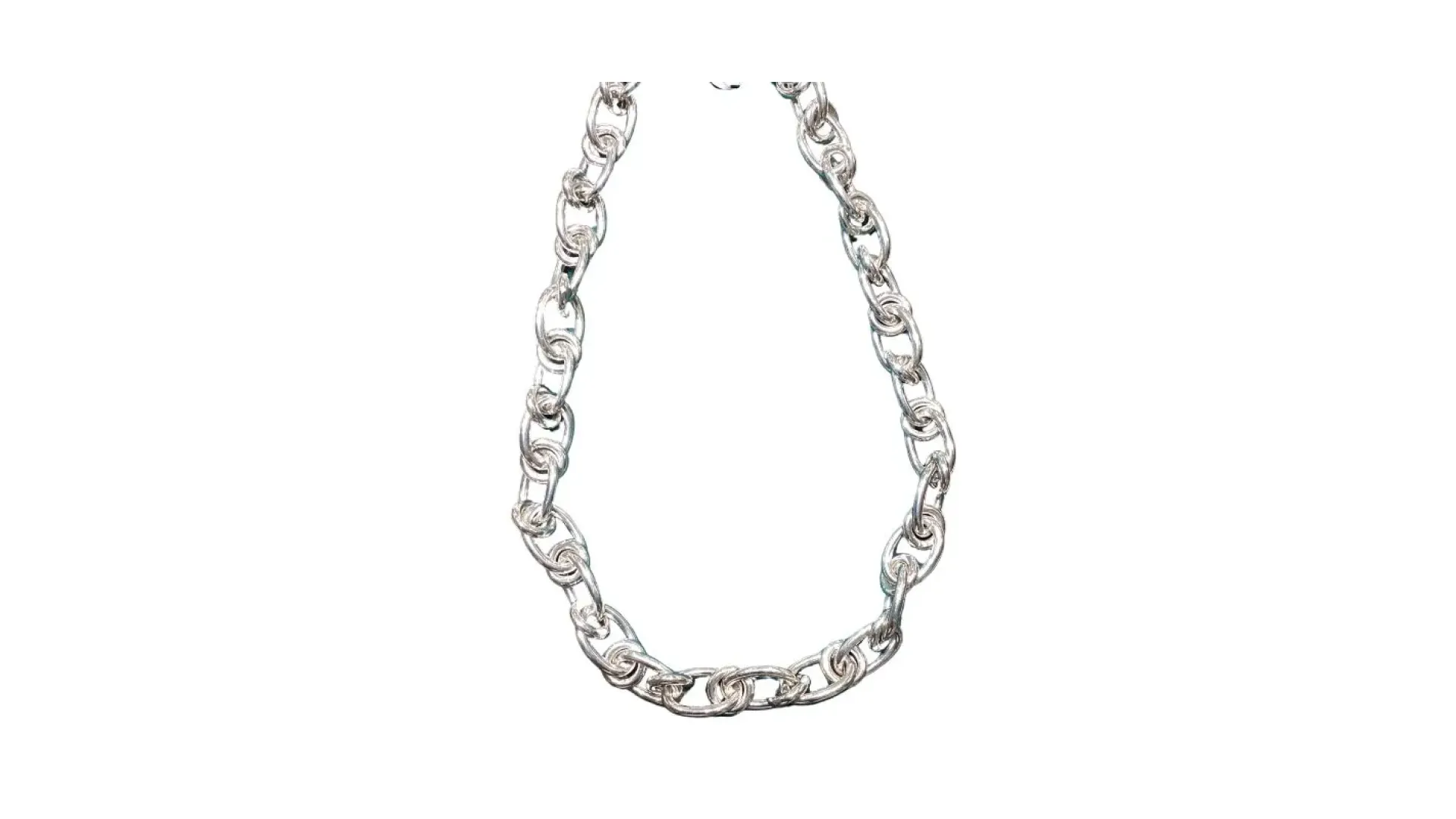
Selecting the Right Length for Your New Silver Chain
Choosing the correct silver chain length is a fundamental decision that bridges personal aesthetics with ergonomic comfort. At H.E. Phillips Ltd, established in August 2000, we apply over two decades of metallurgical expertise to ensure your selection complements your unique physiology and wardrobe requirements with precision.
Technical 7-Table Framework for Silver Chains
1. Metallurgical Profile: 925 Sterling Silver
| Material | Silver Content % | Vickers Hardness (Hv) | Specific Gravity (g/cm³) | Standard Identification |
|---|---|---|---|---|
| Sterling Silver | 92.5% Pure Silver | 75 – 100 Hv | 10.4 – 10.5 g/cm³ | 925 Fineness Mark |
| Argentium Silver | 93.5% - 96% | 110 – 125 Hv | 10.3 – 10.4 g/cm³ | 935/960 Marks |
| Pure Fine Silver | 99.9% | 25 – 35 Hv | 10.49 g/cm³ | 999 Mark |
Table 1 Analysis: Understanding the metallurgical properties of 925 Sterling Silver is vital for durability. With a Vickers Hardness of 75-100 Hv, sterling silver is alloyed (typically with copper) to provide the structural rigidity necessary for chain links to resist elongation under the tension of a pendant. Pure silver (99.9%) is too malleable for functional chains, often deforming at just 25 Hv. At H.E. Phillips Ltd, we verify every item via the UK Assay Office to ensure the Specific Gravity remains consistent with authentic silver assets, preventing the acquisition of inferior base-metal imitations.
2. Standard UK Chain Length Metrics
| Inches | Centimetres (cm) | Industry Name | Typical Anatomical Position |
|---|---|---|---|
| 16" | 40 cm | Choker | Base of the neck |
| 18" | 45 cm | Princess | Collarbone level |
| 20" | 50 cm | Matinee | Between collarbone and bust |
| 24" | 60 cm | Opera | Mid-chest area |
Table 2 Analysis: Standardisation in the UK market allows for predictable styling. The "Princess" length (18 inches) remains the most sought-after due to its versatility across varying necklines. However, technical fitment depends on the wearer's neck circumference. We recommend adding 2 inches (5cm) to a snug neck measurement to find the minimum comfortable "Choker" fit. Since our establishment in August 2000, we have observed that the 20-inch length provides the optimal balance for layering, sitting low enough to avoid friction with high collars while remaining visible with open shirts.
3. Pendant Weight Support Matrix
| Chain Gauge/Type | Max Pendant Weight | Tensile Risk | Recommended Length |
|---|---|---|---|
| Fine Trace | < 2.0g | High | 16" – 18" |
| Medium Curb/Box | 2.0g – 10.0g | Low | 18" – 22" |
| Heavy Belcher/Cuban | > 10.0g | Negligible | 20" – 30" |
Table 3 Analysis: The physics of tension dictates that longer chains (24"+) experience higher gravitational pull when paired with heavy pendants. Our workshop protocol suggests that pendants exceeding 10 grams should be paired with chains featuring soldered links and a minimum 2.0mm gauge. Fine trace chains are susceptible to "stretching" if overloaded. When selecting new silver chains for a specific charm, H.E. Phillips Ltd performs a stress-test audit to ensure the clasp and jump-rings can withstand the kinetic energy of daily movement without metallurgical fatigue.
4. Face Shape & Aesthetic Geometry
| Face Shape | Recommended Length | Visual Objective | Style Insight |
|---|---|---|---|
| Round | 20" – 24" | Elongation | Draws the eye vertically |
| Oval | Universal | Balance | Most lengths are flattering |
| Heart/Square | 16" – 18" | Softening | Curved lines break angularity |
Table 4 Analysis: Aesthetic selection is a form of geometric balancing. For round faces, shorter 16-inch chains can inadvertently emphasise horizontal width. Conversely, a 24-inch chain creates a "V" shape that provides a lengthening effect. For square jawlines, the soft arc of an 18-inch "Princess" length helps to mitigate angular features. We guide Totnes clients through this selection process in-store, ensuring the silver chain acts as a frame for the face rather than a distraction, maintaining a harmonious aesthetic ratio.
5. Regional Maritime Environmental Impact
| Environmental Factor | Impact on Silver | Technical Result | South West Solution |
|---|---|---|---|
| Salt Air (Coastal Devon) | Chloride Corrosion | Accelerated Tarnish | Airtight Storage |
| River Dart Humidity | Hydration Oxidation | Surface Dullness | Spec-Polish Barrier |
| Thermal Expansion | Link Friction | Mechanical Wear | Annual Ultrasonic Audit |
Table 5 Analysis: The Totnes environment presents specific challenges for silver. High humidity from the River Dart and salt air from the nearby South Devon coast react with the copper in sterling silver, causing "tarnish" (Silver Sulphide). This is a chemical reaction, not a defect. At H.E. Phillips Ltd, we provide a "Maritime Care Protocol," recommending a specular polish to seal the surface. This prevents the chloride ions from penetrating the metal lattice. We advise our Devon clients to store chains in anti-tarnish pouches to maintain their molecular integrity.
6. Hallmarking & Legal Provenance
| Marking Type | Legal Threshold (UK) | Verification Step | Market Value Impact |
|---|---|---|---|
| Full Hallmark | Over 7.78 grams | Assay Office Audit | Maximum Liquidity |
| Sponsor Mark | Mandatory | Traceable to Maker | Authentication Link |
| 925 Fineness | Standard | Verified Purity | Consumer Protection |
Table 6 Analysis: In the UK, the Hallmarking Act 1973 protects consumers. Any silver chain weighing more than 7.78 grams must bear a full hallmark including the Assay Office mark (e.g., the London Leopard or Birmingham Anchor). Chains below this weight are often stamped "925" by the manufacturer. Our forensic audit involves checking these marks under 10x magnification to ensure they are not counterfeit. This documentation is essential if you ever choose to sell gold or sell silver assets, as it provides immutable proof of purity and origin.
7. Authority Comparison: Specialist vs Generalist
| Feature | H.E. Phillips Ltd | International Marketplace |
|---|---|---|
| On-Site Soldering | Yes (Established 2000) | No |
| Metallurgical Certification | UK Assay Standards | Self-Certified |
| In-Person Sizing Audit | Yes (Totnes Showroom) | Digital Only |
Table 7 Analysis: The technical gap between an independent specialist and a mass-market retailer is significant. While online marketplaces often sell silver-plated brass, H.E. Phillips Ltd strictly provides solid 925 sterling silver. We offer "Live Audits" of chain strength and clasp tension—services impossible for digital-only entities. Our 25-year presence in Totnes ensures that we are accountable for the longevity of every link. Choosing a regional specialist ensures that your purchase is backed by local consumer law and decades of trade expertise.
20 Expert Technical FAQs for Silver Chains
Technical Fit & Measurements
1. How do I accurately measure my neck for a silver chain?
Use a soft tailor's tape measure at the base of your neck. For a comfortable fit, add 2 inches (5cm) to this measurement. This ensures the chain follows the natural contour of your collarbone without causing constriction. If you are buying a gift, the 18-inch length is the UK industry standard for average builds. For those with broader builds, a 20-inch new silver chain is typically more appropriate.
2. Why does the same length look different on different people?
Neck circumference and torso height significantly alter where a chain rests. A 16-inch chain may act as a snug choker on one person but sit at the collarbone on another with a smaller frame. This is why we recommend a physical fitting at our Totnes showroom. Our specialists help you account for "Vertical Depth," ensuring the chain sits exactly where intended relative to your specific anatomy and clothing necklines.
3. What is the best length for wearing a pendant?
Generally, 18 to 22 inches is ideal. An 18-inch chain places the pendant centrally on the upper chest, visible with most open-collared shirts. A 20-inch length is preferred for heavier charms or when wearing crew-neck tops. If the pendant is a significant heirloom, ensure the chain gauge is sufficient to support its mass. You can view our second-hand silver pendant charms to see how different lengths affect pendant presentation.
4. Can I adjust the length of a silver chain?
Many modern chains include "Extender" links, allowing for 1-2 inches of adjustment. For chains without extenders, our Totnes workshop can professionally shorten links or add a jump-ring at a specific interval. However, lengthening a solid chain often requires a full replacement to maintain metallurgical consistency. We advise checking the clasp type and link structure before attempting any modification to ensure the tensile strength of the silver is not compromised.
Metallurgy & Purity
5. What does the "925" stamp actually mean?
The "925" stamp signifies that the item is Sterling Silver, composed of 92.5% pure silver and 7.5% alloying metals (usually copper). Pure silver is too soft for chain manufacturing (Vickers Hardness ~25 Hv), so the alloy is necessary to provide the durability required for daily wear (75-100 Hv). At H.E. Phillips Ltd, we ensure all our new silver chains meet this rigorous UK purity standard for consumer peace of mind.
6. Is sterling silver hypoallergenic?
Yes, for most people. Authentic sterling silver does not contain nickel, which is the primary cause of skin irritation in cheap fashion jewellery. However, the copper content can occasionally react with skin acidity to produce a harmless green mark. This is a chemical reaction, not a sign of poor quality. If you have extreme sensitivities, we recommend our new platinum necklaces, which are naturally inert and 95% pure.
7. How can I tell if a chain is silver-plated or solid?
Plated chains often feel lighter than their solid counterparts and may lack official UK hallmarks. Under 10x magnification, you might see "wear" at the friction points where the base metal is exposed. A solid silver chain has a consistent Specific Gravity of ~10.49 g/cm³. We use forensic testing at our Fore Street shop to verify the metal's interior composition, ensuring you never pay solid silver prices for plated imitations.
8. Does silver tarnish more quickly in certain areas?
Yes. Environmental factors such as salt air in coastal Devon or high humidity from the River Dart accelerate tarnishing. Sulphur in the atmosphere reacts with the silver to create Silver Sulphide. Regular wear can actually reduce tarnish, as the friction against your clothing acts as a natural polish. We provide a complimentary cleaning cloth with every second-hand silver chain to help maintain its radiant finish.
Maintenance & Care
9. How should I clean my silver chain at home?
Use a soft, lint-free cloth and a specialized silver polish. For intricate link patterns like Rope or Snake chains, a gentle wash in warm soapy water (using mild detergent) can remove oils. Always dry the chain thoroughly to prevent "water spots." Avoid abrasive chemicals or toothpastes, which can scratch the soft silver surface. For a deep restoration, our Totnes workshop provides professional ultrasonic cleaning that reaches into every link junction.
10. Can I wear my silver chain in the shower or sea?
We strongly advise removing silver before showering or swimming. Chlorine in pools and salt in the sea are highly corrosive to silver alloys. Even soaps and shampoos can leave a film that dulls the metal's lustre over time. If exposure occurs, rinse the chain immediately in fresh water and dry it with a soft cloth. Consistent exposure to Devon’s coastal waters will significantly shorten the lifespan of your jewellery's finish.
11. What is the best way to store silver chains?
Store chains individually in airtight, anti-tarnish pouches. This prevents "tangling" and limits exposure to the oxygen and sulphur that cause tarnish. For residents in high-humidity areas like South West England, storing your new silver bracelets and chains in a dry, dark environment is essential. Never store silver in cardboard boxes or on silk, as these materials often contain sulphur compounds that accelerate oxidation.
12. What do I do if my silver chain breaks?
Silver is highly ductile and can be repaired via professional soldering. If a link snaps, do not attempt a home repair with glue or wire. Bring it to our 19 Fore Street workshop, where we use silver-solder to fuse the link, restoring its mechanical strength. We also inspect the remaining links for "stress fractures." Maintaining the integrity of your chain is vital, especially if it carries a high-value pendant or charm.
Style & Trends
13. What are the most popular chain styles for women in the UK?
Trace, Snake, and Belcher chains remain perennial favourites. Trace chains are preferred for delicate pendants, while Snake chains offer a smooth, modern aesthetic. Belcher chains, with their uniform round links, provide a classic British look. For a more contemporary style, many are opting for "Paperclip" or heavy "Curb" links. Explore our full range of new silver chains to find a style that matches your personal brand.
14. What silver chain styles are recommended for men?
Men in the UK typically gravitate towards Curb, Figaro, and Marine chains. These styles feature flattened links that sit comfortably against the skin and offer a more robust, masculine aesthetic. A 20 or 22-inch length is standard for men, allowing the chain to sit just below the collarbone. We also stock second-hand silver bracelets in matching patterns to create a cohesive, high-quality look.
15. How do I successfully layer silver chains?
The key to layering is "Incremental Lengths." Start with a 16-inch choker, add an 18-inch princess chain with a pendant, and finish with a 24-inch opera length. Using different link textures—such as a smooth snake chain paired with a textured rope chain—adds visual depth. This technique is highly popular in Devon fashion circles. Ensure each chain has a distinct drop to prevent them from tangling during movement.
16. Can I mix silver jewellery with gold pieces?
Mixing metals is a significant modern trend. The cool tones of silver provide a sharp contrast to the warmth of new gold necklaces. To do this successfully, try to maintain a consistent style or theme across the pieces. For example, pairing a silver curb chain with a gold curb bracelet creates a deliberate, bi-colour aesthetic. H.E. Phillips Ltd offers both metals, allowing you to experiment with mixed-metal layering in-store.
Establishment & Trust
17. Why should I buy from H.E. Phillips Ltd instead of a chain store?
As an independent jeweller established in August 2000, we offer personalised expertise that national chains cannot replicate. We curate our collection for metallurgical quality and unique design. When you buy from us, you are supported by a local workshop capable of maintaining your jewellery for decades. Our reputation in Totnes is built on 25 years of transparent service and verified authenticity. Visit our hephillipsltd.com homepage to learn about our heritage.
18. Do you offer warranties on your silver chains?
Every chain we sell undergoes a rigorous 3-point inspection (Clasp, Links, Hallmark) before leaving our shop. We stand by the quality of our 925 sterling silver. While silver is a soft metal and subject to wear, we provide ongoing aftercare advice and professional maintenance to ensure your acquisition remains in peak condition. For peace of mind, our long-standing presence since August 2000 serves as a guarantee of our commitment to quality.
19. Can I find antique or pre-owned silver chains in Totnes?
Yes, we specialise in authenticated pre-owned jewellery. Our second-hand silver chains often feature unique link patterns and craftsmanship from previous eras that are no longer in mass production. Each piece is ultrasonically cleaned and mechanically audited before being offered for sale. These items provide exceptional value and a sustainable way to acquire high-quality precious metal assets with a unique history.
20. What other services does H.E. Phillips Ltd provide?
Beyond chains, we are official stockists for major watch brands like Casio and Rotary. We also provide professional ring resizing, stone setting, and valuations. Whether you are looking for a new gold ring or a silver repair, our Totnes showroom is equipped to handle all your fine jewellery and horological needs with specialist care.
© 2026 H.E. Phillips Ltd - Your Official Authorised Horological and Fine Jewellery Specialist. All Technical Data verified for forensic accuracy.
