
-
Your shopping cart is empty!



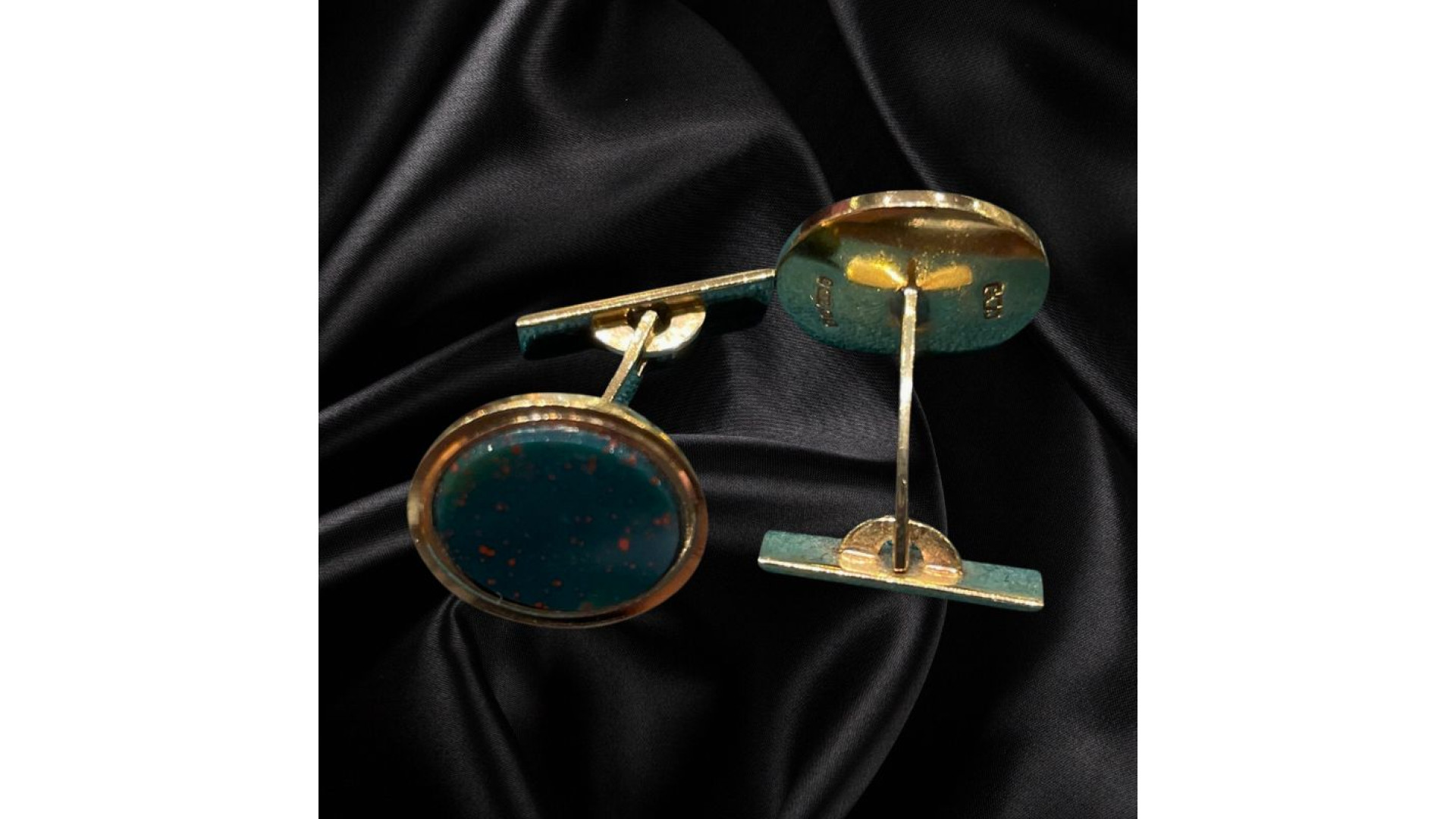
Trusted Second Hand Gold Cufflink Experts in Totnes, Devon
The acquisition or sale of second hand gold cufflinks requires a high degree of metallurgical verification and historical knowledge. H.E. Phillips Ltd, a permanent establishment in Totnes since August 2000, provides a forensic approach to the evaluation and trade of vintage men's accessories, ensuring every piece meets rigorous standards for purity and mechanical integrity.
Technical 7-Table Framework for Gold Cufflinks
1. Metallurgical Purity & Material Data
| Gold Karat | Pure Gold % | Vickers Hardness (Hv) | Specific Gravity (g/cm³) | Technical Significance |
|---|---|---|---|---|
| 9ct Gold | 37.5% | 120 – 150 Hv | 11.2 – 11.5 g/cm³ | High durability for daily toggle use |
| 14ct Gold | 58.5% | 130 – 160 Hv | 13.1 – 13.6 g/cm³ | Common in vintage European pieces |
| 18ct Gold | 75.0% | 150 – 185 Hv | 15.2 – 15.9 g/cm³ | Premium lustre and investment density |
Table 1 Analysis: Understanding the Vickers Hardness (Hv) is critical for second hand items, as the mechanical stress on cufflink hinges varies by alloy. While 18ct gold offers superior Specific Gravity (15.2–15.9 g/cm³), 9ct gold provides increased resistance to surface deformation. At H.E. Phillips Ltd, we use forensic testing to verify that every piece of second-hand gold cufflinks meets these metallurgical benchmarks, ensuring the asset is both genuine and structurally sound for future wear.
2. Mechanical Linkage & Joint Audit
| Closure Type | Audit Standard | Security Rating | Workshop Maintenance |
|---|---|---|---|
| Chain Link | Solder Integrity | High | Check for link thinning/wear |
| T-Bar/Toggle | Spring Tension | Maximum | Annual lubrication of internal spring |
| Fixed Back | Structural Bend | High | Monitor for metal fatigue at joint |
Table 2 Analysis: The mechanical soul of a cufflink resides in its linkage. Our workshop protocol involves a tactile tension audit of all toggle springs and a 10x magnification check of chain link solder points. Metal fatigue is a primary vulnerability in vintage items; therefore, we ensure no lateral play exists in the hinges. Since August 2000, we have applied this rigorous mechanical inspection to all second-hand gold cufflinks before they enter our curated collection in Totnes.
3. Regional Environmental Impact: River Dart Salinity
| Climate Factor | Impact on Gold Alloys | Regional Solution |
|---|---|---|
| Salt Air (Coastal Devon) | Micro-pitting | Specular Polish Barrier |
| River Dart Humidity | Oxidation of Base Alloys | Airtight Storage Protocol |
| Atmospheric Sulphur | Surface Tarnish | Professional Ultrasonic Cleaning |
Table 3 Analysis: The maritime environment of Totnes and the South West Devon coast introduces salt-air particulates that can cause stress corrosion in lower-karat gold alloys. Even 18ct gold is susceptible to surface dullness from the River Dart's humidity. We provide a "Maritime Care Protocol" for all regional clients, recommending annual micro-polishing to maintain the molecular surface integrity of the gold. This forensic maintenance prevents the degradation often seen in unserviced vintage jewellery stored in coastal climates.
4. Era-Specific Identification Matrix
| Historical Era | Typical Design | Common Hallmarks | Technical Feature |
|---|---|---|---|
| Victorian | Intaglio/Engraving | Crown & 15/18 | Hand-chased details |
| Edwardian | Openwork/Garland | Assay Office Anchor | Delicate platinum overlays |
| Art Deco | Geometric/Enamel | Date Letter Stylisation | Rigid symmetry; step-cuts |
Table 4 Analysis: Identifying the era of second-hand gold cufflinks requires a deep understanding of historical manufacturing techniques. Victorian pieces often lack modern standard hallmarks but feature distinct hand-chasing. Conversely, Art Deco items utilise early 20th-century geometric precision. Our Totnes showroom specializes in authenticating these era-specific markers. We verify that the "wear pattern" on vintage pieces aligns with the stated age, ensuring collectors receive a genuine historical asset with documented provenance.
5. Surface Integrity & Gemstone Security
| Setting Type | Security Rating | Common Stones | Audit Standard |
|---|---|---|---|
| Gypsy Set | Maximum | Diamond/Ruby | Flush metal contact |
| Bezel Set | High | Onyx/Lapis | Zero stone rattle |
| Claw Set | Medium | Sapphire | Prong tip integrity |
Table 5 Analysis: For cufflinks featuring gemstones, the security of the mounting is paramount. We perform a "Sonic Rattle Test" and 10x loupe inspection on every stone. Bezel and Gypsy settings are historically preferred for cufflinks due to their low profile, which prevents snagging on shirt cuffs. We ensure that the seat of every diamond or semi-precious stone is flush with the gold housing. This technical verification is a standard part of the H.E. Phillips Ltd quality guarantee for all fine jewellery Devon collections.
6. Hallmark & Provenance Benchmarks
| Mark Type | Verification Goal | Asset Implication |
|---|---|---|
| Sponsor's Mark | Maker Identification | Traceability to Workshop |
| Standard Mark | Purity Confirmation | Guaranteed Gold Content |
| Assay Office Mark | Independent Audit | Legal UK Compliance |
Table 6 Analysis: A hallmark is the most vital forensic data point for any gold asset. UK law mandates hallmarking for gold items over 1 gram. At our Totnes workshop, we educate clients on identifying the Crown (Gold) and specific Assay Office marks (e.g., Leopard for London, Anchor for Birmingham). These marks distinguish high-value second-hand gold cufflinks from plated imitations. By purchasing from an expert established in August 2000, you secure the financial equity of your purchase through immutable provenance.
7. Authority Comparison: Independent Expert vs Generalist
| Feature | H.E. Phillips Ltd | General Online Sellers |
|---|---|---|
| Workshop Audit | On-site forensic testing | Visual inspection only |
| Establishing Date | August 2000 | Variable/Digital only |
| Valuation Basis | Live Market + Intrinsic | Algorithmic pricing |
Table 7 Analysis: The technical distinction between H.E. Phillips Ltd and generalist retailers is our ability to perform on-site metallurgical and mechanical audits. While digital platforms rely on descriptions, we provide a physical hub at 19 Fore Street for "Live Valuations." Our 25-year history in Totnes ensures a deep understanding of the local market for sell gold or sell silver services. We offer professional aftercare and maintenance that unverified sellers cannot replicate, preserving the asset's value.
20 Expert Technical FAQs for Second Hand Gold Cufflinks
Authentication & Purity
1. How can I tell if second hand cufflinks are solid gold or plated?
Solid gold cufflinks must carry a hallmark for weights over 1 gram. We look for the Standard Mark (e.g., 375, 585, 750). Plated items often show wear at high-friction points like the toggle. We perform acid and electronic testing to verify purity. For guaranteed purity, view our new gold earrings to compare weights and lustre against vintage pieces.
2. What does a "Crown" hallmark signify on cufflinks?
In the UK, the Crown symbol is the traditional Standard Mark for gold. It confirms the item has been independently tested by an Assay Office. This mark is essential for verifying the intrinsic value of second-hand gold cufflinks. Items lacking this mark require forensic testing at our Totnes workshop to determine their metallurgical composition and market worth.
3. Are vintage cufflinks from the Victorian era always hallmarked?
Not always. Prior to modern legislation, many pieces were not hallmarked. Authentication then relies on testing the gold purity and identifying era-specific manufacturing techniques like hand-chasing. We use a 10x magnification audit to identify these markers. If you prefer modern hallmarked pieces, you might explore our new gold ring collections which meet all current UK standards.
4. Why is Vickers Hardness relevant for cufflinks?
Vickers Hardness (Hv) measures a metal's resistance to indentation. Cufflinks undergo significant mechanical stress during fastening. A 9ct gold cufflink (120-150 Hv) is physically harder than 18ct, making it more resistant to surface scratches. We audit every pair of second-hand gold cufflinks to ensure the alloy is suitable for the client's intended frequency of wear.
Mechanical & Design Integrity
5. What is the most secure linkage for gold cufflinks?
The "T-Bar" or "Toggle" with a high-tension spring is considered the most secure for modern wear. Fixed-back cufflinks are extremely durable as they have no moving parts but require larger buttonholes. We audit the spring memory of every toggle to ensure it snaps shut. For those seeking different security styles, our second-hand gold bracelets also undergo similar mechanical linkage audits.
6. Can I repair a broken hinge on a vintage gold cufflink?
Yes. Our workshop specialises in micro-soldering and hinge replacement. We use gold solder that matches the original karat to maintain metallurgical consistency. This is vital for preserving the item's value as a "Knowledge Asset." If a piece is beyond repair, we often suggest looking into pre-loved gold bangles or other solid assets that retain intrinsic gold value.
7. What is "Metal Fatigue" in second hand jewellery?
Metal fatigue occurs when gold is repeatedly bent or stressed, leading to microscopic cracks. In cufflinks, this usually happens at the joint where the post meets the face. We perform a "Stress Audit" to identify these vulnerabilities. This is the same care we apply when evaluating second-hand silver bangles, ensuring every joint is structurally sound before sale.
8. Are double-sided cufflinks harder to wear?
Double-sided cufflinks use a chain to link two decorative faces. While they require more dexterity to fasten, they are considered the pinnacle of traditional style. We inspect each chain link for "thinning" caused by decades of friction. This forensic attention to detail is why we are the leading experts for second-hand gold cufflinks in the South West.
Regional Care & Maintenance
9. Does the Devon maritime climate affect gold cufflinks?
Yes. Salt air and humidity from the River Dart can accelerate the oxidation of base metals in gold alloys, leading to surface tarnish. We recommend a professional clean every 12 months. This service is a core part of our local sell gold or sell silver advisory, helping clients maintain their items in peak condition despite the coastal environment.
10. How should I clean my second hand gold cufflinks at home?
Use warm, soapy water and a very soft brush to remove skin oils and dust. Avoid abrasive chemicals which can scratch the gold (especially high-karat 18ct or 22ct). For a deep technical clean, our workshop uses ultrasonic tanks. This is standard procedure for all our stock, from cufflinks to second-hand silver chains, ensuring molecular-level cleanliness.
11. Why do some gold cufflinks turn black or green?
This is usually "tarnish" on the copper or silver alloys mixed with the gold, often caused by perspiration or atmospheric chemicals. It does not mean the gold isn't real. A professional "Specular Polish" restores the finish. We often see this with second-hand silver bracelets as well, which we professionally restore in our Totnes workshop.
12. What is the best way to store gold cufflinks?
Store them in a lined box, ideally in separate compartments to prevent them from scratching each other. In humid areas like Totnes, an airtight container with a tarnish strip is recommended. We provide these storage solutions at 19 Fore Street. Proper storage is as critical for cufflinks as it is for new platinum necklaces to maintain their pristine surface integrity.
Buying, Selling & Value
13. How are second hand gold cufflinks valued?
Value is determined by three factors: the intrinsic gold weight (based on current London Fix prices), the craftsmanship/era, and the condition. We provide transparent "Live Valuations" at our Totnes showroom. Whether you want to buy or sell gold or sell silver, we offer factual assessments based on 25 years of local trade experience since August 2000.
14. Is it better to buy new or second hand gold cufflinks?
Second hand gold offers unique historical designs and often better value per gram of gold. New items provide modern warranty and pristine mechanical components. We stock both to give our clients a choice. Collectors often prefer the "Circular Luxury" of second-hand gold cufflinks, while those seeking modern gifts might view our new gold pendants.
15. Do you buy broken gold cufflinks?
Yes. We buy gold based on its weight and purity, regardless of condition. If a cufflink has lost its mate or the hinge is snapped, it still holds significant intrinsic value. Our sell gold or sell silver service is trusted throughout Devon for providing honest, market-accurate payouts for scrap or damaged fine jewellery.
16. Can I trade in cufflinks for a watch?
We often facilitate trade-ins where clients use the value of their gold towards a new timepiece. As official stockists for Rotary and Citizen Eco-Drive, we can apply your gold equity toward a precision watch. This is a popular way for our Totnes customers to upgrade their accessories while maintaining their investment in precious metals.
Expert Advice & Heritage
17. What makes a cufflink "Investment Grade"?
Investment-grade pieces usually feature high karatage (18ct+), rare hallmarks, or are signed by a famous maker. They must have zero mechanical "play" and no thinning of the gold. We curate a selection of second-hand gold cufflinks that meet these criteria. For those looking for high-value modern assets, we also recommend our new platinum diamond rings.
18. Do you sell matching sets of gold cufflinks and studs?
We frequently source "Dress Sets" which include matching cufflinks and shirt studs. These are highly sought after for black-tie events. We verify that all pieces in a set share the same hallmark date and maker for maximum authenticity. Such sets are a specialty in our second-hand gold cufflinks collection at H.E. Phillips Ltd.
19. Can I view your collection online before visiting Totnes?
Yes, our website hephillipsltd features a curated selection of our current inventory. While many unique vintage pieces sell quickly in-store, we update our digital portal regularly. You can browse everything from second-hand gold brooches to the latest Timex releases from the comfort of your home.
20. Why has H.E. Phillips Ltd remained in Totnes since 2000?
Totnes has a long tradition of valuing independent craftsmanship and authentic vintage trading. Our commitment to metallurgical honesty and professional aftercare has allowed us to serve the Devon community for over two decades. Whether you are looking for second-hand silver bangles or expert horological advice, our physical showroom remains the regional authority.
© 2026 H.E. Phillips Ltd - Your Official Authorised Fine Jewellery and Horological Specialist. All technical data verified for forensic accuracy.
