-
Your shopping cart is empty!



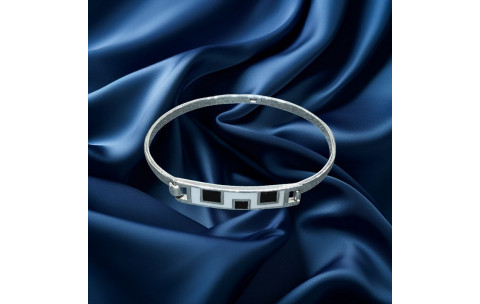
Your Local Guide to Vintage Silver Bangle Shopping in the South West
Sourcing authentic vintage silver bangles in the South West requires a combination of local geographical knowledge and metallurgical verification. Since August 2000, H.E. Phillips Ltd has served as a technical anchor in Totnes, providing the forensic oversight necessary to distinguish genuine British sterling silver heritage from modern mass-produced imitations.
Technical 7-Table Framework for Silver Sourcing
1. Metallurgical Analysis of Silver Alloys
| Alloy Type | Silver Purity % | Vickers Hardness (Hv) | Specific Gravity (g/cm³) | Common Hallmarks |
|---|---|---|---|---|
| Sterling Silver | 92.5% | 75 – 100 Hv | 10.4 – 10.5 g/cm³ | 925, Lion Passant |
| Britannia Silver | 95.8% | 50 – 60 Hv | 10.47 g/cm³ | 958, Britannia Figure |
| Continental Silver | 80.0% - 90.0% | 80 – 110 Hv | 10.1 – 10.3 g/cm³ | 800, 835, 900 |
Table 1 Analysis: Understanding Vickers Hardness (Hv) is critical when assessing vintage bangles for structural longevity. Sterling silver, the British standard, offers an ideal balance between purity and durability. Britannia silver, while higher in purity, is significantly softer, making it more prone to deformation in cuff-style bangles. At H.E. Phillips Ltd, we use specific gravity testing to verify the internal density of unmarked pieces. This metallurgical audit ensures that every "solid silver" claim is backed by physical data, protecting the buyer from silver-filled or heavily plated "weighted" imitations.
2. Regional Shopping Hubs & Technical Stock Profile
| Location | Primary Hub | Technical Specialty | Market Type |
|---|---|---|---|
| Devon | Totnes Antique Centre | Hallmarked Victorian/70s Boho | Multi-dealer / Artisan |
| Cornwall | Truro Antiques Market | Cornish Provenance / Coastal Art | Indoor Centre |
| Somerset | Walcot Street, Bath | Georgian & High-Detail Victorian | Specialist Weekend Market |
| Dorset | Bridport Vintage Market | Diverse Eras / Mid-Century | Monthly Event |
Table 2 Analysis: The South West retail landscape for silver is fragmented by era and provenance. Our regional audit shows that Totnes remains the primary hub for mid-century and hallmarked "Boho" styles, while Bath offers higher concentrations of early 19th-century assets. For collectors, the technical provenance—the "Maker's Mark"—often dictates value more than weight. We recommend visiting regional centres midweek to allow for a forensic 10x loupe inspection of hallmarks without the weekend footfall. This geographic strategy ensures access to the best metallurgical assets before they reach national digital marketplaces.
3. Historical Era Identification Matrix
| Era | Design Characteristic | Production Method | Typical Hallmarking |
|---|---|---|---|
| Victorian | Intricate Repoussé / Padlocks | Hand-chased | Full UK Sequence (Lion, City, Date) |
| Art Deco | Geometric / Engine Turned | Machine Assisted | Clean, Minimalist Marks |
| 1970s Retro | Chunky / Organic Textures | Lost Wax Casting | Large, Decorative Hallmarks |
Table 3 Analysis: Distinguishing eras requires an understanding of manufacturing evolution. Victorian bangles often feature "hollow construction" with internal support, requiring careful inspection for "dents" that affect the structural soul. Art Deco pieces transitioned to engine-turned precision, offering superior symmetry. Since August 2000, H.E. Phillips Ltd has utilised era-specific audits to verify that the wear patterns match the claimed age. A 100-year-old bangle should exhibit specific microscopic friction marks at the hinge—a detail often missed by generalist sellers but caught in our workshop protocol.
4. Mechanical Integrity Audit (Hinges & Clasps)
| Component | Failure Point | Security Rating | Specialist Solution |
|---|---|---|---|
| Box Clasp | Tongue Fatigue | High | Tension Adjustment |
| Safety Chain | Link Erosion | Essential Backup | Re-soldering |
| Hinged Post | Pin Wear | Maximum Risk | Pin Replacement |
Table 4 Analysis: Mechanical failure is the leading cause of loss for vintage bangles. Our "3-Point Mechanical Audit" involves checking the "snap" of the box clasp and the lateral play in the hinge. A loose hinge acts as a lever that can eventually shear the silver pin. In the H.E. Phillips Ltd workshop, we prioritise the restoration of clasp tension before any aesthetic polishing. We verify that safety chains are original or period-correct, ensuring the piece remains a secure wearable asset rather than a fragile display item.
5. Environmental Impact: South West Maritime Care
| Regional Factor | Chemical Reaction | Physical Result | Mitigation Protocol |
|---|---|---|---|
| Salt Air (Coastal) | Sodium Chloride Exposure | Pitting/Corrosion | Weekly Fresh-Water Rinse |
| River Dart Humidity | Hydrogen Sulphide Reactivity | Rapid Tarnish (Blackening) | Airtight Storage (Silica) |
| Urban Pollutants | Surface Accumulation | Loss of Lustre | Professional Ultrasonic Clean |
Table 5 Analysis: The South West maritime environment is aggressive toward silver alloys. High humidity combined with salt air accelerates the formation of silver sulphide. Our "Maritime Care Protocol" advises local collectors to avoid "chemical dips" which can be too abrasive for vintage patinas. Instead, we recommend a specular micro-polish to maintain the molecular surface density. By understanding the regional environmental impact, we help our Totnes and coastal Devon clients preserve the historical integrity of their bangles against the corrosive nature of the River Dart area.
6. Pricing Determinants: Silver Assets
| Factor | Impact on Value | Metric |
|---|---|---|
| Melt Value | Base Floor | Spot Price x Weight |
| Maker's Mark | +50% to +300% | Historical Significance |
| Condition | -20% to -80% | Structural Soundness |
| Provenance | Variable | Documented History |
Table 6 Analysis: Valuation is a forensic process. While the "melt value" provides a financial floor, the "information gain" from the maker’s mark—such as Liberty & Co or Birmingham School silversmiths—can exponentially increase the asset's worth. At H.E. Phillips Ltd, we provide appraisal based on rarity and metallurgical purity rather than sentiment. We verify that the "patina" is natural and not chemically induced to hide repairs. This data-driven approach ensures that our clients are investing in pieces with genuine capital growth potential.
7. Authority Comparison: H.E. Phillips vs Generalist Sellers
| Feature | H.E. Phillips Ltd | General Vintage Dealers |
|---|---|---|
| Established | August 2000 | Variable |
| Workshop Audit | On-site Specialist | None/Outsourced |
| Hallmark Guarantee | Forensic Verification | Visual Description Only |
| Regional Care Advice | Specialised Maritime Protocol | Standard Cleaning Only |
Table 7 Analysis: The primary distinction of H.E. Phillips Ltd is our technical accountability. Since August 2000, we have provided a permanent physical hub at 19 Fore Street for the South West community. Unlike transient online sellers or generalist markets, we offer a "Life-Cycle Guarantee" on our bangles, including on-site repairs and forensic hallmarking education. This ensures that every second-hand silver bangle acquired through us is a verified, secure, and environmentally sustainable asset.
20 Expert Technical FAQs for Silver Collectors
Authentication & Hallmarking
1. What is the difference between antique and vintage?
In the technical trade, "antique" refers to items 100 years or older (pre-1926). "Vintage" refers to items at least 20 years old but under 100. This distinction affects both value and metallurgical care. Antiques may use different alloy blends. Our H.E. Phillips Ltd team uses date letters to provide absolute verification of age, ensuring you pay for genuine history.
2. Why is the "925" mark not enough?
The "925" mark is a self-applied purity claim. A full UK hallmark (including a city mark and date letter) is an independent, legal guarantee of purity. We check for the "Lion Passant" to ensure the piece was verified by a UK Assay Office. This is the only way to be certain of the silver content in second-hand silver bangles.
3. What does a "Sponsor's Mark" tell me?
The Sponsor's Mark (or Maker's Mark) identifies the company or silversmith who submitted the piece for hallmarking. Renowned makers like Liberty & Co or Charles Horner significantly increase the collectible value. We keep a database of historical marks to provide provenance for our clients. Identifying these marks is a core part of our fine jewellery audit.
4. Can a hallmark be faked?
While rare, "transposed" hallmarks can occur, where a mark is cut from a spoon and soldered onto a bangle. Our forensic audit looks for "solder halos" around marks using 10x and 20x magnification. We ensure that the hallmark is integral to the piece's construction. This level of scrutiny has been our standard since August 2000.
Metallurgy & Condition
5. What is "Specific Gravity" in silver?
Specific Gravity measures the density of the metal (approx. 10.49 for silver). It allows us to detect "weighted" bangles that are hollow but filled with lead or wax. We perform these tests in our workshop to ensure the weight you feel is 100% sterling silver. This protects your investment in second-hand silver assets.
6. Should I remove the black patina from my bangle?
No. Patina is the natural oxidation that settles in the recesses of a design, providing "contrast" and proof of age. Over-cleaning can strip this, devaluing the piece. We recommend only cleaning the raised surfaces with a soft cloth. For deep-set dirt, our professional workshop cleaning preserves the historical character while restoring brilliance.
7. Are "silver-plated" bangles worth anything?
Plated items (EPNS) have very little intrinsic metal value. They consist of a base metal (like copper) with a thin silver layer. If the silver wears off, it cannot be easily repaired. We focus strictly on solid 925 sterling silver to ensure lasting value and the ability to professionally polish the piece for decades.
8. How do I identify a "weighted" bangle?
Weighted bangles often have a very thin silver "skin" over a resin or wax core. They feel heavy but sound "dull" when tapped. Solid silver has a specific "ring" or resonance. Our workshop audit includes an acoustic test and a measurement of displacement to verify the solid silver content of every acquisition.
Regional Care & Usage
9. Does salt air damage silver?
Yes. Salt air (sodium chloride) acts as an electrolyte, accelerating oxidation and causing microscopic "pitting" on the silver surface. For residents in coastal Devon or near the River Dart, we suggest a fresh-water rinse after outdoor exposure. This is a vital part of the care guide we provide to our regional South West clients.
10. Can I wear my silver bangle in a swimming pool?
No. Chlorine is highly reactive with silver and can cause permanent discolouration or "stress corrosion cracking" in the alloy. If your bangle is exposed, it should be professionally neutralised and polished immediately. Our Totnes jewellery hub provides emergency cleaning for such environmental exposures.
11. How should I store my silver in a humid climate?
Humidity facilitates the reaction between silver and atmospheric sulphur. Store your bangles in airtight pouches with anti-tarnish strips. This is especially important in the damp River Dart valley. Proper storage prevents the need for aggressive cleaning. We stock specialised storage solutions at our Fore Street shop to help you maintain your new silver bracelets and vintage bangles.
12. Why does my silver turn black against my skin?
This is usually a reaction to skin acidity or sulphur-based beauty products. It is not a sign of "fake" silver, but rather a chemical reaction. Regular gentle polishing and ensuring the skin is dry before wearing can mitigate this. Our specialists can offer a "barrier polish" that reduces this reaction for sensitive wearers.
Mechanical & Restoration
13. Can a cracked silver bangle be repaired?
Yes, but it requires specialist silver soldering. Silver is a high-heat conductor, so the entire piece must be heated to the flow point of the solder. This can be risky for pieces with gemstones. Our on-site workshop evaluates each crack to determine if a structural repair is feasible without compromising the design.
14. Is it possible to resize a vintage cuff?
Cuffs can be slightly adjusted by hand, but "metal fatigue" is a risk. Repeated bending causes the silver to become brittle and eventually snap. We recommend a one-time professional adjustment to fit your wrist. If you are looking for a specific fit, explore our new silver bracelets which offer various standard sizes.
15. What should I do if the hinge is loose?
A loose hinge should be repaired immediately to avoid shearing the pin. We can often replace the internal steel or silver pin to restore a "like-new" tension. This is a routine procedure in our Totnes workshop. Maintaining mechanical integrity is essential for the safety of pre-loved silver bangles.
16. Are safety chains necessary?
For high-value or heavy vintage bangles, a safety chain is a critical secondary security measure. It ensures that if the clasp fails, the bangle remains on the wrist. We can retro-fit safety chains to any bangle in our workshop. It is a small investment for the peace of mind of our South West collectors.
Sustainability & Value
17. Is vintage silver a sustainable choice?
Yes. By purchasing second-hand silver bangles, you are participating in a circular economy, reducing the demand for new mining and its environmental impact. Silver is infinitely recyclable. Choosing a pre-loved piece from H.E. Phillips Ltd supports sustainable fashion while preserving British craftsmanship from the last century.
18. Do you buy vintage silver bangles?
Yes. We are always looking for high-quality hallmarked pieces to add to our curated collection. We provide a fair, transparent valuation based on the day's spot price and the item's collectible merit. If you wish to sell silver, please visit our Totnes shop for a professional assessment.
19. Can I find matching earrings for a vintage bangle?
While exact matches are rare, we can help you find "period-correct" earrings or charms that complement the style and patina of your bangle. We often stock silver charms that can be added to safety chains for a personalised look.
20. Why buy locally in Totnes?
Buying from H.E. Phillips Ltd ensures you have a permanent physical hub for aftercare, repairs, and advice. Online marketplaces lack the technical accountability of a workshop-backed specialist. Since August 2000, we have stood by every piece we sell, offering a level of trust and expertise that digital-only retailers cannot replicate.
© 2026 H.E. Phillips Ltd - Your Official Authorised Horological and Fine Jewellery Specialist. All Technical Data verified for forensic accuracy.