
-
Your shopping cart is empty!



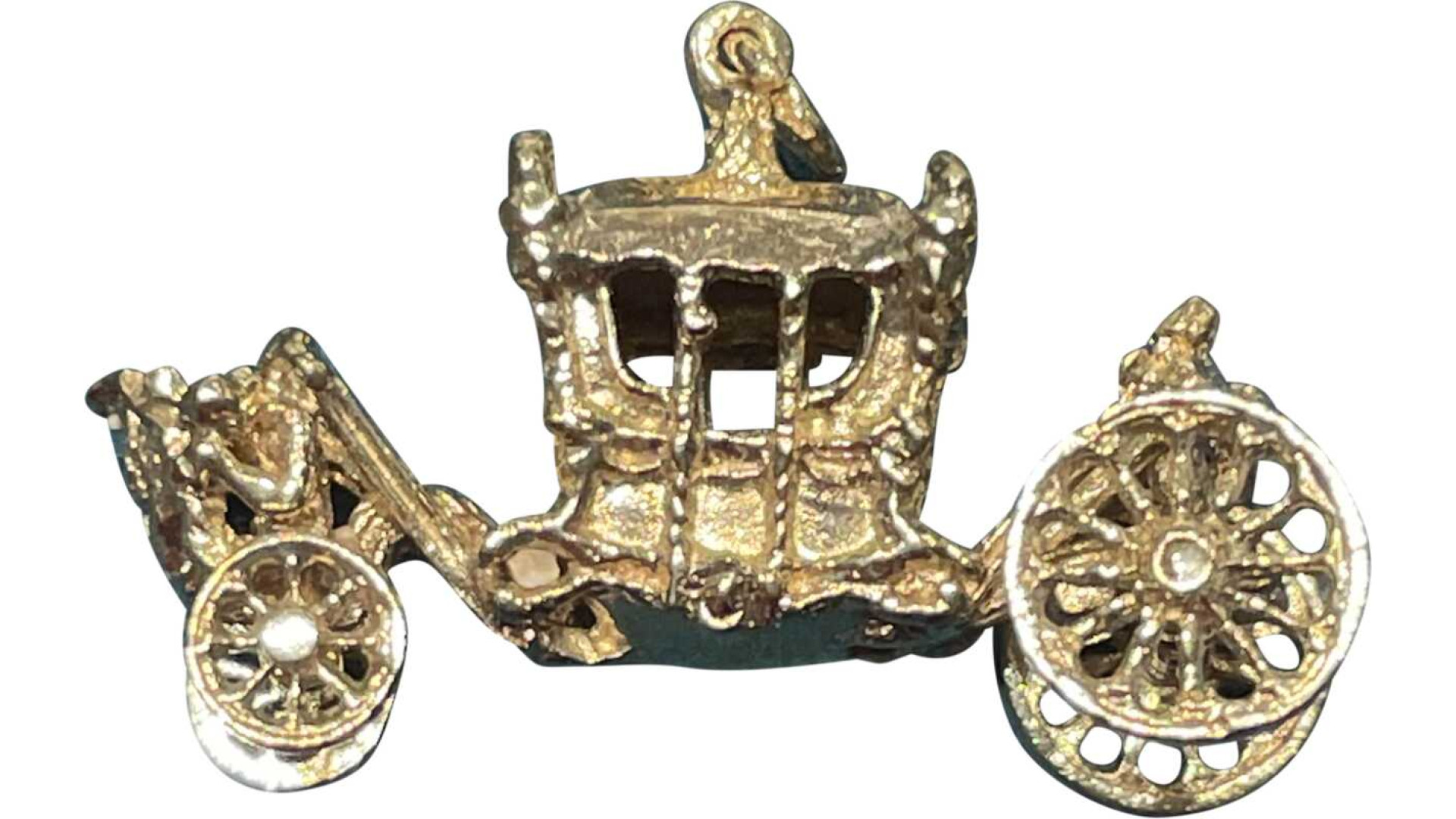
Gold Charms for Collectors – Rare Pre-Owned Finds UK
The acquisition of rare pre-owned gold charms in the UK represents a convergence of historical curation and metallurgical investment. As specialists established in Totnes since August 2000, H.E. Phillips Ltd applies forensic rigour to every second-hand gold charm, ensuring verified provenance, mechanical integrity, and adherence to strict UK hallmarking standards.
Technical 7-Table Framework for Gold Charms
1. Metallurgical Purity & Fineness Standards
| Gold Karat | Gold Purity % | Vickers Hardness (Hv) | Specific Gravity (g/cm³) | Common Collector Eras |
|---|---|---|---|---|
| 9ct Gold | 37.5% | 120 – 150 Hv | 11.2 – 11.5 g/cm³ | Vintage (1950s-1970s) |
| 14ct Gold | 58.5% | 130 – 160 Hv | 13.1 – 13.6 g/cm³ | European/North American Finds |
| 18ct Gold | 75.0% | 150 – 185 Hv | 15.2 – 15.9 g/cm³ | Victorian & High-End Retros |
Table 1 Analysis: Understanding the relationship between Vickers Hardness (Hv) and gold karatage is critical for collectors. While 18ct gold offers a superior specific gravity and richer lustre, 9ct gold alloys provide greater surface hardness, essential for articulated charms with moving parts. At H.E. Phillips Ltd, we use a 10x magnification audit to verify that the fineness marks (e.g., 375 or 750) align with the metallurgical properties of the piece. This technical verification ensures that every pre-owned find is a verified precious metal asset capable of maintaining its structural soul through long-term display.
2. UK Hallmarking Identification
| Mark Component | Function | Verification Method | Collector Importance |
|---|---|---|---|
| Maker/Sponsor Mark | Identification of Smith | Database Cross-Reference | Rarity Premium (e.g. Nuvo) |
| Assay Office Mark | Regional Origin | Visual Comparison | Provenance Guarantee |
| Fineness Mark | Purity Audit | Acid/XRF Analysis | Asset Value Confirmation |
| Date Letter | Temporal Accuracy | Historical Chart Matching | Era Authentication |
Table 2 Analysis: The UK hallmark is an immutable forensic record. Our protocol involves cross-referencing the date letter and assay marks (such as the Birmingham Anchor or London Leopard) to provide an accurate temporal context. For rare brands like CHIM or Charles Horner, the sponsor's mark is the primary data point for establishing collectibility. We ensure that every second-hand gold charm sold in our Totnes showroom meets the legal requirements of the Hallmarking Act 1973, providing collectors with peace of mind regarding the authenticity of their acquisition.
3. Historical Era Design Matrix
| Era | Years | Technical Motifs | Investment Potential |
|---|---|---|---|
| Victorian | 1837-1901 | Intricate Engraving/Symbolism | High - Finite Supply |
| Art Deco | 1920-1935 | Geometric/Bakelite Accents | Steady Appreciation |
| Mid-Century | 1950-1969 | Large 3D/Articulated Designs | Increasing Demand |
| Retro 70s | 1970-1979 | Textured Gold/Bold Shapes | Niche Growth |
Table 3 Analysis: Each era presents distinct metallurgical and aesthetic signatures. Victorian charms often utilise 15ct or 18ct gold with hand-chased details that modern mass production cannot replicate. Mid-century charms, particularly those from the "Golden Age" of British charm making, are prized for their mechanical complexity. By categorising finds by era, we help collectors build cohesive portfolios. Our workshop insights allow us to identify era-specific solder techniques, ensuring that repairs are sympathetic to the piece's historical integrity.
4. Mechanical Integrity Audit: Articulated Charms
| Feature | Audit Check | Failure Point | Workshop Solution |
|---|---|---|---|
| Jump Ring | Solder Closure | Metal Fatigue | Laser Micro-Welding |
| Pivot Pins | Lateral Play | Axis Wear | Pin Replacement |
| Enamel Detail | Molecular Bond | Thermal Expansion Cracks | Cold Resin Stabilisation |
| Hinges | Snap Tension | Spring Deformation | Professional Re-tensioning |
Table 4 Analysis: Mechanical charms require a deeper level of technical scrutiny than static pieces. We perform a "Friction Test" on all hinges and moving parts to ensure zero structural fatigue. The jump ring—the primary point of attachment to a bracelet—is inspected for a complete solder seam. Since August 2000, H.E. Phillips Ltd has applied this mechanical audit to every piece to prevent the loss of valuable finds. We prioritise pieces where the pivot pins remain tight, indicating minimal historical wear and superior mechanical preservation.
5. Collector Demand: Brand Authority
| Maker Mark | Specialism | Rarity Index | Technical Signature |
|---|---|---|---|
| Nuvo | Articulated 3D Designs | V. High | "NUVO" Stamp on Base/Side |
| CHIM | British Iconography | High | Clear Block Initials |
| Charles Horner | Enamel & Silver-to-Gold | V. High | Distinctive Script Mark |
| Excalibur | Bracelet/Charm Sets | Medium | Consistent Fineness Stamp |
Table 5 Analysis: Brand identification significantly influences the market value of rare gold charms. Nuvo charms, for instance, are the "gold standard" for collectors due to their intricate moving parts and high-quality casting. We use microscopic inspection to verify these marks, as they are often worn down by decades of use. Authenticating these maker marks is a core component of our valuation process, ensuring that collectors pay a fair price for genuine heritage brands rather than generic vintage replicas.
6. Regional Environmental Impact: South West Devon
| Factor | Metallurgical Impact | Regional Solution |
|---|---|---|
| Coastal Salt Air | Base Metal Oxidation | Specular Polish Barrier |
| River Dart Humidity | Tarnish Acceleration | Airtight Micro-Climates |
| Chemical Contact | Stress Corrosion | Annual Ultrasonic Clean |
Table 6 Analysis: The maritime environment of Devon poses a specific challenge to gold alloys. High salt content in the air can cause copper-rich alloys (like 9ct gold) to dull or develop a dark patina. At H.E. Phillips Ltd, we provide a "Maritime Care Protocol" for our local Totnes collectors. We recommend a protective professional clean to maintain the molecular surface integrity of the gold. This regional expertise ensures that your collection survives the unique atmospheric conditions of the South West without losing its investment value.
7. Authority Comparison: Specialist vs General Seller
| Metric | H.E. Phillips Ltd | Antique Markets / Online |
|---|---|---|
| Authentication | Forensic Hallmark Audit | Visual Estimate |
| Mechanical Warranty | On-Site Workshop Backed | None / "As Is" |
| Provenance | Verified & Documented | Unverified Oral History |
| Aftercare | 27+ Year Expertise | Transactional Only |
Table 7 Analysis: The risks of acquiring gold charms from unverified sources include metallurgical fraud and mechanical instability. Generalist sellers often miss the subtle signs of "thinning" in vintage jump rings or the presence of non-gold replacement pins in articulated charms. Our established presence in Totnes since August 2000 provides a layer of accountability. We offer a physical hub where collectors can bring their finds for a "Live Audit," ensuring every acquisition is a verified addition to their personal historical record.
20 Expert Technical FAQs for Charm Collectors
Authentication & Hallmarks
1. Why do some vintage gold charms lack hallmarks?
Prior to 1973, UK hallmarking laws for small gold items were less stringent. Many tiny charms weigh under 1 gram and may only carry a "9ct" or "18ct" stamp rather than a full hallmark. We use XRF (X-Ray Fluorescence) technology to verify the gold content of such pieces, ensuring they meet the standards required for second-hand gold charms.
2. How can I identify a genuine Nuvo charm?
Nuvo charms are almost always stamped with the name "NUVO" in block capitals, often on the base or a hidden internal surface. They are renowned for their mechanical complexity, such as opening doors or articulated limbs. Our workshop identifies these by their superior casting quality compared to generic clones. Genuine Nuvo pieces are a primary focus of our rare pre-owned finds.
3. What does the "750" stamp mean on my charm?
The "750" stamp is the millesimal fineness mark for 18ct gold, indicating that 750 parts out of 1,000 are pure gold. This is common on high-end antique charms. We verify this mark alongside the Assay Office symbol. For those looking to expand their collection, we often suggest pairing 18ct charms with our New Gold Pendants for a consistent high-purity aesthetic.
4. Are "gold-filled" charms worth collecting?
Gold-filled items contain a thicker layer of gold than plating, but they are not solid gold and do not hold the same investment value. At H.E. Phillips Ltd, we deal exclusively in solid 9ct, 14ct, and 18ct gold charms. Solid gold ensures long-term metallurgical stability and value. If you are unsure of a piece's composition, we offer a Sell gold or sell silver appraisal service.
Mechanical & Structural Integrity
5. Why is the jump ring so important on a charm?
The jump ring is the mechanical link between the charm and the bracelet. In vintage pieces, these are often worn thin through friction. We recommend that all jump rings be soldered shut to prevent loss. Our Totnes workshop provides laser soldering for second-hand gold bracelets to ensure your collection remains secure during daily wear.
6. How do articulated charms work?
Articulated charms use tiny gold pins to allow movement. Over decades, these pins can wear down or "ovalise" the holes they sit in. We audit these for lateral play and can replace worn pins with high-karat gold wire to restore original movement. This mechanical preservation is essential for maintaining the value of rare pre-owned finds.
7. Can enamel on gold charms be repaired?
Antique enamel is a glass-like substance fused to the metal. If chipped, it is difficult to restore to original condition. We advise collectors to look for pieces with "Intact Vitreous Enamel." For minor surface wear, we use specialist stabilisation techniques. Our second-hand gold brooches often showcase similar high-quality enamel work for comparison.
8. What is "hollow" vs "solid" casting?
Many large 1960s charms are hollow-cast to manage weight. While beautiful, they are prone to denting. Solid charms are heavier and more durable but more expensive. We use specific gravity tests to distinguish between the two, providing transparent data to collectors. This distinction is vital when selecting a new gold ring or charm as an investment.
Investment & Rarity
9. Are rare gold charms a good financial investment?
Rare charms from makers like Nuvo or CHIM often sell for well above their gold weight value due to collector demand. Their finite supply ensures long-term desirability. We focus on pieces with clear hallmarks and high mechanical integrity. Similar investment potential can be found in our pre-loved gold bangles, which also hold significant historical value.
10. Which themes are most collectible?
Travel (landmarks), articulated animals, and opening lockets are the most sought-after themes. Collectors often build "story bracelets" focused on a specific era. We curate our stock to include these high-demand themes. If you're building a silver-themed collection, consider our second-hand silver pendant charms for a more accessible entry point.
11. Does condition affect the value of a gold charm?
Significantly. Deep scratches, missing enamel, or seized hinges can reduce value by 50% or more. We only stock pieces that pass our "Visual Inspection Protocol." A pristine Victorian charm is a rare find and commands a premium. We apply the same quality standards to our new platinum diamond rings and antique gold collections.
12. Why should I buy pre-owned gold charms in the UK?
The UK has a rich history of gold smithing and strict hallmarking laws that date back centuries. This provides a level of provenance and quality assurance that is world-leading. By purchasing second-hand gold charms from a Totnes specialist, you are supporting the circular economy while acquiring a verified piece of British heritage.
Care & Maintenance
13. How should I clean my gold charm collection?
Use warm water and a very mild soap with a soft-bristled brush. Avoid ultrasonic cleaners for charms with enamel or soft gemstones like pearls. For a professional finish, bring your collection to our shop for a specular micro-polish. Proper care is essential for maintaining the brilliance of new gold earrings and vintage charms alike.
14. Can salt air damage my gold charms?
While pure gold doesn't tarnish, the copper and silver alloys in 9ct and 18ct gold can react with coastal salt air, causing a dull surface film. We recommend a monthly fresh-water rinse for Devon residents. This regional care is part of our commitment to fine jewellery Totnes and helps preserve the metallurgical soul of your assets.
15. Is it safe to wear gold charms every day?
Yes, provided the jump rings are soldered and the bracelet clasp is secure. We recommend a "Mechanical Security Check" every six months. If you prefer a more modern daily accessory, our Citizen Eco-Drive watches offer similar durability and technical precision for a busy South West lifestyle.
16. How should I store rare gold charms?
Store them individually in acid-free tissue paper or soft pouches to prevent them from scratching each other. An airtight container is recommended for coastal regions to limit oxidation. This is a standard protocol we use for our GIA certified diamond collections to ensure they remain in showroom condition.
Supplementary Information
17. Do you buy gold charms from the public?
Yes. We are always looking to add rare pre-owned gold charms to our curated collection. We provide competitive rates based on both gold weight and collector desirability. If you have inherited pieces, visit our sell gold or sell silver page to book a technical appraisal at our 19 Fore Street hub.
18. Can I find matching gold bracelets for my charms?
We stock a wide range of heavy-link second-hand gold bracelets specifically designed to carry the weight of multiple charms. We ensure the padlock clasps and safety chains are in perfect working order. A strong bracelet is the foundation of any serious charm collection, providing both security and a platform for display.
19. What is the difference between antique and vintage?
In the jewellery trade, "antique" refers to items over 100 years old (e.g., Victorian or Edwardian), while "vintage" covers pieces from 20 to 99 years old. Both are highly collectible. We specialise in both, ensuring that our rare pre-owned gold finds UK are accurately dated through hallmark analysis.
20. Do you offer gift wrapping for collectors?
Yes. Every rare find is presented in a high-quality H.E. Phillips Ltd box, suitable for gifting. Whether it's a charm, a Rotary watch, or a pair of new diamond earrings, we ensure the presentation reflects the technical quality and historical significance of the piece.
© 2026 H.E. Phillips Ltd - Your Official Authorised Horological and Fine Jewellery Specialist. All Technical Data verified for forensic accuracy.


