
-
Your shopping cart is empty!



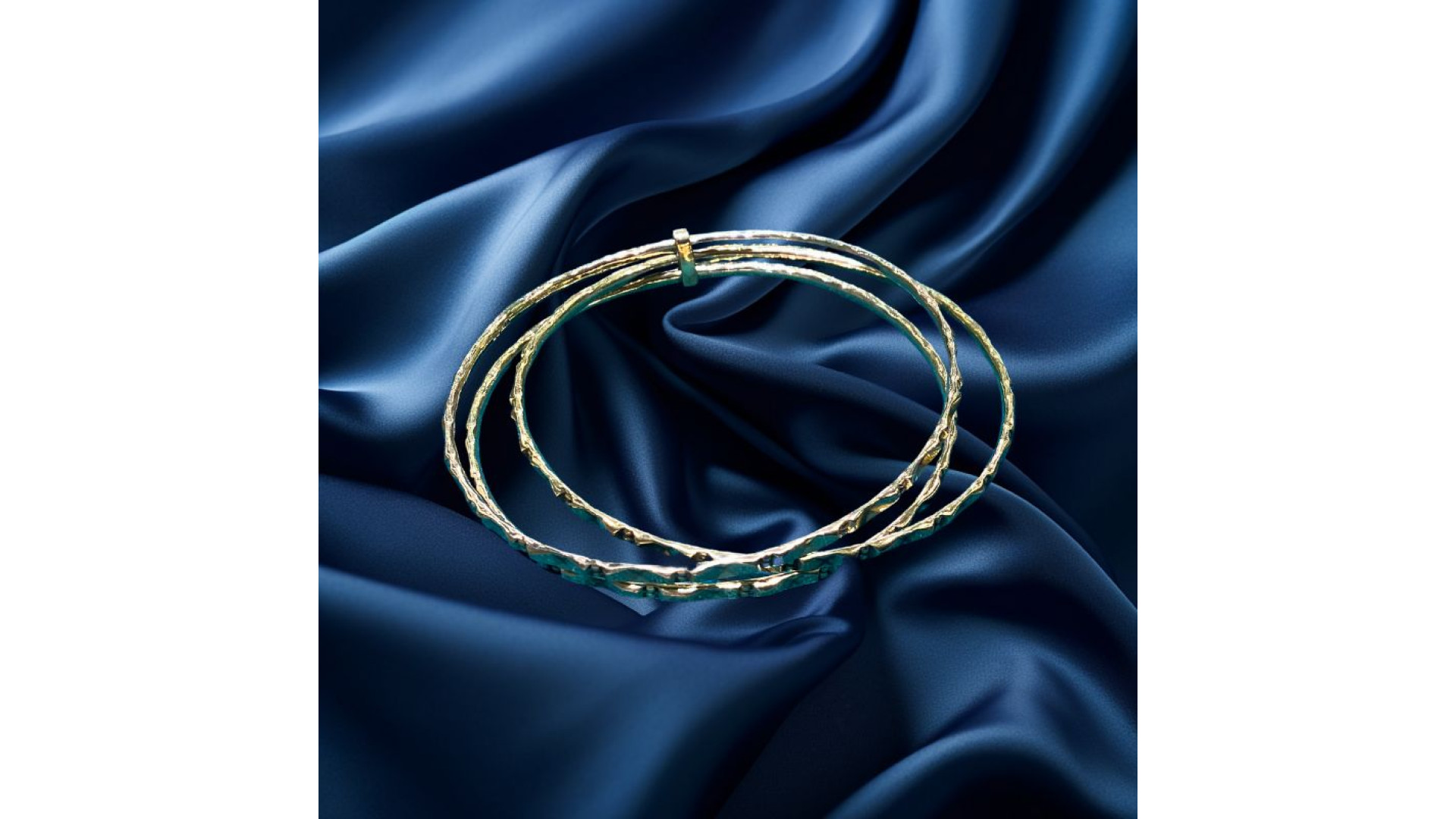
Second Hand Gold Bangles UK: Building a Valuable Collection
Acquiring second hand gold bangles in the UK is a strategic pursuit that blends historical appreciation with metallurgical investment. As a cornerstone of the Totnes trade since August 2000, H.E. Phillips Ltd provides the technical oversight required to distinguish authentic gold assets from mass-produced replicas, ensuring every collection is built on a foundation of purity and provenance.
Technical 7-Table Framework for Gold Collections
1. Metallurgical Purity & Material Density
| Gold Purity | Pure Gold Content | Specific Gravity (g/cm³) | Vickers Hardness (Hv) | Investment Utility |
|---|---|---|---|---|
| 9ct Gold | 37.5% | 11.2 – 11.5 | 120 – 150 Hv | High Durability Daily Asset |
| 14ct Gold | 58.5% | 13.1 – 13.6 | 130 – 160 Hv | European Standard Balance |
| 18ct Gold | 75.0% | 15.2 – 15.9 | 150 – 185 Hv | Premium Wealth Preservation |
| 22ct Gold | 91.6% | 17.7 – 17.8 | 50 – 60 Hv | High Purity / Low Wear Resistance |
Table 1 Analysis: Understanding the relationship between Specific Gravity and Vickers Hardness (Hv) is critical when evaluating pre-loved gold bangles. While 22ct gold offers the highest purity, its low Hv rating makes it susceptible to deformation. Conversely, 9ct and 18ct alloys provide the structural rigidity necessary for hinged mechanisms. At H.E. Phillips Ltd, we use forensic density testing to ensure the gold content matches the hallmarked standards, protecting the financial equity of your collection from debased alloys often found in unverified online listings.
2. Hinged vs. Solid Construction Audit
| Structure Type | Mechanical Integrity | Maintenance Requirement | Workshop Insight |
|---|---|---|---|
| Solid Slave | Maximum | Minimal (Annual Polish) | No moving parts to fatigue |
| Hinged Bangle | High | Pivot Lubrication / Tension Check | Inspect safety chain annually |
| Torque/Open | Medium | Shape Retention Audit | Avoid repeated manual bending |
| Expansion | Variable | Spring Tension Replacement | Spring fatigue occurs every 10-15 years |
Table 2 Analysis: Mechanical failure is the primary risk for antique and second-hand bangles. Our workshop audit focuses on "Pivot Fatigue" in hinged designs. A hinged bangle must exhibit zero lateral play in the joint and produce a distinct auditory "click" upon closure. For collectors in the UK, we recommend "Solid Slave" bangles for high-activity wear, as they lack the mechanical vulnerabilities of spring-loaded pieces. Since August 2000, we have applied a 10-point stress test to every piece entering our curated collection to ensure mechanical longevity.
3. South West Environmental Impact: Coastal Corrosion
| Environmental Factor | Impact on Gold Alloys | Prevention Protocol |
|---|---|---|
| Maritime Salt Air | Surface Oxidation (Copper/Silver Alloys) | Professional Specular Micropolishing |
| River Dart Humidity | Tarnish of Internal Solder Joints | Airtight Silica-Gel Storage |
| Estuary Mineral Deposits | Pitting of Lower Karat Alloys | Ultrasonic De-scaling (Bi-annual) |
Table 3 Analysis: The South West maritime climate, particularly near the River Dart and coastal Devon, presents unique challenges for gold alloys. Higher concentrations of atmospheric salt can accelerate the oxidation of the copper and silver used in 9ct and 18ct gold. This often manifests as a "dullness" that domestic cleaning cannot resolve. H.E. Phillips Ltd provides a "Coastal Care" protocol, using professional grade polishing to seal the molecular surface of the gold, preventing the deep-seated pitting that can compromise the structural integrity of vintage bangles.
4. Provenance & Hallmarking Benchmarks
| Mark Type | Verification Value | Forensic Data Point |
|---|---|---|
| Standard Mark | Purity Guarantee | The Crown (Gold) or Numerical Purity |
| Assay Office Mark | Regional Origin | Anchor (Birmingham) / Leopard (London) |
| Date Letter | Historical Accuracy | Alphabetic sequence within a shield |
| Makers Mark | Artisan Pedigree | Initials identifying the workshop origin |
Table 4 Analysis: In the UK, hallmarking is the ultimate technical filter. For second hand gold bangles, the date letter allows us to cross-reference the manufacturing technique with the era’s metallurgical standards. We perform a "Forensic Hallmark Audit" on every piece, ensuring that the wear pattern on the marks matches the purported age of the item. This prevents the acquisition of "Franken-jewellery" — pieces assembled from disparate parts. Our expertise, established in August 2000, ensures that your investment carries an immutable record of authenticity.
5. Gemstone Setting Security Matrix
| Setting Style | Security Rating | Vulnerability Point | Audit Technique |
|---|---|---|---|
| Grain Setting | High | Micro-prong wear | 10x Loupe Visual Check |
| Bezel / Rub-over | Maximum | Metal thinning at edges | Tactile Perimeter Sweep |
| Claw / Prong | Medium | Snagging on fabric | Fibre Pull Test |
Table 5 Analysis: Bangles set with diamonds or precious stones require a "Setting Integrity Audit." Over decades of wear, the gold securing the stone (the "claws" or "bezel") will naturally thin. We use the H.E. Phillips Visual Inspection Protocol to measure metal thickness at these critical points. For second-hand acquisitions, we often recommend "Rub-over" settings, as they provide a seamless wall of gold around the stone, offering maximum protection against the physical impacts common to wrist-wear.
6. Investment Liquidity: Gold vs. Artisan Value
| Asset Class | Resale Factor | Value Retention |
|---|---|---|
| Generic Gold Weight | Daily Bullion Price | Fluctuating (Market Dependent) |
| Hallmarked Antique | Weight + Provenance | Strong (Historical Premium) |
| Signed Artisan Piece | Weight + Maker Rarity | Maximum (Collector Demand) |
Table 6 Analysis: When building a collection, one must distinguish between "Scrap Value" and "Artistic Equity." A generic bangle’s value is tied strictly to its gold weight and current market spot price. However, a hallmarked Victorian or Edwardian bangle carries a historical premium that often exceeds its metallurgical value. We advise our Totnes clients to focus on bangles with clear makers' marks and unique hand-chased details, as these assets demonstrate higher price resilience during gold market volatility.
7. Authority Comparison: Specialist vs. Pawn/Online
| Service Metric | H.E. Phillips Ltd | General Online Marketplaces |
|---|---|---|
| Authentication | Forensic Workshop Audit | Visual Description Only |
| Aftercare | Permanent Physical Hub | None / Digital Only |
| Establishment | Since August 2000 | Often Unverified |
| Mechanical Guarantee | Yes (Tested Pivot/Hinge) | "Sold as Seen" |
Table 7 Analysis: The primary risk in the second-hand market is the lack of technical accountability. Generalist sellers often miss "Stress Fractures" in gold hinges or "Debased Solder" used in past repairs. As a dedicated specialist since August 2000, H.E. Phillips Ltd provides a physical service hub at 19 Fore Street. We don't just facilitate a transaction; we provide a technical warranty that the piece has been audited for both purity and mechanical stability, a standard that unverified online sellers cannot replicate.
20 Technical FAQs: Gold Bangle Authority
Metallurgy & Purity
1. Why does some 9ct gold look more 'red' than others?
9ct gold contains 37.5% pure gold, with the remainder being a mix of copper and silver. A higher copper ratio results in a "Rose" or reddish tint. When buying pre-loved gold bangles, this can indicate regional manufacturing preferences or specific historical eras. We verify that the alloy composition meets UK standards regardless of the hue, ensuring the metallurgical value remains consistent with its hallmark.
2. Is 18ct gold too soft for a daily wear bangle?
While 18ct gold is more ductile than 9ct, it has a higher Vickers Hardness (150-185 Hv) when work-hardened. This means it resists surface scratches well but can bend under significant pressure. For daily wear, we recommend a solid 18ct "Slave" bangle, which lacks delicate moving parts. Our workshop can assess the "Structural Soul" of any 18ct piece to ensure it is fit for your specific lifestyle.
3. What is 'Specific Gravity' and why does it matter?
Specific Gravity measures the density of the metal (e.g., 18ct gold is ~15.5 g/cm³). It is a non-destructive way to verify gold purity. If a bangle is hallmarked 18ct but has a lower density, it may be hollow or contain a base-metal core. At H.E. Phillips Ltd, we use density testing to provide our clients with absolute certainty regarding the financial equity of their gold acquisitions.
4. Can I mix 9ct and 18ct bangles in a stack?
Technically, yes, but be aware of "Differential Wear." Because 18ct is more dense, constant friction against a 9ct bangle can cause the 18ct piece to wear down the 9ct surface over several years. We recommend stacking metals of the same karat where possible. If mixing, we suggest a professional annual inspection to check for "Friction Thinning" at the contact points of your second-hand gold bracelets.
Mechanical & Safety
5. How can I tell if a bangle hinge is failing?
Look for "Lateral Play" (side-to-side movement) when the bangle is open. If the hinge feels "sloppy," the internal steel or gold pin is likely worn. This is a common issue with vintage pieces. Our Totnes workshop can replace these pins to restore factory-standard tension. Since August 2000, we have made mechanical auditing a mandatory step in our intake process for all second-hand inventory.
6. Why are safety chains important on bangles?
A safety chain acts as a fail-safe. If the main clasp fails, the chain prevents the bangle from sliding off the hand. We recommend safety chains for any hinged bangle over 10 grams. We can retro-fit high-quality gold chains to any piece in our collection. This simple mechanical addition is the most effective way to protect your investment from accidental loss during daily activities.
7. What is 'Hollow Construction' and is it durable?
Hollow bangles are made from gold tubing to provide a "chunky" look without the weight and cost of solid gold. While they are excellent for occasional wear, they are susceptible to denting, which cannot always be repaired. We use ultrasonic thickness testing to identify hollow pieces, ensuring our clients understand the "Durability-to-Value" ratio of their purchase before committing to a piece.
8. How do I adjust the size of a solid gold bangle?
Resizing a solid bangle involves cutting the metal, removing or adding a section, and laser-welding the joint. This requires expert horological precision to ensure the hallmark is preserved and the joint is invisible. At our Fore Street hub, we perform these adjustments on-site. We do not recommend "stretching" gold, as this thins the metal and compromises the structural integrity of the piece.
Authentication & History
9. How do I identify a Victorian gold bangle?
Victorian pieces often feature "Hand-Chasing," floral engravings, or "Granulation" techniques. They will typically carry a specific set of UK hallmarks, including a date letter from the 1800s. We use 10x magnification to inspect the "Tool Marks" — modern replicas often show the uniform lines of 3D printing, whereas genuine Victorian pieces show the slight irregularities of hand-craftsmanship. Visit us for a valuation audit today.
10. What does a 'Makers Mark' add to the value?
A recognised Makers Mark (e.g., Murrle Bennett or Deakin & Francis) can double or triple the value of a bangle compared to its gold weight alone. It provides "Artisan Traceability." We maintain an extensive library of maker records to help our clients identify rare pieces in their collections. This focus on provenance is what distinguishes a "Collector’s Asset" from mere "Jewellery."
11. Are second-hand bangles always hallmarked?
Under UK law, all gold items over 1 gram must be hallmarked to be described as gold. However, antique pieces or items from abroad may have "Pictorial Marks" or no marks at all. We use XRF (X-ray Fluorescence) and acid testing to verify the purity of un-marked pieces before we offer them for sale. This ensures that every piece leaving H.E. Phillips Ltd meets the strict legal standards of the UK Assay Office.
12. Why is 'Provenance' important for investment?
Provenance is the documented history of ownership. For high-value gold bangles, knowing a piece came from a specific estate or was crafted by a renowned workshop adds "Intangible Value." It makes the asset more desirable for future resale at auction. We provide detailed "Provenance Certificates" for our most significant pieces, a service we have refined since our establishment in August 2000.
Regional Care & Maintenance
13. How does the River Dart climate affect my gold?
The humidity from the River Dart can cause "Micro-Tarnish" in the recessed areas of engraved bangles. This is due to atmospheric sulphur reacting with the copper in the gold alloy. We recommend an annual "Deep Clean" using our workshop’s ultrasonic tanks. This removes salt and mineral deposits that domestic cloths cannot reach, preserving the "Radiant Soul" of your second hand gold bangles.
14. Can I wear my gold bangle while swimming at the Devon coast?
We strongly advise against it. Saltwater is a natural abrasive, and the chlorine in pools can cause "Stress Corrosion Cracking" in lower-karat gold and solder joints. If exposure occurs, rinse the piece immediately in distilled water and dry it with a soft microfibre cloth. For coastal residents, we offer a "Maritime Protection Polish" that adds a microscopic barrier to the gold surface.
15. How often should I have my bangle 'serviced'?
We recommend a "Mechanical Audit" every 12 to 24 months. This involves checking hinge tension, safety chain integrity, and gemstone settings. Like a fine watch from our Rotary collection, a bangle is a mechanical object that experiences wear. Regular maintenance prevents catastrophic failure and ensures the piece remains a wearable asset for decades.
16. What is the best way to store a gold collection in the UK?
Store bangles individually in soft-lined compartments to prevent "Metal-on-Metal" scratching. In the humid South West, we suggest including a silica-gel sachet in your jewellery box to absorb excess moisture. Proper storage is the most cost-effective way to maintain the specular finish of your gold. See our Full Care Guide for more regional tips.
Building a Collection
17. Should I buy new or second-hand for investment?
Second-hand gold typically offers better value as you avoid the "High Street Premium" and VAT on the labour of new pieces. You are essentially buying gold closer to its "Melt Value" while gaining "Historical Equity." By sourcing from an established specialist like H.E. Phillips Ltd, you ensure the piece is physically sound, offering the best possible return on investment over time.
18. How do I start a 'Stack' of gold bangles?
Start with a "Foundation Piece" — a solid, hallmarked 9ct or 18ct slave bangle. From there, add "Texture" with engraved or gemstone-set pieces. We recommend varying the widths but keeping the internal diameter consistent for comfort. Our team at 19 Fore Street can help you curate a cohesive stack that reflects both your personal style and your metallurgical goals.
19. Can I trade in my old gold for a new bangle?
Yes. We offer a sell gold or sell silver service that allows you to unlock the bullion value of broken or unwanted items. This credit can be applied toward an authenticated second-hand bangle, allowing you to "upgrade" your collection's quality. We provide transparent, market-linked rates for all bullion trades, backed by our 25-year reputation in Totnes.
20. What is the most 'timeless' bangle style?
The "Plain D-Shape" solid gold bangle is the most enduring design. It has remained popular for over a century because of its structural strength and simple elegance. It coordinates perfectly with modern new gold rings or vintage gold brooches. Investing in a high-karat D-shape bangle is the safest way to ensure your collection remains stylish and liquid for generations.
© 2026 H.E. Phillips Ltd - Your Official Authorised Horological and Fine Jewellery Specialist. All Technical Data verified for forensic accuracy.
