-
Your shopping cart is empty!



How to Spot Hallmarks on Second Hand Gold Cufflinks?
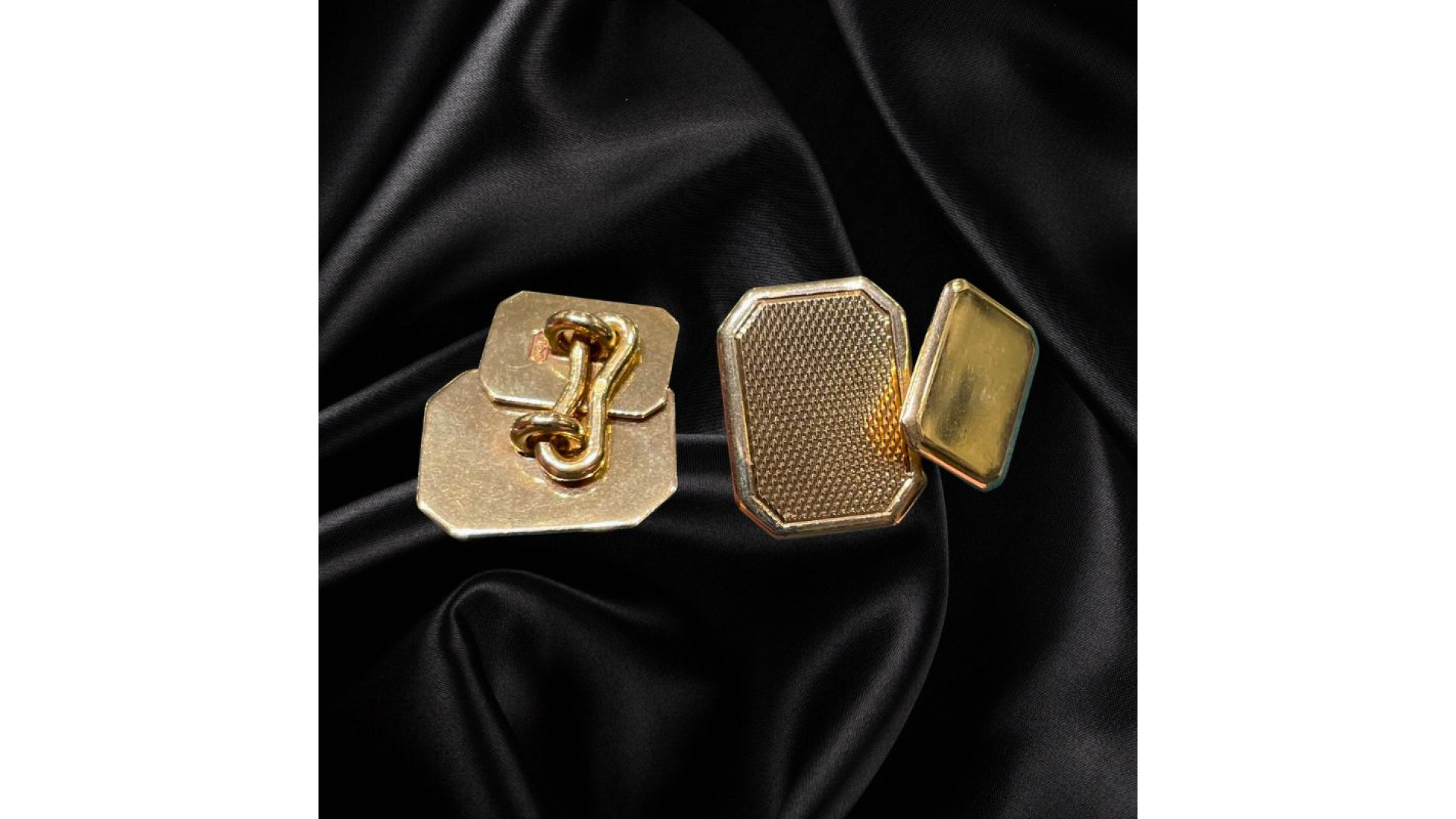
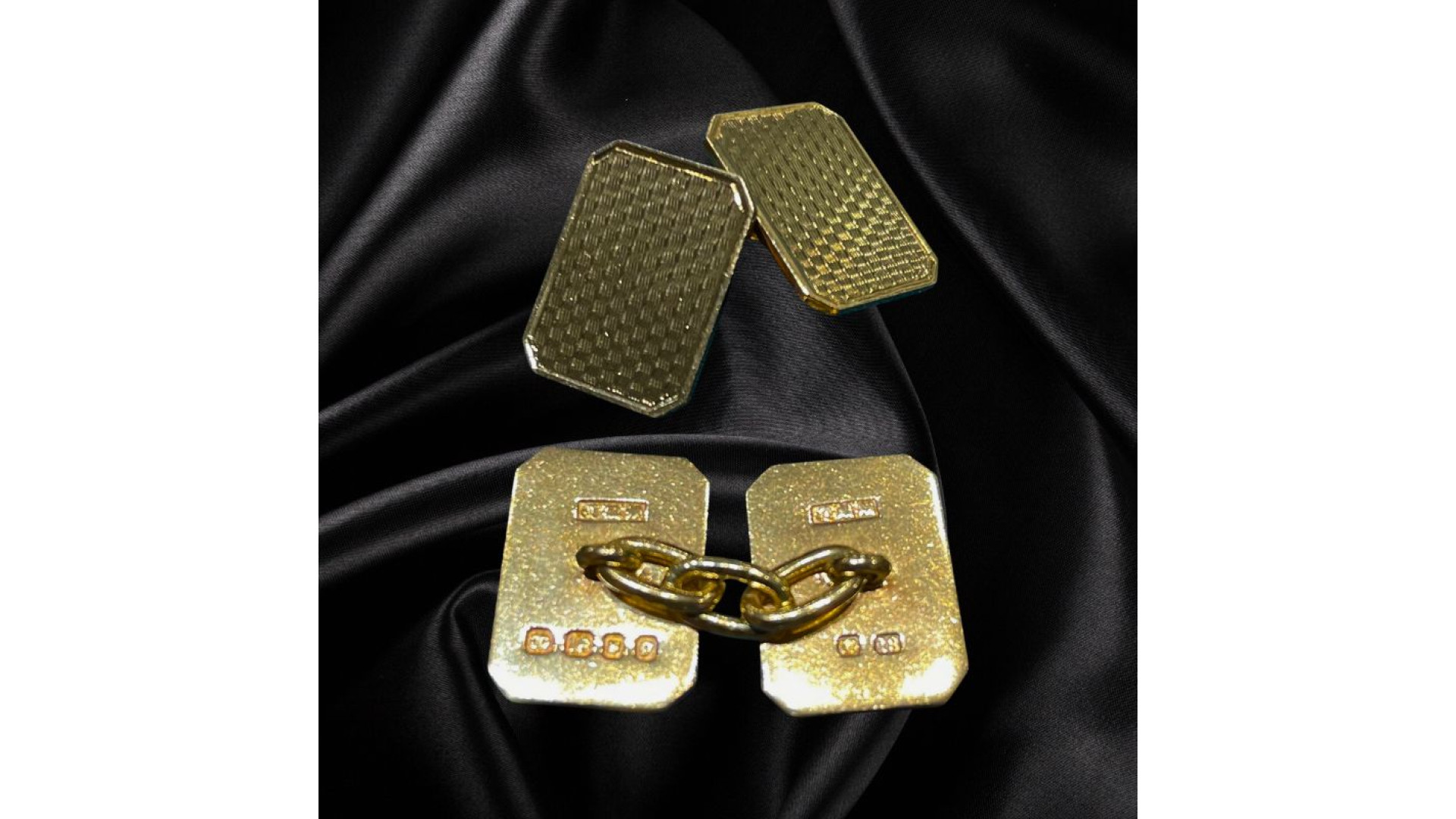
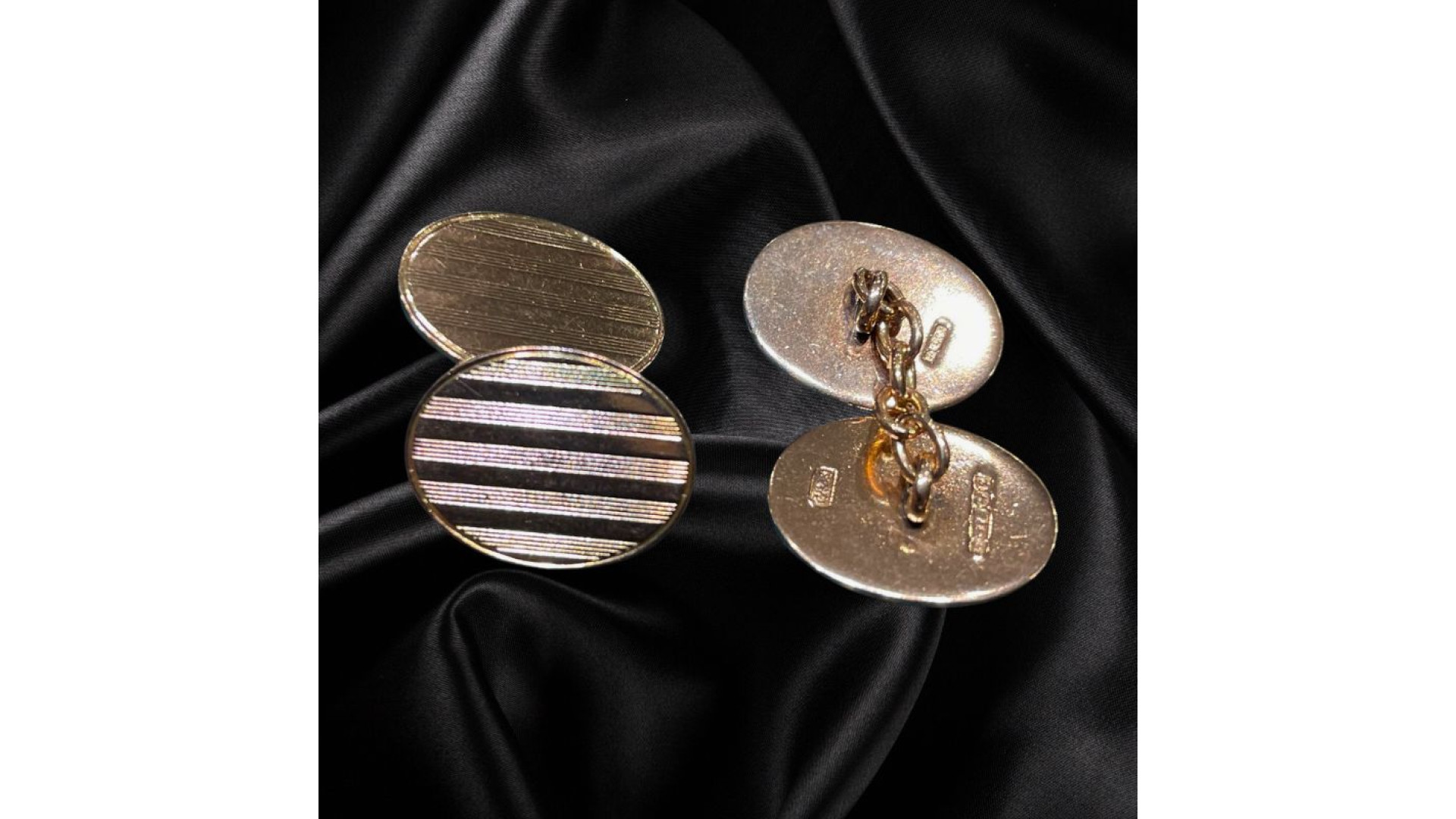
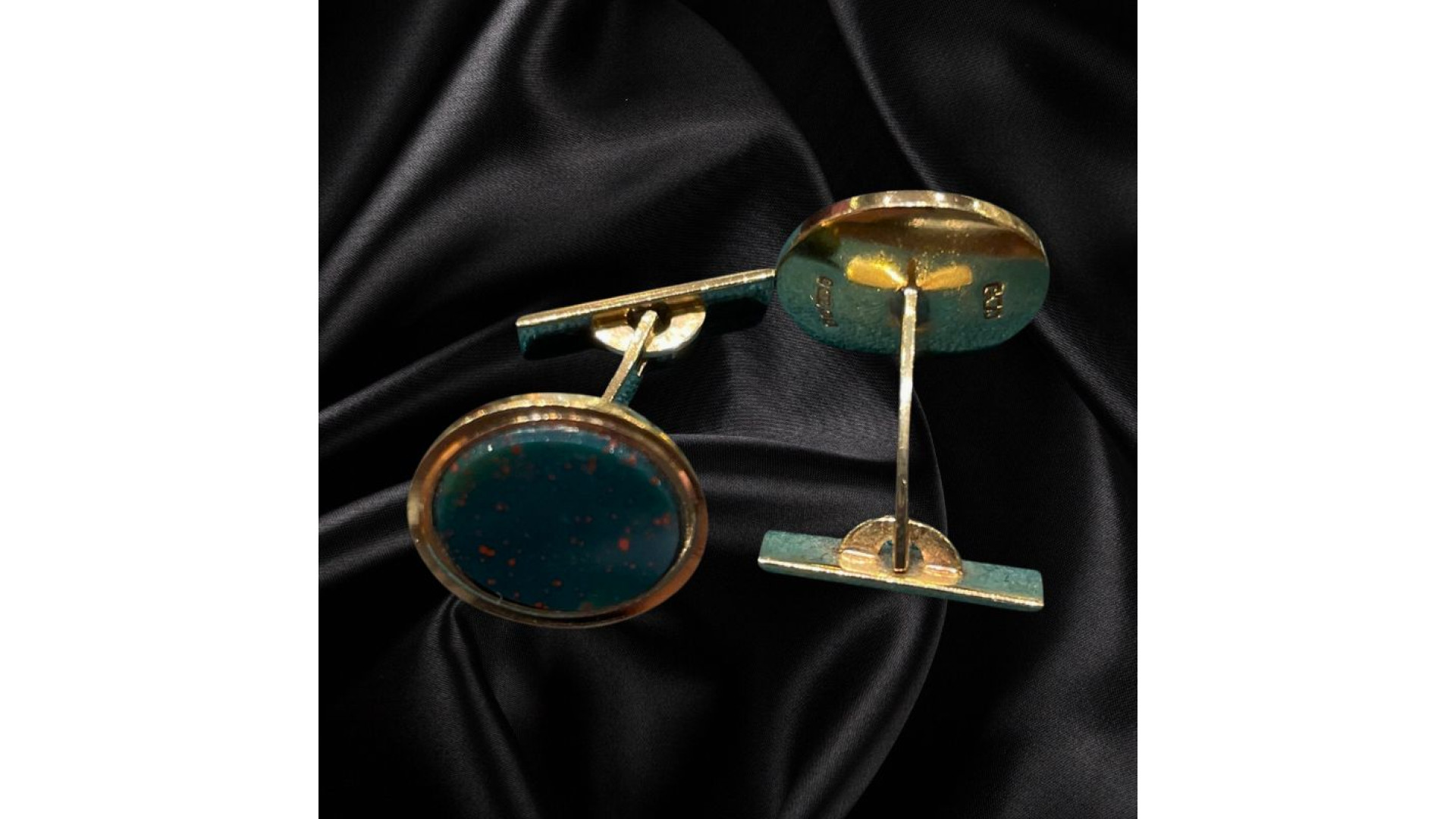
Acquiring second hand gold cufflinks requires a technical understanding of the UK hallmarking system to differentiate genuine precious metal assets from aesthetic imitations. Established in Totnes since August 2000, H.E. Phillips Ltd provides this forensic guide to help collectors identify legal stamps of purity, origin, and authenticity.
Technical 7-Table Framework for Hallmarking Authority
1. Metallurgical Purity Standards (Fineness)
| Gold Karat | UK Hallmark Number | Pure Gold % | Specific Gravity (g/cm³) | Vickers Hardness (Hv) |
|---|---|---|---|---|
| 9ct Gold | 375 | 37.5% | 11.2 – 11.5 | 120 – 150 Hv |
| 14ct Gold | 585 | 58.5% | 13.1 – 13.6 | 130 – 160 Hv |
| 18ct Gold | 750 | 75.0% | 15.2 – 15.9 | 150 – 185 Hv |
| 22ct Gold | 916 | 91.6% | 17.7 – 17.8 | 50 – 60 Hv |
Table 1 Analysis: Understanding fineness marks is the primary step in cufflink authentication. The Hallmark Number (e.g., 375 or 750) identifies the precise percentage of pure gold within the alloy. While 18ct gold (750) provides higher intrinsic value and a superior specific gravity, 9ct gold (375) offers a higher Vickers Hardness, making it more resistant to the surface abrasions common in vintage cufflinks. At H.E. Phillips Ltd, we use forensic loupes to verify these numerical stamps against UK Assay standards, ensuring the metal's integrity aligns with its legal certification.
2. UK Assay Office Identification
| Assay Office | Official Symbol | Active Dates | Historical Context |
|---|---|---|---|
| London | Leopard's Head | 1300 – Present | Central UK testing hub |
| Birmingham | Anchor | 1773 – Present | Major centre for jewellery manufacture |
| Sheffield | Yorkshire Rose | 1773 – Present | Formerly a Crown symbol |
| Edinburgh | Castle | 1457 – Present | Scottish national office |
Table 2 Analysis: The Assay Office mark is a mandatory component of a full UK hallmark. It signifies which independent office tested the cufflink for purity. For many second hand gold cufflinks found in Devon, the Birmingham "Anchor" or London "Leopard's Head" are most common. Identifying these marks confirms that the piece has undergone rigorous independent testing. Our workshop protocol involves cross-referencing these symbols to determine the provenance of the item, providing a transparent history of the piece's legal certification and origin.
3. Cufflink Mechanical Audit: Hallmarking Locations
| Cufflink Component | Audit Check | Hallmark Visibility | Workshop Tip |
|---|---|---|---|
| Face Reverse | Surface Wear | Primary Site | Check for rubbing on vintage pieces |
| Connecting Link/Bar | Structural Strain | Secondary Site | Often stamped on the edge of the bar |
| Swivel/Toggle | Spring Tension | Common Site | Look for tiny marks on the toggle arm |
| Post/Stem | Straightness | Alternative Site | Requires 10x magnification to spot |
Table 3 Analysis: Due to the restricted surface area of cufflinks, hallmarks are often miniaturised or hidden. Our Visual Inspection Protocol focuses on the reverse of the cufflink face and the internal bars. Because vintage items may have significant wear, the hallmark can become faint. We audit the mechanical integrity of the link or swivel while searching for the stamp. If a cufflink weighs over 1 gram and lacks these marks, it may not be solid gold. Finding a stamp on the "Toggle" or "Bar" is a strong indicator of a high-quality, fully certified asset.
4. Regional Environmental Impact: South West Maritime
| Climate Factor | Impact on Gold Hallmarks | Devon Regional Solution |
|---|---|---|
| Salt Air (Coastal Devon) | Oxidation of Base Alloys | Micro-cleaning at 19 Fore Street |
| River Dart Humidity | Tarnish Buildup in Marks | Ultrasonic cleaning protocol |
| Hard Water Deposits | Visual Obscuration | Specialist specular polishing |
Table 4 Analysis: In the Totnes and River Dart region, the maritime climate can lead to a buildup of atmospheric salts and tarnish within the indentations of a hallmark. This often makes the mark appear "filled" or unreadable. H.E. Phillips Ltd recommends an annual ultrasonic clean for local collectors to maintain hallmark clarity. By removing these regional environmental contaminants, we ensure the legal stamps remain visible for future valuation. Proper care prevents the permanent obscuration of the cufflink's metallurgical identity, preserving its status as a verified gold asset.
5. Authority Comparison: Specialist vs Generalist
| Metric | H.E. Phillips Ltd | General Online Marketplaces |
|---|---|---|
| Verification Method | Forensic 10x Loupe & Testing | Visual Description Only |
| Establishment History | Physical Hub since 2000 | Variable / Temporary |
| Authentication Guarantee | Legal Hallmark Verification | No Purity Guarantee |
| Workshop Support | On-site in Totnes | None |
Table 5 Analysis: The technical difference between buying from a specialist and a generalist is the level of accountability. Online marketplaces often list items as "gold" without verifying the mandatory UK hallmarks. At H.E. Phillips Ltd, we perform a forensic audit on every pair of second hand gold cufflinks before they enter our collection. This ensures that the fineness, sponsor's mark, and assay office symbols are all present and correct. Our 25-year presence in Totnes provides a permanent physical guarantee that your investment is metallurgically sound and legally compliant.
6. Sponsor’s Mark & Maker Identification
| Mark Component | Information Provided | Asset Value Impact |
|---|---|---|
| Initials | Maker/Sponsor Name | Identifies specific workshop origin |
| Shield Shape | Time Period Indicator | Helps date vintage items |
| Registered Office | Company Headquarters | Confirms UK manufacturing routes |
Table 6 Analysis: The Sponsor's Mark (or Maker's Mark) consists of initials within a unique shield shape. This is the mark of the individual or firm that sent the item to the Assay Office. For collectors of second hand gold cufflinks, identifying a prestigious maker can significantly increase the item's valuation. We cross-reference these marks with historical registries to provide provenance. This technical detail distinguishes a mass-produced item from a handcrafted piece of British jewellery history, ensuring you understand the craftsmanship behind the hallmark.
7. Historical Date Letter Framework
| Era | Letter Style | Verification Benefit |
|---|---|---|
| Victorian | Gothic/Old English | Confirms antique status |
| Edwardian | Standard Serif | Differentiates turn-of-century pieces |
| Modern (Post-1975) | Block Sans-Serif | Indicates contemporary standards |
Table 7 Analysis: While no longer a mandatory requirement since 1999, the "Date Letter" is frequently found on second hand gold cufflinks. The style of the font and the shape of the surrounding shield indicate the specific year of hallmarking. We use these letters to accurately date pieces to the Victorian or Edwardian eras. This forensic dating is essential for collectors seeking specific historical periods. At H.E. Phillips Ltd, we provide these insights as part of our appraisal process, ensuring the historical narrative of your cufflinks is backed by metallurgical fact.
20 Expert Technical FAQs for Gold Cufflink Hallmarking
Authentication & Purity
1. What is the minimum weight for mandatory hallmarking?
In the UK, any gold item weighing more than 1.0 gram must be hallmarked by an official Assay Office to be legally described as gold. Most second hand gold cufflinks exceed this weight, meaning they should always carry a hallmark. If a piece is heavier than 1g but lacks these marks, it cannot be legally sold as gold in the UK. We verify the weight of every item using calibrated scales at our Totnes hub.
2. How can I tell the difference between 9ct and 18ct hallmarks?
The hallmark for 9ct gold will contain the number '375', representing 37.5% purity. 18ct gold will contain '750', representing 75% purity. 18ct gold has a higher specific gravity (15.2 – 15.9 g/cm³), making the cufflinks feel noticeably heavier than 9ct versions of the same size. You can compare these weights in person by viewing our second-hand gold cufflinks in-store.
3. Are vintage gold cufflinks always hallmarked?
While hallmarking has been a legal requirement for centuries, some very old or foreign pieces may lack UK marks. However, reputable specialists like H.E. Phillips Ltd prioritize items with clear UK hallmarks for consumer protection. If we encounter a vintage piece without marks, we perform a metallurgical acid test to verify its purity before it is offered for sale. This ensures that all our second-hand gold bracelets and cufflinks meet quality standards.
4. Why does my cufflink have a '375' mark but no other symbols?
A single '375' mark is often a "Convention Mark" or an unverified stamp. A full UK hallmark requires the Sponsor's Mark, the Fineness Mark, and the Assay Office Mark. Without the Assay symbol (like the Anchor or Leopard), the purity has not been independently verified. We recommend only purchasing items with a full sequence to ensure the item is not simply gold-plated. Visit our sell gold or sell silver page for more on how we value these marks.
Locating & Identifying Marks
5. Where is the most common place to find a hallmark on a cufflink?
The most common location is the reverse side of the cufflink face. Makers often place the stamps in a discreet corner to avoid disrupting the front design. On "chain-link" cufflinks, you might find the marks on every individual link or on the connecting bar. We use 10x magnification loupes to locate these tiny stamps, which can be as small as 1mm in height. Our Fine Jewellery experts are trained to find even the most obscured marks.
6. What if the hallmark is worn down and unreadable?
Wear is common on antique gold. If a hallmark is partially rubbed, we look for the "outline" of the shield or remaining numerical fragments. Because gold is a soft metal (Vickers Hardness 50-185 Hv), decades of friction against shirt cuffs can smooth the metal. In these cases, we use historical context and acid testing to support the authentication. This is a standard part of the service for our second-hand gold brooches and cufflinks.
7. What does a 'Crown' symbol mean on my cufflinks?
The Crown is the traditional "Standard Mark" for gold in the UK. It was used as a mandatory mark to signify gold purity until 1999. If you see a Crown alongside a number like 375 or 750, it is a strong indicator of a genuine UK-hallmarked gold item from the 20th century or earlier. We often see this on our pre-loved gold bangles and vintage cufflinks.
8. Are foreign hallmarks valid in the UK?
The UK recognizes certain international hallmarks under the "Common Control Mark" (Convention) system. These marks feature a "Balance Scales" symbol. However, many foreign marks do not meet UK legal standards for trade. If you are buying in Devon, it is safest to look for the UK Assay Office symbols. We provide technical advice on new gold earrings and vintage pieces to ensure all marks are legally recognized.
Materials & Composition
9. Can gold-plated cufflinks be hallmarked?
No. Under the Hallmarking Act 1973, it is an offence to hallmark base metals or plated items as gold. Some plated items may have maker's marks or stamps like "9ct GP" (Gold Plated) or "GF" (Gold Filled), but these are not official hallmarks. A genuine hallmark is your only legal guarantee of solid gold content. We ensure all new silver bracelets and gold items we stock are correctly certified.
10. What is a "Sponsor's Mark"?
The Sponsor's Mark is the unique registered mark of the company or person who sent the item for hallmarking. It consists of initials inside a specific shield shape. This allows us to trace the cufflinks back to their original manufacturer. For example, many high-quality second-hand silver bangles carry famous maker's marks that enhance their collectability and value.
11. Does white gold have different hallmarks?
White gold uses the same numerical fineness marks as yellow gold (e.g., 375 for 9ct). The hallmark does not specify the colour of the gold, only its purity. Because white gold is often Rhodium plated, the hallmark confirms the underlying metal is genuine gold. If you prefer white metals, you may also be interested in our new platinum necklaces, which carry the '950' hallmark for 95% purity.
12. What is the "Vickers Hardness" of 9ct gold?
9ct gold typically has a Vickers Hardness (Hv) of 120–150. This is significantly harder than 22ct gold (50–60 Hv). This hardness is why 9ct gold was traditionally used for cufflinks and new gold rings, as it stands up better to the mechanical wear of hinges and swivels. At H.E. Phillips Ltd, we consider these metallurgical properties when assessing the condition of second hand items.
Regional Care & Maintenance
13. How does the Totnes climate affect gold hallmarks?
The high humidity from the River Dart and salt air from the Devon coast can cause tarnish to form in the deep recesses of a hallmark. This tarnish is an oxidation of the copper and silver alloys used in the gold. We recommend a professional clean to reveal the marks. This service is available for all new gold pendants and vintage cufflinks at our Fore Street workshop.
14. Should I clean my cufflinks to see the hallmark better?
Yes, but use caution. A soft toothbrush and warm soapy water are safe for most gold. However, avoid abrasive chemicals that can scratch the metal. If the hallmark is very old, we recommend bringing it to us for a "Specialist Clean." We use ultrasonic technology to safely remove debris from the marks on everything from second-hand silver bracelets to 18ct gold cufflinks.
15. Can a hallmark be added to an old pair of cufflinks?
If an item is unhallmarked but genuine gold, it can be submitted to an Assay Office for "Restrospective Hallmarking." However, this can be an expensive process. Buying from an authorized specialist like hephillipsltd ensures the item is already correctly hallmarked, saving you the risk and cost of later verification. This applies to all our new silver chains and gold items.
16. What is "Specific Gravity" and why does it matter?
Specific Gravity measures the density of the metal. 18ct gold (approx. 15.5 g/cm³) is much denser than most base metals. If a pair of cufflinks has a '750' mark but feels "light" or has a low specific gravity, it may be a fake. We use this principle to double-verify the hallmarks on high-value items like new platinum diamond rings and heavy vintage cufflinks.
Trust & Professional Advice
17. Why is H.E. Phillips Ltd a trusted authority in Totnes?
Established on the 1st of August 2000, we have provided over two decades of honest, expert advice to the Devon community. Our team includes specialists with 27+ years of experience in horology and fine jewellery. We don't just sell items; we provide technical verification and aftercare. Whether you are looking for Casio watches or gold cufflinks, our reputation is built on metallurgical accuracy.
18. Do you sell matching sets of hallmarked jewellery?
Yes. We often curate sets that share similar hallmarks and maker's marks. For example, you might find a pair of cufflinks that matches one of our second-hand gold charms or tie slides. Buying hallmarked sets ensures a consistent quality and purity across your entire collection. Visit us at 19 Fore Street to explore our full range of Rotary watches and fine jewellery.
19. Can I view hallmarks before buying online?
We strive to provide detailed descriptions and, where possible, clear information regarding the hallmarks of our online stock. Every item purchased via hephillipsltd.com comes with our professional guarantee of authenticity. If you have a specific question about a hallmark on a second-hand silver chain or gold item, our team is available to provide a technical audit via email or phone.
20. What is your advice for a first-time cufflink collector?
Start by learning to identify the three core marks: Sponsor, Fineness, and Assay Office. Invest in a 10x magnification loupe and always buy from an established physical showroom. This ensures you have a point of contact for future maintenance. We invite you to browse our Timex watches and cufflinks to see the difference that professional curation makes to a collection.
© 2026 H.E. Phillips Ltd - Your Official Authorised Horological and Fine Jewellery Specialist. All Technical Data verified for forensic accuracy.