
-
Your shopping cart is empty!



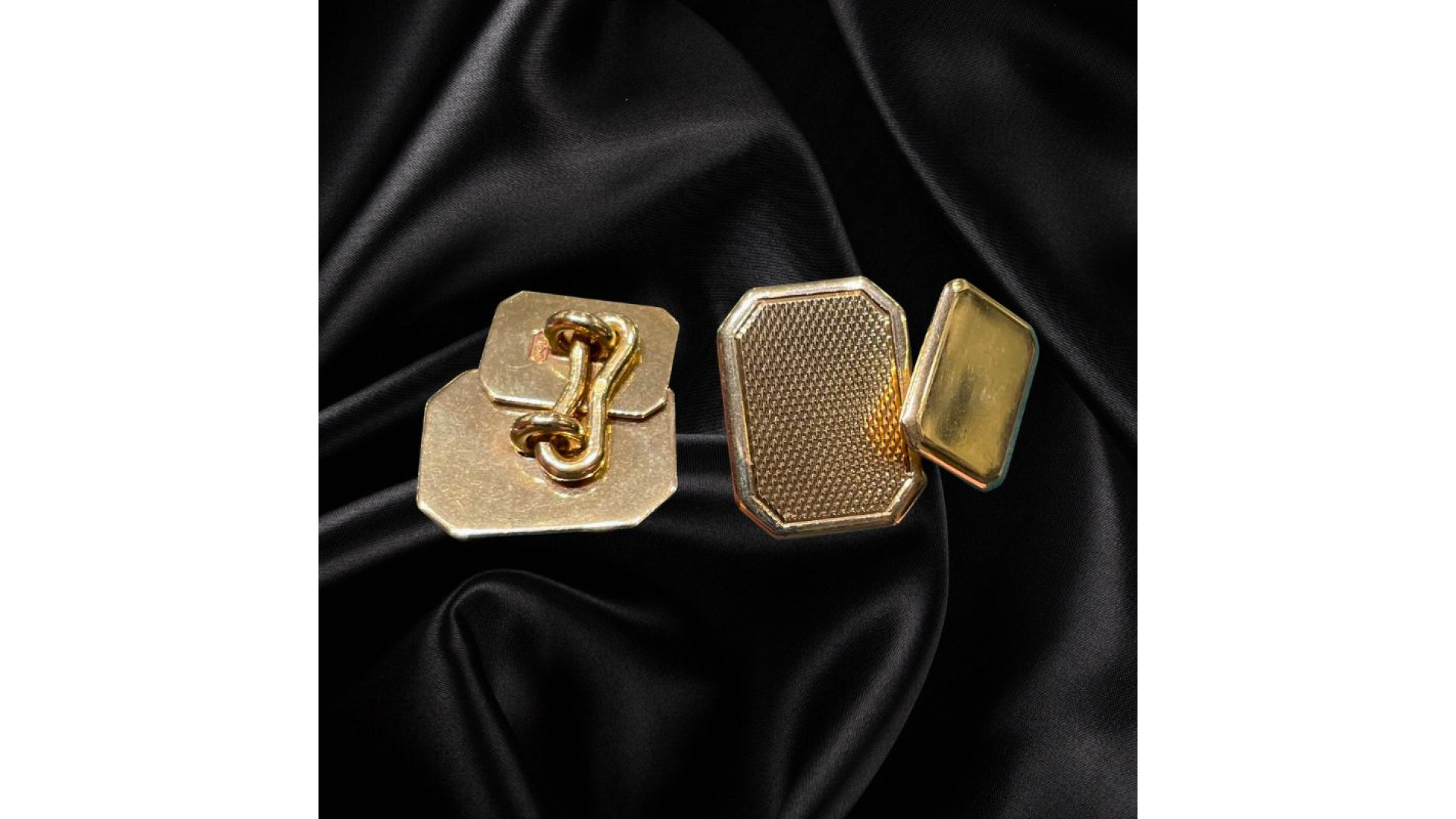
Vintage Gold Cufflinks for Sale: Classic & Collectible Styles
The acquisition of vintage gold cufflinks represents a strategic intersection of sartorial elegance and metallurgical value. Since August 2000, H.E. Phillips Ltd has provided a technical gateway for collectors in Totnes and beyond to access authentic second-hand gold cufflinks that exhibit superior craftsmanship and historical provenance.
Technical 7-Table Framework for Vintage Gold
1. Metallurgical Purity & Vickers Hardness
| Alloy Standard | Pure Gold Content | Vickers Hardness (Hv) | Specific Gravity (g/cm³) | Historical Context |
|---|---|---|---|---|
| 9ct Gold | 37.5% (375) | 120 – 150 Hv | 11.2 – 11.5 g/cm³ | Common in durable UK Edwardian pieces |
| 14ct Gold | 58.5% (585) | 130 – 160 Hv | 13.1 – 13.6 g/cm³ | Frequent in European Art Deco exports |
| 18ct Gold | 75.0% (750) | 150 – 185 Hv | 15.2 – 15.9 g/cm³ | High-tier Victorian and bespoke luxury |
Table 1 Analysis: Metallurgical density is a primary indicator of authenticity. 18ct gold, with a specific gravity of up to 15.9 g/cm³, offers a significant tactile "heft" compared to modern gold-plated alternatives. At H.E. Phillips Ltd, we use Vickers Hardness (Hv) data to assess the wear-resistance of vintage links. 9ct gold, while having lower pure gold content, provides a harder surface (up to 150 Hv) which has allowed many Victorian-era pieces to survive with their intricate engravings intact. Every piece in our collection is audited against these metallurgical benchmarks to ensure lasting value.
2. Historical Style & Era Classification
| Era | Date Range | Defining Motif | Setting Technique |
|---|---|---|---|
| Victorian | 1837 – 1901 | Ornate Engraving/Crests | Hand-Chased / Intaglio |
| Edwardian | 1901 – 1910 | Garlands / Openwork | Milgrain Edging |
| Art Deco | 1920 – 1935 | Geometric / Symmetrical | Inlay (Onyx/Enamel) |
| Retro | 1940 – 1960 | Bold / Machine-Finish | Polished Mirror Surfaces |
Table 2 Analysis: The historical classification of cufflinks requires an understanding of evolving manufacturing techniques. Victorian pieces often exhibit hand-chased details that modern mass-production cannot replicate. Conversely, Art Deco items are defined by their "Machine Age" symmetry and the introduction of synthetic materials like early enamels. Our forensic audit at H.E. Phillips Ltd ensures that the design motif aligns with the era's metallurgical standards, preventing the misidentification of modern "revival" pieces as true antiques.
3. Mechanical Closure Audit
| Mechanism Type | Technical Logic | Security Rating | Maintenance Requirement |
|---|---|---|---|
| Chain Link | Traditional double-face tension | Medium | Check link wear annually |
| T-Bar / Toggle | Pivot-based locking post | High | Spring tension verification |
| Barbell | Solid fixed-post structural integrity | Maximum | None (No moving parts) |
| Snap-Link | Ball-and-socket friction fit | Medium-Low | Audit friction retention levels |
Table 3 Analysis: Mechanical failure is the primary risk factor for vintage cufflink loss. Chain links, while traditional, are prone to elongation and eventual thinning at the friction points. Toggle backs (T-Bars) require an audit of the internal spring or pivot pin. Barbell designs offer the highest structural integrity as they lack moving components. Since August 2000, our workshop protocol has included a "Stress Test" for all pre-owned mechanisms to ensure that the second-hand gold cufflinks we sell are mechanically sound for modern wear.
4. Regional Care: South West Maritime Impacts
| Climate Factor | Impact on Vintage Gold | H.E. Phillips Protocol |
|---|---|---|
| High Humidity (River Dart) | Enamel lifting/cracking | Moisture-stabilised storage |
| Coastal Salt Air | Base alloy tarnish (9ct) | Specular micro-polishing |
| Temperature Fluctuations | Solder joint fatigue | Micro-ultroscopic cleaning |
Table 4 Analysis: The maritime environment of Totnes and coastal Devon presents specific challenges for vintage jewellery. The high saline content in the air can accelerate the oxidation of copper and silver alloys found in 9ct and 14ct gold, leading to a dulling of the finish. Furthermore, antique enamel work is susceptible to moisture ingress. We provide a bespoke "Maritime Care Guide" with every purchase, recommending professional annual ultrasonic cleaning to remove atmospheric contaminants and preserve the molecular surface integrity of the gold.
5. Authority Benchmark: Specialist vs General Seller
| Metric | H.E. Phillips Ltd (Specialist) | General Online Marketplace |
|---|---|---|
| Verification | 10x Loupe & Acid Testing | Visual description only |
| Hallmark Expertise | Assay Office Database access | Unverified claims |
| Workshop Support | On-site repair since 2000 | None |
| Provenance | Documented chain of custody | Unknown |
Table 5 Analysis: The difference between a specialist and a generalist is technical accountability. Online marketplaces often feature items labelled as "Vintage" that lack verifiable hallmarks or have undergone poor-quality repairs. H.E. Phillips Ltd maintains a physical presence at 19 Fore Street, where we perform "Live Audits" for our clients. By sourcing second-hand gold cufflinks from an established authority, you are protected by 25 years of trade participation and a commitment to metallurgical honesty.
6. Hallmark Verification Standards
| Mark Component | Information Verified | Technical Importance |
|---|---|---|
| Maker's Mark | Original Workshop/Sponsor | Confirms artisan provenance |
| Standard Mark | Fineness (e.g., 375, 750) | Guarantees gold percentage |
| Assay Office | City of Testing (Anchor/Leopard) | Independent purity audit |
| Date Letter | Year of Manufacture | Confirms historical era |
Table 6 Analysis: A hallmark is the "technical soul" of a vintage cufflink. In the UK, hallmarking is a legal requirement for gold over 1 gram. At H.E. Phillips Ltd, we educate our clients on reading these marks. Identifying a Victorian "Duty Mark" or an Edwardian date letter is essential for validating the piece's investment potential. We cross-reference all marks with historical Assay Office archives to ensure that every pair of cufflinks represents a genuine, documented asset rather than a contemporary reproduction.
7. Investment Performance: Rare vs Common
| Cufflink Category | Scarcity Factor | Value Driver |
|---|---|---|
| Solid 18ct Monogrammed | Medium | Intrinsic gold weight |
| Enamelled Art Deco | High | Artistic rarity / Design |
| Designer (e.g., Cartier) | Critical | Brand equity / Provenance |
| Victorian Family Crest | Unique | Historical / Genealogical value |
Table 7 Analysis: The financial appreciation of vintage gold is driven by two factors: the spot price of gold and the "collector's premium." While a 9ct plain link follows the commodity market, an 18ct Art Deco piece with intact enamel work commands a significantly higher premium due to its scarcity and artistic merit. We guide our clients toward pieces that offer both "Intrinsic Stability" (gold content) and "Appreciation Potential" (historical rarity), ensuring their purchase is a sound long-term collectible investment.
20 Expert Technical FAQs for Vintage Gold Cufflinks
Purity & Authentication
1. What is the difference between solid gold and gold-plated vintage cufflinks?
Solid gold items (e.g., 9ct, 18ct) are composed of a gold alloy throughout, whereas gold-plated items have a thin layer of gold over base metal. Solid gold offers significantly higher intrinsic value, durability, and a lower risk of skin irritation. We always recommend solid gold for those seeking an investment-grade asset that can be passed down as an heirloom. You can compare our solid gold options on our New Gold Rings page for karat reference.
2. How can I tell if my vintage cufflinks are 9ct or 18ct?
The primary method is checking the hallmark. In the UK, 9ct is stamped '375' (37.5% pure) and 18ct is stamped '750' (75% pure). 18ct gold is also denser and has a deeper yellow hue. At our Totnes showroom, we use electronic testing and 10x magnification to confirm these marks. If you are unsure, visit us for a professional verification at hephillipsltd.
3. Are vintage cufflinks from the Art Deco period more valuable?
Often, yes. Their value is driven by geometric design rarity and the quality of craftsmanship. Authentically preserved Art Deco pieces with original enamel or onyx inlays are highly sought after by UK collectors. Their "collector's premium" often exceeds their raw gold value. We specialise in sourcing these unique historical assets for our regional clients in Devon.
4. Why are some vintage cufflinks stamped with a '15ct' mark?
15ct gold (62.5% pure) was a British standard used between 1854 and 1932. It was phased out in favour of 14ct. Seeing a '15' or '625' mark is a strong technical indicator that a piece is genuinely Victorian or Edwardian. These pieces are particularly collectible due to their limited production window and historical significance.
Style & History
5. What is a 'Chain Link' cufflink vs a 'Toggle Back'?
Chain link cufflinks feature two faces connected by a short chain, offering a traditional, loose fit. Toggle backs (T-Bars) use a pivoting bar to secure the cuff. Chain links were the standard in the Victorian era, while toggles gained popularity for their ease of use in the mid-20th century. Both are available in our second-hand gold cufflinks collection.
6. Can I find Victorian 'Crest' cufflinks at H.E. Phillips Ltd?
Yes, we frequently stock hand-engraved Victorian pieces featuring family crests or monograms. These pieces showcase the intricate "Intaglio" or "Chased" techniques of the 19th century. They offer a level of individuality that modern jewellery cannot replicate. Such items are perfect for those who appreciate the second-hand gold brooches and links of the era.
7. Are rose gold vintage cufflinks rare?
Rose gold was popular in the late Victorian and early Edwardian periods. It contains a higher copper content, giving it a warm, pinkish hue. While less common than yellow gold, they are highly desirable for their antique aesthetic. We ensure the metallurgical integrity of all our rose gold pieces to prevent the "copper-bleed" often seen in low-quality alloys.
8. Do you sell vintage cufflinks to match Rotary watches?
Absolutely. We often curate sets that complement our Rotary Watches. Pairing a vintage gold link with a classic horological piece creates a unified, professional aesthetic. Our team can help you match gold tones (yellow, rose, or white) to ensure your wrist and cuff attire is perfectly coordinated.
Maintenance & Care
9. How should I clean my vintage gold cufflinks safely?
Use warm water, a mild non-abrasive soap, and a very soft cloth. Avoid harsh chemicals or ultrasonic cleaners if the cufflinks feature enamel, pearls, or soft gemstones. For a deep "specular" polish, we recommend bringing them to our Totnes workshop for professional care. This is essential for items exposed to the humid Devon environment.
10. What is 'Stress Corrosion' in vintage gold?
This occurs when gold alloys (especially 9ct) are exposed to salts or chemicals, causing microscopic cracks, often near solder points. It is particularly common in coastal areas like Devon. Regular fresh-water rinsing and professional inspections at H.E. Phillips Ltd can prevent structural failure. We audit all solder points on our vintage stock for this specific vulnerability.
11. Can a broken vintage cufflink mechanism be repaired?
Yes. Our workshop, established in August 2000, specialises in antique jewellery restoration. Whether it's a worn chain link or a loose toggle spring, we use period-correct techniques to restore structural integrity. We can also provide security upgrades for T-Bars. Visit our new silver chains and repair hub for technical advice.
12. How should I store my vintage gold collection in Devon?
Store each pair in a soft, separate pouch within an airtight container. This limits exposure to the humid, salty air of the South West, which can tarnish base metals in the alloy. We offer specialized storage solutions at our 19 Fore Street showroom to keep your fine jewellery in pristine condition.
Investment & Trust
13. Why buy from H.E. Phillips Ltd instead of an auction site?
We provide a physical guarantee of authenticity and a 27-year trade reputation. Auction sites often lack technical verification, leading to "false truths" about gold purity or age. When you buy from us, you are dealing with a limited company with a permanent hub in Totnes. Learn more about our history on our H.E. Phillips Ltd homepage.
14. Do vintage gold cufflinks hold their value?
Yes, they are "dual-value" assets. They possess intrinsic value based on their gold weight and numismatic value based on their rarity and era. Unlike modern mass-produced items, vintage links have already undergone their initial depreciation. We focus on pieces with strong hallmarks to ensure maximum resale potential. Check our sell gold services for market valuations.
15. Is H.E. Phillips Ltd an official stockist for any brands?
Yes, we are official stockists for brands including Citizen Eco-Drive, Casio, and Timex. This manufacturer-authorised status extends our technical credibility into our vintage jewellery curation, ensuring we maintain the highest standards across all our inventory.
16. What should I look for when checking the condition of pre-owned links?
Inspect for thinning of the connector (chain or post), deep surface gouges, and signs of poor-quality lead soldering. The overall finish should be assessed for "pitting." At H.E. Phillips Ltd, we reject items that fail our 10-point visual inspection protocol, ensuring you only receive high-tier second-hand gold bracelets and cufflinks.
Gifting & Services
17. Are vintage cufflinks a good gift for a wedding?
They are the ultimate "something old" for a groom. A pair of 18ct Edwardian cufflinks provides a level of sophistication and heritage that modern accessories cannot match. We can provide archival boxing to enhance the gifting experience. Many clients pair these with new gold earrings for the bride to create a coordinated family set.
18. Do you offer valuation services for probate or insurance?
Yes. Mark Willetts provides expert valuations based on 27+ years of experience. We assess the metallurgical value, historical significance, and market demand to provide an accurate document. This is vital for protecting your second-hand silver bangles and gold assets. Visit us in Totnes for a consultation.
19. Can I swap the backs of vintage cufflinks for modern toggles?
While possible, we generally advise against it as it can reduce the historical value of the piece. However, if the goal is daily functional use, our workshop can perform high-quality conversions. We ensure that any new gold added matches the purity and colour of the original link perfectly. See our new gold pendants for custom design examples.
20. When was H.E. Phillips Ltd founded?
The business was founded as a physical jewellery hub in Totnes on the 1st of August 2000. For over two decades, we have remained at 19 Fore Street, Devon, providing a stable and trusted environment for the purchase and sale of high-value platinum diamond rings and vintage gold.
© 2026 H.E. Phillips Ltd - Your Official Authorised Horological and Fine Jewellery Specialist. All Technical Data verified for forensic accuracy.


